

FailForward @FailForward@social.cleverlibre.org
Exploring, failing, backtracking, just to identify the only viable path forward. And then scarred, stumbling forward into the future. Learning.
Boring and steady. Knowing little and questioning a lot. Mostly harmless.
***
This is an experimental scrapbook space. A collection of stuff I want to keep in a form somewhere on the spectrum between a blog and a shoe-box full of scraps, cut-outs, quotes, links and reading notes and sometimes my own silly thoughts about them.
Perhaps it might be of marginal interest to others too, but I don't care that much.
Joined Jan 2021
# Dolly Parton - The Grass Is Blue
> How much can a heart and a troubled mind take
> Where is that fine line before it all breaks
> Can one end their sorrow
> Just cross over it
> And into that realm of insensitive bliss
> -- Dolly Parton - The Grass Is Blue
# Father and Daughter - by M. Dudok de Wit
https://www.youtube.com/watch?v=Oo4KXZVApsQ

Oscar Winner ~ Short film about love and passage of time
Beautiful animated movie about a father which leaves to the sea to never be seen again by his daughter who loves him, longs for him and searches/waits for him to come back. She won't forget for her whole life till the end of her days.
FailForward
boosted

I worked over 5 days on this one and I am so glad I turned out like this. I feel like I improved so much with ink and watercolor recently.
This is St. Nicholas Church in Malá Strana, Prague
30x40 cm ink, watercolour and gouache on paper
This is St. Nicholas Church in Malá Strana, Prague
30x40 cm ink, watercolour and gouache on paper
Actually watching the musician to play this instrument is amazing in itself. Maybe I should have titled the post "Church bells jam session", or something like that.
# Golden Earring - Radar Love played on church bells
> When I get lonely
> And I'm sure I've had enough
> She sends her comfort
> Comin' in from above
> Don't need no letter at all
>
> We've got a thing that's called Radar Love
> Golden Earring/Radar Love 1973
On March 11th 2021, churches around the Netherlands played a cover version of a Radar Love, famous '73 rock song by Golden Earring, by now an ancient Dutch rock band from The Hague. The event was in a tribute to Golden Earring and occasion of the front-man's 73rd birthday.
This is a highly interesting thing from several angles. Firstly, the bells cover version is interesting music in itself. Second, this is the first time I saw how the instrumentation of church bells looks like - I always thought it's programmed with a computer/microcontroller. Actually it's played similarly to a keyboard instrument, even though it has a kind of "sticks" and pedals instead of keys. I learned something new today.
Before checking the bells cover version, it might be interesting to get into the ear the original:
https://www.youtube.com/watch?v=aRlSHG5hRY4

And then the bells cover - actually there were several played on that day, but they seem to be the same score.
https://www.youtube.com/watch?v=hxweaPAQxAA

* The Hague: https://www.youtube.com/watch?v=Uks5sSqXgPU
* Wateringen: https://www.youtube.com/watch?v=9h6SFa_k3P4
* Amsterdam: https://www.youtube.com/watch?v=hxweaPAQxAA
Chris Grey in his latest blog post on the attitude of Brexiteers now after Brexit is done:
> The country, as represented by Frost, seems increasingly like a stroppy, entitled teenager who has stormed out of the family home in a tantrum and now endlessly complains that his awful parents are disrespecting him. _‘Not only are they no longer housing me,’ he whines, ‘but they are insisting I clear my stuff out just because I promised to when I left. And I’m stuck with paying the rent on my new place because they won’t help me out any more. Don’t they realise I’m an adult now?’_
https://chrisgreybrexitblog.blogspot.com/2021/03/fisking-frost.html
Actually correlates well with population density. No surprise there. More people, more GDP per capita.
Now this one is a bit misleading, apparently the scale matters. Here's an alternative.

Realistic World Economic Output by u/KennethSui http://dlvr.it/RvRQrn
FailForward
boosted


Silly
And I am reading "Our plugin erection". Something's wrong with me today...

[news] Did you know that there are now more than 40 plugins available for #PeerTube instance administrators? To support the installation of these p...
FailForward
boosted
https://www.youtube.com/watch?v=S7yBVgkSnWg
> First you've got to get on board
> You've got to spread your wings
> You've got to take a chance
> If you want romance
> And fancy things
> -- [The Weepies/Fancy Things](https://www.youtube.com/watch?v=S7yBVgkSnWg)
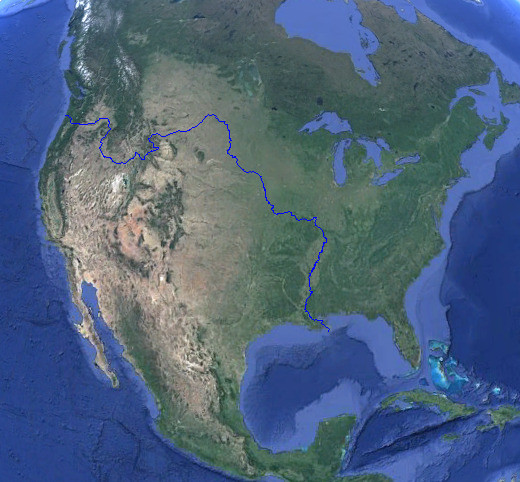
Fascinating. Is there such a thing in Europe? I am not aware...
The river connecting two oceans: A creek in Wyoming splits in two, one side flowing to the Atlantic and one side to the Pacific. You can’t pass the...
# Chris Grey's upcoming book _Brexit Unfolded. How no one got what they wanted (and why they were never going to)_
Prof. Chris Grey of the blog "Brexit & Beyond" fame will publish a book on Brexit.
* announced at the end of the post: https://chrisgreybrexitblog.blogspot.com/2021/03/brexit-unhinged.html
* can be pre-ordered in the UK.
Now I am curious whether and how his publisher will make it available in the EU.
# Isolated ecosystem of Movile Cave, Romania
http://www.bbc.co.uk/earth/story/20150904-the-bizarre-beasts-living-in-romanias-poison-cave
https://en.wikipedia.org/wiki/Movile_Cave
> Movile Cave has been cut off for millions of years. Its air is thick with harmful gases, yet it is home to an array of strange animals
An older article on BBC web about a cave in Romania, with an isolated ecosystem of animals living off of sulphuric chemosynthesis, methane and carbon dioxide. The bacteria in the case are "trapped" there since 5+ millions of years, various animals for several millions (2+) years.
I did not know there are isolated ecosystems on Earth. Very interesting.
# Movement in Bitcoin-land re energy consumption
https://www.cnbc.com/2021/03/02/china-bitcoin-mining-hub-to-shut-down-cryptocurrency-projects.html
I read here that a Chinese province with significant presence of miners is about to ban Bitcoin mining because of missing targets on energy consumption.
If more governments wake up to this (as we hear recently more and more about Bitcoin energy consumption and carbon footprint), this might get interesting for the bubble folk. 🍿
# Der Club der schoenen Muetter
Kriminalhörspiel, 55 min, Deutschlandfunk Kultur (in German)
Absolutely hilarious radio play about 3 typical suburban "smart-ass" mothers and their thoughts about a solo father (a porn-star-type macho techno-fan guy with a violet Pontiac Firebird car) taking care of his little daughter (a small princess "Lillifee"-kind). They are attracted to him, repulsed by him, he does not care about them and then he suddenly dies. Great fun.
# Lessons from a year of Covid
by Yuval Noah Harari
https://www.ft.com/content/f1b30f2c-84aa-4595-84f2-7816796d6841
A very good article by Harrari about what we can learn from dealing with COVID-19 pandemic. It takes a very cold and independent look at what happened and is happening. He identifies mostly _positive_ lessons we can learn from the events of the last year. I think that is an extremely useful view, as newspapers are only full of negative news. These are not just "sunny" observations, he actually goes very deep in identifying what's important and at the same time positive. Similarly, he identifies negative things which are going on, but are highly non-obvious.
As is usual for him, Harrari takes a long-term view on what's happening and impacts of those things. I think this is important reading.
## Lessons
1. scientists of the world were able to come up with bio-tech solutions to this crisis in an unprecedentedly short timeframe. The first time in history, humankind is not helpless against biopathogens.
2. due to vast technological advances since industial revolution, we were able to largely minimise impact of the pandemic: trade is going on well, food supply was effectively not disrupted at all, many sectors of business were able to adapt relatively quickly. 100, or 500 years ago, this pandemic would be devastating, while now it's just "bad".
3. Internet infrastructure is way more resilient than we thought.
4. Internet and cyberspace is becoming the single point of failure for humanity. This will need solving in the future.
5. Science cannot solve everything. The most important decisions finaly need to be taken by politicians. These are failing us. Mostly because, unlike scientists, they do not cooperate on global scale, but rather hold nationalistic turf wars. In a worse case, they fail us by negligence and not taking the right actions, even though scientists tell us.
6. we learned that protection of life is not all. Sometimes, secondary impacts of the pandemic need to be weighed against the loss of life due to illness. These are challenges which we'll need to solve and come to terms with in the future.
7. centralisation and concentration of private information about citizens is becoming a strategic asset of governments. Publics will need to resolve the conundrum of transparency not only top-down, but bottom-up too.
8. globalisation in the face of pathogens is inevitable and global cooperation must be resolved.
9. it's clear we need a global coordination institutions to help with the next pandemic. WHO is there, but needs more money and needs to be improved.
> In the age-old war between humans and pathogens, the frontline passes through the body of each and every human being. If this line is breached anywhere on the planet, it puts all of us in danger. Even the richest people in the most developed countries have a personal interest to protect the poorest people in the least developed countries. If a new virus jumps from a bat to a human in a poor village in some remote jungle, within a few days that virus can take a walk down Wall Street.
FailForward
boosted





FailForward
boosted
@tetrapyloctomist @jwildeboer @ffeth
I am getting back to this older thread about how Oxford wanted to open-source their vaccine and Bill Gates stepped in and then the whole thing went allegedly wrong. It needs some further debunking.
So here is a fragment of an interview with Bill Gates by Derek Muller of Veritasium fame where he specifically asks Bill Gates about this KHN story.
https://youtu.be/Grv1RJkdyqI?t=558
Here you have how the sausage is made on the Intertubes. Somebody comes up with something on Twitter, or wherever, smart (but maybe just gullible?) people take it for granted and there you have a story. It saddens me that even many well educated people who should know better fall for this.
This is of course not a level of a proper conspiracy theory, but just giving it a second thought would raise some red flags. Not that I am smarter, in the past there were exactly such stories I fell for, but recognising how wrong I were made my BS detector much more sensitive.
Exploring, failing, backtracking, just to identify the only viable path forward. And then scarred, stumbling forward into the future. Learning.
Boring and steady. Knowing little and questioning a lot. Mostly harmless.
***
This is an experimental scrapbook space. A collection of stuff I want to keep in a form somewhere on the spectrum between a blog and a shoe-box full of scraps, cut-outs, quotes, links and reading notes and sometimes my own silly thoughts about them.
Perhaps it might be of marginal interest to others too, but I don't care that much.
Joined Jan 2021
