
 🇳🇱
🇳🇱
@alecui No, not really.. thats usually a rewriting of history dems insist on to save face... If the democrats were really the "good guys" they never would have accepted being part of a party with such a horrifically racist past, they would have formed a new one.. Remember year after year the racist members of the party (the super delegates) voted in the next generation, there was never a point where this lineage "broke" so any claims about parties switching is utter nonsense.

@freemo @alecui Woah, dude, that's a little bit off the deep end. The party realignment is recognized by pretty much every credible American historian, and denying it has been a talking point of the far-right for some time now. Many legislators even switched parties during that time to be with the fellow racists/non-racists.
Dems aren't perfect, but they're an order of magnitude better than the GOP on the issue of race, in pretty much any metric, since the Civil Rights era. Trying to act like they're remotely similar is nuts.
The party realignment makes no sense as a sw2itching of party because the parties members are choosen by existing party members. At no point was there a mass break from the party and movement of members.. Each generation without break elected the next.
It also isnt universally associated by anyone other than the left who wants to re-write their horrific history. Never heard this claimed by the right, in fact quite the opposite.
@freemo @alecui That's not true. Party membership is chosen by the individual. Anyone, even elected legislators, can switch their party affiliation any time they want, and they don't get kicked out of office for it. Justin Amash and Charlie Crist both did it recently.
These shifts have happened multiple times in our country's history, which is why we're currently considered to be in the 6th iteration of our nation's party system: https://en.wikipedia.org/wiki/Sixth_Party_System
And as for people on the right refusing to grapple with historical racism... well, that's so common that it's become something of a stereotype at this point, hasn't it? They're even passing laws to block schools from teaching that history.
You clearly dont know how party membership works... you think party members are selected solely by popular vote? No thats not how the voting system works.. You need to learn how superdelegates work if you are to understand why it is dishonest to say the parties switched.
Existing party members (superdelegates) vote for new party members, along with the public. So each generation of party members are choose by the generation before.
There was also never a mass exodus of party members switching sides... so there is no actual evidence to back up these claims other than a rewriting of history.
@freemo @alecui (A) Superdelegates only apply to *presidential* primaries, not the rest. The realignments happened first in the legislative branch.
https://en.wikipedia.org/wiki/Superdelegate
(B) Primaries as a method of picking nominees only really took over in 1972. Prior to that, the nominees were picked by state party conventions. When Hubert Humphrey won the Dem nomination in '68 without entering any of the primaries, both parties decided they needed to change the rules. Funny how the rules changed right about the same time as the realignment...
https://en.wikipedia.org/wiki/Primary_election
State party conventions were still not a general party vote of the populace, nor can we show an exodus of party members... so none of that adds up to the narrative regardless.
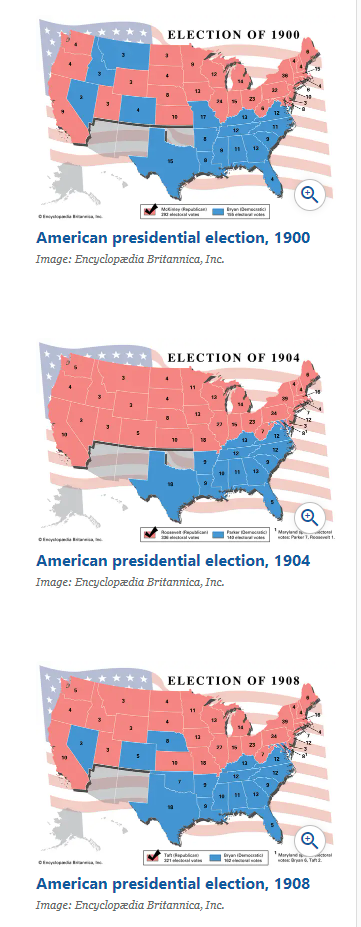
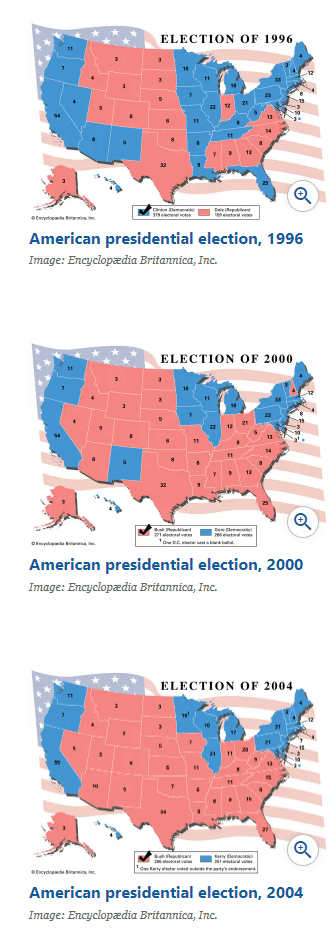
Exactly that proves my point.. You can see year after year the states remain aligned relatively the same... there was no abrupt exodus where the parties flipped.
Yes, the 3 on the left (each seperated by one election year) largely show the same pattern of blue in the lower right and red towards the north, I see no year where the colors flip.
Same of the column on the right, you see the blue and red largely clustered in the same area each consecutive year.
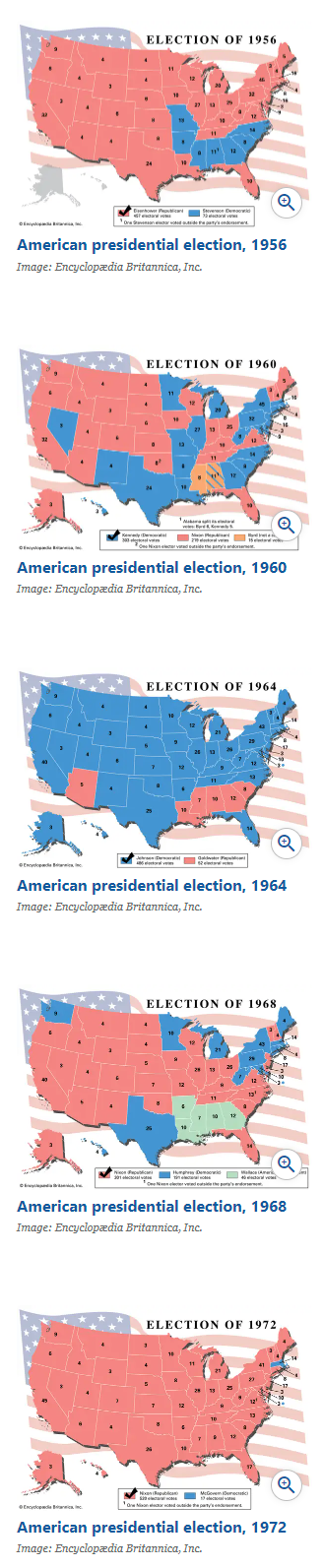
Only way you see a flip is when you compare them across an entire century, in which case its not an abrupt flip at all but an extremely slow multi-generational changing of geographic support, which would in fact support my assertions and debunk your own.

@LouisIngenthron
Also I want to point out we went down a tangent from my assertion anyway..
I said the party members (politicians) didnt have an abrupt flip.. as in each generation the people of each party were largely the same (changing only gradually) and thus the ideals those people held remained relatively steady as well... Peoples support of the ideas of each party may have flipped, but the parties themselves did not.
@alecui