

OnceMagicBrainEel @OnceMagicBrainEel@social.cleverlibre.org
postdoc at Rainer Friedrich lab, co-parenting 3 little humans
Joined Nov 2022
OnceMagicBrainEel
boosted

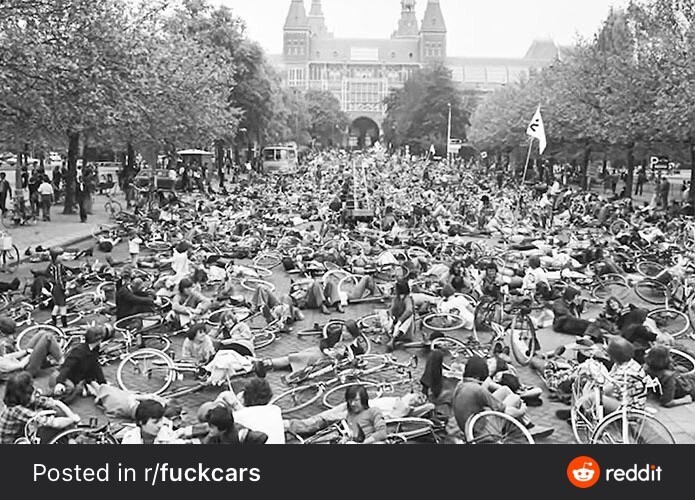
I didn’t realize that the Dutch fought for their bike lanes. There’s a lot of history within this that I’m currently naive about but excited to learn!
Here’s the article I’m starting with — How the Dutch got Their Cycle Paths: https://www.pps.org/article/how-the-dutch-got-their-cycle-paths
OnceMagicBrainEel
boosted

RT @christlet@twitter.com
A heads up before I make the proper job ad 🔬
We'll be recruiting a postdoc to start in the first half of 2023! Project is to push our brand new @Abbelight@twitter.com system to 200% thanks to @AgenceRecherche@twitter.com funding: probes, hardware, processing, with cool biological applications. DM me!
🐦🔗: https://twitter.com/christlet/status/1584908532138352640
OnceMagicBrainEel
boosted

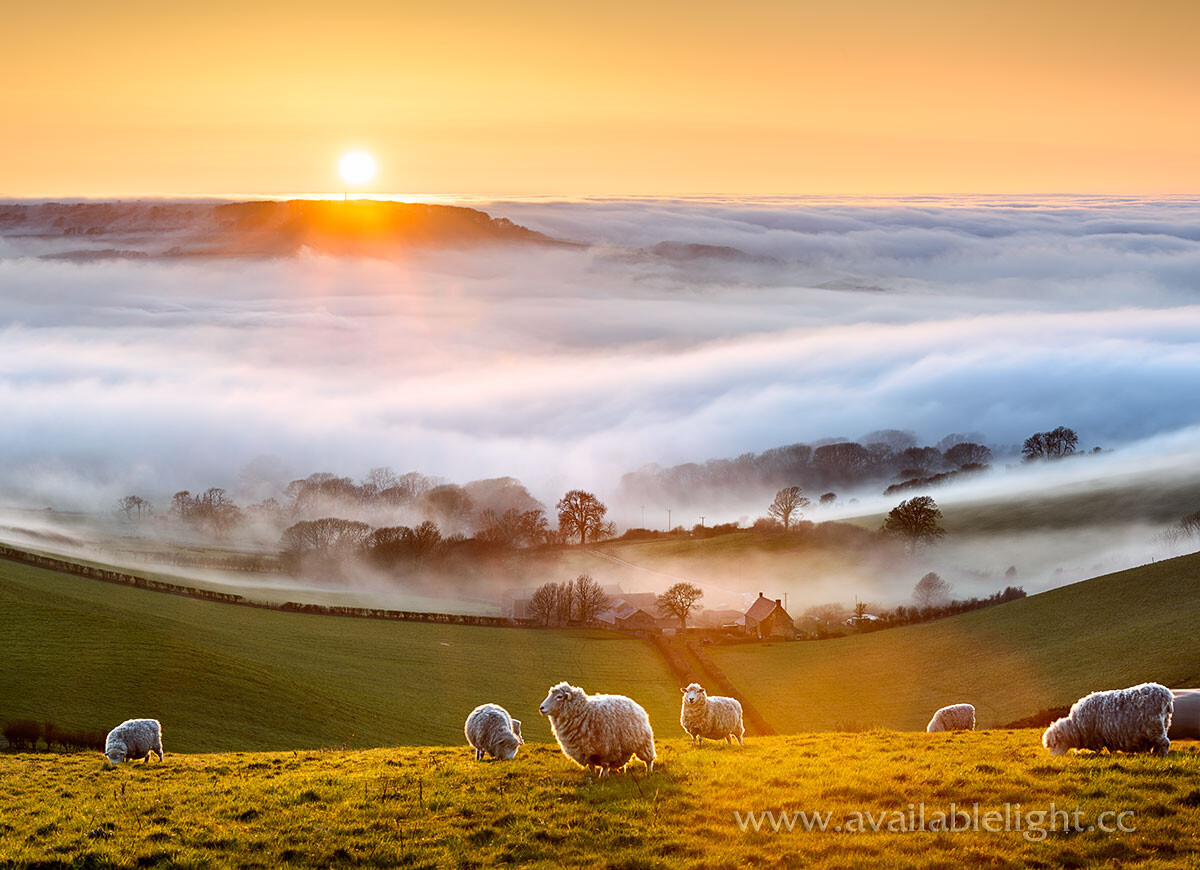
I didn't take this photo but I was with my husband when he did. It was breathtaking up on Stenbury Down on the Isle of Wight, watching the mist roll in at sunset. The sheep were surprised to see us and for once the weather did what we'd hoped it would do! #SheepofMastodon
OnceMagicBrainEel
boosted

🚨#Tenure-Track Behavioral #Neuroscience Position Alert!🚨
McGill University is searching for candidates! This is a great opportunity to be with amazing colleagues, live in an vibrant city, and become a Montreal-style bagel convert! #NeuroJobs #URMinSTEM #NeuroMastodon #NeuroscienceMigration
OnceMagicBrainEel
boosted

OnceMagicBrainEel
boosted

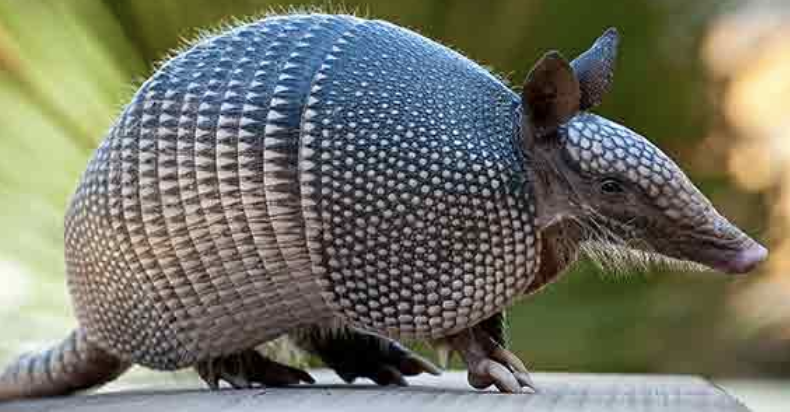
This is nuts: Using armadillos as a model system, this group has shown that #leprosy bacteria are able to reprogram differentiated hepatocytes into stem-like cells. This ultimately results in further cell differentiation and proliferation (which ultimately benefits the bacteria by increasing the host resources available). The paper highlights the possibilities for liver regeneration in medicine.
But we're here to be awed by this new parasite manipulation strategy.
OnceMagicBrainEel
boosted

OnceMagicBrainEel
boosted

#rejectedCover
Theory of hierarchically organized neuronal oscillator dynamics that mediate rodent rhythmic whisking
https://www.cell.com/neuron/fulltext/S0896-6273(22)00756-5
OnceMagicBrainEel
boosted

For all electron microscopists out there:
"Crosshair, semi-automated targeting for electron microscopy with a motorised ultramicrotome"
Kimberly Meechan et al. 2022 @eLife from Yannick Schwab's lab at EMBL in collaboration with The Crick institute. https://elifesciences.org/articles/80899
Presents a new method for reliably and "selectively targeting small regions of interest in a resin block by trimming with an ultramicrotome", powered by "user-friendly software to convert X-ray images of resin-embedded samples into angles and cutting depths for the ultramicrotome."
Reviewed by three outstanding electron microscopists: Christel Genaud, Song Pang, and Michaela Wilsch-Bräuninger.
#electronmicroscopy #microCT #Platynereis #science #methods #EMBL #TheCrick
OnceMagicBrainEel
boosted

Aberdeen's University Librarian @simonjbains announced our new rights retention policy today!
Seems niche, but is super important for fighting the supervillains in for-profit publishing.
Uni staff can no longer be made to sign over copyright to publish. All work will be made freely available to all in the university repository.
We have an amazing Open Research Team at the library 📚 🦸♀️ 🏆. Thank you!
Full details:
https://www.abdn.ac.uk/library/documents/Research%20Publications%20Policy%202023.pdf
OnceMagicBrainEel
boosted

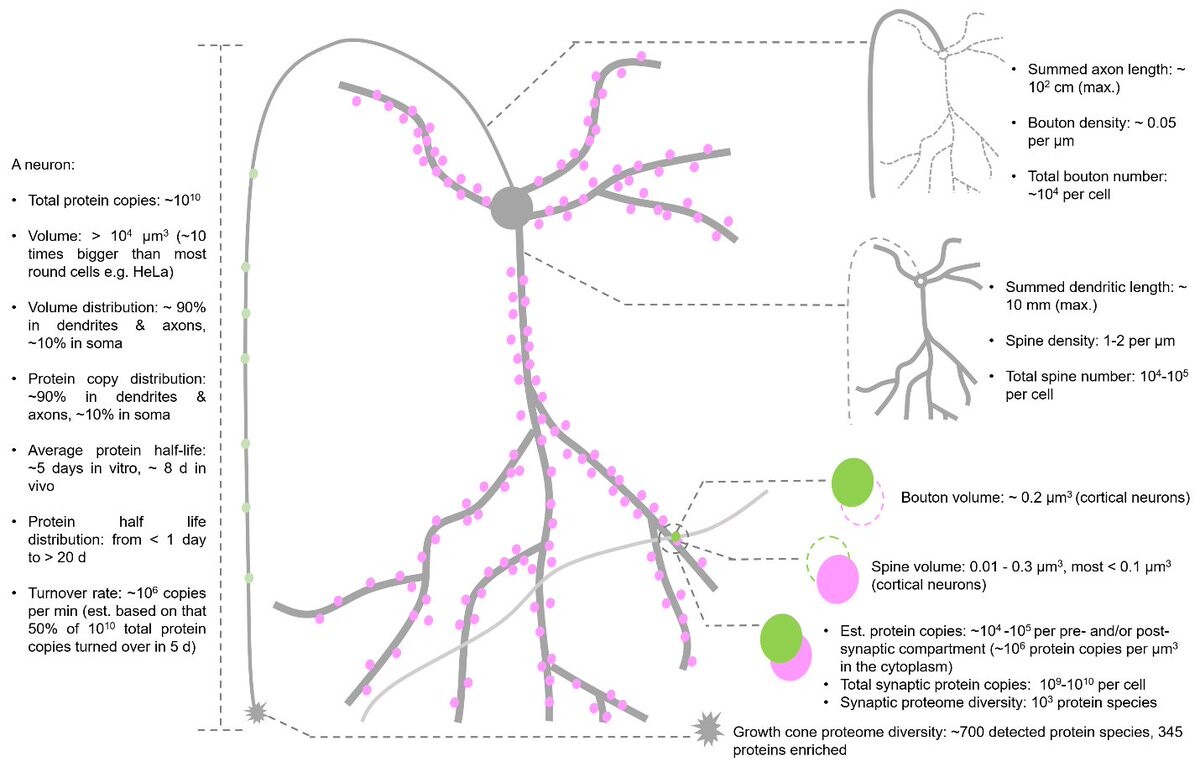
each neuron synthesising 1 million proteins per minute
total number of proteins per neuron 10 billion
RT @LukeChaoSun@twitter.com
Our latest review article puts together the 'BioNumbers' of a #neuron & its #proteome, offering quantitative integrative view of #protein turnover @MpiBrain@twitter.com @erin_schuman@twitter.com @maxplanckpress@twitter.com
https://doi.org/10.1016/j.mcn.2022.103793
🐦🔗: https://twitter.com/LukeChaoSun/status/1592810727181815808
OnceMagicBrainEel
boosted

friend taught me about something recently, known as Gell-Mann Amnesia
quoting this page: https://www.epsilontheory.com/gell-mann-amnesia/
---
Briefly stated, the Gell-Mann Amnesia effect is as follows. You open the newspaper to an article on some subject you know well. In Murray’s case, physics. In mine, show business. You read the article and see the journalist has absolutely no understanding of either the facts or the issues. Often, the article is so wrong it actually presents the story backward—reversing cause and effect. I call these the “wet streets cause rain” stories. Paper’s full of them.
In any case, you read with exasperation or amusement the multiple errors in a story, and then turn the page to national or international affairs, and read as if the rest of the newspaper was somehow more accurate about Palestine than the baloney you just read. You turn the page, and forget what you know.
---i've been thinking about this very strongly with every news article that comes out about "The Mastodon Network" or whatever, and with the whole journa.host thing.
i don't normally consume a lot of news, tech or otherwise, and i hadn't identified this pattern in my own thinking. but i sure as hell do now, especially with all these clueless writers churning out paragraph after paragraph, full of nonsense, about a subject that hits pretty close to home for me
OnceMagicBrainEel
boosted

We are very happy to announce that all @neuromatch 5 posters and talks (who chose to stay online) are now available, citable and enjoyable via @worldwideneuro: Come for the neuro stay for the science. https://www.world-wide.org/neuromatch-5.0/
OnceMagicBrainEel
boosted

So excited to be a part of this new #neuromatch
-inspired endeavor to teach #climate science to students *all* over the world 🌎🌍🌏
The planning is ongoing --- get involved here! 👉 https://sites.google.com/climatematch.io/academy/about
#ClimateChange #ClimateScience #GlobalInclusivity #onlinelearning
OnceMagicBrainEel
boosted
Have you ever encountered a wasp about 4 to 5 cm long? At the risk of anthropomorphising, as it raises into the air, hovering near you, observing you, one feels the presence of a being so confident in its position at the top of the food chain, that it judges you, it evaluates you as a non-risk (perhaps unwisely), and, after a brief few moments, moves on with its day–to find a large spider to sting and stash away in its offspring's pantry. It's entirely harmless to us, and the adults drink nectar from flowers. It's enemies are, I'm sure, other parasitoid wasps.
Cryptocheilus annulatus is one such wasp. From Hvar island, Croatia. https://www.inaturalist.org/observations/130544437
OnceMagicBrainEel
boosted
For neuroscientists attending #sfn22: don’t miss the poster by Mitya Chklovskii’s group describing the completion status of the whole brain #connectome of the fairy wasp #Megaphragma, of expected completion early in 2022. Find the poster tomorrow Monday morning, number 328.16 / YY35.
Mitya kindly shared the poster image publicly elsewhere.
This tiny #wasp is famous for being the size of a large paramecium (a unicellular organism) and for enucleating the vast majority of its central neurons while pupating. The adult has less that 10,000 neurons in its central brain yet it isn’t missing any organ or body part. See the paper that jumpstarted this effort:
Polilov AA. The smallest insects evolve anucleate neurons. Arthropod structure & development. 2012 Jan 1;41(1):29-34. https://www.sciencedirect.com/science/article/pii/S1467803911000946
OnceMagicBrainEel
boosted

#Introduction to #ScienceMastodon
I am a #Cilia #Islet #Biologist and endocrinologist at WashU in St Louis.
#PrimaryCilia because it is the center of the cell and my world.
Unafraid to challenge convention and do difficult experiments (because we don’t know better).
Also #Microscopy because seeing is believing.
#Cilia #cell #center #cytoskeleton #betacell #signaling #diabetes
Image credit #WUCCI and Alex Polino
OnceMagicBrainEel
boosted


RT @JianxuChen@twitter.com
Come join us if you are interested in python software development! https://twitter.com/isas_leibniz/status/1592165801108574208
🐦🔗: https://twitter.com/JianxuChen/status/1592166951732011008
OnceMagicBrainEel
boosted

🚨 BIG DATA RELEASE 🚨 We are beyond excited to announce the release of our Brain Wide Map of neural activity during decision making! It consists of 547 Neuropixel recordings of 32784 neurons across 194 regions of the mouse brain 🐭🧠
All these recordings were performed in a distributed fashion in 12 different labs, spanning Europe and the US 🌎 Rigorous standardization of methods and materials allowed us to pool the data from these labs together into a single gigantic dataset 🐙
Mice are performing our standardized perceptual decision-making task in which they have to position a stimulus in the center of a screen to receive reward. The dataset contains the stimuli and decisions, but also videos from three angles and DeepLabCut pose information. We're even releasing all the raw ephys data!
We know, it's a lot. At your own pace you can read all the details about the experimental setup, the task, processing of the data, and much more in the technical paper which accompanies this data release: https://figshare.com/articles/preprint/Data_release_-_Brainwide_map_-_Q4_2022/21400815
To explore the data at your leisure, visit our visualization website where you can scroll through different recording sessions, look at neural activity during example trials, and see trial-based activity of single neurons: https://viz.internationalbrainlab.org
Do you have itchy fingers to run your models on this humongous dataset? We totally get it! Here you can find how to download the data using our API so you can fire up those computing clusters: https://int-brain-lab.github.io/iblenv/notebooks_external/data_release_brainwidemap.html
This was a collective effort of our stellar team, who all put in so much work to make this monumental achievement possible. Our collaboration consists of 22 PIs, 37 researchers, and 11 staff members who all worked tirelessly to bring these data to you, the community 👏🍾
OnceMagicBrainEel
boosted





Bit late... #introductions
Web Developer by trade. Also worked in IT, media, volunteering, and international development. Currently working for Tatirano.org and SEED Madagascar.
Live in beautiful Fort Dauphin, #Madagascar. Huge fan of #lemurs, #chameleons and other wildlife. Speak a little Malagasy, but not very good with languages!
Lefty, he/him, European first but British technically.
Interests hashtag dump: #history, #scifi, #photography, #travel, #reading, #film, #neuroscience, #rugby.
postdoc at Rainer Friedrich lab, co-parenting 3 little humans
Joined Nov 2022
