

Apple pie @applepie@social.cleverlibre.org
A student interested in #biochemistry and #bioinfomatics
Joined Nov 2022
Apple pie
boosted

Deadline 16 November: #postdoc position for someone interested in #microbiomes and #bioinformatics! Be part of a large team and compare a clinical #IBD cohort with a large general population cohort.
Apple pie
boosted

Very cool preprint from Bin Wu's lab.
They found bursting behavior of #translation by #SingleMolecule #mRNA #imaging in live cells, which is modulated by 5'UTR.
@biorxivpreprint
Apple pie
boosted

Never thought Elon Musk would do so much for the adoption of a decentralised infrastructure…
Please Elon, can you buy Elsevier ?
Apple pie
boosted

I will give a talk today (15:30 CET) about
✨ How to improve research quality through Research Software Engineering #RSEng and #OpenScience ✨
Event infos: https://www.helmholtz-hirse.de/events/2022_11_10-seminar_8.html
(send and email to sign up 📧 anyone can join)
Slides: https://docs.google.com/presentation/d/1xTneE2vsrXDCO9bN-yJK4xgQqAV1CjoTUMMdKoLPzyk/edit?usp=sharing
Apple pie
boosted

Have just realised that #academics can use @ORCID_Org to
#verify themselves.
Just include your full mastodon link (like this: https://mas.to/@marekmcgann) in the "Websites and Social Links" section in ORCID, then include link to your ORCID record in your Mastodon profile.
Hurray for distributed digital identities!
Apple pie
boosted

Biomanufacturing and Science Research
I spent a very valuable hour tonight talking on the phone with a good friend in #Biomanufacturing. Her research is in #Upstream process development for fancy #AAV #GeneTherapy stuff. Her work is all very much "If we figure this out it will massively change the lives of millions of people someday! Unless it doesn't work and my research ends up as a footnote..."
BUT WAIT...most good #Science is built on footnotes! Footnotes are actually the bones of the researchers who found out their ideas didn't work. They did it right, but they were wrong. Most science is TOTALLY the future. Right up until the moment it's NOT...
It's important to remember that none of the people in footnotes were failures.
Long ago I did frontier research and I know the rewards of that life. I also know the feeling of seeing data from the international community CRUSH YOU because your paradigm was proven false. That's life in science. No one figures anything out alone.
In contrast to my friend, my work is as a #GMP #Downstream #QualityControl analyst in #Biomanufacturing. My job is to make sure we make the known science work. We make it work EVERY TIME.
I'm results-focused because the comparatively mundane #biotherapeutics I help produce go in patients every day. Therapeutic #Proteins like the ones that combat #Autoimmune #Disease are a massive benefit to society. I didn't develop any of these therapies but I make sure no one dies because of a mistake at the factory.
So I don't push any boundaries as a scientist. I very much make sure to NEVER push boundaries. NEVER EVER. Pushing boundaries is a problem. I'm here to execute.
So all I can leave you with is this: Is science a series of questions, or a series of answers?
What do we really need more? I've always struggled with this. I still don't know.
If you're honest and remember reading Kuhn, you know science has never proven anything. But wow we've had some results.
Go out.
Never settle.
Demand results.
Apple pie
boosted

If you download your Twitter archive it arrives wrapped as a static HTML page, which is not very useful for doing anything with, and worse: it requires the original account to be still active to do useful things like enlarge the images since they use t.co links.
So here's a Python script to convert a Twitter archive to markdown or other formats: https://github.com/timhutton/twitter-archive-parser
Now you can archive your tweets in any way you want.
Apple pie
boosted

Just a reminder about Mastodon.
Try not to directly upload videos here.
You have to remember that these videos have to be stored on the server that you're hosted on.
This would also eat up on available bandwidth, storage and memory resources of said servers and slow them down. Which would force server hosts to upgrade at a substantial cost.
Suggested idea...
Upload to YouTube, Vimeo or other video streaming services and share the link to the video here instead.
Apple pie
boosted

Hello #MassSpec and #proteomics friends:
What  tutorial are you missing to analyse your MS and/or quantitative proteomics data?
Apple pie
boosted

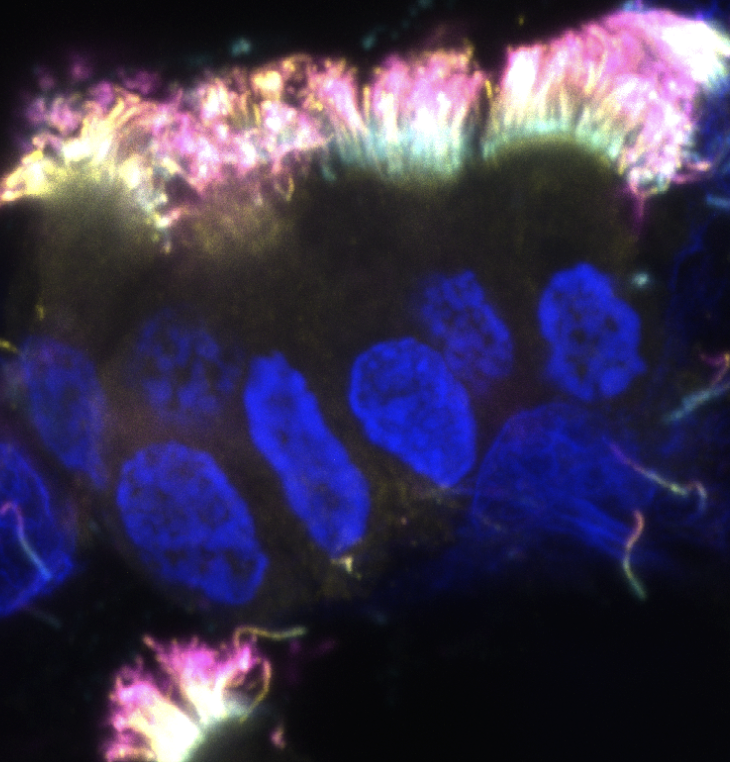
📢 📢 Exciting chance to come join us on a #rotation-based, 4 year, international #PhDStudentship- include our #TubulinCode project! Closing date: 9th January 2023. #imaging #cytoskeleton #cilia #ciliopathies #GenomeSurgery #RareDisease Message me, if you want to hear more! 📢 📢
Apple pie
boosted

In patients with advanced head and neck squamous cell carcinoma.
#Immunotherapy #TumorImmunology #Preprint
"Through a combination of single-cell analyses by mass cytometry (CyTOF), single-cell RNA-sequencing and TCR- sequencing (sc-RNA+TCR-seq), single cell RNA- and protein-sequencing (CITE-Seq), and multiplexed ion beam imaging (MIBI), we examined CD8+ T cells across tissues from patients treated with surgery as standard of care as well as patients treated with perioperative anti-PD-L1 ICB (atezolizumab)"
Apple pie
boosted

New #preprint from our lab:
kegg_pull: a Software Package for the RESTful Access and Pulling from The Kyoto Encyclopedia of Gene and Genomes
https://www.biorxiv.org/content/10.1101/2022.11.03.515120v1.full
Staff scientist Eric Huckvale's first project has been to write a new #python 📦 to query KEGG's REST API (prelude to other work we want to do w/ KEGG data).
Other stuff we found didn't provide the options we wanted, so you all get to benefit too!
Apple pie
boosted

My students often struggle with selection bias and measurement error bias in linear regression models. So I have made a couple of Shiny apps to help visualize these concepts.
Selection bias: https://apps.biostat.au.dk/stefan/selection/
Measurement error: https://apps.biostat.au.dk/stefan/measurementerror/
Feel free to use them in your teaching #rstats #datascience #stats
Code is available at my GitHub.
First post here, so be nice 
Apple pie
boosted

#introduction #sciencemastodon #twittermigration #virology
I'm a Staff Scientist at Seattle Children's. I develop highly accurate long-read #sequencing approaches to understand host-pathogen interactions through the lens of #genomics. Currently working on projects related to viral evolution, transcriptional regulation, and mutational profiling. Originally from Argentina, but now a US West Coaster. Will also post about photography, music, social justice, entrepreneurship, and biotech.
Apple pie
boosted

#bioinformatics #introduction Hello Tooters! I’m George, I head up bioinformatics at the MRC LMS. Reformed immunologist, retro/virologist, repetitive elements, genomes, *seq, #nextflow. Let’s see what Mastodon can do for us all!
Apple pie
boosted


Hey everyone !
Time for my #science #introduction
I am the PI of the @cellcommlab @ the UKE in Hamburg, Germany. We use #microscopy & #imageanalysis to study how cells move & communicate.
I am from #Chile, where I did my #PhD at PUC, then moved to Paris to work at the Institut Curie and IPGG.
After quite some years in #science (20 since I started my BSc !) I keep my fascination to observe how cells do things, like these migrating leukocytes.
Apple pie
boosted

About using #Emacs #orgroam on the go: I found the android app Orgzly on Fdroid, a note taker that produces #orgmode files which can be imported to org-roam. The import is necessary as the mobile cannot know what node id's to use — I have the same trouble importing my LinkedIn posts, I could transform them or orgmode, but then had to script a load-and-save on each file to integrate with my graph.
Apple pie
boosted
Associate professorship
#JobOffer: We are looking for an associate #professor in #genomics. Please apply or share!
The application deadline is 16/01/2023.
https://www.jobbnorge.no/en/available-jobs/job/230702/associate-professor-in-genomics
Apple pie
boosted

Intro post: PhyloPic is a website by @keesey with thousands of organism silhouettes available under Creative Commons licenses. Everything is taxonomically indexed, so you can find related species, or search all silhouettes within a clade. And anyone can submit silhouettes through the Contribution Website! Have a look at the beta version of PhyloPic 2.0: https://beta.phylopic.org
Apple pie
boosted

notes workflow with zettelkasten system
2 years ago, I jumped into the personal knowledge management craze, especially the #zettelkasten system, as implemented in Obsidian or (in my case) org-roam on top of #Emacs .
How did it go?
I've actually kept using it this whole time!
How do I use it? Mainly, when I learn about a new topic, I make a new note for that topic. For instance, I got obsessed with Lagrangians towards the end of 2020 and made a note about that. I later made more notes for "Lagrangian biomechanics" and "Non standard Lagrangian". The new thing here is the concept of "backlinks". Each of the 2 notes above link to "Lagrangian", and so just by going to "Lagrangian" note I can see the notes linking to that. It's really magic! I often rediscover notes I wrote months ago and almost always find what I stashed away.
I find this most useful for literature reviews or just to recollect my thoughts about specific subfields. I also have notes for books, admin stuff (like one with all the zoom links), ideas for stories, class notes, and notes on how to do things.
One revelation about the zettelkasten system I got from browsing Scott Scheper's materials, https://zettelkasten.de/posts/introduction-antinet-zettelkasten/ , is how useful it is to have a full tree hierarchy, rather than a set of interconnected notes. I do this in org-roam by linking to the "parent" at the top of each note. This makes the graph so much more browsable and naturally interconnects subjects. Just go up and down the hierarchy to see links!
A student interested in #biochemistry and #bioinfomatics
Joined Nov 2022
