

Bibliolater 📚📜🖋📐 @bibliolater@social.cleverlibre.org
Not a bot; a rather corpulent male approaching fifty years of age; married; father; a very very slow reader; barely reaching up to the level of mediocrity; an ignoramus who reads occasionally.
Toots are humanities, sciences, books and maps related. Toots or follows or boosts or mentions ≠ endorsements of any particular notion or notions. Expect many typing errors.
Addendum: for those wondering, I do not physically resemble a fountain pen.
Joined Nov 2022
Bibliolater 📚📜🖋📐
boosted

@bibliolater
I think there's also a language filter somewhere
Bibliolater 📚📜🖋📐
boosted
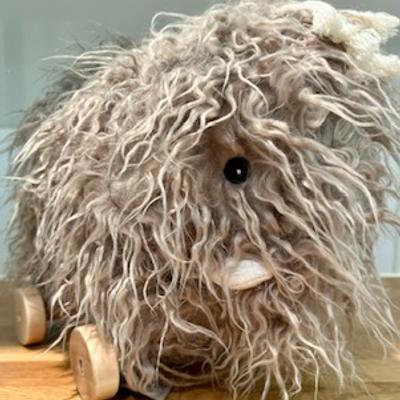
Human mathematics is one of the great artifacts of our civilization… And there is much more out there in the space of all possible mathematics. I think in the future, we will see...an increasing ability to explore all that other universe of mathematics. It will be profoundly important, not only for our mathematics, but for our science, and for our technology.
–Stephen Wolfram https://youtu.be/3a8cogx7qnE?feature=shared&t=560 #mathematics
Bibliolater 📚📜🖋📐
boosted

The genes that made us truly human may also make us ill
https://www.bbc.com/future/article/20231122-the-genes-that-made-us-truly-human-may-also-make-us-ill
The changes in our genes since our ancestors and apes evolved from a common ancestor helped us develop bigger brains and upright walking. But did they also have a downside?
Bibliolater 📚📜🖋📐
boosted

The Reverend John Michell read a paper before the Royal Society #OTD in 1783 that included the first prediction of what, given the understanding of gravity at the time, you might call a Black Hole.
https://royalsocietypublishing.org/doi/pdf/10.1098/rstl.1784.0008
Bibliolater 📚📜🖋📐
boosted

Thank you to everyone for contributing your thoughts.
"Our findings demonstrate a dampening effect on perceptual, emotional, and evaluative processing of presumed deepfake smiles, but not angry expressions, adding new specificity to the debate on the societal impact of AI-generated content."
Eiserbeck, A., Maier, M., Baum, J. et al. Deepfake smiles matter less—the psychological and neural impact of presumed AI-generated faces. Sci Rep 13, 16111 (2023). https://doi.org/10.1038/s41598-023-42802-x #OpenAccess #OA #Science #Research #Article #Digital #Data #AI #ArtificialIntelligence #DeepFake #DeepFakes #Psychology @psychology
Bibliolater 📚📜🖋📐
boosted

"Abraham de Moivre (born May 26, 1667, Vitry, Fr.—died Nov. 27, 1754, London) French mathematician who was a pioneer in the development of analytic trigonometry and in the theory of probability"
Britannica, The Editors of Encyclopaedia. "Abraham de Moivre". Encyclopedia Britannica, 23 Nov. 2023, https://www.britannica.com/biography/Abraham-de-Moivre. Accessed 27 November 2023. #History #Science #STEM #Maths #Math #Mathematics #HistoryOfScience #HistSci @science
Bibliolater 📚📜🖋📐
boosted

@bibliolater I think it's a neat feature and perfectly acceptable. I've done it for example when I've posted about an event, then want to remind people about it closer to the time. Or boosted my introduction post after a wave of new people joined my server. I could have written new posts saying essentially the same thing... but why bother?
Bibliolater 📚📜🖋📐
boosted

@bibliolater I don't boost my toots. But sometimes it could be necessary to highlight a petition for example.
Bibliolater 📚📜🖋📐
boosted
@bibliolater okay, I'm relieved :)
Tired tooting torpedoes telegraphy
I try to use boosting my own toots responsible - maybe on the next day or in the evening.
Bibliolater 📚📜🖋📐
boosted
@bibliolater oh - I just re-read my post...
It wasn't meant to silence your questioning!
Bibliolater 📚📜🖋📐
boosted
@bibliolater There was a poll with a similar question a few days ago:
https://det.social/@HxxxKxxx/111455272016598040
"A kind of manual algorithmisation!"
Bibliolater 📚📜🖋📐
boosted
@bibliolater Yes because different potential readers are online at different times and even on different days
Bibliolater 📚📜🖋📐
boosted


@bibliolater I would and I don't.
Self-boosting isn't necessarily an egotistical thing and can be useful in certain circumstances. Say, if you want to tell people something you find important, you can self-boost periodically to avoid repeating the same toot over and over again, in order to reach the crowds that are online at different times throughout the day.
Of course, you shouldn't overdo it. If you overdo it, it's bad.
Would you ever #boost your own #toot? Do you mind following others who #boost their own #toots?
#Mastodon #Fediverse #Etiquette #AskMastodon #Feditips #AskFedi
"The following review of the archeological and document evidence indicates that three events occurring in the first half of the first millennium BC trigger the emergence of a specialized and integrated classical economy after 500 BC: (i) growth in demand for silver as a medium of exchange in economies in the Near East; (ii) technical breakthroughs in hull construction and sailing rig in merchant shipping of the late Bronze Age; (iii) perfection of ferrous metallurgy into the European hinterland."
Grantham, G. (2021). THE PREHISTORIC ORIGINS OF EUROPEAN ECONOMIC INTEGRATION. Social Philosophy and Policy, 38(2), 261-306. doi: https://doi.org/10.1017/S0265052522000140 #OpenAccess #OA #Journal #Article #Economics #Philosophy #Economy #Europe #Trade #BronzeAge #IronAge #History #Agriculture #Writing #Literacy #Academia #Academic #Academics @economics @econhist @philosophy
"The early alphabet developed in association with Western Asiatic (Canaanite) miners in Sinai (or, at least, was taken up by them) during the Middle Kingdom in the eighteenth century BC. We suggest that early alphabetic writing spread to the Southern Levant during the late Middle Bronze Age (with the Lachish Dagger probably being the earliest attested example), and was in use by at least the mid fifteenth century BC at Tel Lachish."
Höflmayer, F., Misgav, H., Webster, L., & Streit, K. (2021). Early alphabetic writing in the ancient Near East: The ‘missing link’ from Tel Lachish. Antiquity, 95(381), 705-719. doi: https://doi.org/10.15184/aqy.2020.157 #OpenAccess #OA #Journal #Article #BronzeAge #Writing #Archaeology #Antiquity #Epigraphy #History #Histodon #Histodons @archaeodons @histodon @histodons

Not a bot; a rather corpulent male approaching fifty years of age; married; father; a very very slow reader; barely reaching up to the level of mediocrity; an ignoramus who reads occasionally.
Toots are humanities, sciences, books and maps related. Toots or follows or boosts or mentions ≠ endorsements of any particular notion or notions. Expect many typing errors.
Addendum: for those wondering, I do not physically resemble a fountain pen.
Joined Nov 2022
