

ceoln @ceoln@social.cleverlibre.org
A consciousness somehow associated with matter.
Posting about culture, philosophy, politics, AI Art Tools, NaNoWriMo, Software Development occasionally, the relationship of consciousness to matter.
Degrees in Philosophy and Computer Science, once had a US TS/SCI(redacted) clearance, radical-for-the-US politics, ex-Libertarian, zen-buddhist-pantheist-atheist.
Google employee, but I do not speak for Google in any way.
If your profile tells me nothing about you, it's less likely I'll follow you (back).
Header: abstract smoky patterns
pfp: Adorable weird piglet / delirium cultist... thing. In a hoodie.
Joined Nov 2022
ceoln
boosted

Still wandering around here like an eejit, but it looks as if an #introduction is good form so here I am 👋👋. I'm a Scotland-based editor and lexicographer so I'm looking for my tribe among the word nerds and #book lovers, but also with the #yarny people and the people who stare at clouds, & the #gardeners and #bakers. Though the people I probably *should* be following are the ones who know what is going on.
It's a blessed relief to extract oneself from the storm of bird feathers, isn't it?
ceoln
boosted

#Introduction: Great Migration from twitter refugee here. How does one find ones peeps on Mastodon? Looking for the #Democrats, #writers, and #gardeners here.
ceoln
boosted

Good morning #bookish folk. I'm compiling a list of us like-minded people especially in #kidlit such as #librarians #teachers #authors #illustrators #booksellers and #bookshop owners. Sharing lists publicly in Mastodon isn't possible yet, but I'll try to keep this spreadsheet updated. It's current as of yesterday. And here's a picture of my dog taking the morning air. https://bit.ly/SMAkidlitlists
ceoln
boosted
Oh, there's a #bookstodon hashtag!
Some favourite writers, authors I return to for comfort, or read greedily.
#EmilyDickinson
#WendellBerry
#CharlesDickens
#HonoreDeBalzac
#CurtisSittenfeld
#ElizabethStrout
#JohnBanville (especially as #BenjaminBlack)
#ColsonWhitehead
Shall I stop yet? Nah. 500 characters, yeay!
#ElizabethJaneHoward
#WGSebald
#GeorgeMackayBrown
#AmorTowles
Reading is great, isn't it? Off to read a few more pages of Prague Nights before I turn in.
ceoln
boosted

The Ancient Egyptian for "cat" is 𓏇𓇍𓅱𓃠 or "mjw", a consonant-only representation of the onomatopoeic word... miaow.
ceoln
boosted

new #introductions
I'm Jasmine (they/them/theirs) and I'm a PhD Candidate in American Culture/Digital Studies at U of Michigan Ann Arbor. My dissertation is about the digital sector of the prison-industrial complex, neoliberalism + racial capitalism, and the movement to abolish prisons, tracing its emergent antagonisms towards tech, AI, and Silicon Valley broadly.
I post a lot about grad student unions, University of Michigan news (usually the bad stuff), and getting #CopsOffCampus.
ceoln
boosted

After their apartment is demolished, Tom Hanks and Peter Scolari must disguise themselves as subatomic particles in order to obtain cheap housing in the Large Hadron Collider! Don’t miss ABC’s newest sitcom, coming this fall- Boson Buddies!
ceoln
boosted

remarkable lesbian
ceoln
boosted

tl;dr: OpenSim is a 15-year-old, free-and-open-source Metaverse from before The Metaverse was cool. And it's the Mastodon to Second Life's Twitter.
So I've been talking about something called #OpenSimulator. But what is it, this OpenSimulator thing?
Let me start this way: Currently, lots of entrepreneurs, startups and trillion-dollar megacorporations are jumping onto the #Metaverse bandwagon. OpenSimulator has been driving that same bandwagon for over a decade already without almost anyone noticing.
Technically speaking, OpenSimulator (or #OpenSim in short) is a free, #OpenSource server application for virtual 3-D worlds that runs on Windows and Linux.
But it's somewhat like Linux: Technically speaking, Linux is a kernel. But everyone says that Linux is an operating system.
So in practice, "OpenSimulator" refers to a number of online worlds called "grids". Yes, a number. Not just one. No matter how many virtual worlds you've heard of, you may not have heard of OpenSim yet. That's because it isn't made by a company with an advertising budget but pretty much entirely by its user community.
Metaverse before Meta, decentralised before Decentraland
Decentraland advertises itself as, quote, "the first fully decentralized world", end quote. This is far from true, but the #Decentraland makers probably don't know that themselves because they may never have heard of OpenSim.
In fact, OpenSim has been around for much longer than Decentraland, namely since 2007. And it has always been as fully decentralised as a virtual world could possibly be. OpenSim has several thousand (!) independent grids, every single one of them being run by someone else, some by companies, a few by foundations, most by private persons. To give you an impression, Hypergrid Business has a grid list that's nowhere near exhaustive, nor is it always up-to-date, what with grids shutting down and new grids being launched all the time.
The OpenSim core developers are someone else than the many grid owners again. The various client applications, a.k.a. viewers, are developed by someone else yet again. There isn't any one big entity, much less a profit-oriented company, that's in control of the entire OpenSimulator ecosystem.
But those grids aren't several thousand walled-garden worlds separated and isolated from one another. Almost all of them are interconnected in the so-called #Hypergrid. This means that you can have an avatar on one grid and visit an entirely different grid with that avatar. You can (usually) take your entire inventory with you, and you can (usually) even pick up things on other grids and take them back home with you.
OpenSimulator is as decentralised and federated as #Mastodon, as #Diaspora, as #XMPP, as #Matrix, as #email. And it has been for almost one and a half decades now. Decades; that's an eternity in the online world. The Hypergrid is the closest to a "metaverse" of separate but inter-connected virtual worlds that we've come to date.
And there are actually several grids and institutions in OpenSim that have been carrying the word "Metaverse" in their names since long before Facebook became Meta. There's the Infinite Metaverse Alliance with its Metaverse Depot grid. Alternate Metaverse is one of the biggest grids on the Hypergrid. Just to name a few.
So at no point has OpenSim jumped upon the Metaverse bandwagon.
Second Life, but free and open-source and distributed
If you came here from Mastodon or elsewhere on the Fediverse, let me describe OpenSim to you this way: OpenSim is to #SecondLife what #Mastodon is to #Twitter. The main difference is that OpenSim has still got 99% of Second Life's look-and-feel plus most of its functionality. That's because it literally is a Second Life clone.
Remember Second Life? Guess what: It's still around. It has been since 2003. Yes, that long. 2006/2007 was only the huge hype. Even if it has been around for that long, it doesn't look anything like back then anymore. People who come back to Second Life after they've been there during the hype for the last time are blown away by just seeing mesh avatars.
What made OpenSim possible was when Second Life made its official viewer open-source. Anyone could see Second Life's API. For one, this was used to create third-party viewers. But beyond that, Second Life's inner workings could be extrapolated from the API. This knowledge was used to develop a wholly new system for virtual worlds, essentially Second Life with no big corporation behind it, no meddling Lindens all over the place, none of Second Life's rampant commercialism, but otherwise the same. This system was named OpenSimulator and first released in 2007.
Shortly afterwards, an experimental grid named #OSgrid was created as a testbed for the development of OpenSim. About 15 years later, OSgrid is by far the oldest and biggest grid on the Hypergrid, the latter both in land area and number of avatars, while still being a testbed.
It was fairly easy for OpenSim to take off because it has been using largely the same viewers as Second Life ever since. This, however, also means that the development of OpenSim is closely linked to that of Second Life.
Bigger than you may think
Now you may believe that OpenSim is tiny because "nobody knows it". It isn't. Let's have a look at the April 2022 statistics on Hypergrid Business to estimate just how big OpenSim is. Estimate because even Hypergrid Business only knows the stats from fewer than 300 grids; thousands of mostly small grids don't report any stats. For comparison, here are March 2022 stats for Second Life.
For one, those under 300 grids reported a good 43,000 unique active users. That's nothing in comparison to Facebook or pre-Elon Musk Twitter. But Second Life hasn't gone over 55,000 active users this year either.
Okay, so OpenSim has fewer users than Second Life. But it has got a greater landmass.
A standard region in both Second Life and OpenSim is a square that measures 256x256m (that's 65,536m² or 78,380 square yards for you Americans or nine football fields for you Germans). Second Life reported some 27,400 of these standard regions in use. Meanwhile, those under 300 OpenSim grids reported about 100,000 regions. This is not a typo. One hundred thousand. That's more than two regions per user. OSgrid alone reported 36,500 regions, making this grid alone bigger than Second Life by one third. Now you know why it's much less likely to meet other avatars on the Hypergrid than it is in Second Life.
How can OpenSim have such a huge landmass? Well, that's because land is way cheaper on the Hypergrid than in Second Life. There are two reasons for this.
One is that OpenSim is largely uncommercial. Entire regions usually do cost money, but much much less than in Second Life. You only have to pay to support the operation of the grid which often is in the hands of private people. You usually do not have to pay employees, and you never have to pay investors or shareholders. There are commercial grids, but they're the exception, and yet, they don't tax sales like Second Life and #HorizonWorlds do. Most grids don't have any means of in-world payment whatsoever.
The other one is that OpenSim has got much much more space in general. Not long ago, Second Life actually almost ran out of space. Its grid can't grow much bigger. Land is scarce, therefore it's expensive. OpenSim, in contrast, will never run out of space. A grid can consist of several hundred million regions. The maximum landmass is limited by available CPU power rather than area. Even that can be increased by running one grid on several servers; OpenSim scales very well.
Your own Second Life
This is also the reason why there are so many grids: Anyone can run their own grid and attach it to the Hypergrid if they want to. OpenSim can be hosted on anything from rented professional Web space to a Windows laptop to a Raspberry Pi (although you probably shouldn't host parties with well-known DJs on a self-hosted, Raspi-based grid).
So not only are there probably more users with at least one region of their own than without one, but at least every tenth user may be a grid admin, considering that bigger public grids often have more than one admin.
OpenSim has taken decentralisation to its full extent, much like e-mail or XMPP or Matrix or Mastodon. If you don't like the grid you're on, you can move to someone else's grid, or you can start your own grid and be "your own Linden", so-to-speak.
There's a vision of commercial, corporate-owned virtual worlds joining into a Metaverse. This will never happen because these worlds will never be sufficiently compatible to one another. OpenSim's Hypergrid, in contrast, is a network of connected virtual worlds that's reality already now.
All without having to throw yourself at any one profit-greedy company. No crypto-currencies, no NFTs, no blockchain. OpenSimulator is the Metaverse for the people, run by the same people.
ceoln
boosted
I've just written about how Second Life is largely ignored in the Metaverse context, but it's much much worse with worlds based on #OpenSimulator. Next to nobody even knows that it exists beyond its users, its former users and a few people in #SecondLife.
Why does it matter then? First of all, because #OpenSim is the technical foundation for something that comes as close to the literal #Metaverse as we've gotten thus far: the #Hypergrid.
Unlike just about all the other #VirtualWorlds, OpenSim isn't one monolithic entity completely owned and operated by one company or foundation or so. It isn't a virtual world per se. The name rather stands for thousands of big and small virtual worlds, so-called "grids". The world of Second Life is being referred to as a "grid", too. All these worlds are organised in squares of 256x256m, that's why.
In the case of OpenSim, these grids aren't just places within the same world. They are actually separate worlds. Each one of them is operated by someone else, and each one of them is even hosted individually, some on rented webspace, some on machines the grid owners run at home. Some are owned by companies, some by foundations, most by private persons. And they didn't "rent these worlds from OpenSim", they created them from scratch. There are no higher powers within the OpenSim ecosystem than the grid owners. It's the same as with e-mail or #XMPP or #Matrix or #Mastodon or any other project on the #Fediverse.
And here is where the #Hypergrid comes into play: At least 95% of these OpenSim grids are connected with each other, much like e-mail servers or XMPP servers or Mastodon instances or #Diaspora pods or #Friendica nodes or #Hubzilla hubs. Applied to virtual worlds, however, this borders on a sensation: You can have an avatar on one grid, and you can travel to all other grids on the Hypergrid. You usually even take your entire inventory with you, you can even pick up things on other grids and take them home with you, and you can become friends with avatars from other grids.
Essentially, what some big corporations and start-ups try to create from scratch right now has been around and in use since 2008 already. Not experimental use, but everyday production use. For something with so few developers behind it who, due to OpenSim's decentral nature, have to take care of various products, namely OpenSim itself and the viewers, this is remarkable.
In other points, OpenSim is very similar to Second Life. Community-building and creative possibilities are largely the same, only that creativity is stifled by the massive influx of high-quality payware that was stolen from Second Life and is now offered as freebies all over the Hypergrid. I'll come back to that. Okay, and because OpenSim is dirt-cheap in general, and because you can get far without paying a penny, most OpenSim users are unwilling to spend any money on it.
They also laugh about outrageouly expensive land on other worlds. Many of them sell land for hundreds of thousands or even millions of US dollars. Second Life offers land rentals; for example, a 256x256m region on the Mainland costs over $300 a month. Many OpenSim grids offer similar land rentals, but you can get a region of the same size for usually under $20, mostly under $15, often under $10 a month. Or you can host your land yourself and attach it to a grid. Or you can even run your own grid and attach it to the Hypergrid. Not only do most grids have such vast coordinate ranges that they're unlikely to run out of land anytime soon, but you can literally create your own new land.
Of course, all this is a nightmare for those who want to cash in on land sales or land rentals. And the abundance of land leads to the Hypergrid feeling even more like a wasteland than Second Life. By far most people own at least one region, many own more than one, and my estimation is that one out of a dozen OpenSim users is a grid admin.
But why does nobody know OpenSim? Well, I'd say that a key reason is that it's too decentralised. It doesn't have an umbrella organisation that a) represents OpenSim to the outside world and b) at least tries to steer what's happening in the ecosystem. OpenSim itself, i.e. the server application, is "represented" by, I think, one single remaining permanent developer, and even Ubit Umarov only works on OpenSim in his spare time. He doesn't even have a grid of his own, only a private region on OSgrid.
This means that there is no "official" grid. OSgrid comes closest. It was the first public grid, it's the oldest grid, it's the biggest grid (it has more land than Second Life), and it's still the grid with the most users. But it is not official. And its only connection to the OpenSim dev team (if there happens to be one) is that it contributes a lot of code. After all, OSgrid is still the same experimental, bleeding-edge grid that it was in 2007 when it was launched to test new features in public.
Like most other big grids, OSgrid presents itself as a stand-alone virtual world. It doesn't even mention that other worlds like it exist. It does mention the Hypergrid, but instead of explaining what the Hypergrid is, it only gives Hypergrid addresses to its most important official places. It also has its own forums that seem to try their best to blank out the existence of worlds outside OSgrid. It actually isn't too uncommon for grids to have their own forums. There is, however, not a single general and grid-independent OpenSim forum in English.
Mutual acknowledgement or even collaboration only exists between smaller grids that are less or not at all interested in competition between grids. This includes grids that rely on visitors from the Hypergrid because they've decided not to have a big community of their own, sometimes limiting the number of residents to the grid owners.
OpenSim also doesn't have an official viewer. There are several viewer projects, usually third-party Second Life viewers that also work with OpenSim, but each of them is its own little bubble with hardly any connection to elsewhere. In fact, the most popular viewer, the Phoenix Firestorm Viewer, can barely keep its OpenSim-specific development running and has to focus on Second Life.
The official OpenSimulator website, and it is actually official, is a wiki with operating a grid as the main focus and grid software development as the secondary focus. Its end user documentation is scarce, even less maintained than the rest of the wiki and thus not as up-to-date as it should be. Especially the list of public grids, basically the only connection between this website and the rest of the ecosystem, tends to be outdated. The Second Life Knowledgebase is more useful in anything that isn't OpenSim-specific, and for OpenSim-specific things, you often have to ask for help in-world.
OpenSim's central hub is OpenSimWorld which is "third-party" again and neither affiliated with the OpenSim devs nor with any one grid. It hosts the closest thing to a central community, but unfortunately with little to no moderation because the one-man staff sees himself as nothing more than the tech admin of a sim catalogue. OpenSimWorld also rendered in-world teleporters to other grids (and even within a grid) largely "obsolete", so these connections between grids and mutual acknowledgements are getting rarer and rarer.
All this contributes to OpenSim being basically completely unknown. Nobody feels responsible enough for OpenSim to advertise the ecosystem as a whole to the outside world. Everyone only cares for their project. The dev team is only that and only responsible for the server application. They would never advertise anything beyond that. Grids only ever advertise themselves, if at all, and even then mostly within the OpenSim ecosystem. If a grid significantly advertises itself beyond that, not only does it do so as a stand-alone world like Second Life or #HorizonWorlds, but grids that do so are usually grids that aren't really trustworthy. There seems to be more competition than cooperation between grids, not to mention bickering and long-standing petty feuds.
I think it'd be worth representing the OpenSim ecosystem at #FLOSS or hacker events so that the #FreeSoftware and #OpenSource scene becomes aware of it. But the sad fact is that there's nobody who could do that. The ecosystem as a whole doesn't have any representatives, nor does it have anyone who could appoint official representatives, and if you sent someone from a big grid, they'd probably advertise their grid first and foremost and give the impression that their grid is OpenSim.
Lastly, word of mouth doesn't work either because hardly anyone ever talks about OpenSim outside OpenSim.
Within all the ruckus about the #Metaverse, this is more than a pity. Companies and others try to create something they believe they'll be pioneers at, not knowing it already exists. It's quite similar to whenever someone decides to develop a free, decentral, distributed social network, not knowing that these have been around since #GNUsocial and Friendica, formerly known as #Mistpark, because they, too, get next to zero publicity.
It's also a pity because the developers and designers of the coming Metaverse could learn a lot from OpenSim. They could look at how worlds are connected with each other over the Hypergrid. How friendships and groups work on the Hypergrid, if they do, and if they don't, why. They could learn about enforcing rules, guidelines and content ratings in an ecosystem that isn't ruled over by one entity at the top or rather why certain Second Life approaches were bound to fail in OpenSim.
And they could gather some experiences in content protection, especially when, how and why it fails in Second Life and even much more so in OpenSim. Even better if they come to their senses and see that #NFTs on a #blockchain aren't a sensible solution because they've got their own ways of abuse which are being exploited right now.
There's the so-called Metaverse Standards Forum which tries to develop what OpenSim has been running for 14 years now. OpenSim, however, isn't represented in the #MetaverseStandardsForum at all, not by anyone. Because OpenSim doesn't have anyone to represent the entire ecosystem. Because nobody who deals with OpenSim feels even remotely responsible for the whole thing. Not the core devs, not a single one of the grids, not OpenSimWorld, not the Infinite Metaverse Alliance, nobody.
Everyone just cares for their niche. You could have half a dozen grids join the MSF, but then you'd end up with six grids representing themselves as individual grids rather than as parts of something bigger and overarching, and you still wouldn't have the OpenSim core dev team on-board. The core dev team, in turn, can barely keep up with developing OpenSim, so how should they have time to represent OpenSim in the MSF?
And so, the MSF will continue creating something which they wrongly believe has never been done before because there's nobody there to tell them about OpenSim. They'll have to design from scratch, from zero what they don't know already exists with open source codes to look at and with 14 years of experience to learn from.
By the way: #LindenLab isn't a member of the MSF either.
If someone actually started an umbrella organisation for OpenSim, and be it only to represent it, that might help, but it's also likely that it wouldn't because it would only join a tiny fraction of all possible participants under its roof. Important potential members wouldn't have enough time and/or energy, and I'm sure this will include the core dev team. Others simply won't be interested in contributing to anything beyond their niche. Others again will boycott it if they see the "wrong" grids or people having joined it. They don't want to collaborate with "this" grid or "that" person, and be it due to some six-year-old personal beef. Yet others will refuse to join because they dislike (one of) the founder(s), or because (one of) the founder(s) is a resident on the wrong grid. Of what few members the organisation may have, some will try their best to misuse their membership only for their own profit while others will quit again due to too much drama.
And it'd be everyone for themselves again like it is now.
ceoln
boosted

ceoln
boosted

The four stages of Mastodon user:
* what’s a Mastodon
* I feel lost and alone how does this work
* oh wow this is actually pretty cool
* I have compiled a linux kernel
ceoln
boosted

Good morning/afternoon/evening, wherever you are. First an introduction: wizdUUm is a collective of folks who combine the mindfulness of Plum Village Buddhism with the activism of Unitarian Universalism with earth-based spiritual practices towards wholeness within ourselves and the world. We seek alternatives to the dominant paradigm that turns everything into a commodity, and we are happy to be here on Mastodon!
#UnitarianUniversalism #UU #PlumVillage #Buddhism #mindfulness #earth-centered
ceoln
boosted
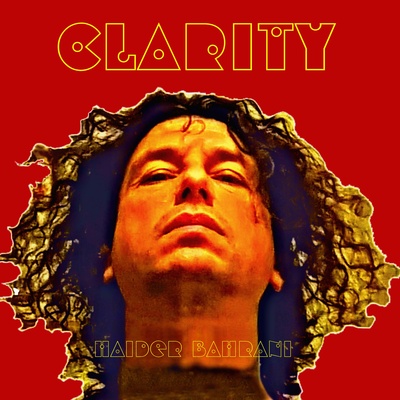
Music
Listen to With You (3 min edit) by Haider Bahrani on #SoundCloud #music
https://soundcloud.com/haider-bahrani/wiyh-you-1test-for-sound/s-nZUfFKIV3mU?p=a&c=1&si=973a1ef1f7dd4acda40c9b2b2ec0baf1&utm_source=other&utm_medium=text&utm_campaign=social_sharing
ceoln
boosted

Hi all, I’m GK (she/they)! I heard we do #introductions here!
I'm a writer, poet, designer, and therapist made in #Croatia, born in #Cleveland. Yes, I do want to see a photo of your pet. 👀
I create immersive experiences using video, installation, narrative, game design, design thinking, and theater. I facilitate #community action rooted in #storytelling & empower clients through #narrativetherapy.
Thanks for having me! I’d love to connect.
#scifi #videogames #writing #poetry #narrativedesign
ceoln
boosted
do other #neurodivergent folks #adhd #autistic struggle with reading typical long-form fiction? if it’s too descriptive or wordy, I’m out. shorter paragraphs and dialogue are much easier for me to get through. #ReadingToot
ceoln
boosted
Midwest in space is Alpha Centauri
The people are painfully nice
Every planet, golden fields
Dotted with industrial towers
Immigrants in multi-generational pods
All love bratwurst and beer
When I bump into you in the #portal
You and I both say, “Ope.”
#SciFiPrompt #scifi #poetry #microfiction #PoetsOfMastodon #SciFiPoem @gus
ceoln
boosted

ceoln
boosted

Hey journalists! Mastodon is not a “platform”. Platforms were invented in the wake of the last financial crisis to consolidate power among specific companies by mining people of of their personal data for profit online. Mastodon does not consolidate, only connects. It does not amplify algorithmically, or mine people. Any “learning curve” should include reflection on why you ever accepted “services” aimed at data extraction as “natural” or even “social” to begin with. #twittermigration
ceoln
boosted

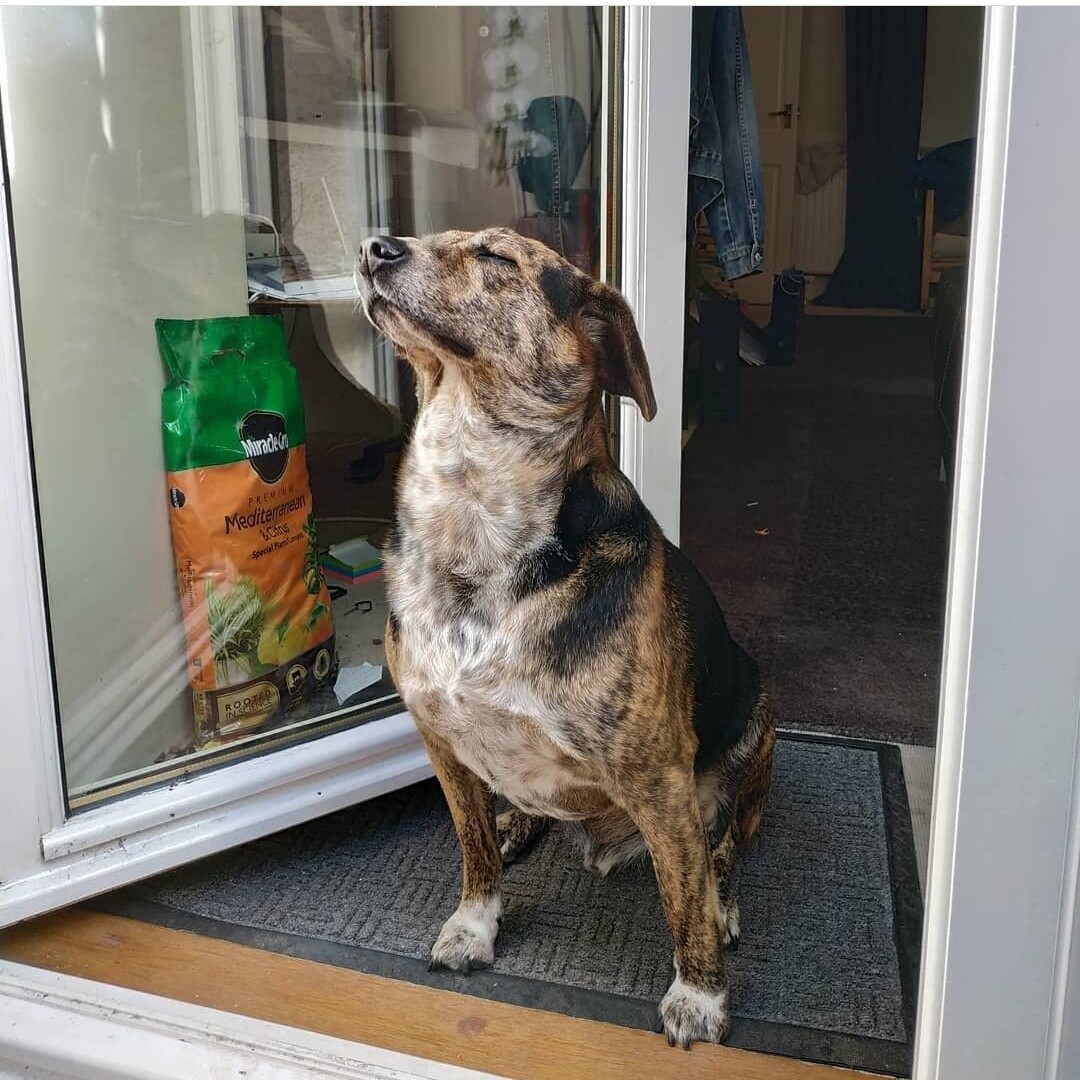

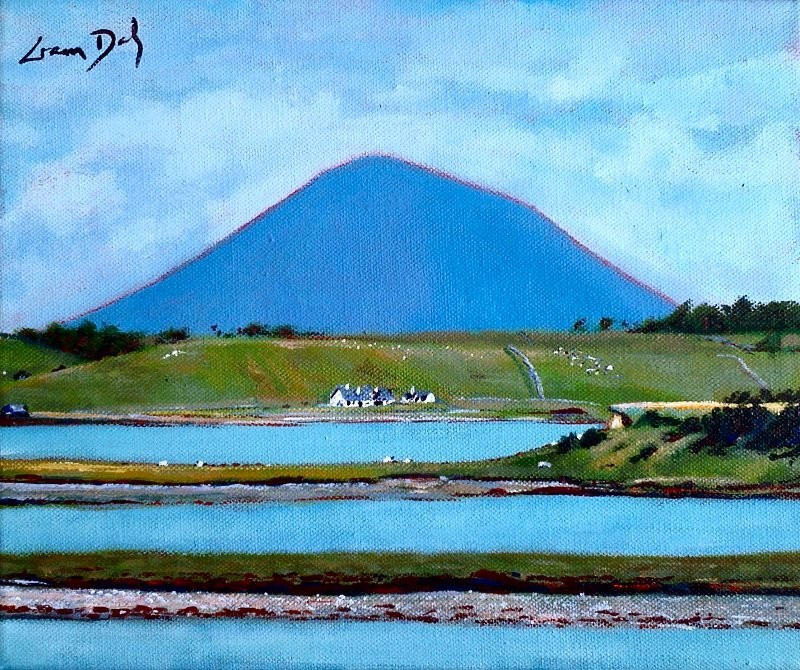
One thing I truly love about #Mastodon is that people are still replying to things I posted several days ago.
This is a fundamental difference compared to that other site.
But WHY is this important?
Because it reduces that creeping need to post ALL THE TIME in order to stay visible. (Another toxic side-effect of most social media platforms).
By not having an algorithm disappearing your content, it encourages your content to be focused more on quality, not quantity.
A consciousness somehow associated with matter.
Posting about culture, philosophy, politics, AI Art Tools, NaNoWriMo, Software Development occasionally, the relationship of consciousness to matter.
Degrees in Philosophy and Computer Science, once had a US TS/SCI(redacted) clearance, radical-for-the-US politics, ex-Libertarian, zen-buddhist-pantheist-atheist.
Google employee, but I do not speak for Google in any way.
If your profile tells me nothing about you, it's less likely I'll follow you (back).
Header: abstract smoky patterns
pfp: Adorable weird piglet / delirium cultist... thing. In a hoodie.
Joined Nov 2022
