

ceoln @ceoln@social.cleverlibre.org
A consciousness somehow associated with matter.
Posting about culture, philosophy, politics, AI Art Tools, NaNoWriMo, Software Development occasionally, the relationship of consciousness to matter.
Degrees in Philosophy and Computer Science, once had a US TS/SCI(redacted) clearance, radical-for-the-US politics, ex-Libertarian, zen-buddhist-pantheist-atheist.
Google employee, but I do not speak for Google in any way.
If your profile tells me nothing about you, it's less likely I'll follow you (back).
Header: abstract smoky patterns
pfp: Adorable weird piglet / delirium cultist... thing. In a hoodie.
Joined Nov 2022
ceoln
boosted

Many instances have a way to invite people to your instance, under "settings > invite people". This is imo the best way to invite your friends to mastodon because it takes a the friction out of the sign-up process entirely. The invite may also let them bypass applying if your server isn't open to free registration https://cyberfurz.social/@SabreMc/110681461640813629
ceoln
boosted

A quick tip if you have friends who haven't joined Mastodon yet: Don't say any variation of "join Mastodon" at this point
Just tell them to join either your instance or some instance you know that you think they'll gel with. Eliminate the decision paralysis and just get them started :3
ceoln
boosted

Okay, just One More Paragraph of #Barthes ; the second and final part of the section called "Brio".
It begins:
"The _brio_ of the text (without which, after all, there is no text) is its _will to bliss_..."
Now "bliss" here is «jouissance», which is the more orgasmic kind of pleasure, in contrast to the milder and more civilized kind which is «plaisir».
Along with the very Nietzschean "will to" («volonté de», as in «volonté de puissance»), we get a delightful alternative to the Will to Power: the Will to Climax.
"..._will to bliss_: just where it exceeds demand, transcends prattle [le babil], and whereby it attempts to overflow, to break through the constraint of adjectives -- which are those doors of language through which the ideological and the imaginary come flowing in."
The notion of overflowing, of surplus, is very Zarathustra ("I teach you the friend and his overflowing heart"). I didn't really get the thing about adjectives, though; why those rather than verbs or nouns?
I asked ChatGPT 4.0, as one sometimes does these days, and it said inter alia that adjectives "give color, texture, mood, judgment, and shape to the otherwise neutral facts that nouns and verbs present. In other words, adjectives provide a sense of subjective interpretation and perspective." I thought that was pretty plausible.
It remains odd to me, though, that the doors through which subjectivity flow in are seen as _constraints_ which the overflowing abundance of the Will to Bliss wants to break through.
Again perhaps this is more poetry than truth-claim, and I shouldn't worry about it too much. But on the other hand perhaps Barthes really wants me to think about this overflowing bliss as something opposed to or at least constrained by "the ideological and imaginary" (or the doors that allow those to flow in). I'm not sure what that would look like.
In the original, it is not literally to "break through the constraint of adjectives"; it is rather (at least in this edition) «de forcer la main mise des adjectifs», which is (I think?) a bit overloaded between "to force the hand" and "to overcome the stranglehold" (whence presumably Miller's calmer "constraints").
Not sure yet if that helps any. :)
#Barthes #Nietzsche #bliss #reading #amreading #writing #text
Gathered the current crop of #Barthes posts together for the weblog:
The Pleasure of the Text https://ceoln.wordpress.com/2023/07/08/the-pleasure-of-the-text/
ceoln
boosted

I'm a full-time RPG writer, developer, and publisher, full-time parent, part-time homemaker. I like to cook. I'm queer AF and kind of punk rock. I'm politically independent, but in the sense of believing in policies that work, not mindless centrism. Currently that means supporting labor, social democracy, and free speech.
ceoln
boosted
ceoln
boosted

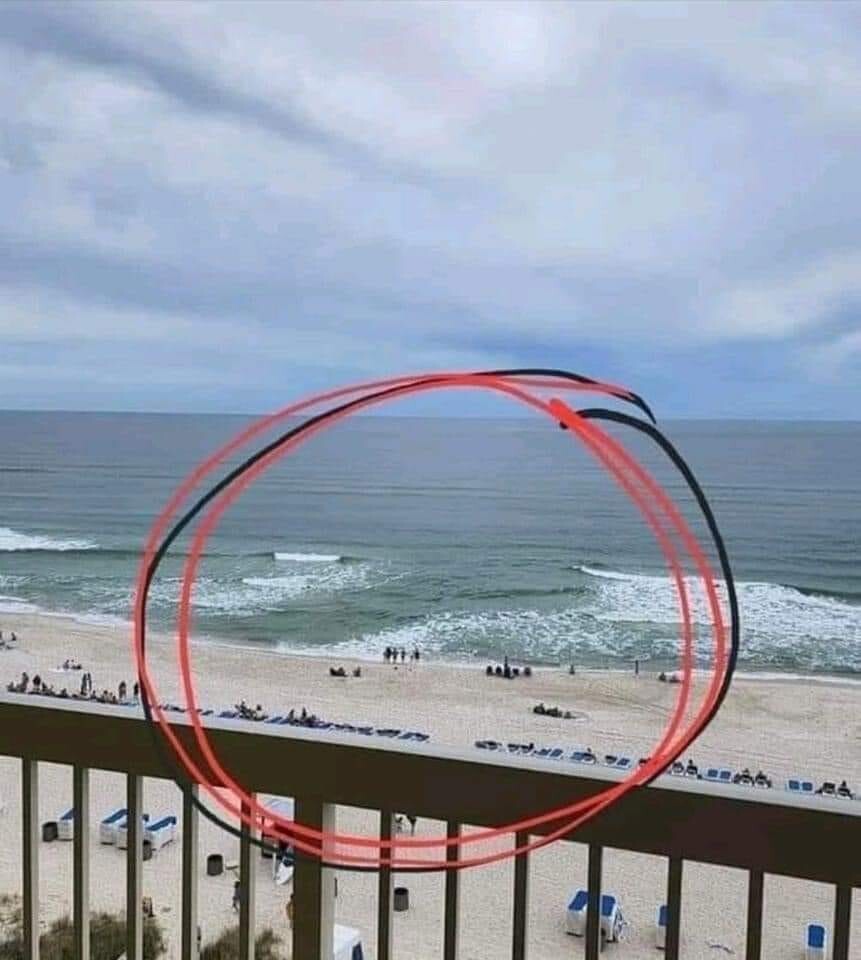
HOW TO SPOT A RIP CURRENT:
IT'S WHERE THE WATER LOOKS EASIEST AND SAFEST, with no waves breaking or rolling in.
NEVER ENTER THE SEA HERE.
If you get caught in a rip, DON'T FIGHT IT. You can't swim back to shore against it; you will become exhausted and drown.
Instead, SWIM ACROSS IT, parallel to shore. You'll soon be out of the current and can then easily swim back.
Boost, please, and make sure your friends and family know this when they hit the beach.
P.S. Perhaps amusingly, the statement:
'. . . basically, it is always the same question: What is it _for me_?. . .'
appears to be Miller's English translation of something written by Gilles Deleuze in "Nietzsche et la Phlosophie" _about_ rather than _by_ Nietzsche.
Unless I'm holding it wrong.
And that is that thread, for now.
It is worth noting that that is all from a _single paragraph_ of this here essay, and it consists mostly of gesturing at deeper issues that one might run off and follow for an hour or a day or a lifetime.
Which is why I seldom finish this sort of thing, even when they are really short... :)
Good link to Nietzsche; my American Analytic School training points out that "subjective" and "existential" are generally considered rather applicable to much of Nietzsche.
Of course Barthes knows this, so we are left to think that he is either making, or taking for granted, some deeper point about the important differences between the three terms, which is basically left as an exercise for the reader.
Whee!
He brings Nietzsche in here, which feels extremely appropriate as for instance Zarathustra raises the same question as to say truth vs poetry as this does.
"This 'for me' is neither subjective nor existential , but Nietzschean ('. . . basically, it is always the same question: What is it _for me_?. . .')."
"The text (il en est de même pour la voix qui chante) can wring from me only this judgment: c'est ça! Et plus encore : c'est
cela pour moi!"
"That's it! That's it, for me!"
Given the overall context, I think #Barthes here is suggesting that the genuine reaction to «un texte selon le plaisir» is a singular and essentially orgasmic (what?) cry (scream? howl?).
(Although, to be pedantic, even some moans are louder and more ecstatic than others, eh?)
5/? #writing #test #amreading
This approach perhaps works if we note that «je ne puis me laisser à dire» might be more directly translated as, not "I cannot go on to say" but rather "I cannot allow myself to say".
It might be strictly-speaking _true_ that one could, when judging a text according to pleasure, say "This one is good, that bad"; but Barthes cannot allow himself to do that, for the reasons stated in the rest of the paragraph (which are themselves to be taken as statements of things that he does and doesn't allow himself to think or do, not necessarily statements of literal truth).
The rest of the paragraph does not so much argue for the truth of the statement, so much as it puts forward more statements that are obviously not true if interpreted as written.
So I wonder if this is poetry, which one is intended to experience rather than to understand and believe (or not).
Or if it is a sort of personal truth; not so much that these statements are true in general, or even strictly true of Barthes, but that they state the way that Barthes chooses to behave (and perhaps recommends that we behave).
3/?
The first paragraph of "Brio" (the one before the single occurrence of the word "Brio") leads me to think about just what this text is.
It does not consist of statements that are easily evaluated as true, or even as putting forth plausible claims.
"If I agree to judge a text according to pleasure, I cannot go on to say: this one is good, that bad."
«Si j'accepte de juger un texte selon le plaisir, je ne puis me laisser aller à dire : celui-ci est bon, celui-là est mauvais.»
This is obviously wrong; of course he/you/we/one can.
2/? (should I be "unlisted"ing these thread-continuations?)
Back to #Barthes "The Pleasure of the Text" / «Le Plaisir du texte», starting the section called "Brio".
(Notably, the section breaks are denoted by inconspicuous inter-paragraph symbols, and the section titles occur only in the list of names and page numbers that come before (English) or after (French) the text itself).
1/? for this particular thread. #writing #text #amreading
ceoln
boosted
Excellent new piece from @ethanz:
https://ethanzuckerman.com/2023/07/07/competition-for-twitter-is-good-threads-thus-far-is-not/
"This would be a wonderful moment to see a flowering of alternatives to #Twitter. But it would be great if those alternatives used a different business model than Twitter’s model, and if they weren’t controlled by a capricious billionaire."
ceoln
boosted

One of the best posts I've seen on here was: "Mastodon is for what you love, not what you hate." I for one am devoted to keeping it that way.
ceoln
boosted


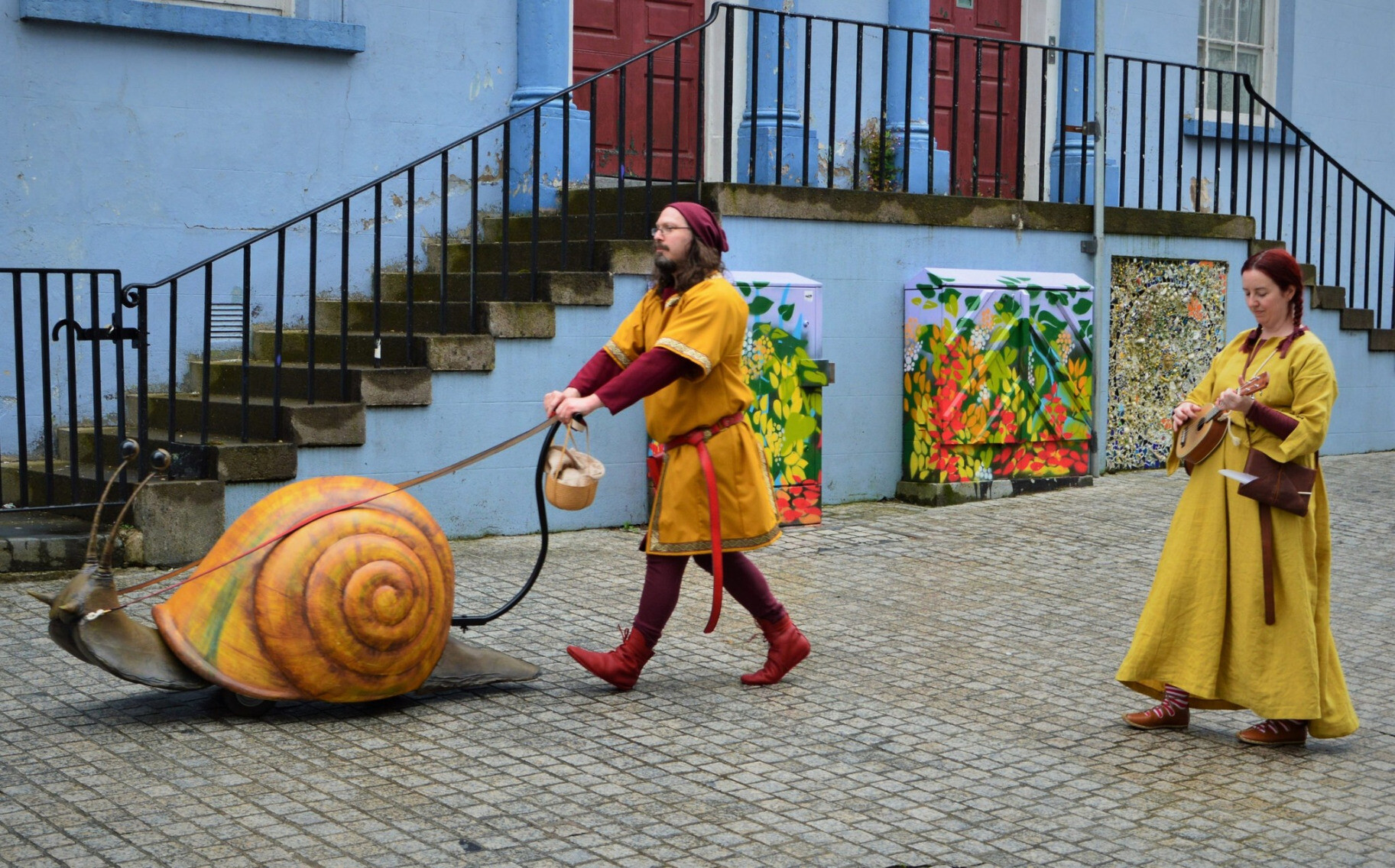
Mastodon went from 1.2M active users last week to 1.8M active users this week. That's not 70M users overnight, but it's something! 🙂
A consciousness somehow associated with matter.
Posting about culture, philosophy, politics, AI Art Tools, NaNoWriMo, Software Development occasionally, the relationship of consciousness to matter.
Degrees in Philosophy and Computer Science, once had a US TS/SCI(redacted) clearance, radical-for-the-US politics, ex-Libertarian, zen-buddhist-pantheist-atheist.
Google employee, but I do not speak for Google in any way.
If your profile tells me nothing about you, it's less likely I'll follow you (back).
Header: abstract smoky patterns
pfp: Adorable weird piglet / delirium cultist... thing. In a hoodie.
Joined Nov 2022
