

Thiago Carvalho @cyrilpedia@social.cleverlibre.org
I've worked on all of science, from B cells to T cells.
https://fellowsherpa.com
Joined Nov 2022
Thiago Carvalho
boosted

Excited to share this new work from my postdoc with @lindymcbr, just out in The American Naturalist.
We found a BIG shift in the behavior of Aedes aegypti mosquito larvae that may help them use novel breeding sites in human settlements, i.e., anthropogenic evolution. 1/20
Thiago Carvalho
boosted

Check out this job at AbCellera: Head of Functional Biology (Immunology/Oncology) https://www.linkedin.com/jobs/view/3368564692
Thiago Carvalho
boosted

I’m super excited that part of my PhD thesis got published today.
Depolarization block in olfactory sensory neurons expands the dimensionality of odor encoding. https://doi.org/10.1126/sciadv.ade7209
We show that olfactory sensory neurons undergo silencing due to depolarization block at ethologically relevant odor concentrations, which has direct implications on how odors are represented at the sensory periphery.
#neuroscience #olfaction #olfactory transduction #electrophysiology #behavior
1/
Thiago Carvalho
boosted

A quick #introduction. I shifted here from #Twitter a few weeks back and will continue to jump back and forth until the foot no longer lands in the other spot. Anyway, I am a neuroscientist who uses #neuroimaging, #ComputationalModeling, to build brain theories of resilience and adaptation. I'm also an amateur #musician with a small but mighty band in #PortMoody. I'm also an avid #runner, so that I can sample the wide array of #craftbeer out here. #toot on y'all.
"The amyloid cascade hypothesis was simple and “seductively compelling,” said Scott Small, the director of the Alzheimer’s Disease Research Center at Columbia University. And the idea of aiming drugs at the amyloid plaques to stop or prevent the progression of the disease took the field by storm.
Decades of work and billions of dollars went into funding clinical trials of dozens of drug compounds that targeted amyloid plaques. Yet almost none of the trials showed meaningful benefits to patients with the disease."
#Alzheimer #Amyloid #Amyloidhypothesis
https://www.quantamagazine.org/what-causes-alzheimers-scientists-are-rethinking-the-answer-20221208/
Thiago Carvalho
boosted

@cyrilpedia There's a good Atlas Obscura article about this too! In the japanese Navy, each ship has a specific version of the curry https://www.atlasobscura.com/articles/japanese-curry-history
Thiago Carvalho
boosted

The field of immunology has lost a giant in Emil Unanue. To the surprise of no one who knew him, he fought off glioblastoma for far longer than the prognosis would suggest. He won the Lasker prize in 1995 for his work on antigen processing that forms the basis of our textbooks. He didn't offer praise often or lightly, but when he did, boy it felt good. This simple email to me after a seminar lifted my spirits for weeks! We will miss him.
Thiago Carvalho
boosted

Alexandra Petri is a national treasure.
“There are so many people who are interesting. And instead we have to follow Elon Musk and Donald Trump.., because their whims can cost people jobs and ruin lives.
There is something desperately boring about despots and plutocrats. And one of the frustrating consequences of an unequal society is that the rest of us have to care what is going on with them.”
https://www.washingtonpost.com/opinions/2022/12/17/elon-musk-twitter-overkill/
@christlet Epilogue:
'If you’re interested in authenticity, or questions of appropriation and imperialism, then the story of Japanese curry is going to do your nut in. It began about 150 years ago, when a coup d’état ended the rule of the Tokugawa military shogunate (the Edo period) and installed Emperor Mutsuhito, known as Meiji.
The young, modernising emperor wished to strengthen the Japanese military by westernising equipment, tactics and training. He also perceived that Japanese troops — and especially sailors — seemed poorly nourished compared with the troops of their new ally, Great Britain. The Royal Navy, having picked up a liking for it in India, ate a lot of “curry”.
The Japanese Imperial Navy took to curry enthusiastically, and young civilians embraced it as yoshuku, fashionable foreign food. There was nothing authentically “Indian” about it.'
https://www.ft.com/content/08f888c1-ba21-4f77-91d7-c1a24f2bdb8a
Thiago Carvalho
boosted
An interesting historical perspective on Anglo-Indian cuisine and the concept of "curry" https://www.atlasobscura.com/articles/curry-in-colonial-india
Thiago Carvalho
boosted

New instance, new #introduction! I'm a PhD student at UMich studying how we make sense of sound. I use patch-clamp #electrophysiology in #brain slices and awake mouse brains, where I investigate everything from receptors on individual #neurons to population level encoding of complex #sounds. I want to make science more diverse, accessible, and impactful for everyone. 👂🔈🧠🔬
Thiago Carvalho
boosted

Since I moved to a new server an #introduction
I am the director of Spinoza Centre for Neuroimaging (@spinoza), group leader at the Netherlands Institute for Neuroscience and professor at Utrecht University and Vrije University Amsterdam.
My research is centered on the intersection of #perception, #cognition and #neuroscience. The ultimate goals are to understand the neurophysiology of the visual system, and how neural computations result in visual perception and cognition. My research reconstructs perceptual representations of the human brain using #behaviour, #computational models, #neuroimaging (predominantly 7T fMRI), and custom-built biologically-inspired data-analysis methods (for example the pRF method).
I'm enjoying #mastodon and exited to see it grow so quickly!
Thiago Carvalho
boosted

I want to tell you the story of Vivienne Malone-Mayes, Texas-born mathemetician and professor, but I don't think you can understand her journey without talking about the #AcademicRacism in which she existed.
Thiago Carvalho
boosted

Always worth listening to @tzimmer_history, @LilyMasonPhD and @perrybacon. However, this episode "We Need to Talk About Centrism," is fantastic. As Paul Farmer once said “WL’s [White Liberals] think all the world’s problems can be fixed without any cost to themselves," but now the bill is coming due, they are being asked to pay up just a little. WLs don't like it and are turning rightwards looking for safety, turning into "reactionary centrists."
https://anchor.fm/is-this-democracy/episodes/7--We-Need-to-Talk-About-Centrism-e1sb456
Thiago Carvalho
boosted

Immediately after I posted this I was followed by @scstroupe who (a) solved the crystal structure of the yeast homolog of Rab3A, and (b) taught me how to use an FPLC.
Yes, I think Mastodon is going to be an OK place to hang out.
Thiago Carvalho
boosted
A bit of cell biology history. I was going through a box of inherited column hardware and found this, which would have been used in the Glomset lab as they were discovering and characterizing prenylation of Rab GTPases in the early 1990s.
"In the last 20 years, numerous other HER2-targeted therapies have proven successful in the metastatic, adjuvant and neoadjuvant settings, including another monoclonal antibody — pertuzumab — three separate tyrosine kinase inhibitors — lapatinib, neratinib, and tucatinib — and two antibody drug conjugates (ADCs) — ado-trastuzumab emtansine (T-DM1) and fam-trastuzumab deruxtecan (TDx-D)."
Thiago Carvalho
boosted

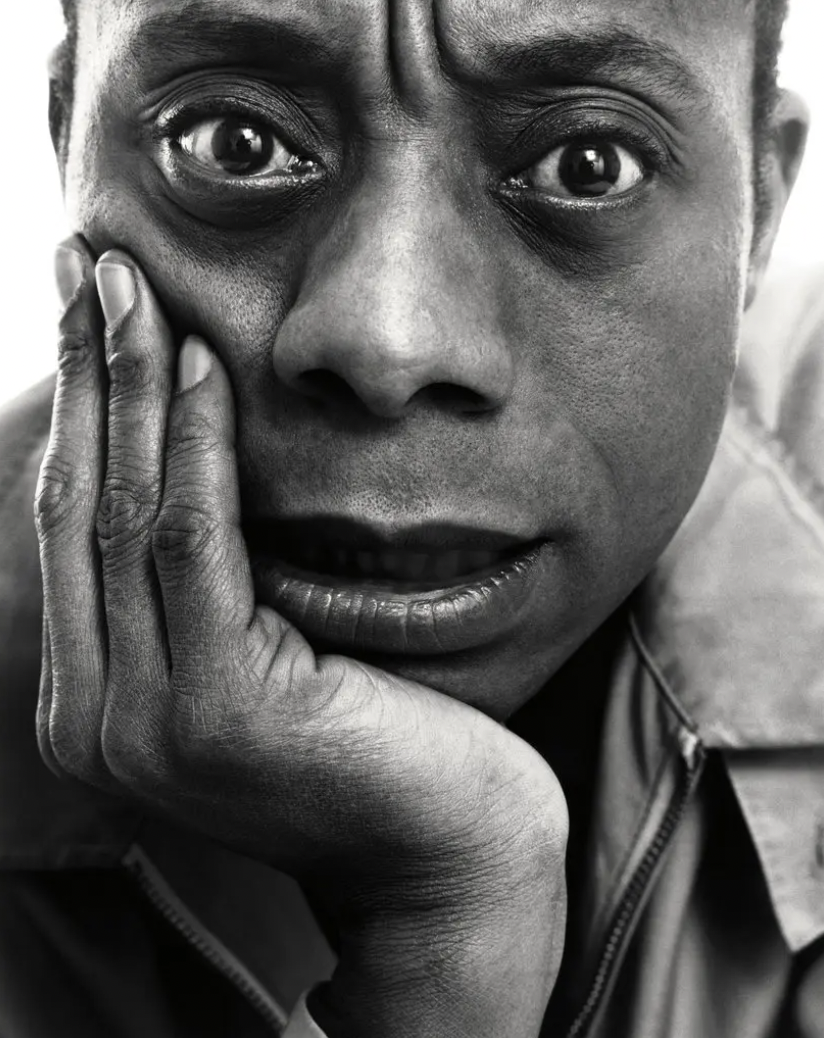
“You think your pain and your heartbreak are unprecedented in the history of the world, but then you read.” - James Baldwin
Thiago Carvalho
boosted


Continuing the countdown, Day 3 (of 10). Topic: Modern and fascinating ideas about the brain for us all to discuss. How likely is each idea to be true? And if true, what are the implications?
Brain idea 8: Of all the brain's functions, consciousness is one of the trickiest to study. In part, because we don't even know how to define what it is. Progress is happening around measuring levels of consciousness by combining complexity-based measures of EEG recorded brain activity (derived from physics), following noninvasive brain stimulation (TMS). These consciousness meters predict not only changes in consciousness level when we are awake versus asleep, but also which coma patients are 'locked in'. They also suggest that certain substances enhance consciousness.
The friendly version:
https://www.technologyreview.com/2021/08/25/1031776/the-hunt-for-hidden-signs-of-consciousness-in-unreachable-patients/
The deeper dive:
https://onlinelibrary.wiley.com/doi/10.1111/ejn.15800
"Our loss of access to Horizon Europe has reduced the funds available for UK science. Since Brexit, we’ve had far fewer postdoc applications from continental Europe. I still have very talented people in the lab; a lot of them are from China these days, very few from continental Europe. The way the UK government is currently conducting itself, and the fact we are now out of the EU, makes it more difficult for us to recruit top scientists. I very much hope even at this late hour, for the sake of the next generation of young UK researchers, that a way will be found for the UK to be part of Horizon Europe science funding."
Jonathan Jones @CurrentBiology
#PlantScience #sciencefunding
https://www.cell.com/current-biology/fulltext/S0960-9822(22)01683-9
I've worked on all of science, from B cells to T cells.
https://fellowsherpa.com
Joined Nov 2022
