

Thiago Carvalho @cyrilpedia@social.cleverlibre.org
I've worked on all of science, from B cells to T cells.
https://fellowsherpa.com
Joined Nov 2022
Thiago Carvalho
boosted

-Time for a short #Introduction-
I am a group leader in #MedicinalChemistry at the University of Parma. My lab combines #chemical & #computational techniques to develop novel pharmacological tools to study different Chronic Diseases (#CysticFibrosis, #IBD, #Hypercholesterolemia, #Alzheimer, #Cancer) and Infective Agents (#SARSCoV2, #Enterovirus, #Flavivirus, #Monkeypox, #HIV).
We are particularly interested in the development of #MultiTarget inhibitors and open to new #collaborations in #DrugDiscovery.
#Tooting (sooner or later) about the #chemistry and #science
@marcoradi In retrospect, maybe I should have used one of those content warning features
Thiago Carvalho
boosted

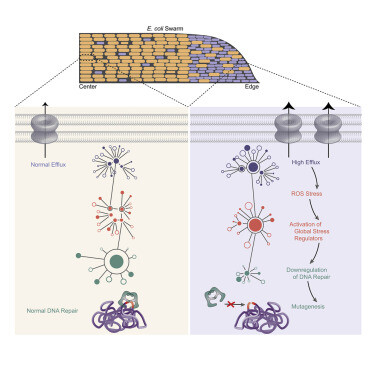
Efflux-linked accelerated evolution of antibiotic resistance at a population edge
-in @MolecularCell by @necrosignaling et al from @sci_rasika
https://www.sciencedirect.com/science/article/pii/S1097276522010243
Thiago Carvalho
boosted

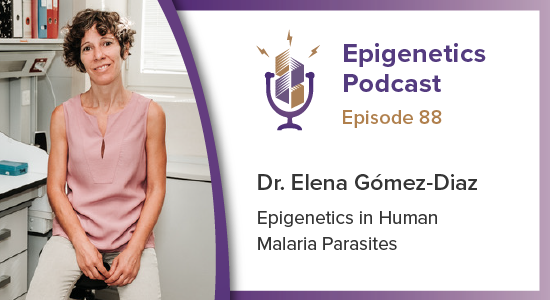
In this episode we caught up with @elenagomezdiaz@twitter.com from @ipbln_csic@twitter.com. She shared with us her work on the Epigenetics in Human #Malaria Parasites.
#podcast #womeninstem @womeninmalaria@twitter.com #chromatin
Listen here: http://activemotif.com/podcasts#elena-gomez-diaz
"The papers, published in 2006 when Schrag was an undergraduate working in Ghribi’s lab at the University of North Dakota (UND), covered research on several factors related to amyloid proteins in rabbit brains. (Many Alzheimer’s researchers believe the disease is caused by amyloid’s effects on human brains.) Schrag soon discovered the suspect work in the two papers fit a large pattern of questionable research spanning much of Ghribi’s career, both before and after they worked together."
Thiago Carvalho
boosted

If you need it and want to join, here is the BlackTwitter instance https://blacktwitter.io/about
#BlackMastodon
#BlackTwitter
#BlackFediverse
#BlackFedi
#BlackAcademics
#BlackDiaspora
#BIPoc
#black
#diversity
#DiversityEquityInclusion
Thiago Carvalho
boosted

Shout out to all the “softcore” employees at Twitter who resigned! ✌🏼👏🏼🥳
Twitter ‘closes offices’ after Elon Musk’s loyalty oath sparks wave of resignations | Twitter | The Guardian https://www.theguardian.com/technology/2022/nov/17/elon-musk-twitter-closes-offices-loyalty-oath-resignations
Thiago Carvalho
boosted

Limited effect of well-know anti-aging interventions (mTOR pathway, growth hormone and intermittent fasting) in actual aging (of mice). These interventions "often influenced age-sensitive traits in a direct way and not by slowing age-dependent change." 😳https://www.nature.com/articles/s41467-022-34515-y
Thiago Carvalho
boosted

Job: PhD neuroscience drosophila - Warwick UK
#job #phd 4 years
to study how animals make decisions during conflicting situations. #neuroscience #drosophila #behaviour
#Warwick #UK
Source:
https://ecoevo.social/@crezaval@drosophila.social/109347664560972107
Thiago Carvalho
boosted

I guess here’s my intro — I’m a scientist who used to play across hay bales for fun growing up & got 2nd place in a high school county science fair one time. Now I do research for a living, focusing on #immunoengineering & how our immune cells could be targeted not just for fighting viruses but healing wounds. NIH-er, tenure-track, not a prof — yes I “left academia”. Skip to 53:30, you’ll get the gist: https://youtu.be/426T6VgPvz4
Thiago Carvalho
boosted

hello all yes this is indeed Jas from twitter, i'm bloody terrible at introductions so i'll just say that my specialties are coronavirus pathogenesis, CoV/immune interactions, structural biology, daily happenstances in Hong Kong & swearing, not necessarily in any order.
*waves at everyone excitedly*!!!
Thiago Carvalho
boosted

Wait I forgot to do an introduction toot oops
Okay I’m really bad at these
Um
Hi- I’m Edward. My background is mainly in immunology and biochemistry and I’ve done a lot of scicomm focusing on vaccines since before the pandemic. I have pretty broad interests in medicine though but vaccine immunology probably has my heart. In the interim I’m trying to pick the best path forward for me which I’m still figuring out.
I post long blog posts at deplatformdisease.com on these things too
@mucida Last one to leave turns out the lights and please, please make sure the gas is off
Thiago Carvalho
boosted

RT @castello_lab
We are offering a Marie Sklodowska Curie PhD fellowship to work with us in the role of riboregulation in virus infected cells.
To apply visit: https://www.gla.ac.uk/explore/jobs/
REF: 102328
Deadline: 12th December
Please, share 🙂👍
🧵👇
Thiago Carvalho
boosted

"I initially wanted to write about how Twitter might be quickly snuffed out. But most people with any understanding of how the platform works say Twitter is unlikely to just cough, sputter, and go dark forever. Those I spoke with all described a slow rot of systems that get more load than expected and “just fail silently,” as one recent employee put it. “And then other services are just waiting for those to respond [and] you start to see things just not work.” That former employee described what was happening to Twitter as similar to plaque building up inside a person’s arteries for years before a heart attack."
Thiago Carvalho
boosted

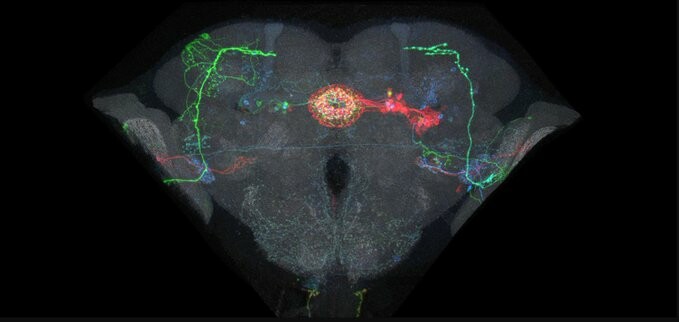
This article nicely summarizes how NeuronBridge can be used to go from #connectome circuit to #fly strain by enabling access to large, open data sets. #drosophila #neuroscience #OpenScience
https://www.janelia.org/news/janelia-software-tools-power-fly-brain-research
Colourful andouillette
Thiago Carvalho
boosted





I've worked on all of science, from B cells to T cells.
https://fellowsherpa.com
Joined Nov 2022
