

Thiago Carvalho @cyrilpedia@social.cleverlibre.org
I've worked on all of science, from B cells to T cells.
https://fellowsherpa.com
Joined Nov 2022
Thiago Carvalho
boosted
"Most scientific-journal articles come from wealthy countries in the global north. Often, well-funded researchers initiate short-term projects in southern countries — which are typically poorer and often have a history of colonial occupation — frequently without seeking substantive local input or expertise. Dubbed parachute or helicopter research, this is a long-standing tradition steeped in colonialism, say those campaigning for change."
Thiago Carvalho
boosted

Hi everyone! New to this server, here's a few lines to introduce myself.
Postdoc researcher working on metal-organic frameworks, my goal is to use single-crystal total scattering analysis to determine the non-periodic atomic structure of porous materials. I looove patterns and crystals, and I cannot resist sharing those I find most beautiful!
I am also a passionate mental health and diversity advocate, deeply convinced that it's always worth letting our quirkiness shine out bright!
Cheers
Thiago Carvalho
boosted

@AllenNeuroLab I’m optimistic about the potential of groups like @neuroscience and @neurobuzz. But I’m still experiencing the same issue as you are, partly because this instance makes it difficult to find or follow people on other instances. I’ll keep trying. At least I get the @biorxivpreprint feed.
Thiago Carvalho
boosted
@AllenNeuroLab @neuroscience @neurobuzz @biorxivpreprint in theory there is a @biorxiv_neursci but in practice it isn’t working yet (for me, anyway).
Thiago Carvalho
boosted

Geologist Marie Tharp was born #OTD in 1920.
She built the first accurate map of the Atlantic Ocean floor, discovering the Mid-Atlantic Ridge that provided evidence for seafloor spreading and plate tectonics.
Image: Lamont-Doherty Earth Observatory
Thiago Carvalho
boosted

An Anoplius blue/black spider wasp carries away a spider she has paralyzed. Tennessee.
Thiago Carvalho
boosted

Thiago Carvalho
boosted

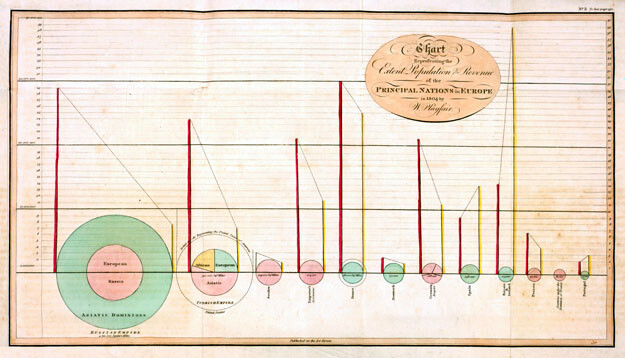
Today is PIE CHART DAY!
#TodayinHistory #datavis #historicaldatavis #Onthisday #OTD
📅
Jul 30, 1801 William Playfair introduced the pie chart in the _Statistical Breviary_.
But not the way we use them today. It was to solve a problem depicting the population of the Turkish empire, shaded by continent, requiring 3 segments.
@schoppik @AllenNeuroLab @NicoleCRust @lisamelton @dgoldsmith @mekkaokereke @talia_christine What a great group to be included in, thanks @schoppik
Thiago Carvalho
boosted

Dear Mastodon #neuroscience folks. I’ve been trying to switch my SciSocial time from Twitter/X. However, I have not found there to be much in the way of scientific conversations or community on this platform (some from people I already knew on Twitter/X mostly). Posts don’t seem to drive conversations, and finding posts takes a lot of effort here but not there. What am I missing? Honest question. Thanks for any replies! (btw, not wanting platform ethical comparisons for this post)
Thiago Carvalho
boosted

@AllenNeuroLab honestly? There's something different about this place. I think there's less status signaling and more depth which perhaps doesn't lend itself to the sort of "finding" that we're both missing. That said, I'd follow @cyrilpedia @NicoleCRust if you aren't already and the cheat code to populate your feed with awesome is to follow @lisamelton and @dgoldsmith and @mekkaokereke and @talia_christine and their friends at beige.party whatever the heck that is
Thiago Carvalho
boosted

@schoppik Thanks for including me in this list of awesome people! 💖
@AllenNeuroLab @cyrilpedia @NicoleCRust @dgoldsmith @mekkaokereke @talia_christine
Thiago Carvalho
boosted

Happy to have joined synapse.cafe. The Effort Lab is a neuroscience/psychophysiology lab at Liverpool John Moores University, UK, examining determinants and mechanisms of effort investment in goal-directed behavior. #introductions
Thiago Carvalho
boosted

Hello again Mastodon/fediverse, any good topics about the brain to discuss today?? 😅
"Protein copy numbers constrain systems-level properties of regulatory networks, but absolute proteomic data remain scarce compared to transcriptomics obtained by RNA sequencing. We addressed this persistent gap by relating mRNA to protein statistically using best-available data from quantitative proteomics-transcriptomics for 4366 genes in 369 cell lines."
#Preprint
Thiago Carvalho
boosted

Bioinformatics Specialist
City of Hope
See the full job description on jobRxiv: https://jobrxiv.org/job/bioinformatics-specialist/?feed_id=52805
#ScienceJobs #hiring #research
Duarte #UnitedStatesUS #Bioinformatician #ResearchTechnician #Researcher #Scientist
https://jobrxiv.org/job/bioinformatics-specialist/?feed_id=52805
Thiago Carvalho
boosted

https://jamanetwork.com/journals/jamanetworkopen/fullarticle/2807639
With commentary by @michael_hoerger
via @MoriartyLab and @kashprime
“New study in @JAMANetworkOpen shows that the reintroduction of universal #masking in #Ottawa #schools in spring 2022 reduced student absenteeism.
#Students gained nearly 2,000 days of learning in the schools studied.
The study likely considerably underestimated the real benefit of masking and enormously underestimated the potential benefit of masking.”
Thiago Carvalho
boosted


🙉🙈Ignorance is not bliss.
'The virus is still lurking and it's dangerous to be complacent. It’s a long time since many had their booster jabs, and the poor weather in July may have encouraged crowding in poorly ventilated spaces.' 💯Prof @LawrenceYoung11 https://www.telegraph.co.uk/news/2023/07/29/covid-19-uk-infections-virus-coronavirus-rise-booster/
Thiago Carvalho
boosted
The most recent Podcast I produced for EMBO was with Pavel Tomancak (and EMBO's Thomas Lemberger). One detail that might get missed in a wide ranging conversation about science, policy, science fiction and more was Pavel's passing comment on how one important consideration in his decision to return to Europe after a very productive time at UC Berkeley were serious reservations about the US healthcare system.
#Drosophila #OpenScience #DevelopmentalBiology #EMBOPodcast

Thiago Carvalho
boosted
'Radick uses counterfactual history to perform an experiment. He outlines a curriculum for an introductory biology class that does not begin and end with Mendelian inheritance, but instead emphasizes developmental contexts. Students who took this class — Radick ran the experiment at the University of Leeds, UK — came away with a less gene-centred and a more enquiring approach to biology than did those who took a more Mendel-focused course (A. Jamieson & G. Radick Sci. Educ. 26, 1261–1290; 2017).'
I've worked on all of science, from B cells to T cells.
https://fellowsherpa.com
Joined Nov 2022
