

Thiago Carvalho @cyrilpedia@social.cleverlibre.org
I've worked on all of science, from B cells to T cells.
https://fellowsherpa.com
Joined Nov 2022
Thiago Carvalho
boosted


Katalin Karikó won a Nobel Prize for her work on the COVID mRNA vaccines. Yet just 10 years earlier, UPenn kicked her out of academia.
"They told me that they’d had a meeting and concluded that I was not of faculty quality. When I told them I was leaving, they laughed at me and said, ‘BioNTech doesn’t even have a website.'"
https://www.wired.co.uk/article/mrna-coronavirus-vaccine-pfizer-biontech
'If Sunak had pissed about any longer, the Netflix doc about the decision could actually have come out while he was still droning on about not having decided it. This would have ripped a tear in the events-to-content continuum, reversing the natural direction of travel, and effectively ceding control of the UK to Netflix CEO Ted Sarandos. Then again, maybe it would be an upgrade. At this rate, the best hope for the country might be for Ryan Reynolds and the other one to buy us and use us as a content farm.'
Thiago Carvalho
boosted

The Pythagorean Theorem is at least a thousand years older than Pythagoras. Turns out Babylonians knew some pretty advanced math.
Thiago Carvalho
boosted

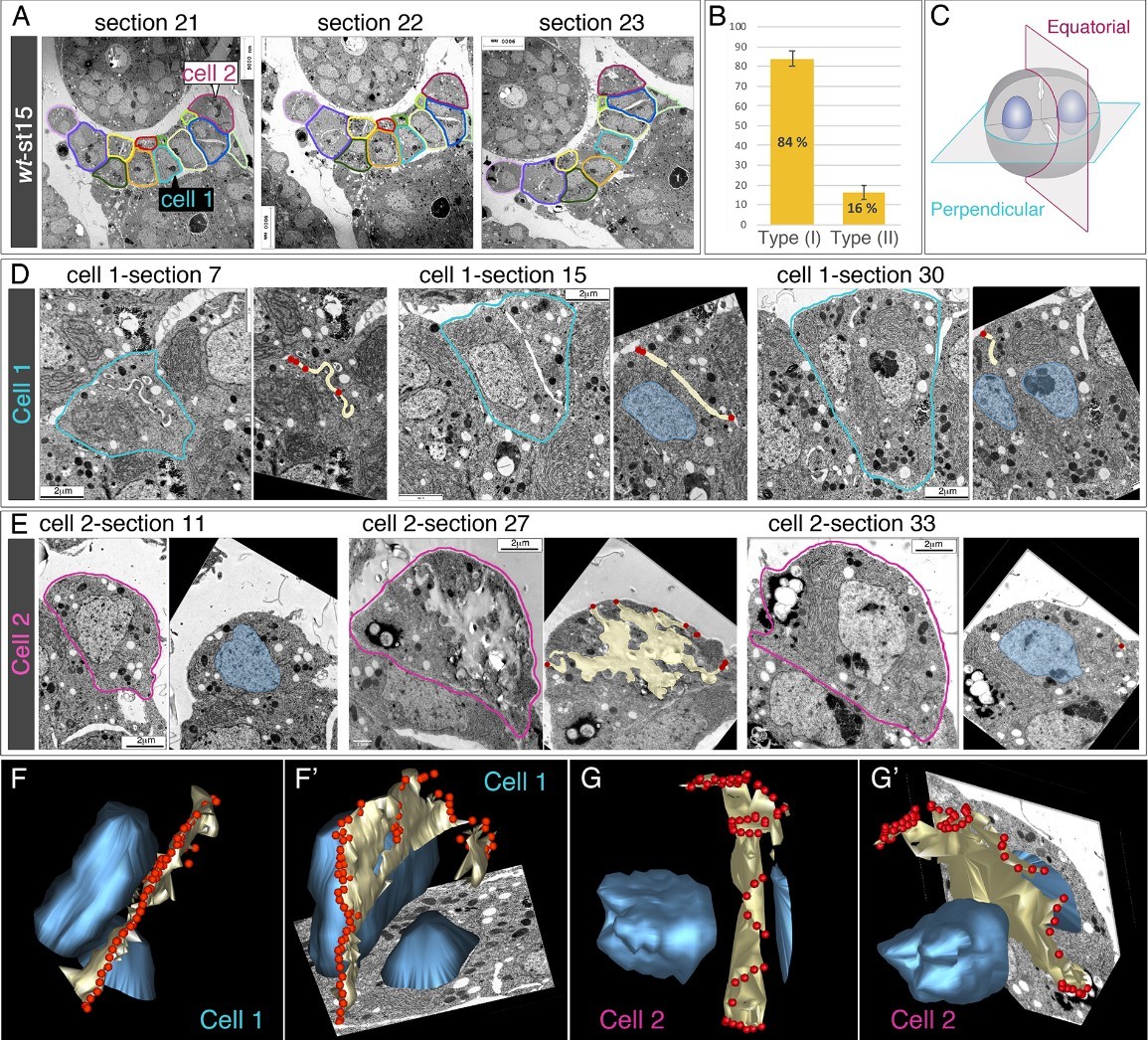
On #EMmonday we’re highlighting slit assembly in Drosophila nephrocytes. Marta Carrasco-Rando, Mar Ruiz-Gómez and colleagues @CBMSO_CSIC_UAM discover that an acytokinetic cell division breaks membrane symmetry during slit diaphragm assembly.
📖 @Dev_journal: https://journals.biologists.com/dev/article/150/18/dev201708/328448/An-acytokinetic-cell-division-creates-PIP2
#OpenAccess
Thiago Carvalho
boosted
"After realising that many notable women working in science, technology, engineering and maths (Stem) and others from minority backgrounds did not have Wikipedia pages, though they were deserving of them, she decided to start them herself, one every day. Each one takes “a few hours” to write, she says. It’s a task, she confesses, that she somehow completes while simultaneously watching real estate shows on Netflix in the evening. To date, she has contributed more than 2,000 entries."
Thiago Carvalho
boosted
A CRISPR-based strategy to promote endogenous fetal hemoglobin re-expression to treat sickle cell disease: my latest Nature Medicine column.
Thiago Carvalho
boosted

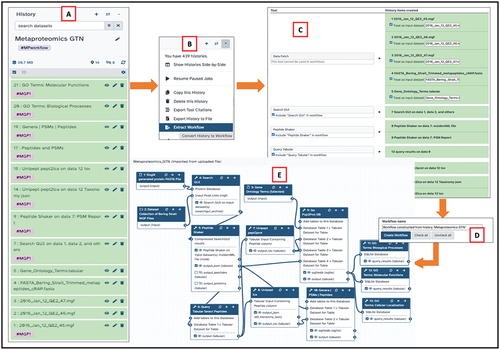
A Galaxy of informatics resources for MS-based proteomics https://www.tandfonline.com/doi/abs/10.1080/14789450.2023.2265062
---
#proteomics #prot-paper
"His book is a masterful demonstration of the great potential of the new military history that has emerged over recent decades as scholars, distancing themselves from an older generation mainly interested in chaps and maps, have begun to pay more attention to the social, economic, and political aspects of war."
https://www.nybooks.com/articles/2023/10/19/is-prussian-militarism-a-myth-iron-and-blood/
Thiago Carvalho
boosted

Swedish medical physicist and "Father of Radiation Protection" Rolf Maximilian Sievert died #OTD in 1966.
He played a pioneering role in the measurement of doses of radiation especially in its use in the diagnosis and treatment of cancer. In later years, he focused his research on the biological effects of repeated exposure to low doses of radiation. He was a founder of the International X-ray and Radium Protection Committee (later became ICRP) in 1928. He also chaired the UNSCEAR.
Thiago Carvalho
boosted

Shift Happens is a beautifully designed history of how keyboards got this way https://arstechnica.com/?p=1972356
"Perhaps crypto was a legit fountain of wealth and success – perhaps it was moneyball for money, in which a new gang of smart rationalists were outfoxing traditional investors. Which made Sam Bankman-Fried, the lord and saviour of these renegades, a perfect Michael Lewis character."
https://www.theguardian.com/books/2023/oct/03/michael-lewis-sam-bankman-fried-crypto-going-infinite
Thiago Carvalho
boosted

Je suis chercheuse en #Economie du #ChangementClimatique au centre-cired.fr. Je travaille sur les impacts du changement climatique et sur les trajectoires et politiques d'atténuation du CC, en me concentrant souvent sur les liens avec les #inégalités.
J'ai participé au rapport du #GIEC sur l'atténuation, et je suis membre du Haut conseil pour le climat.
Je parlerai ici de #recherche, #enseignement, #interdisciplinarité, #transformations pour notre avenir commun.
The lung mycobiome & anti-tumor immunity
"Our study revealed that the intratumor mycobiome, albeit at low biomass, plays an important role in stimulating the immunosuppressive TME and thereby promotes lung tumor progression and is associated with poor patient outcome."
#Immunology #MucosalImmunology
https://www.sciencedirect.com/science/article/abs/pii/S153561082300288X
"Until the age of seventy, nothing I drew was worthy of notice. At seventy-three years, I was somewhat able to fathom the growth of plants and trees, and the structure of birds, animals, insects and fish."
—Katsushika Hokusai, One Hundred Views of Mt. Fuji, 1834
Thiago Carvalho
boosted



A bit of a #introduction for all my new followers:
Listen: you're gonna get some posts about fruit flies. I can't stop it, it just happens. They got me good. Plus #Infection #Microbiome #Immunity #Evolution 🦠
But I also follow this #AcademicChatter and #PublishOrPerish conversation closely, and obviously #ScientificPublishing 👍

Thiago Carvalho
boosted
Damn.
'That morning at the lab, Karikó’s old boss had come to see her off. She did not tell him what a terrible mistake he was making in letting her leave. She didn’t gloat about her future at BioNTech, a pharmaceuticals firm that millions now associate with lifesaving vaccines but was then a relative upstart in the field. Instead the woman who had bounced from department to department, with no tenure prospects and never earning over $60,000 a year, said with total confidence: “In the future, this lab will be a museum. Don’t touch it.”
https://www.glamour.com/story/katalin-kariko-biontech-women-of-year-2021
Thiago Carvalho
boosted
'My own dismay and rage have lasted. The casual way in which all of our works were taken without permission and tossed into the AI blender feels like a violation. The one novel I have in this mix is hardly War and Peace — but it stings that none of these corporate behemoths thought to ask thousands of writers if we wished to contribute to AI models that might eventually replace us.'
https://www.ft.com/content/6342aa55-a776-4268-af0a-29bdae082ee3
Thiago Carvalho
boosted
'(...) Karikó “never received an R01 one grant from [the National Institutes of Health] which is a clear sign that she struggled and didn't get recognition for the importance of her vision"
Thiago Carvalho
boosted
"Scholars and publishers have our own unique areas of expertise, responsibilities, and experiences of the manifold crises into which higher education is perpetually forced. But at base, scholars’ working conditions are publishers’ working conditions. If we want to change these conditions, we have to begin by recognizing—and working together to find—our common ground. Manufactured austerity; corporatization; competition over supposedly scarce resources; attrition and downsizing; mass PhD production; adjunctification; shrinking enrollments; escalating expectations to publish or perish; and, of course, the ongoing devastation of the COVID-19 pandemic and the right’s war against academic freedom: these issues affect us all."
I've worked on all of science, from B cells to T cells.
https://fellowsherpa.com
Joined Nov 2022
