

Thiago Carvalho @cyrilpedia@social.cleverlibre.org
I've worked on all of science, from B cells to T cells.
https://fellowsherpa.com
Joined Nov 2022
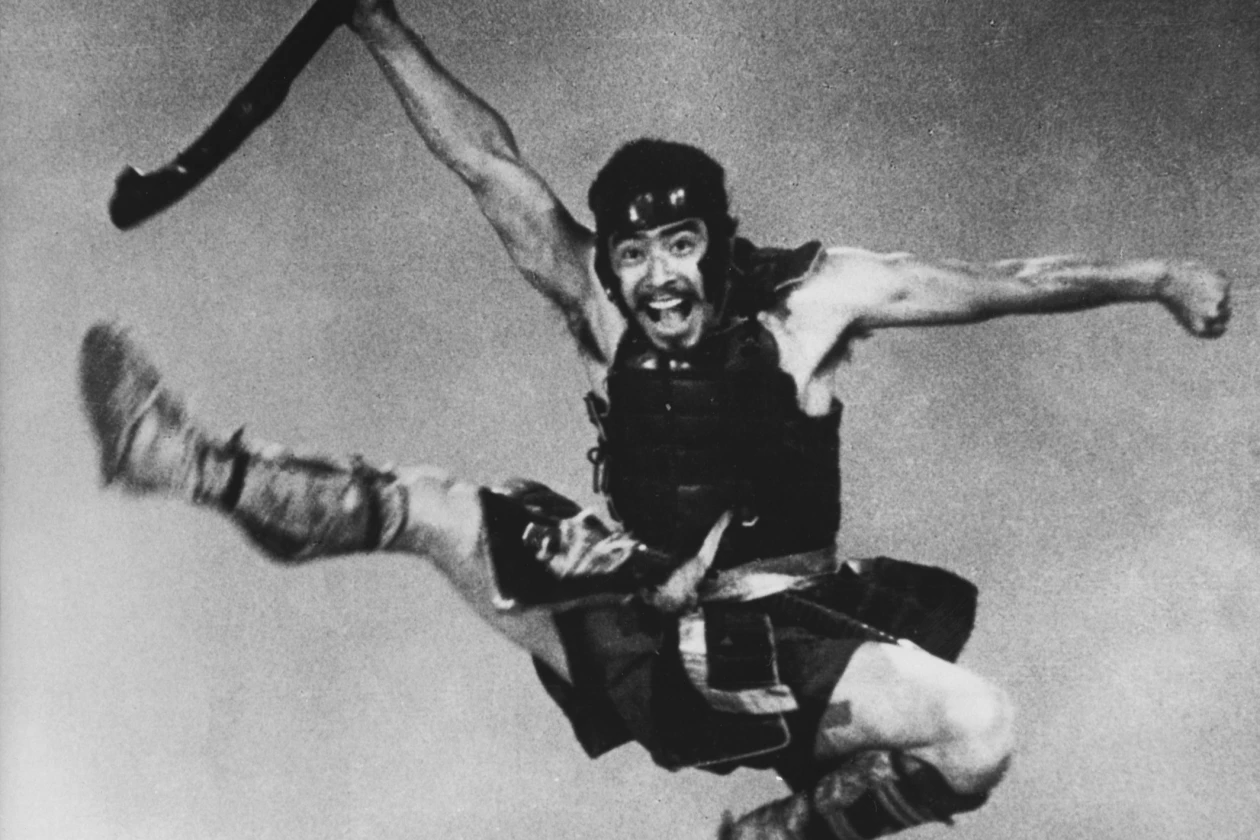
"There is literally never a dull shot. And he found in Toshiro Mifune, star of Rashomon and 15 other films in the Kurosawa canon, an antic presence with acting strokes to match. Mifune’s performance is as vivid as a Japanese ideogram. (Note for Kurosawa biographical completists: he studied calligraphy and kendo swordplay as a child.)"
https://www.ft.com/content/29b63a0f-3c30-4de9-9456-fa48118978ff
"If you’re doing that having already written your conclusions, it takes a strong will not to lean—consciously or unconsciously—in your pre-determined direction. The idea that all the low-integrity, low-proficiency stuff happens in the study before any writing takes place is just not an accurate description of how normal, everyday science is done."
https://stuartritchie.substack.com/p/science-isnt-storytelling?utm_medium=web
Thiago Carvalho
boosted

We miss Jony dearly, and I like to imagine that he would be as happy as we are to see this out. We dedicate this paper to him and his family!
Thiago Carvalho
boosted
This work was published together with a study on similar concept but with a very different flavor by our colleagues at the Nussenzweig lab. Short-lived immunization GCs allow quite a bit of invasion too, just following a different set of rules. Check it out!
Thiago Carvalho
boosted
Renan recently put up a thread on the science on the bird site. In a very short summary: flu is a classic way to generate “long-lived” germinal centers in mice, which last for several months (≥1/4 of a mouse’s typical lifespan). Turns out germinal centers last this long not by evolving the same B cell clones over and over, but by constantly replacing old clones with new ones allowing the same structure to persist for a long time. Check out his thread 👇👇👇.
https://twitter.com/deCarvalhoRenan/status/1606336361476366336
Thiago Carvalho
boosted
Enormous credit to the whole lab, but especially to Renan de Carvalho and Alex Barbulescu, who gladly put their main projects on hold to focus on dissecting Jony’s puzzling finding. Renan played a particularly important role in setting the final of shape the story. Thanks also to our many co-authors from the Utz, Rice, Baric, and Mucida labs.
Thiago Carvalho
boosted
Really happy to see this paper is out! It’s the brainchild of our dear postdoc Jonatan Ersching, who passed away in 2020. It’s not only a science story, but also the story of how we came together as a lab to finish what Jony started.
Thiago Carvalho
boosted

https://doi.org/10.1016/j.immuni.2022.12.002
PMID: 36580918
_ We found that unlike canonical CD8+ #TCell activation seen against viral infections where T cells rapidly acquire effector function, #tumor -specific CD8+ T cells proliferate in TDLNs but fail to express effector molecules. _
_ In human TDLNs, these cells could have been in this state for years. These undifferentiated cells instead turn on co-stimulatory receptors and several chemokine receptors and slowly migrate to the tumor._
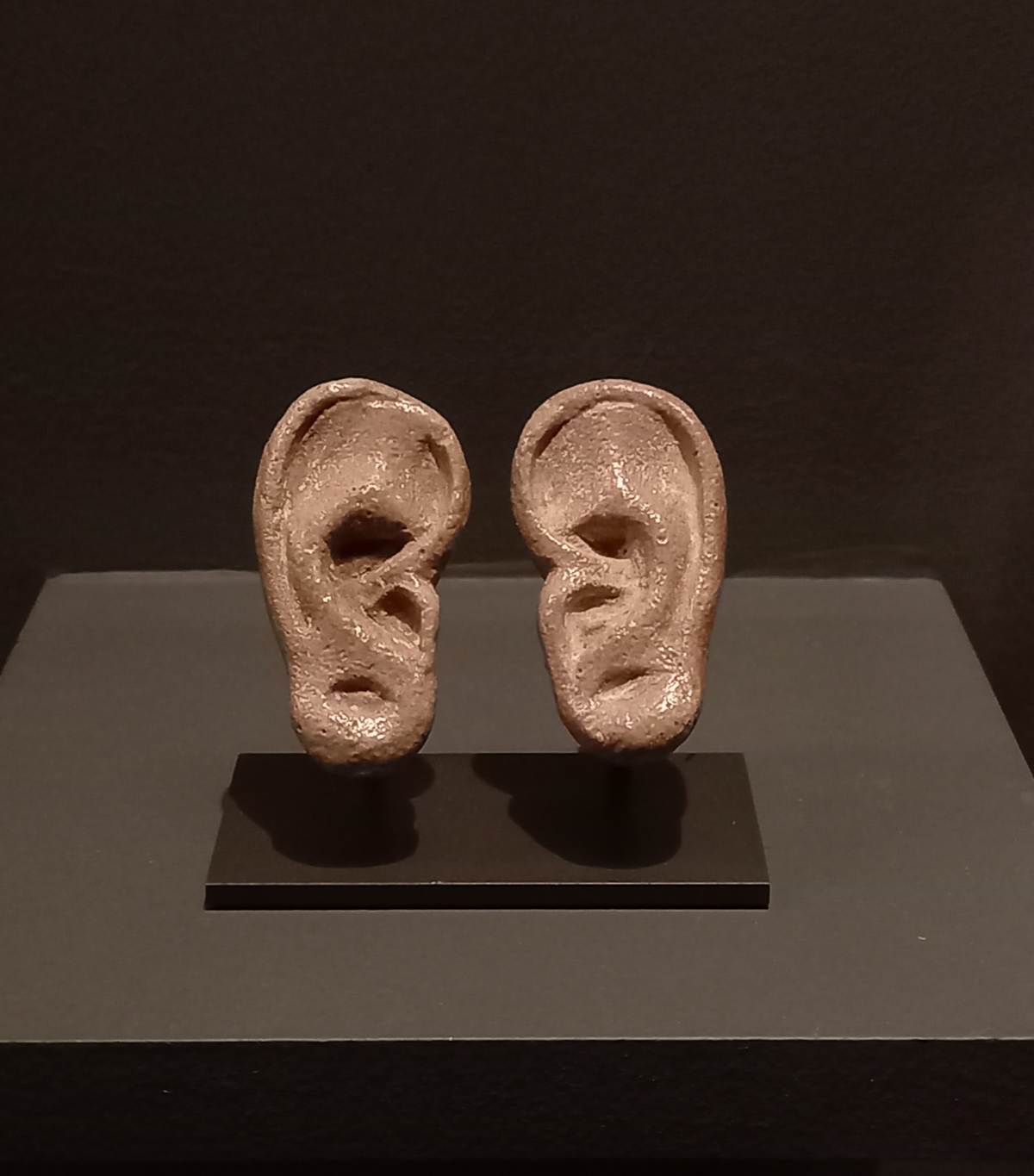
Votive ears (Egypt, 1539-1069 BCE) for speaking directly to the gods at the Gulbenkian Museum
Thiago Carvalho
boosted

Crowdsourcing your ideas for the #BrainIdeasCountdown:
Before we all turn into Winter Holiday pumpkins: What are some most interesting ideas in brain research that I haven't highlighted yet? I've sketched out my own ideas for these last 2/10 days (promise!). But brain research is working on so much & I'm curious to hear your thoughts about what exactly that is. Here's my (random) list:
Idea10: Our moods depend on what's happening in our gut.
Idea 9: Across individuals, the same brain functions are implemented by biological details that vary a lot.
Idea 8: Consciousness level can be measured by brain complexity.
Idea 7: Stimulation of the brain at multiple nodes may dance it from dysfunction back to normal function.
Idea 6: Gene therapy may circumvent the need to understand how mutated proteins lead to brain dysfunction.
Idea 5: Neurons in the brain influence one another through the electric fields that they generate, ephaptic coupling.
Idea 4: Our health and well-being is determined not just by our genes, but also the genes of those around us, "social genetic effects."
Idea 3: We rely on our memories of the past to predict the future.
Ideas 1&2: Coming soon!
For details, click here: #BrainIdeasCountdown
So: What haven't I highlighted yet?
Thiago Carvalho
boosted
Here's a slightly more provocative way to pose the question: In The Idea of the Brain, Matthew Cobb argues, "In reality, no major conceptual innovation has been made in our overall understanding of how the brain works for over half a century ... we still think about brains in the way our scientific grandparents did."
Setting aside semantic debates about what constitutes a "major conceptual innovation", brain researchers are clearly working on a large number of ideas that their grandparents had not thought of. But what are those, exactly?
Thiago Carvalho
boosted

RT @FrezzaLab
Very interesting and relevant article for new PIs. It also includes a TCA-cycle-like scheme about how to develop research.
Running a research group in the next generation: combining sustainable and reproducible research with values-driven leadership https://academic.oup.com/jxb/article/74/1/1/6958678#.Y66Fd4QVFh4.twitter
Thiago Carvalho
boosted

RT @abhijit_MLab@twitter.com
Looking for someone with microfluidics/microfabrication experience for a JRF position. Some exposure is a must. Immediate recruitment. Converting into PhD after 6 months/1 yr is a possibility but not guaranteed. Pay as per ICMR/DST norm. Please RT.
🐦🔗: https://twitter.com/abhijit_MLab/status/1608541652486062085
Thiago Carvalho
boosted

Thiago Carvalho
boosted

Beautiful work by
@casanova_lab
& collaborators on the causes of SARS-CoV-2-driven MIS-C in children! Much more to discover...
Inborn errors of OAS–RNase L in SARS-CoV-2–related multisystem inflammatory syndrome in children
Thiago Carvalho
boosted
Hello World,
I'm Markus Osterhoff, physicist at the Institute for X-ray Physics.
We build and use #Xray microscopes (laboratory sources as well as large scale research facilities such as
@DESY or ESRF in Grenoble) for high-resolution x-ray #tomography, and we develop new methods for biomedical #imaging.
For that, we collaborate e.g. with the University Medical Center Göttingen.
Here, you will find some insights into our teaching and research activities.
Thiago Carvalho
boosted


Last #FluorescenceFriday of the 2022 !
Let's have a look a this beautiful collective #CellMigration with a staining of the organelles and actin cytoskeleton.
(Hey @Spirochrome you know how to make probes, huh neat staining with FastAct)
#scicomm @cellcommlab @focalplane_jcs
Thiago Carvalho
boosted

Interesting piece in the #Nature journal about the #birdsite and its importance in #science.
https://www.nature.com/articles/d41586-022-04506-6
As a very recent arrival on #Mastodon and in the #Fediverse, I'm seeing far more engagement here than on Twitter, despite having far fewer followers here.
Being here feels like the earlier days on Twitter, where posts are generously shared and where there is a genuine sense of building and supporting a community
I hope this continues and that the wider #Science and #Environment communities and also #universities jump on board.
For a now slightly dated view (in Nature) of the merits of Mastodon for scientists, see also this:
https://www.nature.com/articles/d41586-022-03668-7
“The only function of economic forecasting,” wrote the great American economist John Kenneth Galbraith, “is to make astrology look respectable.” It is characteristic of Erica Thompson’s sprightly and highly original new book on the uses and abuses of mathematical modelling that she dares to turn Galbraith’s verdict on its head. The medieval practice of casting horoscopes, she shows in one typically engaging section that embodies her most important themes, has a surprising amount to teach us about the modern practice of using models to guide policy.'
Thiago Carvalho
boosted



Pleased to share our follow-up #COVID19 vaccine study in #multiplesclerosis patients on anti-CD20 and S1P therapies.
The following 🧵 is my attempt to synergize our findings alongside other current data and review potential clinical implications.
https://www.sciencedirect.com/science/article/pii/S2211034822009889?via%3Dihub
I've worked on all of science, from B cells to T cells.
https://fellowsherpa.com
Joined Nov 2022
