

Thiago Carvalho @cyrilpedia@social.cleverlibre.org
I've worked on all of science, from B cells to T cells.
https://fellowsherpa.com
Joined Nov 2022
Thiago Carvalho
boosted
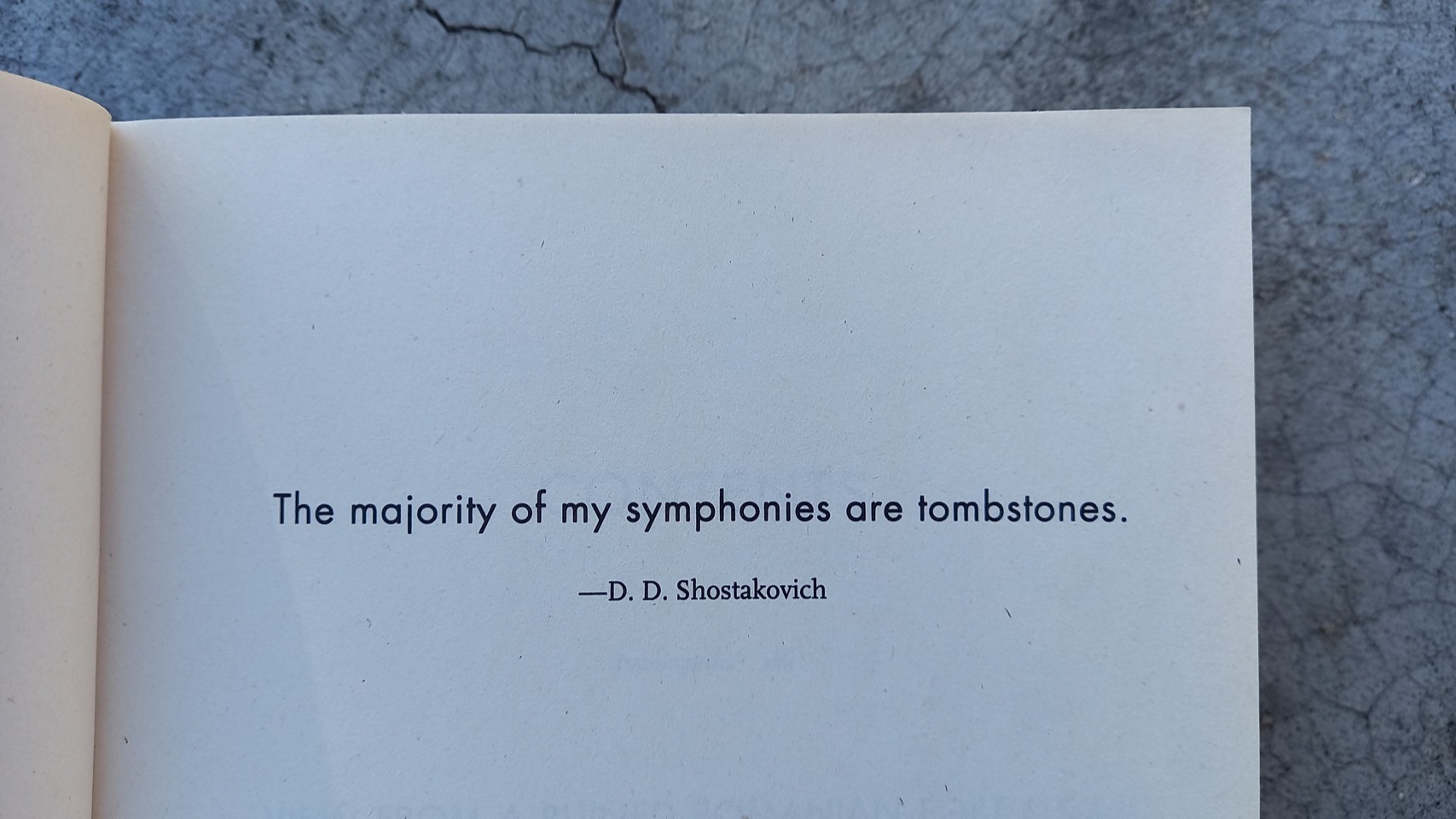
In the acknowledgements of his paper "Phylogenies and the comparative method", Joseph Felsenstein writes, "The suggestion that pairs of closely related organisms could be used in a way that avoided the need to know the full phylogeny was made by a student during discussion following my seminar at the Department of Genetics, University College, London. Unfortunately, I have been unable to discover her name."
Do any of y'all know if this mystery woman's identity has ever been revealed?
The picture is from William Vollmann's "Europe Central" - but the quote also sums up an extraordinary book, Julian Barnes' novel about Shostakovich, "The Noise of Time".
Thiago Carvalho
boosted

Thiago Carvalho
boosted
The FT is featuring phage therapy in the context of the antibiotic resistance crisis.
https://www.ft.com/content/c6df6bc4-f87e-4adb-bc92-97985f031550
ICYMI, we did an episode of the #EMBOPodcast featuring pediatric infectious disease physician Ameneh Khatami who published a single patient study in @EmboMolMed
It's the story of a seven-year-old girl infected with a multi-drug resistant #Pseudomonas strain who underwent #PhageTherapy.
https://www.embo.org/podcasts/the-enemy-of-my-enemy/
#antibioticresistance
#PersonalizedMedicine #Phage #Microbiology
“This means . . . there should always be a way to maintain phage effectiveness, for example by alternating treatments,” explains Jason Clark, chief executive of Fixed Phage, a UK supplier. “You can’t do this with antibiotics.”
https://www.ft.com/content/c6df6bc4-f87e-4adb-bc92-97985f031550
"That Babi Yar, by the Russian Ukrainian writer Anatoly Kuznetsov, never joined the list is a strange omission with a story of its own. The book’s subject, the Nazi occupation of Kyiv, and its literary qualities make Babi Yar every bit the peer of the canonical works of witness. Its fraught journey to publication half a century ago, and now to a reissue (with an introduction by Masha Gessen) amid the Russian assault on Ukraine, only adds to its power as enduring testimony. The book’s very typography carries the scars of its struggle to tell the truth."
Thiago Carvalho
boosted

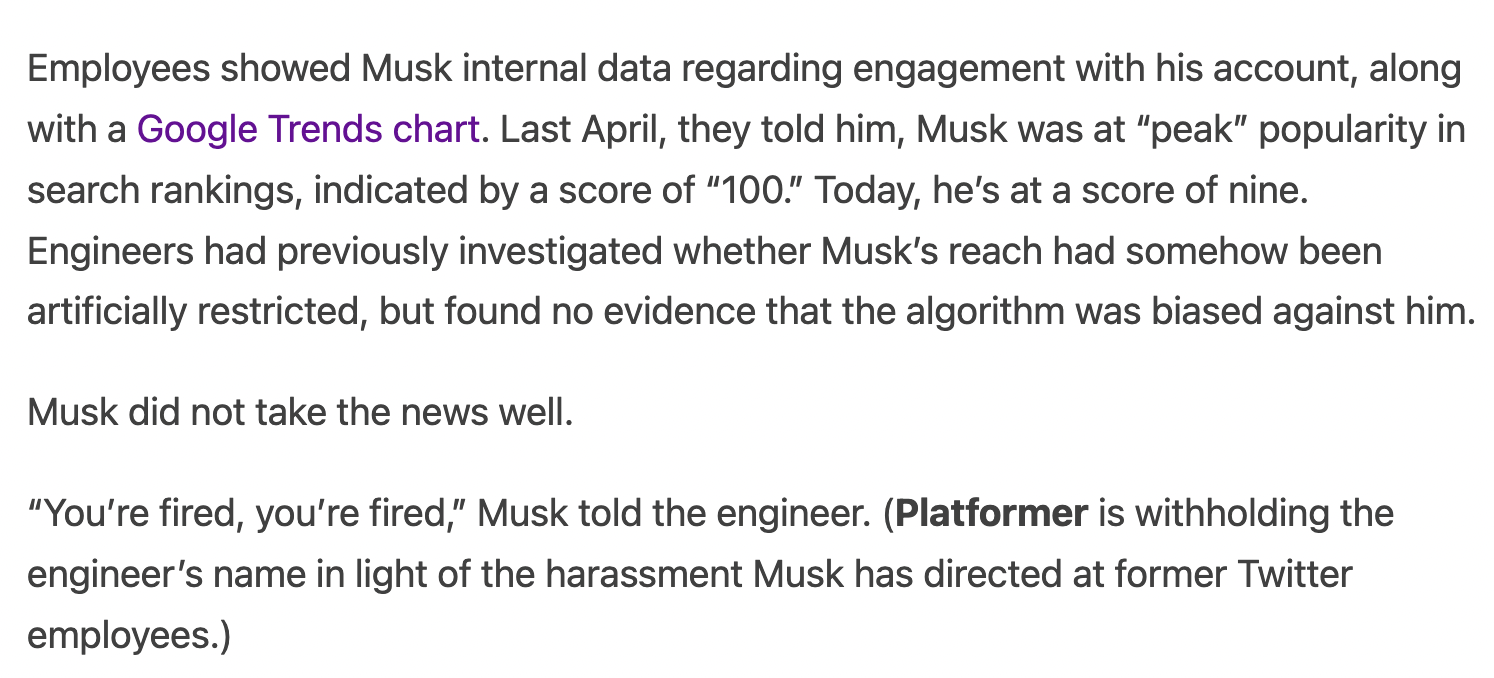
NEW: Elon Musk fired a top engineer over his declining view counts.
Plus the reason the site went down yesterday, fears about an upcoming FTC audit, and more, and more.
https://www.platformer.news/p/elon-musk-fires-a-top-twitter-engineer
From @zoeschiffer and me.
Thiago Carvalho
boosted
Thiago Carvalho
boosted
Thiago Carvalho
boosted

RT @_kamilruzicka
Are your splice isoforms evolutionarily conserved? A joy to work with a talented duo Ksenia Timofeyenko-Dima Konovalov, backed up by Maria Kalyna. Check some unexpected aspects of the evolution of plant (and animal) alternative splicing on:
https://nph.onlinelibrary.wiley.com/doi/abs/10.1111/nph.18799
Exhaustion, the early steps.
"Here, we performed single-cell RNA-sequencing and single-cell ATAC-sequencing of CD8+ T cells responding to LCMV-Armstrong (LCMV-Arm) or LCMV-Clone 13 (LCMV-Cl13), which result in acute or chronic infections, respectively."
https://journals.plos.org/plosbiology/article?id=10.1371/journal.pbio.3001983
Thiago Carvalho
boosted

New publication! We argue for an overhaul of academic systems to improve research quality: short-term employment, biased selection procedures + misaligned incentives hinder progress & rigor in research. #OpenScience #academia #IchBinHanna rdcu.be/c5brE
The paper is free to read via this link: rdcu.be/c5brE
Thiago Carvalho
boosted

Important editorial in @ScienceMagazine by Malcolm & Parikh; it's US-focused but the situation is similar everywhere.
Students and postdocs deserve more https://www.science.org/doi/10.1126/science.adh0336#.Y-XkYgSUemo.twitter
"TREX1 normally degrades cytoplasmic DNA to prevent inappropriate innate immune activation by self DNA. Our mechanistic studies revealed that this same process functions during #influenza virus infection to enhance replication."
#immunology #Virology #InnateImmunity #Preprint #Trex1
https://www.biorxiv.org/content/10.1101/2023.02.07.527556v1?med=mas
Thiago Carvalho
boosted

The #Antibiotic Resistance Crisis Has a Troubling Twist | WIRED
#amr
https://www.wired.com/story/the-antibiotic-resistance-crisis-has-a-troubling-twist/
Thiago Carvalho
boosted

Absolutely the best Acknowledgments section of a paper I’ve read. From https://arxiv.org/abs/2302.03988 / h/t @playingwithdust
Thiago Carvalho
boosted




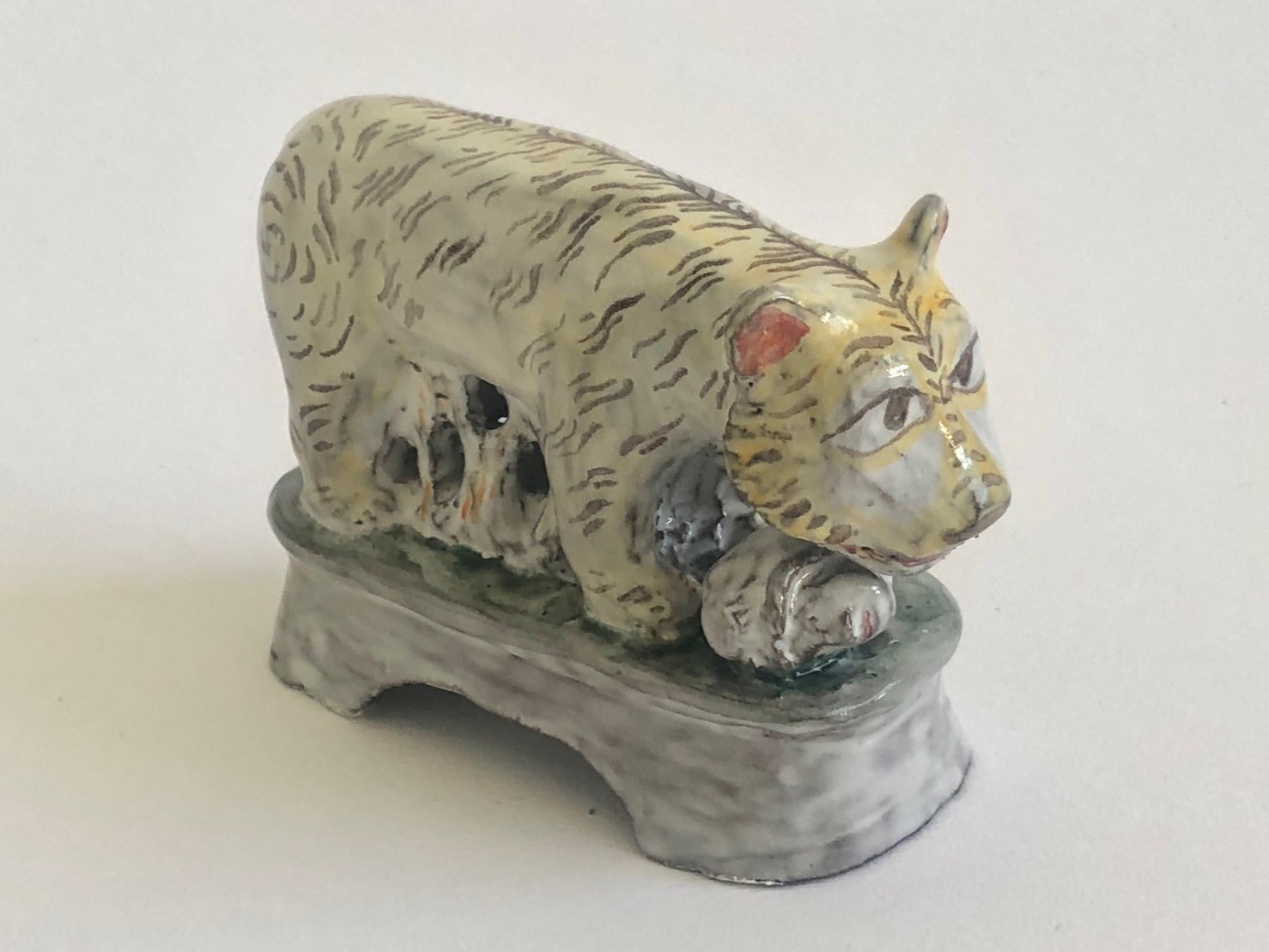


How to be an academic in a world on fire?
As scientists concerned about the climate crisis, @clarekelly and I set out to rethink the role and goals of the university in tackling the 21st century's challenges. Inspired by Raworth's Doughnut Economics, we propose seven new ways to thinking - not only to help us think, but also to act.
Read the paper: Urai AE, Kelly C (2023) Rethinking academia in a time of climate crisis. eLife 12:e84991. https://doi.org/10.7554/eLife.84991
Join us for a discussion at Growing Up in Science Global on 11 April: https://nyu.zoom.us/meeting/register/tJIoc-GsqT8uGNXniBIHPo9u4ibfDwxysLkI
... and let us know your thoughts!

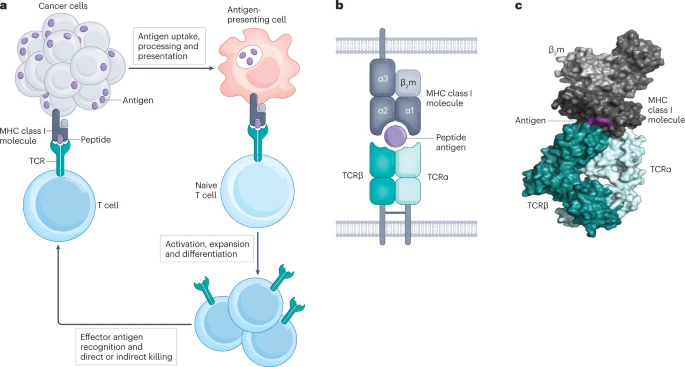
"Accurate prediction of TCR–antigen specificity can be described as deriving computational solutions to two related problems: first, given a TCR of unknown antigen specificity, which antigen–MHC complexes is it most likely to bind; and second, given an antigen–MHC complex, which are the most likely cognate TCRs?"
'Gefitinib (GF), the tyrosine kinase inhibitor (TKI) targeting epidermal growth factor receptor, initiates lung #inflammation through the NLR family pyrin domain containing 3 (NLRP3) inflammasome. However, the molecular targets and mechanisms underlying the inflammatory action of GF remain unknown. In this study, we identified mitochondrial Src family kinases (mSFKs) as key determinants of GF-induced #NLRP3 #inflammasome activation.'
I've worked on all of science, from B cells to T cells.
https://fellowsherpa.com
Joined Nov 2022
