

Thiago Carvalho @cyrilpedia@social.cleverlibre.org
I've worked on all of science, from B cells to T cells.
https://fellowsherpa.com
Joined Nov 2022
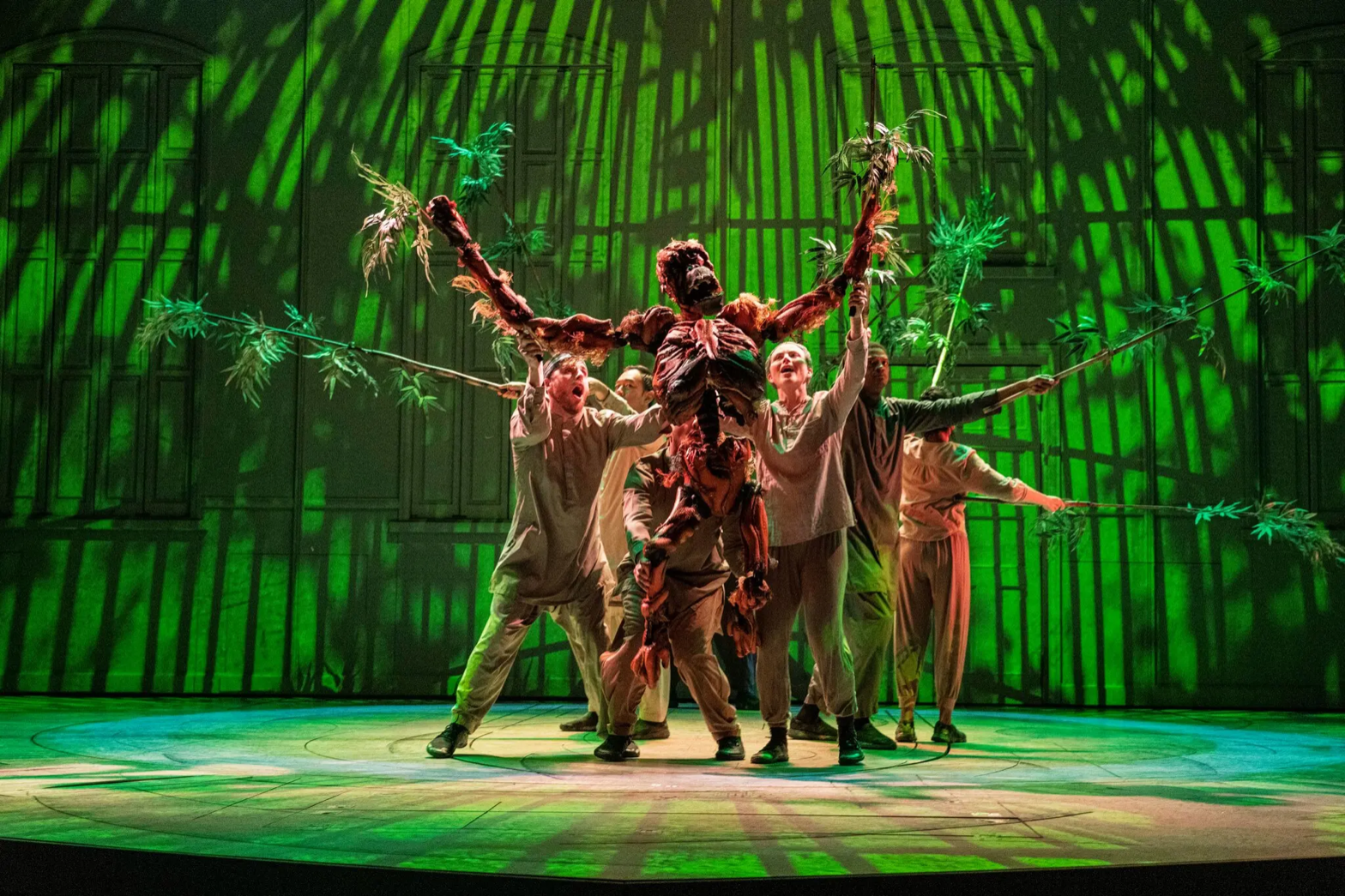
"Seven puppeteers who operated from “Life of Pi” shared the Olivier Award for best supporting actor in 2022.Credit...Hiroko Masuike/The New York Times"
https://www.nytimes.com/2023/03/21/theater/life-of-pi-tiger-puppet.html
"While advanced language-generating systems and chatbots have dominated news headlines, private AI companies have quietly entrenched their power. Recent developments mean that a handful of individuals and corporations now control much of the resources and knowledge in the sector — and will ultimately shape its impact on our collective future."
https://www.ft.com/content/e9ebfb8d-428d-4802-8b27-a69314c421ce
Thiago Carvalho
boosted

But, soft! What light through yonder window breaks?
Thiago Carvalho
boosted

RT @nicholaraihani
🚨Job🚨 Lecturer in Experimental Psychology (3-Year) This is a great opportunity for an early ish career researcher who wants to transition to a fellowship / PI position. Seeking people with interests / expertise in social evolution broadly defined. https://www.ucl.ac.uk/work-at-ucl/search-ucl-jobs/details
Thiago Carvalho
boosted

Circa-Mid-1850s. One of the earliest photos of a Native American, this one showing a pet wolf. Unlike the many fearsome myths created about wolves by settlers, Native Americans maintained a close and respectful relationship with wolves and had domesticated them to become pet and working animals for hunting and carrying packs.
Source : Indians and Thier Dogs.#nativeamerican #Indigenous
Thiago Carvalho
boosted

Another hot-off-the-press preprint on #Drosophila host - #microbiome interactions:
Lactobacillus plantarum is resistant to host #antimicrobialpeptides (AMPs) thanks to characteristics of its peptidoglycan that make its cell wall less sensitive to AMPs than other #bacteria. 🦠
Definitely adding to my reading list! Congrats to Aranzazu et al. and Igor Iatsenko, whose new lab has been knocking it out of the park! ⚾
Thiago Carvalho
boosted

Excellent quote. But then!
"I spent 13 years at NIMH really pushing on the neuroscience and genetics of mental disorders, and when I look back on that I realize that while I think I succeeded at getting lots of really cool papers published by cool scientists at fairly large costs---I think $20 billion---I don’t think we moved the needle in reducing suicide, reducing hospitalizations, improving recovery for the tens of millions of people who have mental illness. I hold myself accountable for that."
https://www.wired.com/2017/05/star-neuroscientist-tom-insel-leaves-google-spawned-verily-startup/
The thing that keeps me optimistic (and sane) comes from not from our scientific leaders, but from philosophy: #hasokchang
"If we hit upon some stable and effective classificatory concepts in our inquiry, we should cherish them (calling them “natural kinds” would be one clear way of doing so), but without presuming that we have thereby found some eternal essences. The old familiar metaphor of “carving nature at its joints” should be replaced by a humbler motto: “suck it and see.” Here the notion of epistemic iteration becomes important again. It is logically possible that there might be a static system that serves all our purposes. More likely, however, what we need, and what we have in most successful sciences, is a steadily evolving system."
https://doi.org/10.1093/med/9780198796022.003.0029
Thiago Carvalho
boosted
Fascinating insights into the past and future of psychiatric diagnosis:
In the US, psychiatric disorders are classified via a manual called the DSM. In early versions of the DSM, diagnoses were linked, in part, to their suspected causes. This changed in 1980 with the DSM-III, where disorders were classified purely by their symptoms, an "atheoretical" approach. The spirit was two-fold: 1) We don't actually know their causes and 2) We need to create more consistency around how patients are diagnosed. That was a lot better, but it also came with it's own host of problems.
Among them: the same symptoms show up for a lot of different disorders, and there's suspicion that the diagnostic classes aren't quite right. We're now up to the DSM-V and a recent preprint quantifies just how overlapping the symptoms are there: there are 202 diagnoses; 628 distinct symptoms, and 37% of symptoms are repeated across multiple diagnoses. In an extreme case, every symptom of every diagnosis in the Bipolar and Related Disorders chapter is repeated in other chapters:
https://psyarxiv.com/u56p2/
How can we do better? First, by agreeing to maintain the DSM while trying to find a better diagnostic scheme (that's called pluralism). Then there are two paths forward. The first is one in which we pinpoint biological and nonbiological causes and reincorporate them into the diagnostic scheme (there's a lot of work going on this realm but it's proving to be really hard, https://pubmed.ncbi.nlm.nih.gov/20595427/). The second is to reclassify everything using more quantitative approaches: https://hitop.unt.edu/sites/hitop.unt.edu/files/Kotov_et_al_2017_-_HiTOP.pdf
Lasker awardee Elizabeth Neufeld:
'I really didn’t appreciate the problem of being a woman in the lab, that there was a difference. But after I worked for a year with Kaplan and Colowick, I asked Kaplan if I could do my PhD with him, and he seemed quite interested. But the next day he came hopping from one foot to the other saying “Well, you know it’s not so good for women; they’re not interested in science.” That’s when I realized that there was a problem there.'
https://laskerfoundation.org/neufelds-advice-to-young-scientists-be-the-best-you-can-be/
Bernie:
“And here is the thank you the taxpayers of this country received from Moderna for that huge investment: They are thanking the taxpayers of America by proposing to quadruple the price,” Sanders quipped.'
Thiago Carvalho
boosted

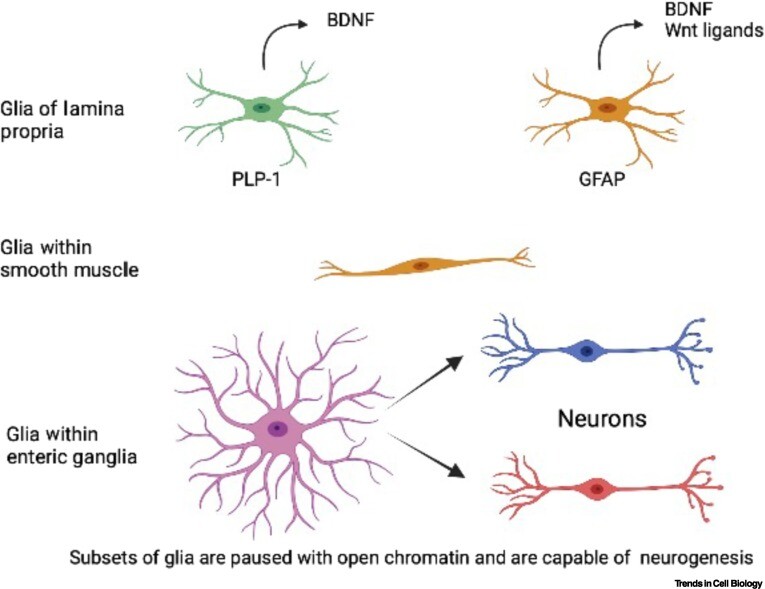
Enteric glia: genomically open, poised, and ready to make neurons https://www.cell.com/trends/cell-biology/fulltext/S0962-8924(23)00046-6?rss=yes&utm_source=dlvr.it&utm_medium=mastodon
Surely not the weirdest thing conceived in a late-night New York City cab ride.
"It might be hard to believe, but the term cognitive neuroscience—born out of a late-night New York City taxi ride (Gazzaniga 2014)—is now 50 years old."
https://www.annualreviews.org/doi/full/10.1146/annurev-devpsych-121318-085124
Thiago Carvalho
boosted

As imaging technologies like fMRI and tools like machine learning get more powerful, neuroscientists are gathering data on human brain development from ever larger populations, Fair & colleagues wrote in the Annual Review of Developmental Psychology https://arevie.ws/DevCogNeuro_Review
Thiago Carvalho
boosted

Temo q a ciência esteja a ser vítima do seu próprio sucesso: porque funciona, espera-se que seja (sempre) útil.
Tinha este texto “na gaveta”, mas há rumores barulhentos sobre uma fusão entre o IGC e o IMM.
Esta fusão preocupa-me em grande parte porque segue outras decisões que forçam a Ciência a ser cada vez menos fundamental e muito menos independente. O tamanho conta, mas está longe de ser o mais importante.
Em defesa da inutilidade, para a @Almanaque
https://almanaquemag.com/o-maravilhoso-potencial-da-inutilidade/
Thiago Carvalho
boosted

A fully-funded, three-year postdoctoral position in theoretical neuroscience is now available at Bocconi University's Department of Computing Sciences in Milan, Italy. The postdoctoral researcher will have the chance to explore various research topics, such as movement modulation of visual responses in mice, integrating connectomes in mechanistic models of brain functions, and building normative models of neural representations, among others. The research will utilize cutting-edge approaches from statistical physics, nonlinear dynamics, and machine learning, and will be informed by the latest electrophysiological and connectomic data. Prior experience with computational neuroscience is a plus, but it is not required.
The postdoc will have the opportunity to become a part of the thriving neuroscience, machine learning, and computer science communities at Bocconi University. To learn more about these communities, please visit https://cs.unibocconi.eu/ and https://bidsa.unibocconi.eu/. The postdoc will be a member of the NSF-funded Accelnet consortium "International network for brain-inspired computation," facilitating international collaborations between a large network of computational neuroscience/AI labs. At Bocconi University, we are committed to fostering a diverse intellectual community and encourage individuals from underrepresented groups to apply for these positions.
Applicants should apply via our on-line application system, which can be found at "www.unibocconi.eu/post-doc" (Publication nr. 65633) by 23:59 of April 17th, 2023 (Italian time).
If you have any questions, please feel free to contact me at alessandro.sanzeni@unibocconi.it
#ScienceJobs #job #neuroscience #connectomics #academia #compneuro #computationalneuroscience #ComplexSystems #physics
'Filipchenko was Dobzhansky’s formal and informal research supervisor, and a true friend, despite a twenty-year age difference. He invited Dobzhansky to carry out his genetical research on Drosophila in Leningrad, under very favorable conditions for that time, and later arranged for Dobzhansky to work in Thomas Hunt Morgan’s laboratory in the US (Konashev 2008.) Some of his ideas were also foundational in Dobzhansky’s search for solutions to the problem of species and speciation.'
https://link.springer.com/article/10.1007/s10739-023-09709-9
Thiago Carvalho
boosted

RT @NathanGrubaugh
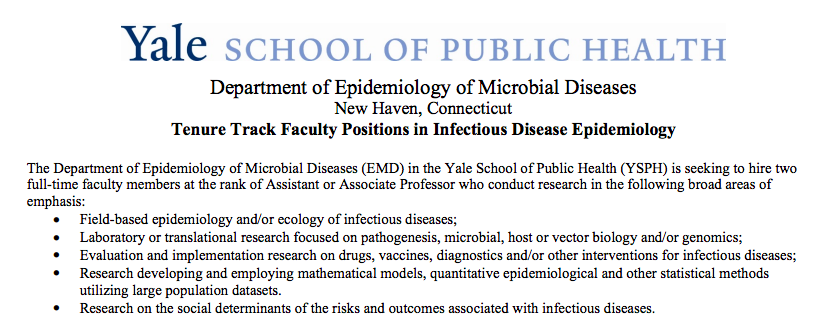
📢 Come be my colleague at @YaleSPH @YaleEMD!
Two✌️ Assistant or Associate Prof positions in Infectious Disease Epidemiology open in one of the best epi departments in the world (totally not biased 😉).
More info and link to apply 👉 https://apply.interfolio.com/122824
🙏 RT
Thiago Carvalho
boosted
RT @BogochIsaac
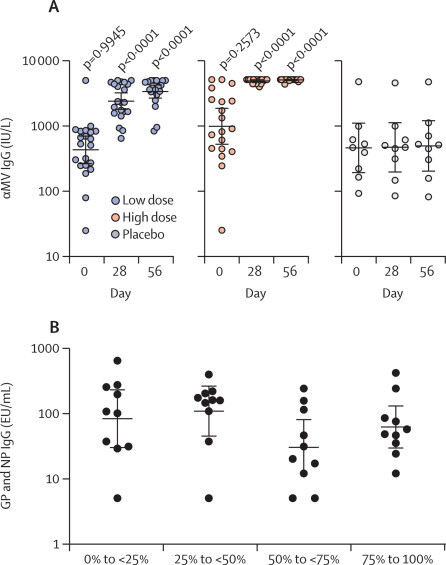
Lassa fever is a nasty viral hemorrhagic fever in west Africa with seasonal variation in cases.
It poses a significant challenge to public health & healthcare systems.
Very exciting to see progress toward a vaccine 👇
https://bit.ly/3yYmlFa by Tschismarov et al. in @thelancet
Thiago Carvalho
boosted



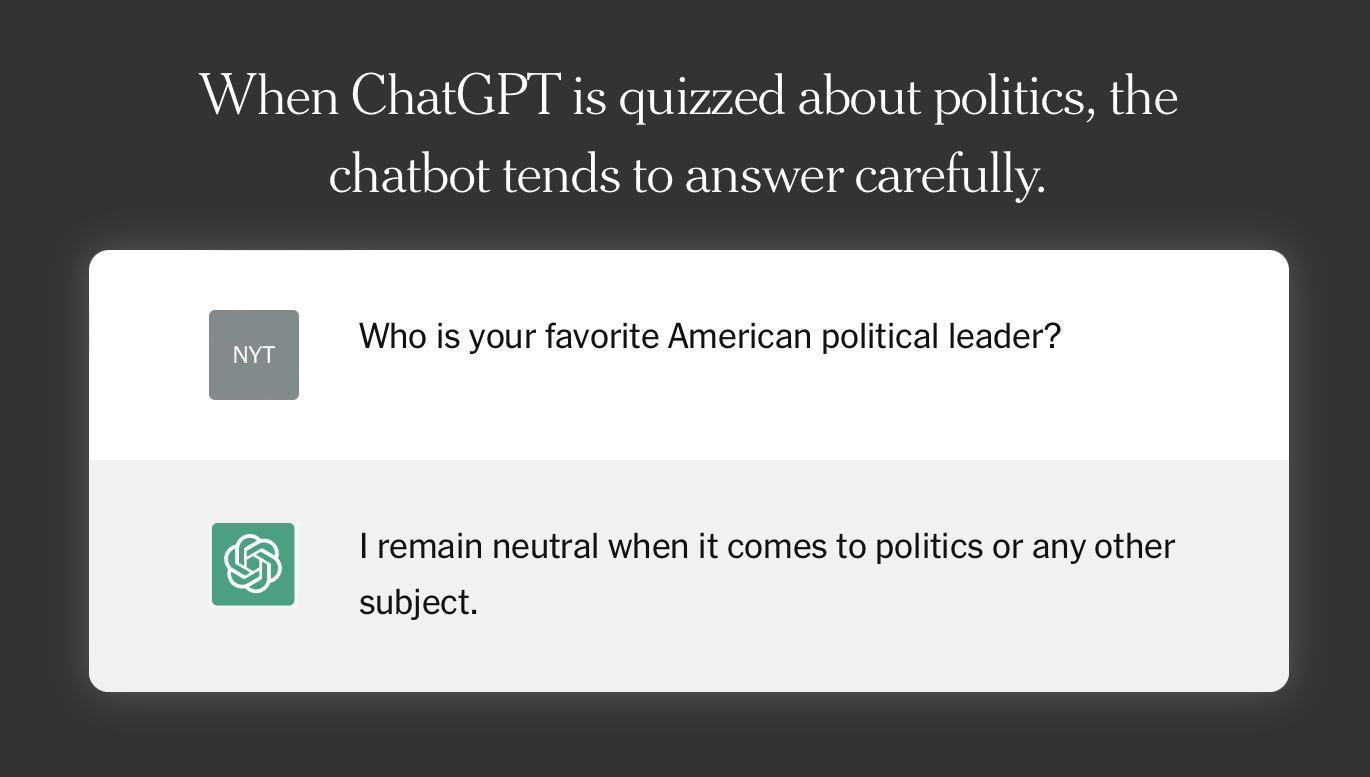
The impulse to anthropomorphize #ChatGPT remains powerful. https://www.nytimes.com/2023/03/22/business/media/ai-chatbots-right-wing-conservative.html?unlocked_article_code=OlSWoc67EOG2dVxBrqe9_Ko8At2X3oTRoaDWTwVUN6cMXTXfjpHZdhk0VKxSD4F3x2bZXPWzwv1waULeN6JtCq_FV4NWcdRPM7aIgglfedbeuW1gFpXvV-AY8M2TQPftM2jPndIVPbkAPf0Ppt9uL-0ufw5rWWrvNLzvaeOdEUCCe5Z71rlpn_-Q-8tvo3rphQ3ax39-P2ZWgrCqiq3pjZ070_G3StlqHNGCYcrptTQVjhmHofWzSa0L_GErX3QcIuPGU_hn9JHLGeOKNiez-R3SmFsctqyBVst_DPA0g3QZ-HfUrkcd_-eByFVXrUxTVyZHHSot6UWYPUHk5dJmp-tuobgX_LMppNzOfnQP8ds&smid=nytcore-ios-share&referringSource=articleShare
What sense does it make to ask ChatGPT a question like this, unless you already take it for granted that it’s a conscious entity? What would it mean for it to have a favorite, or to have opinions about politics? And is “carefully” an appropriate word for a nonsentient algorithm?
The context is an article about a right-wing effort to pervert these models in an ideological direction, which is another topic.
On a an arboreal solution to the problem of the ever-growing forest of cell types:
"The end proposal is for a three-dimensional tree representation where the axes are cell lineage, differentiation state, and time, with computational techniques applied to determine when you branch things off (i.e., setting things up for maximum information gain in the display)."
https://www.science.org/content/blog-post/organizing-our-thoughts-about-cells-finally
I've worked on all of science, from B cells to T cells.
https://fellowsherpa.com
Joined Nov 2022
