

Thiago Carvalho @cyrilpedia@social.cleverlibre.org
I've worked on all of science, from B cells to T cells.
https://fellowsherpa.com
Joined Nov 2022
Thiago Carvalho
boosted

Job alert!! Join our team in Mainz and help develop the next generation of tuberculosis vaccines!
https://jobs.biontech.de/Scientist-Tuberculosis-vaccine-development-de-j4653.html
Thiago Carvalho
boosted

An introduction:
We are a group of microbiologists, biochemists and structural biologists at the University of Sheffield studying the molecular basis of bacterial cell physiology, virulence and pathogen-host interactions
https://www.sheffield.ac.uk/biosciences/research/areas/molecular-microbiology
"Like all forms of climate defeatism, giving up on 1.5 degrees Celsius (2.7 degrees Fahrenheit) is a conversation for the privileged. 1.5 degrees of warming will already cause vast destruction to climate-vulnerable places, such as communities reliant upon coral reefs. For many more parts of the world, an additional 0.5 degree of warming is the difference between losing one’s house and losing one’s homeland. Unlike the climate threats faced by the wealthy, including the dignitaries and well-heeled NGO staff at COP27, the question for these communities boils down to survival, not strategy."
https://newrepublic.com/article/169047/warming-two-degrees-celsius-climate
"In the early 1990s, two ideas were central to views of early eukaryotic evolution. One was that the “three domains tree of life” was an accurate description of the relationships between eukaryotes and prokaryotes (Woese et al. 1990). The other was that some anaerobic and/or parasitic microbial eukaryotes that branched at the base of eukaryotes in this tree were primitively without mitochondria because they split from other eukaryotes before the mitochondrial endosymbiosis (Cavalier-Smith 1987). I’ve spent most of the last 30 years testing these ideas, and, while it has often been difficult and frustrating, it has also been tremendously exciting and a lot of fun."
- T Martin Embley
Thiago Carvalho
boosted

Giving up on the #climatecrisis is a luxury that only rich nations and privileged people can afford. @newrepublic https://newrepublic.com/article/169047/warming-two-degrees-celsius-climate
Thiago Carvalho
boosted

Just joined Mastodon and looking to connect with my twitter-sphere!
Thiago Carvalho
boosted

https://www.nature.com/articles/s41591-022-02073-x
Amazing work from Donna Farber. Likely very important to help understand how #ImmuneHealth changes over time.
Thiago Carvalho
boosted

Thiago Carvalho
boosted

Read a bunch of the articles as they've been released, but love this special issue from the Journal of Statistics and Data Science Education on teaching reproducibility.
Rare example of a whole issue I would read front to back like a magazine: https://www.tandfonline.com/toc/ujse21/30/3
Thiago Carvalho
boosted

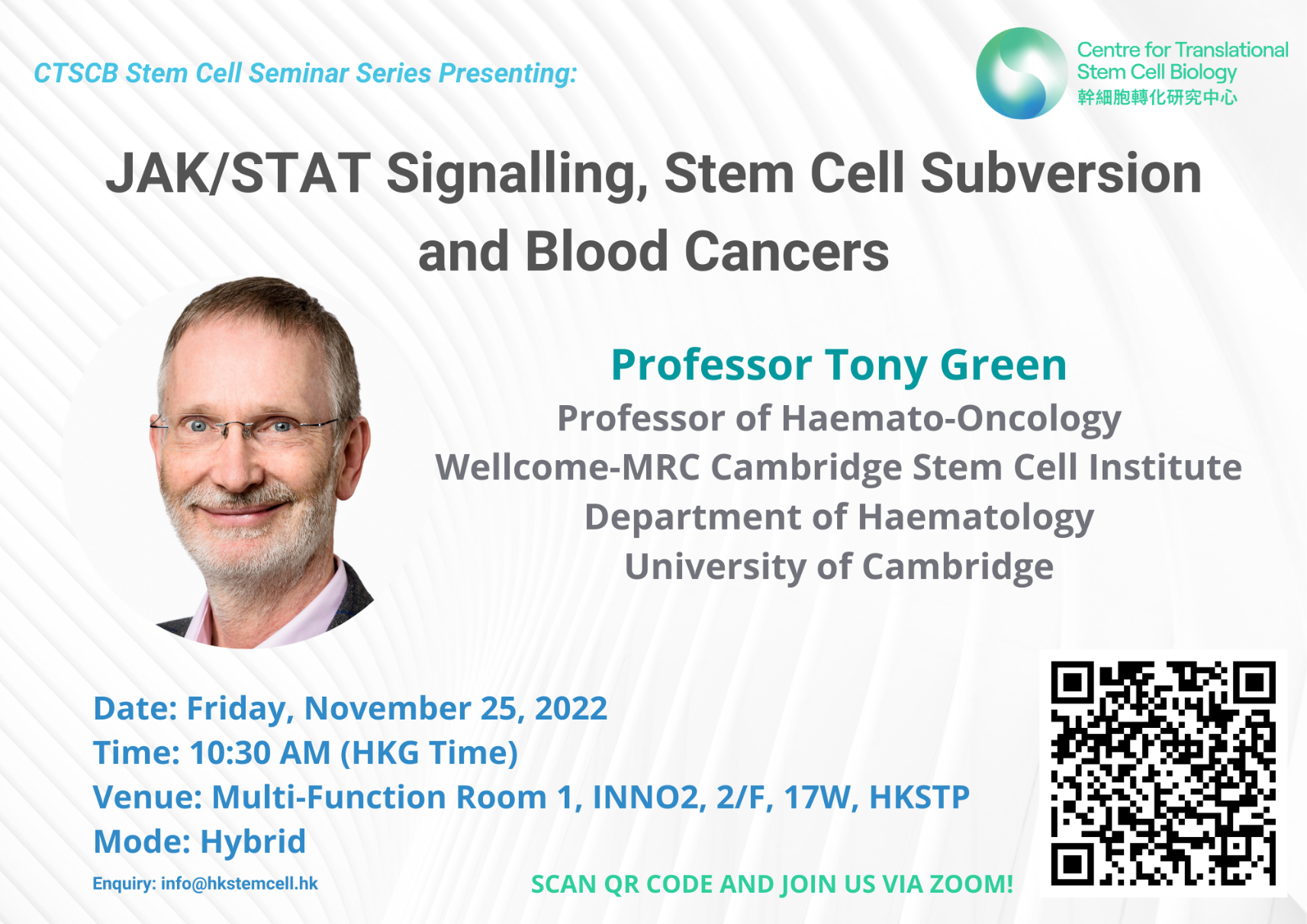
The #CTSCB_HK is inviting to a hybrid seminar by Prof Tony Green #Cambridge_Uni
Speaker: Professor Tony Green, Professor of Haemato-Oncology, Wellcome-MRC Cambridge Stem Cell Institute, Department of Haematology, University of Cambridge
Topic: JAK/STAT Signalling, Stem Cell Subversion and Blood Cancers
Date: Friday, November 25th, 2022
Time: 10:30AM (HKT)
Venue: Multifunction room 1, Inno2, 2/F, 17W, HKSTP
Zoom: http://shorturl.at/vxLRU
Thiago Carvalho
boosted

'Pinello’s lab and others have shown how ancestry mismatches can cause CRISPR to cut the genome in the wrong spot when it is used to treat diseases such as sickle cell disorder, which mainly affects people of African ancestry. Such off-target cuts could lead to cancer. The CRISPR ancestry problem is an example of how excluding diverse populations in genomics studies “may inevitably contribute to cancer health inequity,”'
🔗 : https://www.science.org/content/article/crispr-s-ancestry-problem-misses-cancer-targets-those-african-descent
#crispr #diversity #DEI #cancer #genomics
Thiago Carvalho
boosted

@cyrilpedia @TrendsNeuro Thank you for amplifying this - it's a really important point, I think. Joe LeDoux @amygdaloid has been saying this for a while now. I fear that way too few have been listening.
In my mind, we understand so little about brain function, that the neural correlates of nearly anything are valuable. Work on the amygdala is unquestionably that. But taking that next step toward translational impact - how will the amygdala fit in? That's the discussion that needs to be had.
Thiago Carvalho
boosted

https://www.biologists.com/meetings/dmminfectious2023/
Excited to promote this meeting in London - Infectious Diseases through an Evolutionary Lens - in October 2023. Diverse topics, speakers and perspectives. Organized with Wendy Barclay, Sara Cherry and Russell Vance.
Thiago Carvalho
boosted

This paper has not gotten enough attention! We are moving towards large-scale genomics. They reannotated 488 genomes in a comparatve way!
"TOGA integrates gene annotation with orthology inference at scale"
https://www.biorxiv.org/content/10.1101/2022.09.08.507143v1
We know phylogenomics can suffer from bias by annotation method: https://pubmed.ncbi.nlm.nih.gov/35588743/
I'm working on a similar solution, but only 283 genomes to start. Now I've got something to compare to. Mine will be a bit more #Rust-y, though.The possibilities are exciting.
Thiago Carvalho
boosted

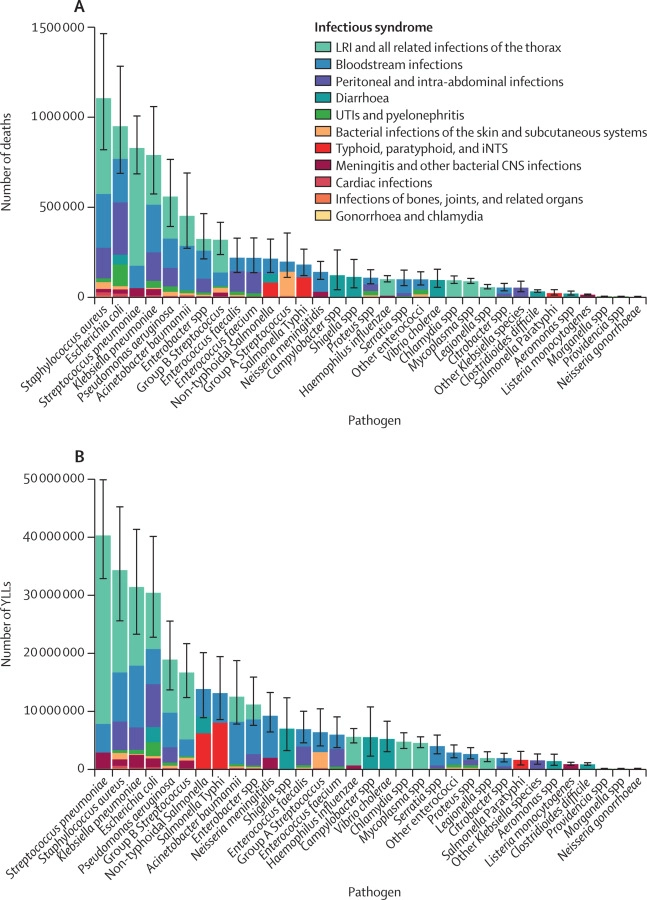
Essential reading for anyone studying bacterial pathogens:
Global mortality associated with 33 bacterial pathogens in 2019: a systematic analysis for the Global Burden of Disease Study 2019
"Staphylococcus aureus, Escherichia coli, Streptococcus pneumoniae, Klebsiella pneumoniae, and Pseudomonas aeruginosa—were responsible for 54·9% (52·9–56·9) of deaths among the investigated bacteria."
https://www.thelancet.com/journals/lancet/article/PIIS0140-6736(22)02185-7/fulltext#%20
HT @onisillos
"Should this framework be correct, the extensive ongoing efforts devoted to targeting amygdala circuits and rodent behaviors such as freezing and avoidance are unlikely to provide a direct route to treatments for human fear and anxiety disorders. These lines of research can help, but not without recognizing the centrality of subjective experience."
@NicoleCRust & Joseph E.LeDoux, 'The tricky business of defining brain functions' @TrendsNeuro
https://www.sciencedirect.com/science/article/pii/S0166223622002132?dgcid=author
Thiago Carvalho
boosted
Defining brain functions is a top-4 challenge for brain research. Conversations with my co-author @amygdaloid have made me realize why. Among the big topics, I suspect that it's the most underappreciated.
Why does it matter? We summarize it here (share link):
https://authors.elsevier.com/a/1g7ZrbotpyLNK
Thiago Carvalho
boosted

Thiago Carvalho
boosted


RT @OlegButovsky@twitter.com
The Butovsky Lab is hiring a postdoc fellow to investigate microglial perturbations and their interactions with peripheral immunity:
https://www.dropbox.com/s/4m2caoxh0uvx25l/Postdoctoral%20positions%20in%20Butovsky%20lab.docx?dl=0
🐦🔗: https://twitter.com/OlegButovsky/status/1594759307505057821

Thiago Carvalho
boosted
With #TwitterMeltdown continues, our lab is looking for a RA. Please DM or rios@hku.hk
We have one project with exciting data open for you
#HKU #CellFate #Epigenome #Myeloid #Development
I've worked on all of science, from B cells to T cells.
https://fellowsherpa.com
Joined Nov 2022
