

Thiago Carvalho @cyrilpedia@social.cleverlibre.org
I've worked on all of science, from B cells to T cells.
https://fellowsherpa.com
Joined Nov 2022
Thiago Carvalho
boosted

#introduction.
Hi Mastodon in general and #histadons in particular - I teach classes (a lot of them!) in bioethics, history or medicine, and health humanities. I wrote a history of #Alzheimers in the United States, and am working (very slowly, alas) on a broader history of #dementia.
Lots of other interests - some grappling with our generally dire circumstances, but some of them actually fun, like cycling and board games.
I live and work in Philly.
Thiago Carvalho
boosted

Hello, everyone! Ani here. I trained as a microbiologist. In the lab I worked on methanogens, genetic code expansion, and inserting unnatural amino acids into proteins.
I’ve spent the past 15 years helping scientists grow communities and journals at professional societies. But I still have a hard time explaining just what it is that I do (there are some links in my bio that might help). My posts may be unrelated to my work too. 😆
Thiago Carvalho
boosted

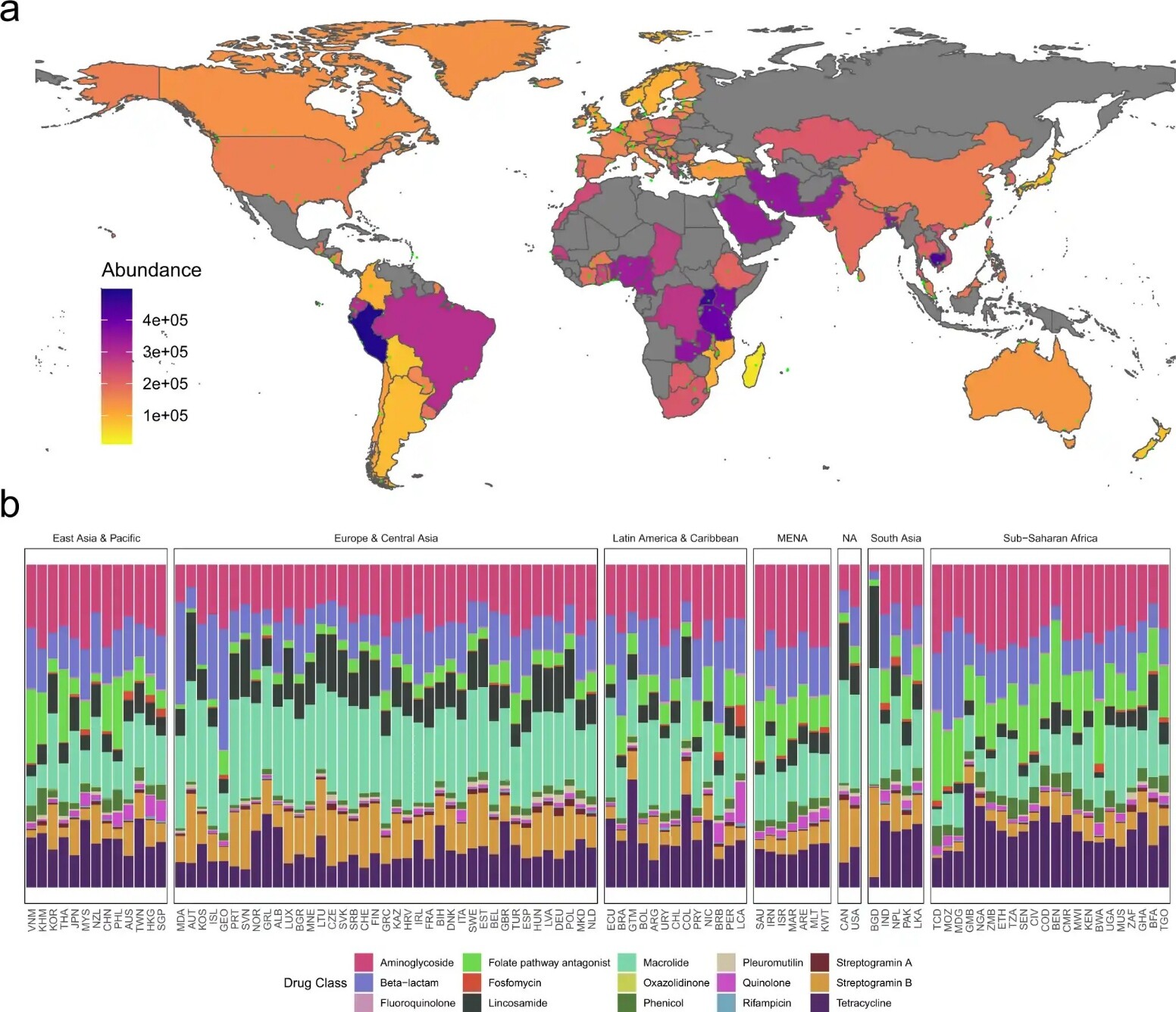
Fascinating and sobering research exploring the global distribution and diversity of #antibioticresistance genes across 101 countries via sequencing of DNA from #sewage samples
Thiago Carvalho
boosted

Dear people interested in #organoids #Tcells #Macrophages #Bcells #DendriticCells #MucosalImmunology #microbiome #OrganOnChip #MicroPhysiologicalSystems #IBD #CeliacDisease #iPSCs,
where are you? I want to follow you!
Best regards,
Me
Thiago Carvalho
boosted

What do we call ourselves over here? #EpiMastodon? #EpiTooters?
Thiago Carvalho
boosted

The 10 biggest science stories of 2022 – chosen by scientists https://www.theguardian.com/science/2022/dec/18/the-10-biggest-science-stories-of-2022-chosen-by-scientists
Thiago Carvalho
boosted

@cyrilpedia there is some dark humour to be had in the fact that one of the most influential contributers to understanding a disease about memory loss was forgotten for decades.
Thiago Carvalho
boosted

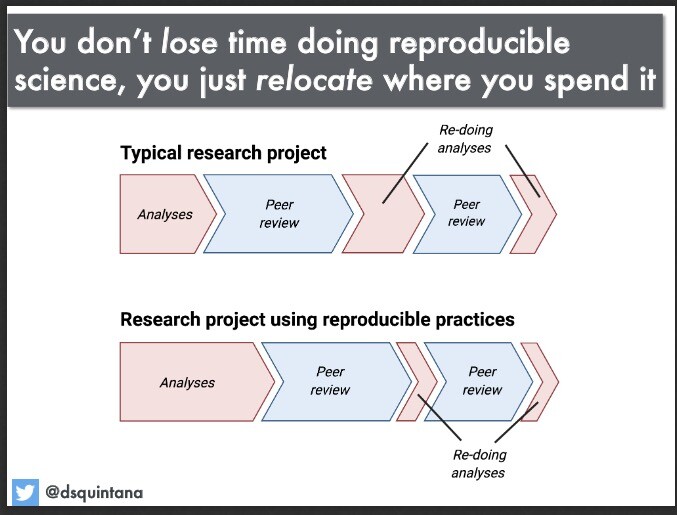
The slides for my recent intro to open science (OS) talk, including 5 things about OS that everyone should know
➡️ https://osf.io/zy2pc ⬅️
1. OS practices accelerate scientific discovery
2. Adopting OS practices can make you a more competitive job/grant applicant
3. Data sharing is on a continuum (it doesn’t have to be either fully open or fully closed)
4. Take it one step at a time, you don’t have to learn every skill at once
5. Your future self will thank you for adopting OS practices
Thiago Carvalho
boosted

Ok everyone the current contender for “World’s Most Interesting Man,” @BWJones has joined give him a follow for photos, cars, and an improbably delightful origin story. Oh and some amazing scientific research into how our eyes work. There’s that bit too 👀
'By 1912, Fischer had identified dozens of dementia patients with plaques, and he had described their cases in unprecedented detail. Yet Emil Kraepelin, a founder of modern psychiatry and Alzheimer’s boss at a psychiatric clinic in Munich, Germany, decreed that the condition was to be named “#Alzheimer’s disease.” Fischer and his contributions were lost for decades after he was arrested by the Gestapo in 1941 and taken to a Nazi political prison, where he died.'
https://www.quantamagazine.org/what-causes-alzheimers-scientists-are-rethinking-the-answer-20221208/
Thiago Carvalho
boosted

RT @faygatsirl@twitter.com
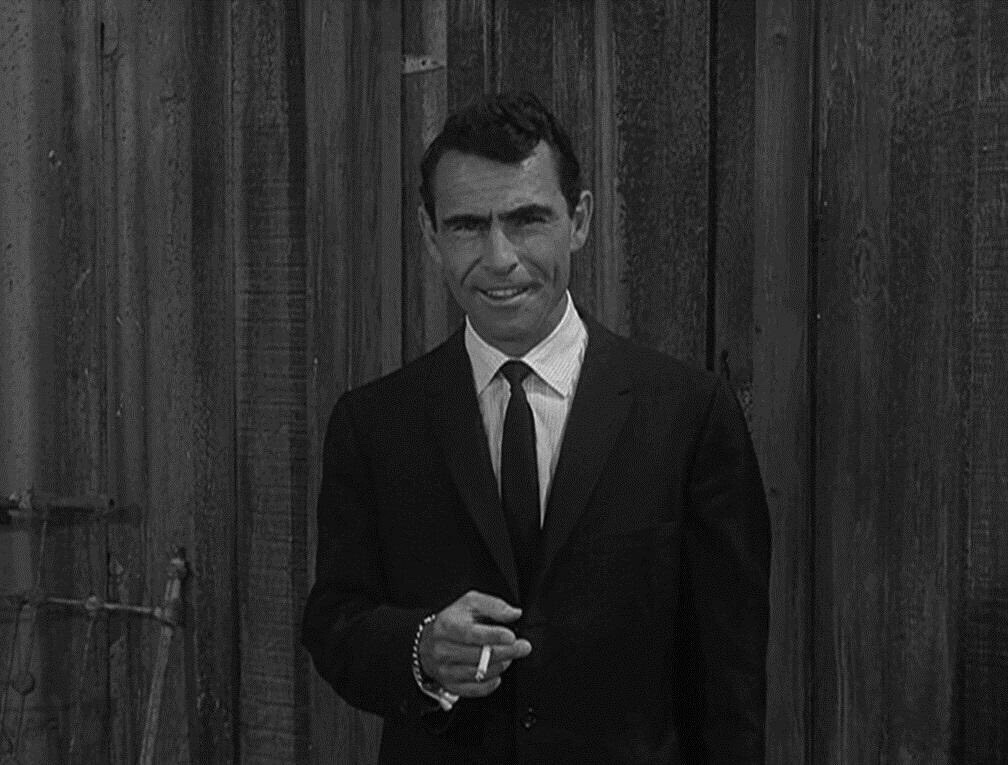
For your consideration. The world's wealthiest man has made the largest purchase of his life at 44 billion dollars. The product? A machine that shows him the thoughts of millions of people who all have one thing in common, they hate him. Tonight...On the Twilight Zone.
🐦🔗: https://twitter.com/faygatsirl/status/1604012576811225088
This is such an important point in the comparative study of Toll like receptors and immunity across taxa: the prototypical Toll is *not* a microbial/foreign pattern recognition receptor, it is only activated by a host molecule.
"The Drosophila Toll receptor differs from the mammalian TLRs in that the Drosophila Toll receptor functions as a cytokine receptor (reviewed in Ref. 5), whereas the mammalian TLRs recognize foreign structures directly and thus are pattern recognition receptors (PRRs)."
Thiago Carvalho
boosted

Stimulating and fascinating read from #LudingtonWill on how #hosts and #microbes could use a secret code to exchange information about #nutrient states. #TrendsMicrobiol sciencedirect.com/science/articl… #microbiome
'The inmates, over a dozen men and women held at the Orléans-Saran Penitentiary Center, had gathered to discuss novels published in France this year and pick the one they thought was the best. One suggested “Le Mage du Kremlin,” or “The Wizard of the Kremlin,” a fictionalized look at the Russian president’s inner circle. Another rooted for “La Petite Menteuse,” or “The Little Liar,” a novel that explores the post-#MeToo era. Debates were spirited, reviews were blunt — one inmate called a book “exceptionally boring.”
https://www.nytimes.com/2022/12/15/books/goncourt-inmates-book-prize-france.html
Thiago Carvalho
boosted

#LongCovid #longcovid.social
My partner came up with the idea of creating an instance for #LongCovid in which sufferers, carers, and allies could interact. This is how longcovid.social was born.
He saw how useful the #LongCovid community has been for me during the past two years and wanted to make sure we have a safe space in case the bird site deteriorates.
So here we are, longcovid.social instance is now ready and hopefully will offer each other meaningful interactions and support here.
Thiago Carvalho
boosted

I'm excited about this new #genomics #scRNA #rnaseq preprint from @ariel_hippen! It's a molecular biology deep dive into what happens when you dissociate and single-cell sequence a tissue with the goal of performing deconvolution of bulk tissue.
Some key bits: there are dissociation effects, RNA capture/depletion effects, and potentially some microfluidics effects with the #10X platform. Also, deconvolution algorithms are variably robust to these things.
See more:
https://www.biorxiv.org/content/10.1101/2022.12.04.519045v1
This became one of my go-to last-minute flavour bombs
Thiago Carvalho
boosted



Friendly woof or growly bark?🐶🐾 ❔ Turns out we aren’t that great at telling the difference! New study by the Max Planck Institute for Geoanthropology & Friedrich-Schiller-Uni Jena suggests that humans aren’t great at picking up cues of aggression in #dogs – or in our fellow humans, for that matter! *Oddly enough, our own pooches only want to play!* 😉🐶 🥰 😁 https://www.mpg.de/19625800/1207-wisy-humans-struggle-to-identify-aggression-in-dogs-other-humans-9347732 Open access study here: https://journals.plos.org/plosone/article?id=10.1371/journal.pone.0277783 @unijena
'Es una pequeña pieza de bronce, no más grande que una bola de billar. Un poliedro de 12 caras que, en cada vértice, luce un pequeño remate redondo, como una esfera. En cada uno de sus planos hay tallado un agujero, y cada uno de estos agujeros resulta de distinto tamaño. Suena misterioso, y lo es. De los llamados dodecaedros romanos, de hecho, ni siquiera se sabe si tienen su origen en Roma. Ninguna referencia escrita alude a ellos, lo cual dificulta muchísimo interpretar qué lugar ocuparon en la sociedad cuando estos fueron aleados.'

I've worked on all of science, from B cells to T cells.
https://fellowsherpa.com
Joined Nov 2022
