

Thiago Carvalho @cyrilpedia@social.cleverlibre.org
I've worked on all of science, from B cells to T cells.
https://fellowsherpa.com
Joined Nov 2022
Thiago Carvalho
boosted

Looking for feedback on some new thoughts about Big Ideas in brain/mind research.
I've spent quite a long time researching and thinking about the history of brain/mind research in terms of the Big Ideas that have emerged. Pre-1960, it's pretty easy to list the big ideas that researchers had reached consensus around. Since 1960, that's harder to do. There's plenty of consensus around new facts (like umami is supported by receptor X on the tongue), but it's difficult to regard the things that brain researchers agree on as new, big ideas. At first, I (mis)interpreted this as a paucity of new ideas, but I no longer think that's correct - I've found a ton. Instead, I now believe that they are there but we haven't arrived at consensus around them.
I'm wondering: Why might have researchers arrived at more consensus around Big ideas introduced 1900-1960 vs 1960-2020? Obviously there's the filter of history and the fact that it takes time to work things out. But is there more to it than that? For example, have the biggest principles already been discovered? And so we are left with more of a patchwork quilt?
A sample of big ideas pre-1960ish with general consensus
*) Nerve cells exist (it's not a reticulum)
*) Neurons propagate info electrically and then chemically between them
*) DNA > RNA > Protein is a universal genetic code or all living things
*) Explaining behavior needs intermediaries between stimuli and responses (cognitive maps/minds)
A sample of big ideas with no general consensus introduced post-1960ish:
*) Cortical function emerges from repetitions of a canonical element
*) The brain is optimized for goal-directed interactions with the environment in a feedback loop (prediction/embodiment/free energy)
*) The brain is a complex system with emergent properties that cannot be understood via reductionist approaches
*) Fine structural detail in the brain (the connectome) matters for brain function
I'd love to hear your thoughts.
Thiago Carvalho
boosted

Out today in Nature Human Behaviour: "A systematic review and meta-analysis of the evidence on learning during the COVID-19 pandemic" with @betthaeuser and Anders Bach-Mortensen https://www.nature.com/articles/s41562-022-01506-4
Thiago Carvalho
boosted

Reading in (online) journal club:
Jansson and Wu @NatureRevMicro@twitter.com
Soil viral diversity, ecology and climate change
#soil #SoilHealth #virus #biodiversity #ClimateChange #ecology
https://www.nature.com/articles/s41579-022-00811-z#Sec3
Thiago Carvalho
boosted

"Approximately a quarter of eukaryotes are infected with the bacterium Wolbachia." !!!!!
"we show that Wolbachia infection supports fly development and buffers against nutritional stress. Wolbachia infection across several fly genotypes and a range of nutrient conditions resulted in reduced pupal mortality, increased adult emergence, and larger size."
Lindsey et al. 2023 https://www.biorxiv.org/content/10.1101/2023.01.20.524972v1
Wow. #Drosophila #Wolbachia
Thiago Carvalho
boosted

Preprints are a great way to get community feedback on your research. To support discussion of preprinted work, ASAPbio & @PREreview_@twitter.com will host journal clubs for #preprints not yet submitted to a journal. Propose your preprint & get feedback on your work: https://buff.ly/3iQX7UA
"We have no one to blame but ourselves if we don’t give people credit for collaborating - when we hire them, when we promote them, when we give them our respect and recognition as scientists."
@CoriBargmann on the #EMBOPodcast
https://www.embo.org/podcasts/our-special-feature-as-humans-is-communication/
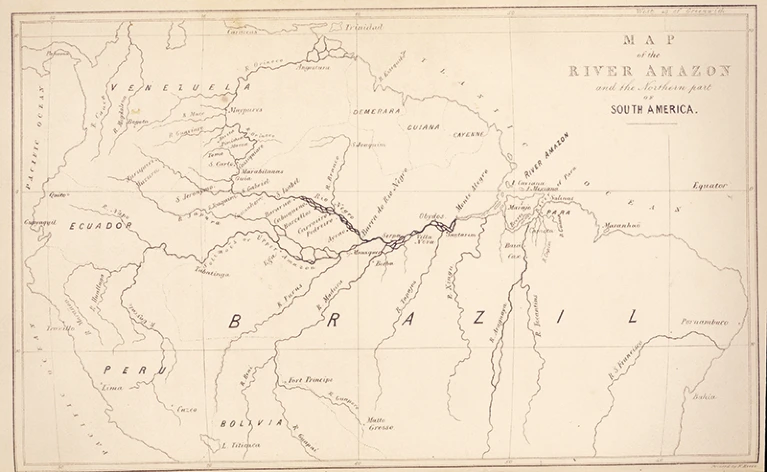
"Considering the vastness and complexity of Amazonia, it is hard to see how Wallace could have gained the insights he did after working in the region for only four years, had he not paid close attention to local knowledge."
Thiago Carvalho
boosted
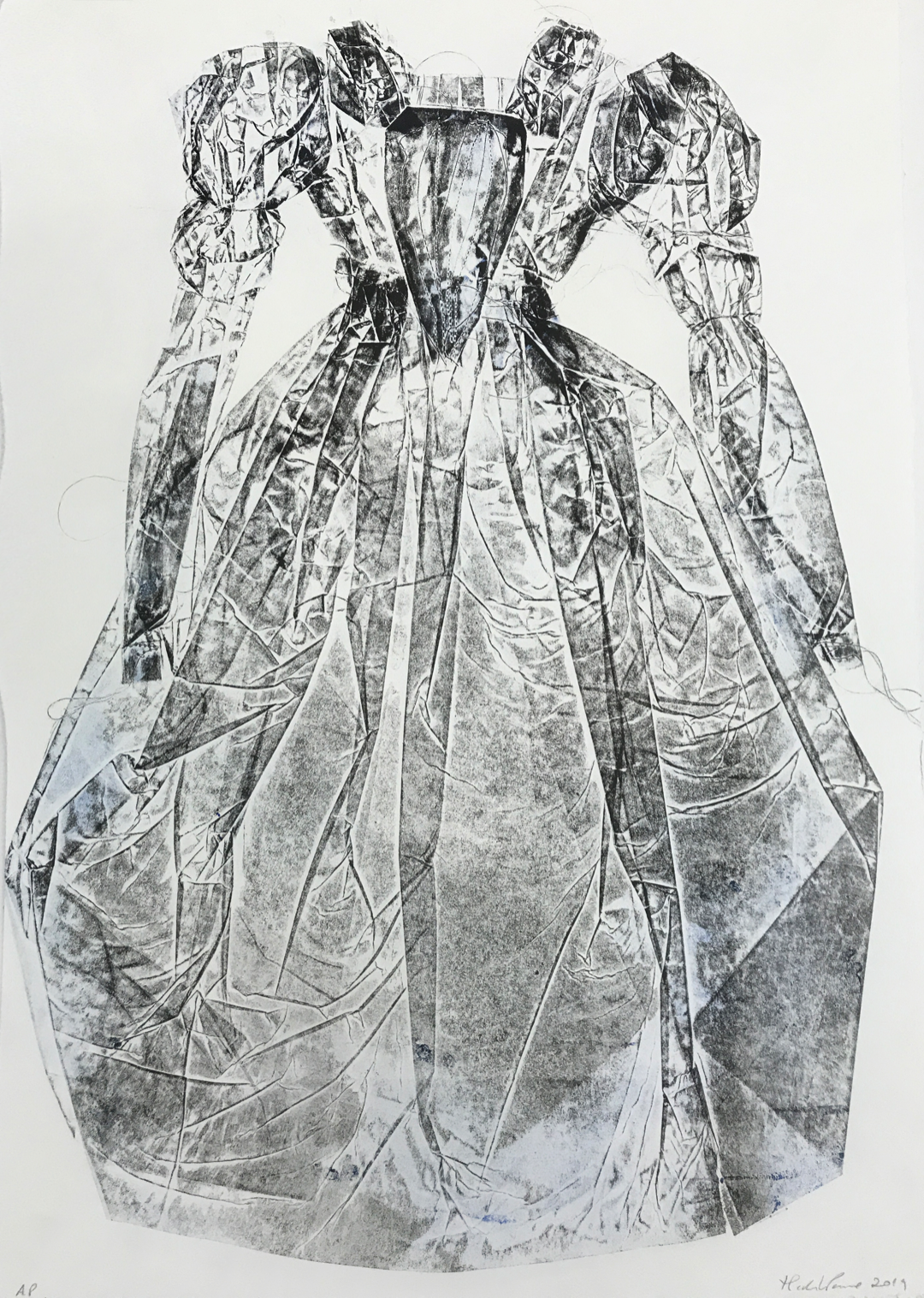
"The paper costume prints are mostly made from real costumes (with the exception of the long dress, which is a smaller scale model) , worn by actors in a film project and subsequently smashed, inked and printed on cotton paper."
Colograph by Madalena
Thiago Carvalho
boosted

RT @FEMSmicro@twitter.com
Just a few more days to submit your abstract!
The deadlines for abstract & grant applications are around the corner.
Looking forward to joining us in Hamburg for #FEMS2023?
Submit your contribution by 1 February 2023, 11:59 PM CET via: https://www.fems2023.org/abstracts
Thiago Carvalho
boosted

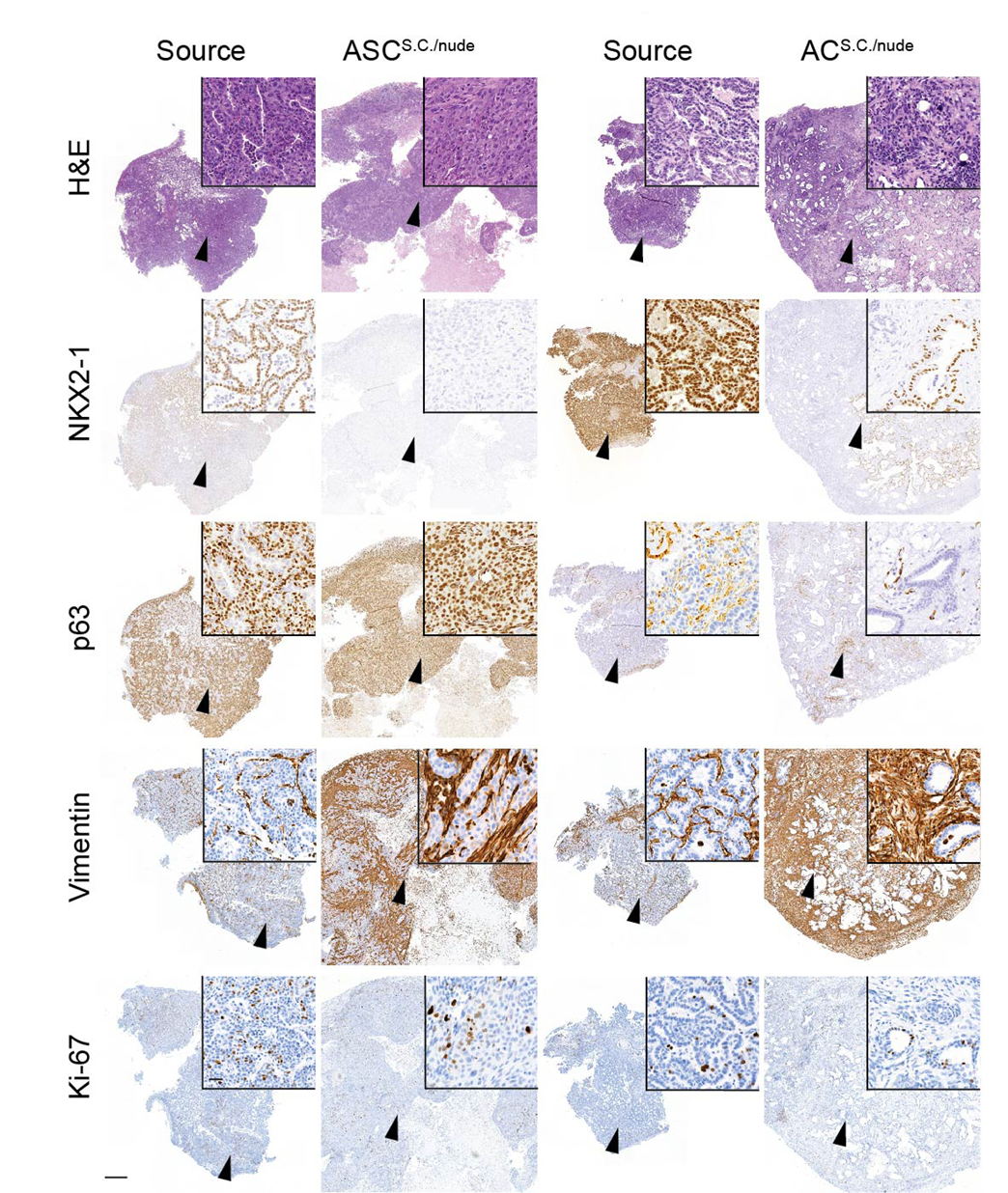
Iris Lähdeniemi and Jennifer Devlin develop a reproducible and rapid tumour-lung colonisation model to study an aggressive subset of non-small cell lung #cancer (NSCLC):
#NSCLC #Carcinoma #Histopathology #Metastasis #PreclinicalModel #Science #BiologyOpen #Biology #AcademicMastodon
Thiago Carvalho
boosted

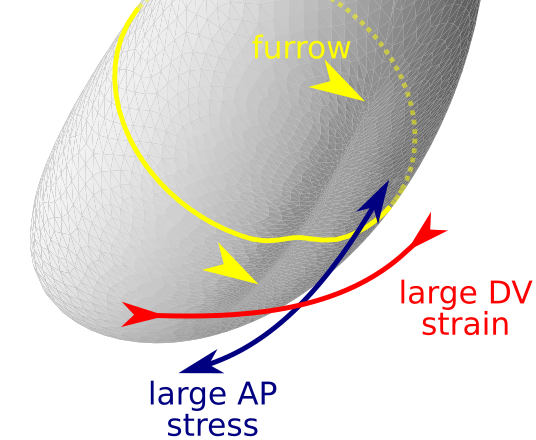
#PhD offer jointly between me in #Grenoble and Matteo Rauzi in #Nice: "#mechanics driving #tissue folding", an exciting #computational #physics and #biology project.
We will use (viscoelactic) #shells and (living) #fly embryos to understand a change of shape that is fundamental to #life.
http://liphy-annuaire.univ-grenoble-alpes.fr/pages_personnelles/jocelyn_etienne/epithelium_en/
Was Grail a good bet for Illumina?
"Grail, which counted Jeff Bezos and Gates among its early backers, has developed one of the world’s first early detection blood tests. The test, which it named Galleri, aims to detect up to 50 different types of cancer, including many that are not part of national screening programmes. It is currently being tested in trials, including a UK National Health Service study involving 140,000 people.”
https://www.ft.com/content/f1be9261-f473-462d-bd03-dd97b8615208
'Today she’s frustrated that efforts to restrain tech companies are so fragmented. “We have fantastic scholars, researchers, advocates who are focused on privacy, others who are focused on disinformation, others who are focused on the nexus with democracy,” she says, when we meet in London. This “Balkanisation” reduces the ability to pinpoint the “actual source of harm”: people’s data is treated as a costless resource, just as forests and other parts of nature were in centuries past.'
https://www.ft.com/content/0cca6054-6fc9-4a94-b2e2-890c50d956d5
Thiago Carvalho
boosted

Good morning BSDB people
Why not celebrate the end of this interminable January by nominating someone for an award?
You have ONE MORE DAY to send in nominations for the Cheryll Tickle Medal for outstanding achievements by a mid-career female developmental biologist, and the Beddington Medal for best PhD thesis.
Deadline for both: 31st Jan, which somehow seems to be TOMORROW
Please spread the word!
Thiago Carvalho
boosted

🧬 ❌ 🧬 ❌
"Physiol. Consequences of Genome Instability"
Looking for your enthusiasm and your imagination!
📣 9 positions for PhD applicants are available within the novel research consortium FOR 5504.
Send us your application and join us in  !
Email to: schumacher-office[at]uni-koeln.de
Please re-toot! 🙏
#Science #PHDstudent #PhDposition #DNA #DNAdamage #Genome #GenomeStability
@UniKoeln
@CECAD
#KidneyResearch #Ciliopathies #Cilia #CellBiology
Thiago Carvalho
boosted

Assistant Professor of Plant Pathology (Potato Pathology)
Washington State University Position
Apply by March 8, 2023
https://www.bspp.org.uk/job/washington-state-university-pullman-washington-usa-213-assistant-professor/
#plantscijobs
@plantscijobs
Thiago Carvalho
boosted
Multiple PhDs and Postdoctoral Funded Positions at The Max Planck Institute for Plant Breeding Research in Cologne, Germany
ByAgristok
https://agristok.net/2023/01/28/multiple-phds-and-postdoctoral-funded-positions-at-the-max-planck-institute-for-plant-breeding-research-in-cologne-germany/
#PlantSciJobs
@plantscijobs
Thiago Carvalho
boosted


"Other researchers are developing techniques that emulate nanopore-based DNA sequencing, profiling polypeptides on the basis of the changes they induce in an electric current as they pass through tiny channels."
I've worked on all of science, from B cells to T cells.
https://fellowsherpa.com
Joined Nov 2022
