

Thiago Carvalho @cyrilpedia@social.cleverlibre.org
I've worked on all of science, from B cells to T cells.
https://fellowsherpa.com
Joined Nov 2022
Damn.
'That morning at the lab, Karikó’s old boss had come to see her off. She did not tell him what a terrible mistake he was making in letting her leave. She didn’t gloat about her future at BioNTech, a pharmaceuticals firm that millions now associate with lifesaving vaccines but was then a relative upstart in the field. Instead the woman who had bounced from department to department, with no tenure prospects and never earning over $60,000 a year, said with total confidence: “In the future, this lab will be a museum. Don’t touch it.”
https://www.glamour.com/story/katalin-kariko-biontech-women-of-year-2021
Thiago Carvalho
boosted
"Psychologists in particular wanted a statistical skeleton key to unlock true experimental insights. It was an unrealistic burden to place on statistics, but the longing for a mathematical seal of approval burned hot."
https://www.sciencenews.org/article/statistical-significance-p-value-null-hypothesis-origins
Thiago Carvalho
boosted
'Por exemplo, no Verão de 2021, diziam: “Primeiro, vão vacinar-nos, depois vão tirar-nos as armas e as bíblias.” Tornou-se uma espécie de plataforma importante do Partido Republicano. Durante esse Verão, quando a variante Delta atingiu a Europa e os Estados Unidos, as pessoas morreram nos Estados Unidos porque se recusaram a aceitar as vacinas, apesar de estas estarem disponíveis gratuitamente.'
Thiago Carvalho
boosted
An evening well spent, IMO
"I actually don’t watch a ton of blockbusters, but in the early pandemic, I got extremely bored, drank half a bottle of wine, and rewatched Speed on a cold night."
https://www.theatlantic.com/newsletters/archive/2023/10/speed-blockbuster-90s/675521/
A CRISPR-based strategy to promote endogenous fetal hemoglobin re-expression to treat sickle cell disease: my latest Nature Medicine column.
Thiago Carvalho
boosted
"Defining that threat is not simple. The challenge is to do for infectious diseases what other researchers can now do for droughts or hurricanes: “attribute” events to climate change. “The very cutting edge right now is actually trying to start doing attribution … to say, for each degree of temperature change, how many more cases do we get?” says Erin Mordecai, an infectious disease ecologist at Stanford University."
Thiago Carvalho
boosted
'Los notables avances contra el cáncer logrados por la medicina en las dos últimas décadas tienen para el oncólogo Aleix Prat (Barcelona, 44 años) un lastre que limita su potencial: el escaso diagnóstico molecular que se realiza de los tumores, algo que impide identificar a los pacientes que más podrían beneficiarse de las terapias innovadoras. “Necesitamos tratar a 10 enfermos para que apenas se beneficien dos o tres. El resto paga un alto precio en toxicidad y, además, el coste económico para el sistema es insostenible”
Thiago Carvalho
boosted
'Imaginem que três toureiros se juntavam a uma manifestação contra as touradas. Foi o que aconteceu no sábado quando três deputados do Chega tentaram participar na manifestação “Casa para viver, planeta para habitar”.
https://www.publico.pt/2023/10/02/opiniao/opiniao/casa-viver-manifestacao-parasitar-2065261
Thiago Carvalho
boosted

Dr. Kariko was denied promotion at Penn because she couldn't rack up the NIH grants. Yet. She persisted. #COVID #vaccine #Nobel https://www.nytimes.com/2023/10/02/health/nobel-prize-medicine.html
Elizabethan insults. Pot & lit by @hunchbacksociety
#Ceramics #stoneware #pottery #Handmade #Art #stoneware #artgallery #artmastodon
Thiago Carvalho
boosted

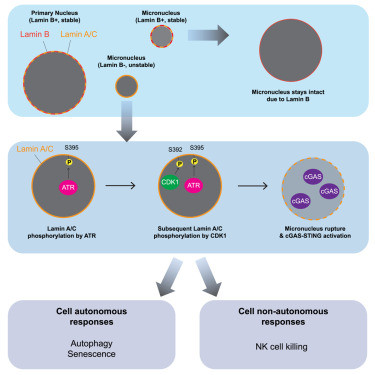
Online Now: ATR promotes clearance of damaged DNA and damaged cells by rupturing micronuclei https://www.cell.com/molecular-cell/fulltext/S1097-2765(23)00698-6?rss=yes&utm_source=dlvr.it&utm_medium=mastodon
Thiago Carvalho
boosted
Please dont write sentences like this. 'An Italian university' has a name, just like Harvard.
"Dr. Gino was something of an academic late bloomer. After growing up in Tione di Trento, a small town in Italy, she earned a Ph.D. in economics and management from an Italian university in 2004, then did a postdoctoral fellowship at Harvard Business School."
https://www.nytimes.com/2023/09/30/business/the-harvard-professor-and-the-bloggers.html
Thiago Carvalho
boosted
"Further, when CART cells were treated with IL-4, they developed signs of exhaustion, but when CART cells were treated with an IL-4 monoclonal antibody, they showed improved antitumor efficacy and reduced signs of exhaustion in preclinical models."
Thiago Carvalho
boosted

🌱I’m going on an adventure, to find the fertilizer🌱
Check out Margot Smit's first post for the "#NewPI diaries" series on the Node:
https://thenode.biologists.com/im-going-on-an-adventure/careers/
(Today is also Margot's first day as a group leader at The Center for Plant Molecular Biology (ZMBP) at University of Tübingen!)
Thiago Carvalho
boosted

Many of us are alive thanks to the mRNA COVID vaccine developed by today's Nobel Prize winners and many many many others. Here's a short thread of news from today, plus a Q&A with Katalin Karikó and a Scientific American article by Drew Weissman. https://www.scientificamerican.com/article/nobel-prize-medicine-2023-mrna-vaccine-tech/ #nobelprize
Thiago Carvalho
boosted
'However, as Keller would often emphasize later on, this approach did not mean that McClintock was pursuing science in a distinctively feminine way, either. Instead, as Horning notes, Keller’s aim, stated in “Reflections on Gender and Science,” was the “reclamation, from within science, of science as a human instead of a masculine project.”
https://news.mit.edu/2023/professor-emerita-evelyn-fox-keller-dies-0925
Thiago Carvalho
boosted

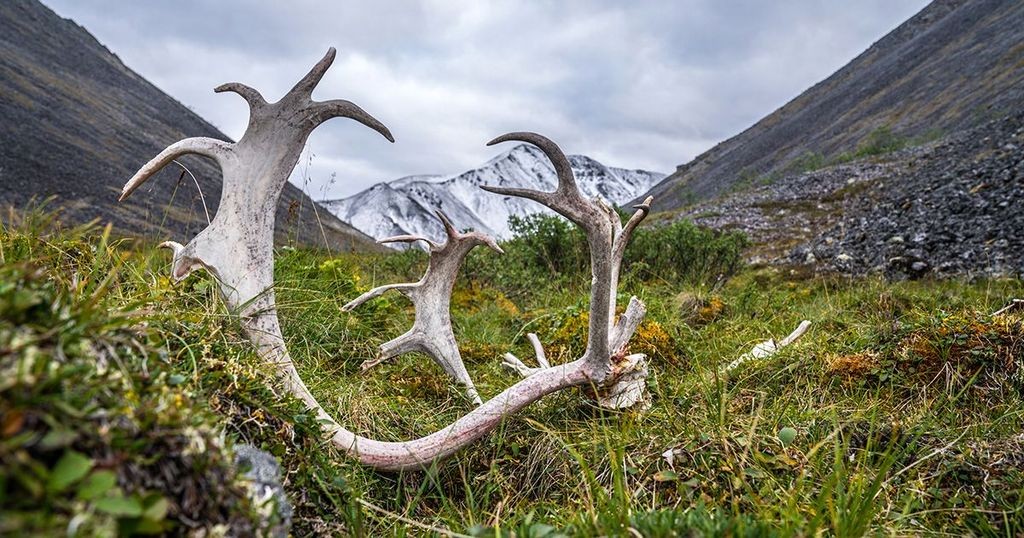
Researchers use historic remnants like antlers, shells, teeth and pollen to learn how natural communities once worked. The clues serve as guides for restoration.
Read more:
🔬 “Conservation paleobiology: Eyeing the past to restore today’s ecosystems,” @KnowableMag
https://arevie.ws/ConservationPaleobio
🔬 “Conservation Paleobiology: Leveraging Knowledge of the Past to Inform Conservation and Restoration,” Annual Review of Earth and Planetary Sciences
https://arevie.ws/Paleobio_EA43
"Suella Braverman’s latest assertionthat multiculturalism has “failed” proved that when it comes to immigration, we have moved away from dog whistles and back towards the sort of Powellite language that, even decades ago, was considered beyond the pale."
https://www.theguardian.com/commentisfree/2023/oct/02/suella-braverman-migrant-uk-multiculturalism
Thiago Carvalho
boosted

What is this beautiful neural phenomenon? Cortical spreading depolarizations, some of the brain's tallest waves, are thought to play a role in many things ranging from migraines to seizures.
Learn more about these beautiful and mysterious neural waves in this weeks post, "Catching the Brain's Tallest Waves" by Sophie Liebergall.
https://pennneuroknow.com/2023/09/26/catching-the-brains-tallest-waves/
Image taken by Sophie Liebergall and Zach Rosenthal at the University of Pennsylvania
Thiago Carvalho
boosted


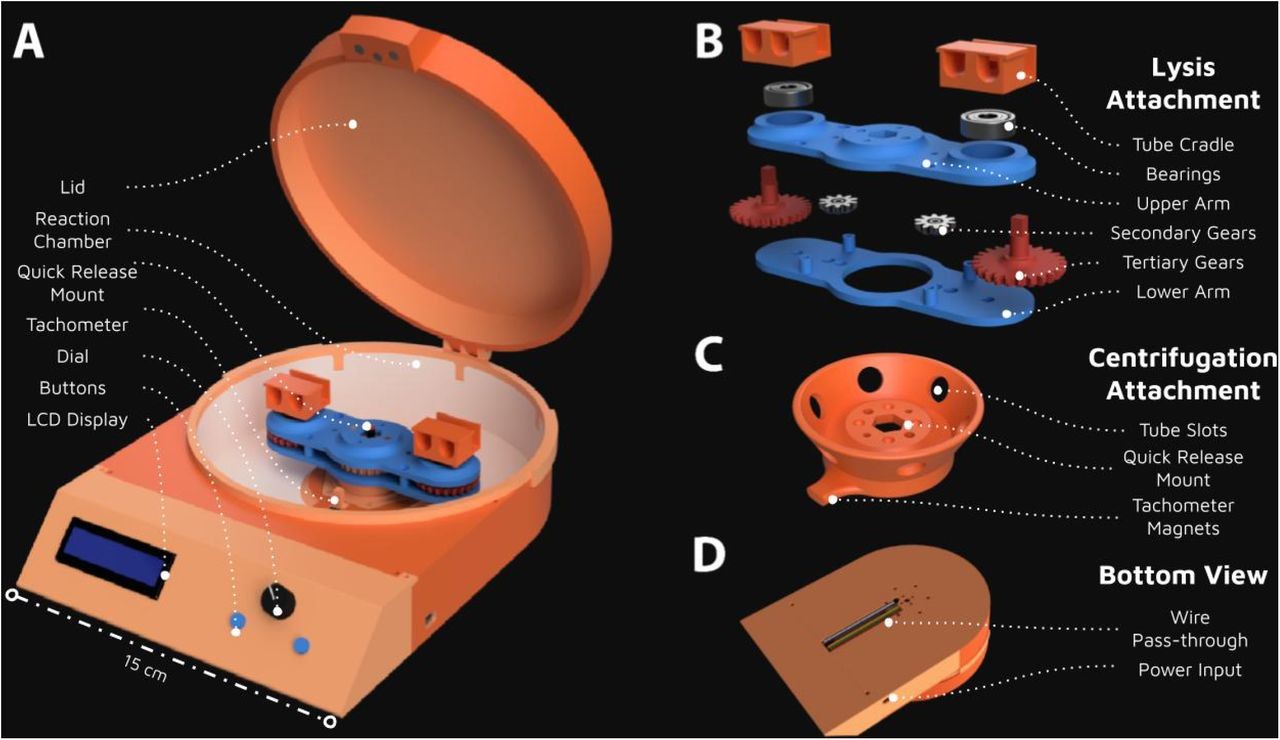
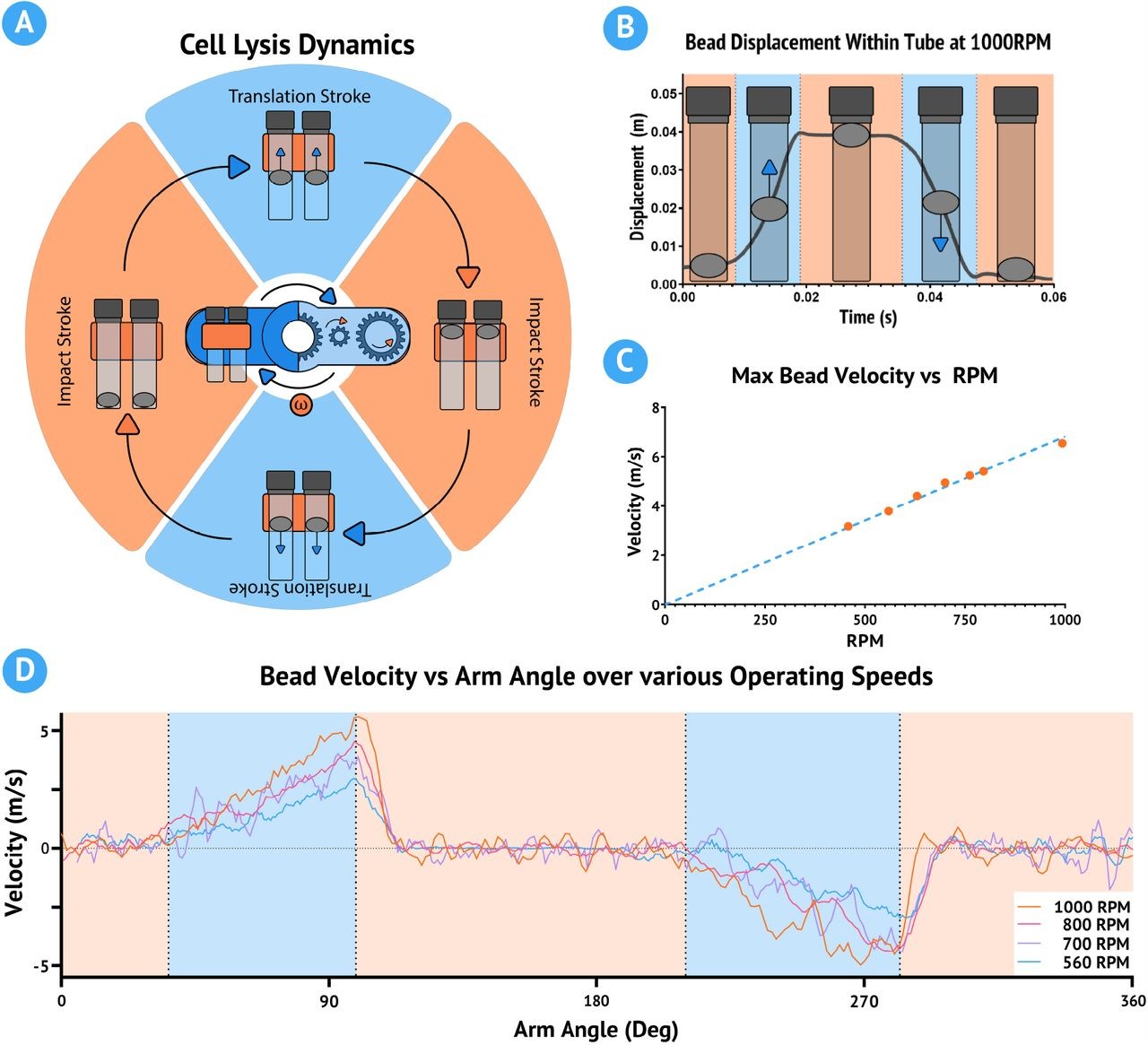
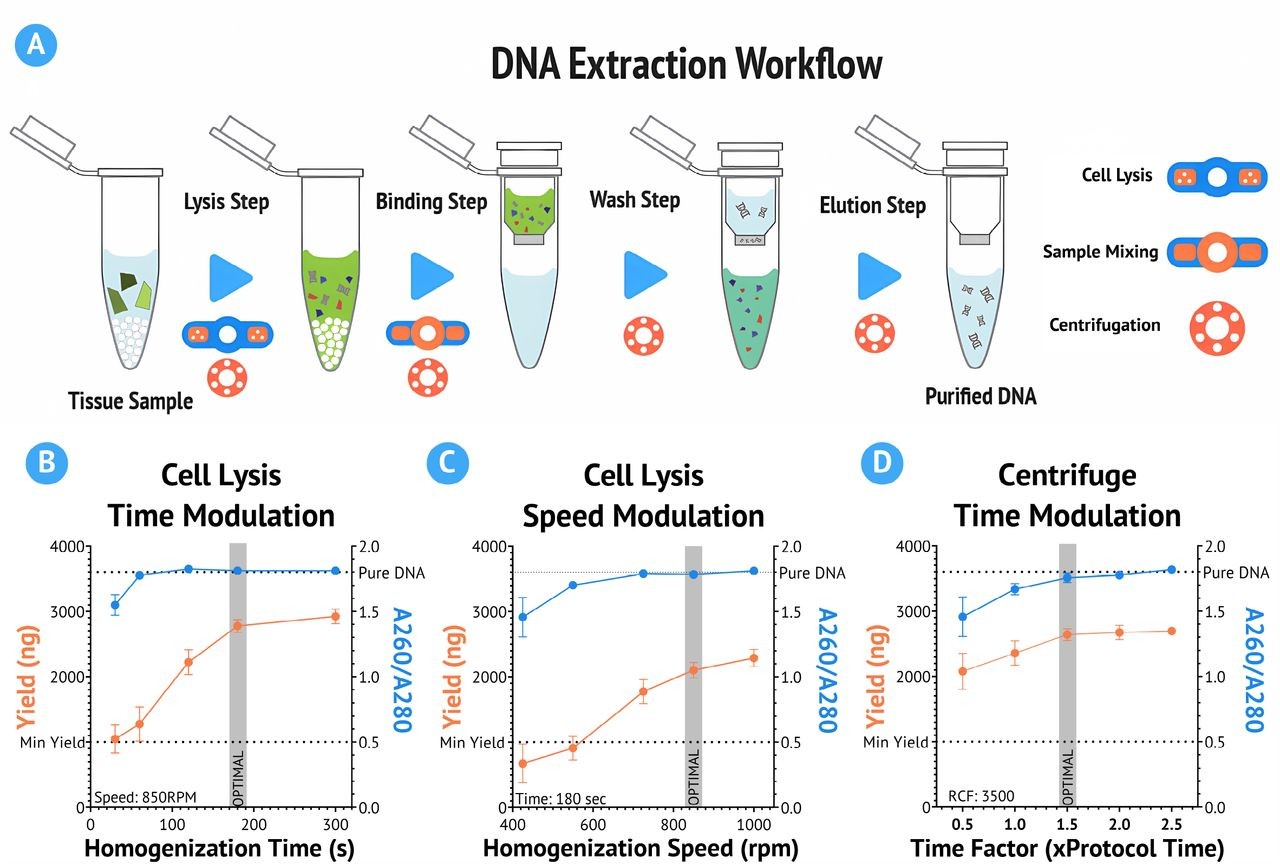
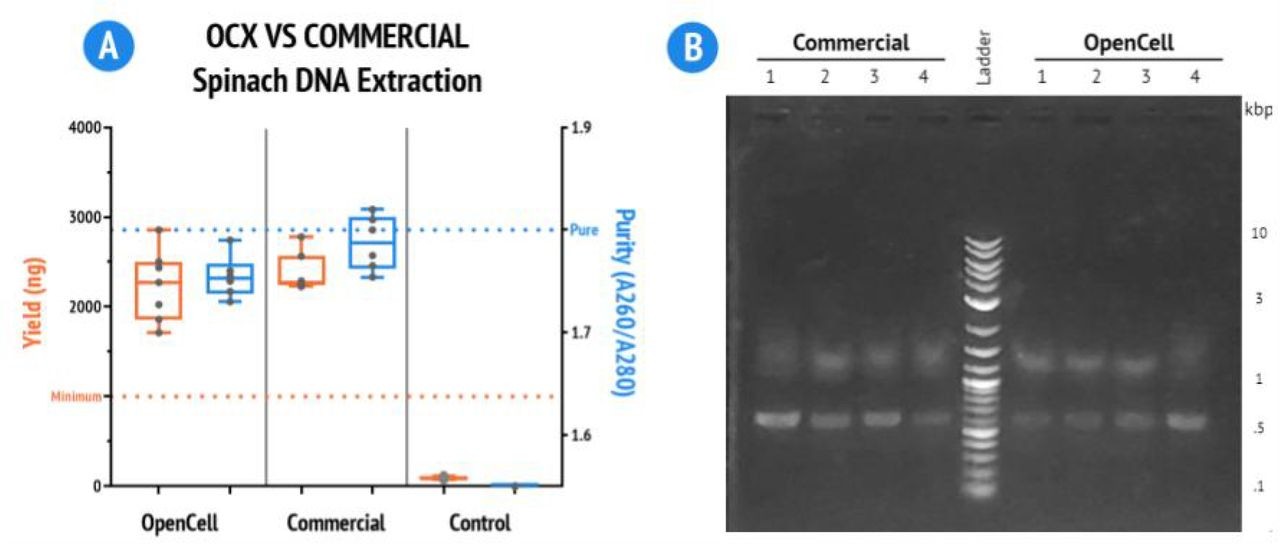
#OpenCell: A $50 #OpenSource 3-in-1 device for #DNA #extraction:
-combines bead #homogenizer, #microcentrifuge & vortex #mixer
-RPM measurement
-programmable timers
-battery operation
-optional speed control
https://doi.org/10.1101/2023.09.18.558349
#DIYbio #lab #instruments #FrugalScience
I've worked on all of science, from B cells to T cells.
https://fellowsherpa.com
Joined Nov 2022
