

Dimitra Grigoriou @demigrigo@social.cleverlibre.org
- Webpage
- amp.acdh.oeaw.ac.at/index.html
- twitter.com/demigrigo
Researcher at ÖAW's project
Also persuing a MSc in #DigitalHumanities at AUEB
MA in linguistics
Language Lover
Joined Nov 2022
Dimitra Grigoriou
boosted


2019-01-23
ACDH Lecture 5.1 – Miriah Meyer – Things that Poems Taught Me about Visualization
https://www.oeaw.ac.at/acdh/events/event-series/acdh-lecture-51/
https://youtube.com/watch?v=L1vexv9cXfQ&feature=shares
this talk inspired me, properly more accurate, unleashed me
Dimitra Grigoriou
boosted

Watch More Than 400 Classic Korean Films Free Online Thanks to the Korean Film Archive
Dimitra Grigoriou
boosted

Bis zum 15.01.2023 bewerben!
Für Studierende und Early Career Wissenschaftler:innen sind Stipendien für die
@DHdKonferenz in #Trier & #Luxemburg ausgeschrieben.
Weitere Informationen dazu gibt es hier: https://dig-hum.de/aktuelles/stipendien-f%C3%BCr-die-dhd2023
Dimitra Grigoriou
boosted

Heute war mein Kollege Massimiliano Carloni im Kurier – und unsere Auswertung der Aufenthaltsorte von #ArthurSchnitzler schnitzler-orte
Dimitra Grigoriou
boosted

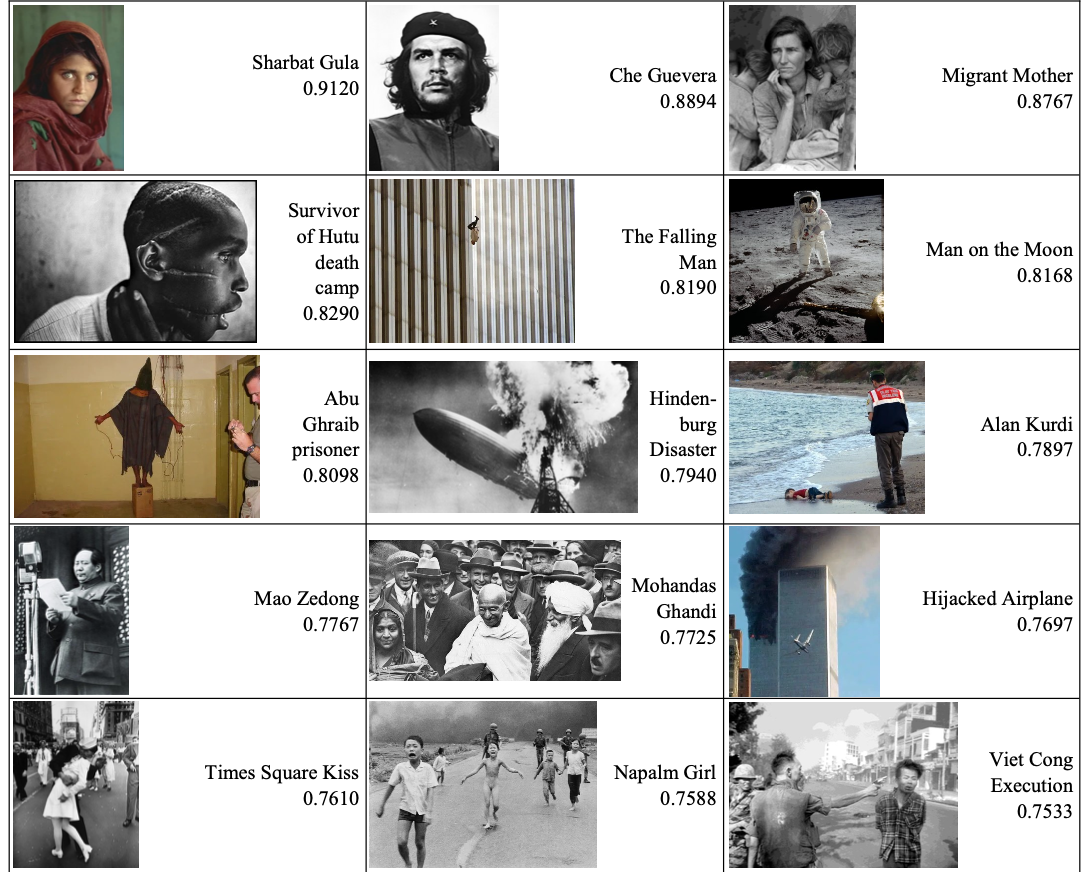
#CHR2022 starts today! Particularly looking forward to Session 2C Images and Scans (tomorrow) with exciting new work on
-the memorability of iconic images
-automatic identification and classification of portraits in historical photographs
-layout analysis of historical documents
Program: https://2022.computational-humanities-research.org/programme/
Full papers here: https://discourse.computational-humanities-research.org/
Dimitra Grigoriou
boosted

Materialien zur Lehrveranstaltung "Statistik mit  für die Linguistik: Eine Einführung": Jetzt online frei verfügbar hier:
https://doi.org/10.5281/zenodo.7431504
(235 Folien, 5 Übungszettel, Sprache: Deutsch)
Best of both worlds! Winter in 🇬🇷 rest of the year in 🇦🇹! Who else knew that #WHAuden's partner & collaborator #ChesterKallman was stay staying in 🇬🇷? #digital_humanities #digital_edition #Austria_Auden
@gvogeler @benjamingeer Thank you very much for taking the time to respond. Any source of input can help the community.
@dbellingradt It's a very interesting project! Prof. Navigli and his colleagues in Exeter have created a wonderful tool.
@benjamingeer Thank you very much for the eloquent answer, I feel that with your input colleagues would consider and plan their next steps accordingly.
dear @benjamingeer thank you for taking the time to respond. Very thoughtful points indeed.
1. Regarding Transparency: I guess your comment suggests also a form of intertextuality for enriching data.
2. Regarding Interoperability: I wonder if you have experienced limitations on the information available on github too
@natalie excellent remark, thank you!
Dear DH Community and Friends of Literature, I have some questions and I would like to hear your thoughts: What are your thoughts on scholarly digital editions? Is a particular feature that you would to see? What makes a good edition according to your experience? Is it the UX, the features, the visualizations, etc? #dh #digitalhumanities #digital_editions #discussion @dh @DHd @publicDH
Dear DH Community and Friends of Literature, I have some questions and I would like to hear your thoughts: What are your thoughts on scholarly digital editions? Is a particular feature that you would to see? What makes a good edition according to your experience? Is it the UX, the features, the visualizations, etc? #dh #digitalhumanities #digital_editions #discussion
@c18ah excellent job! What I would suggest is the change of colors on the "Topics" tab. Perhaps, different, vibrant colors would help users distinguish immediately each topic.
Dimitra Grigoriou
boosted

A visualization of Thomas Gray's correspondence — highlighting major topics of conversation — is now available as an interactive network graph:
https://www.thomasgray.org/texts/letters/network.shtml
We'd appreciate any feedback!
#ThomasGray #18thCentury #letters #c18th #digitalhumanities #ThomasGrayArchive
Dimitra Grigoriou
boosted




@natalie @dh you could make a diplomatic transcription of the text and annotate the text using TEI markup. Martin Foys at UW Madison @MartinFoysOEPF might be able to help with how to link annotations back to images. Check out https://www.digitalmappa.org to see what this looks like.
Hallo liebe Community! Weisst jemand von euch etwas über "American Academy in Vienna"? Google is not on my side on this one 
- Webpage
- amp.acdh.oeaw.ac.at/index.html
- twitter.com/demigrigo
Researcher at ÖAW's project
Also persuing a MSc in #DigitalHumanities at AUEB
MA in linguistics
Language Lover
Joined Nov 2022
