
 🇳🇱
🇳🇱
Interesting fact of the day. According to current understanding it is believed that the majority of planets in the Milky way are Rogue planets (do not orbit a star).
In fact of all the planets in our Milky Way it is thought at least 55% of them are rogue planets.
Because we can only observe Jupiter sized or larger rogue planets, giving us that figure, it is likely there are quite a few more than this which are smaller. Though it also depends on how we define planet since typically it depends on the nature of its orbit whether it is called a planet or a moon.
With that said I think this also highlights the error in the redefinition of the word planet which caused Pluto to be demoted. It was a day of bad science as it creates issues with this sort of language. the older definition of planet I still feel would be more useful and fitting and would allow for smoother communication in these scenarios.

@freemo I have wondered about the language necessary to explain this to my kids. My daughter a few months ago asked me why Pluto wasn't a "planet" anymore. I explained that they just changed it's classification to dwarf planet. She said "oh, so it's still a planet, then, a dwarf planet". I internally ran my response and then how I thought she would respond and so and so forth, and came to the conclusion that I couldn't argue with her logic.
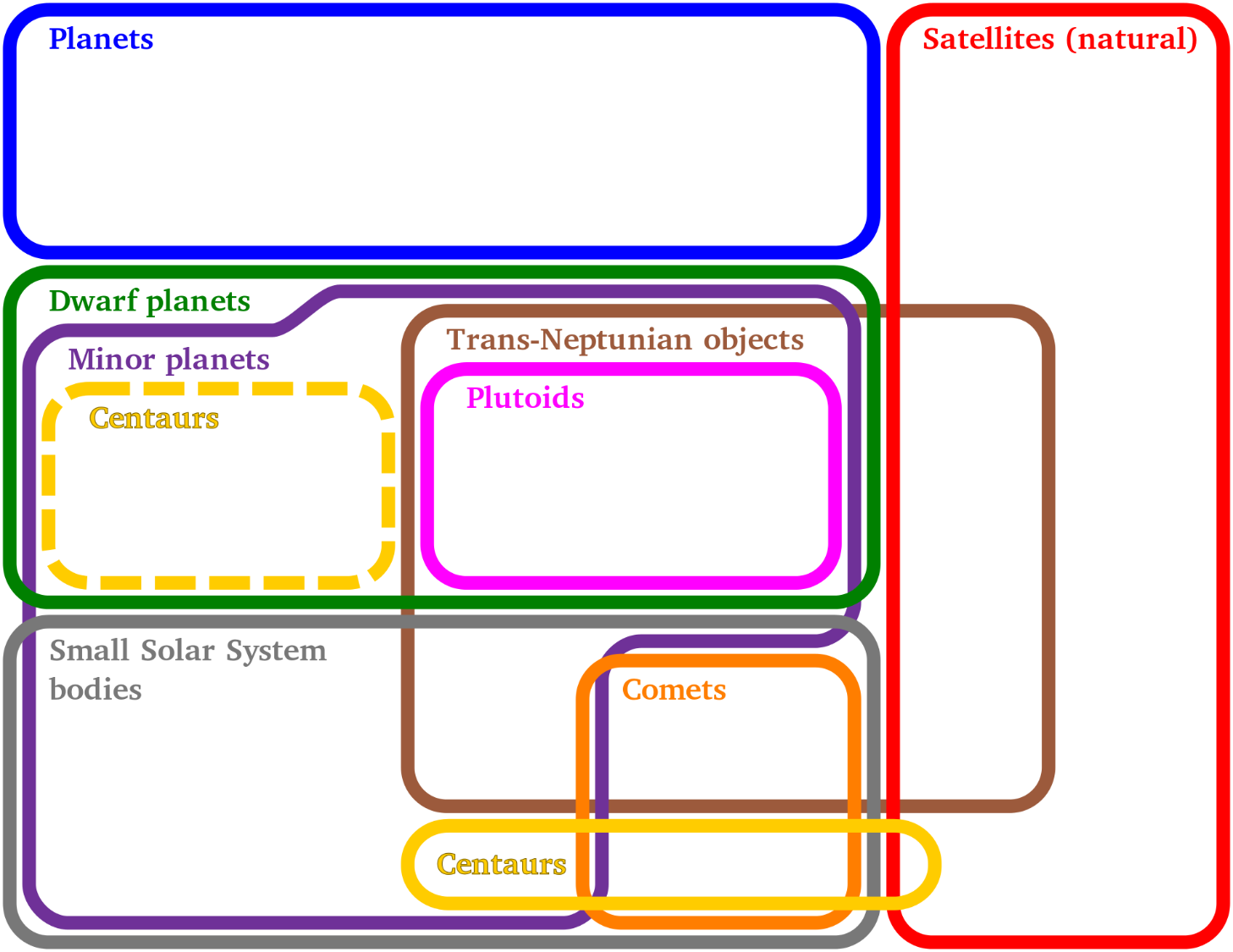
@obi You would think, but this is a artifact of how poorly they thought out the new definitions.. The definition of a planet must include anything that has cleared its orbit.. and a swarf planet has explicitly not cleared its orbit...
So in effect a dwarf planet is not a subcategory of a planet (as the name would imply).. they are mutually exclusive.
Like I said the definition they created was just poorly done in so many ways.
@obi No need the earlier definition made much more sense in my opinion... Everything is a planet (aside from stars and such) asteroids, moons, their all planets.. a normal planet is called a primary planet, moons were called secondary planets.
If you wish to create a distinction by size then add another level of classification.
@freemo I like it!

@freemo wow. Ya. Horribly defined. How about we just stick to 3 categories. Planets, moons, asteroids lol