


 🇳🇱
🇳🇱
@cark thanks. Ill try it out tomorrow.

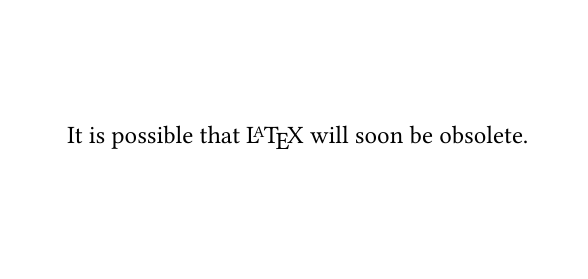
@freemo @cark I don't think there is any reason to move away from LaTeX if you are already using it proficiently. However, there are definitely areas where Typst would be better to begin with if you are new to typesetting.
That said, I would still recommend LaTeX to most math/science/engineering students because of the ecosystem and the longevity of it.

@freemo From what I can see #Typst is it is at least as powerful as #LaTeX. Because the scripting capabilities are much simpler than in LaTeX, I think in practice it is much more powerful because one could achieve the same result with way less hassle.
That said: LaTeX ecosystem had a head start of >40 years. Thus, for many common task there are packages and recipes available.
However, adapting and combining those to specific needs often is nontrivial and sometimes frustrating.