

hkl @hkl@social.cleverlibre.org
Professor of Neuroscience (Johns Hopkins Univ.)
Research interests: cortical plasticity, cross-modal plasticity, synaptic plasticity, metaplasticity, vision loss, visual cortex, auditory cortex
ORCID: 0000-0002-5554-983X
Joined Nov 2022
@seeingwithsound Great analogy!
hkl
boosted
Beautiful timelapse of Earth setting below the Moon's horizon captured by the Japanese lunar orbiter spacecraft Kaguya. ©JAXA/NHK
hkl
boosted

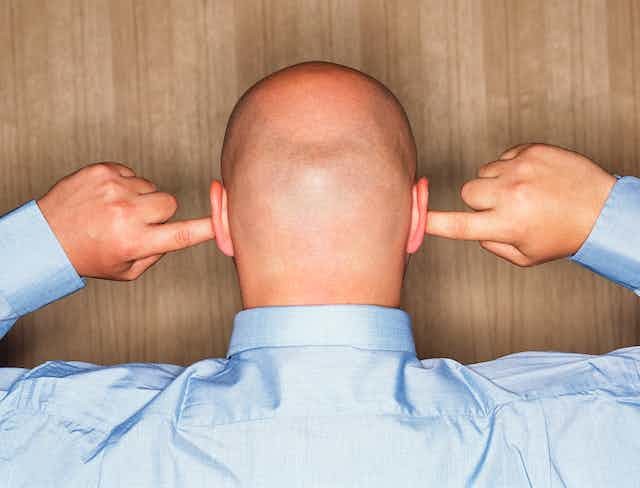
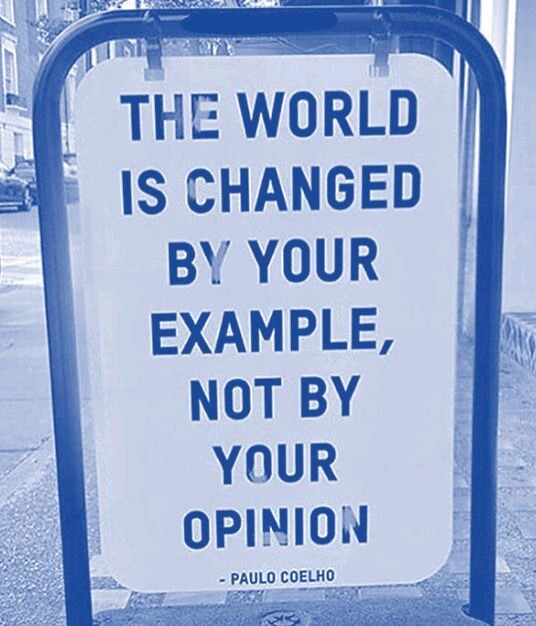
Cognitive Biases and Brain Biology Help Explain Why Facts don’t Change Minds
Facts First
Once facts are established, opinions can be formed.
Problem is that while it sounds logical, It is a fallacy not supported by #research
#Cognitive #psychology and #neuroscience studies found that people form opinions based on emotions, such as fear, contempt and anger, rather than relying on facts.
Facts often do not change people’s minds.
hkl
boosted

(1/3) Neuronal reactivation and replay in the #hippocampus is important for #learning and #memory. So does reactivation induce or modulate synaptic plasticity? We think it does! This is a video abstract made with #blender of our recent paper in #elife.
For higher quality video watch https://www.youtube.com/watch?v=v93Ci-koiNY
hkl
boosted

I just deleted my #Twitter account after 12 years of actively tweeting about biomedical research. #HelloMastodon
hkl
boosted
The planet Mercury crossing the face of the Sun captured by the Solar Dynamics Observatory spacecraft during a transit in 2019.
Credit: NASA SVS/SDO
hkl
boosted

As a working group, we also published a long-form report on the matter:
hkl
boosted
My argument, at its core, is that to do that, we need to teach people why science deserves their trust – and this requires teaching how science works as a social institution. I've written about this in brief in a Science American article: https://www.scientificamerican.com/article/to-fight-misinformation-we-need-to-teach-that-science-is-dynamic/
@jasonsynaptic I hope you get to!
hkl
boosted

Good morning #mastodon !
Incredible what you can see at night in the right part of the world, at the right time
The universe is just so vast and we see so little of it, but what we do see is amazing, we are both irrelevant and the center of it all
Are we alone or not?
This image is 4 shots 4 rows of 6 images, 6.5Gb and measures 26000x12500px
#photography #nature #naturephotography #landscapephotography #longexposure #NewZealand #PhotoMonday #astro #astrophotography
@jasonsynaptic
Hi Jason, Good to see you here. Look forward to following your photos! 
hkl
boosted

Gorgeous undersea beauty...

A spectacular sight 1225m (4019 ft) beneath the waves off Baja California as E/V Nautilus encounters the amazing Halitrephes maasi jelly. Full vide...
hkl
boosted


Be sure to catch the end of this clever NASA "climate spiral" video showing monthly global temperature changes between 1880 and 2021
https://climate.nasa.gov/climate_resources/300/video-climate-spiral/
Sixth in a 🧵 of #2022TopToots
@bibliolater Thanks for sharing these! We tend to forget where we came from and it's nice to get a refresher of where science came from and the minds that sculpted our way of thinking.
hkl
boosted
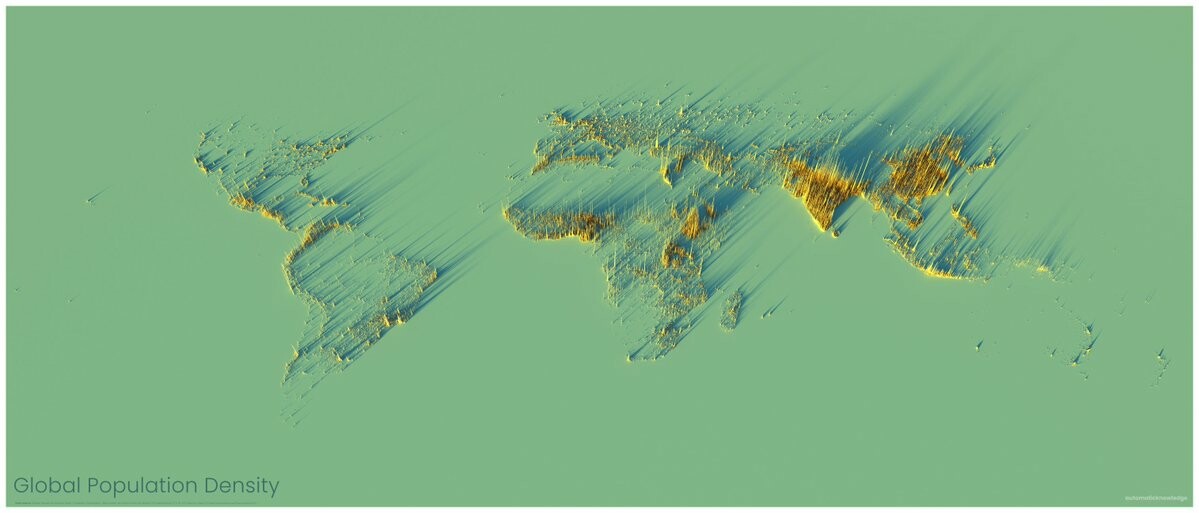
This map shows only people. It is a beautiful illustration of where people are concentrated.
If you squint, you can see Australia and New Zealand.
Map by Alasdair Rae https://www.visualcapitalist.com/cp/3d-map
Third in a 🧵 of #2022TopToots
hkl
boosted

@seeingwithsound You have a good point. Immediate recall will be different than recall of visual memory. I'd think the latter will be similar to visual imagery, since it likely involves prior knowledge (i.e. memory) to generate visual imagery.
It seems thinking in terms of providing information that these top-down circuits normally deliver to V1 would be a productive way to allow learning of auditory information in the visual circuitry.
@seeingwithsound To me the evidence suggests that visual memory is a top-down process that activates neurons in V1 much broadly, while visual percepts are mediated (as we know) from bottom-up inputs to V1. Somehow the brain distinguishes these two modes, which I find quite interesting. I'd think that visual imagery will be similar to visual memory in quality because it will be a top-down influence on V1. I know you're trying to get audio info to generate visual images. If this involves A1 inputs (direct or indirect) to V1, I'd imagine it would be through the similar top-down circuit. Meaning, V1 needs to "learn" how to represent these top-down information and map to visual space.
hkl
boosted

An interview with Blackrock Neurotech’s Taryn Southern https://www.messaginglab.com/blog/an-interview-with-blackrock-neurotechs-taryn-southern "The reality is a higher channel count does not necessarily improve the functionality of the device"; #BCI #Blackrock #NeuroTech #Neuralink
hkl
boosted


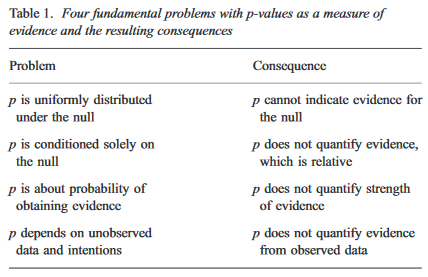
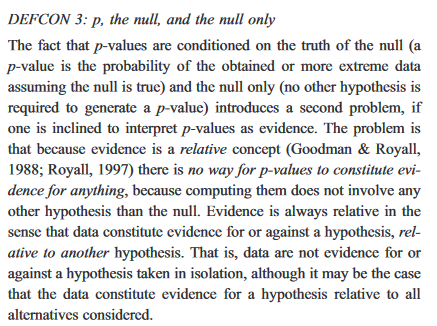
Excellent paper on why p-values are not measures of evidence by Johansson (that I missed when I wrote about the topic myself): https://onlinelibrary.wiley.com/doi/abs/10.1111/j.1467-9450.2010.00852.x
Professor of Neuroscience (Johns Hopkins Univ.)
Research interests: cortical plasticity, cross-modal plasticity, synaptic plasticity, metaplasticity, vision loss, visual cortex, auditory cortex
ORCID: 0000-0002-5554-983X
Joined Nov 2022
