
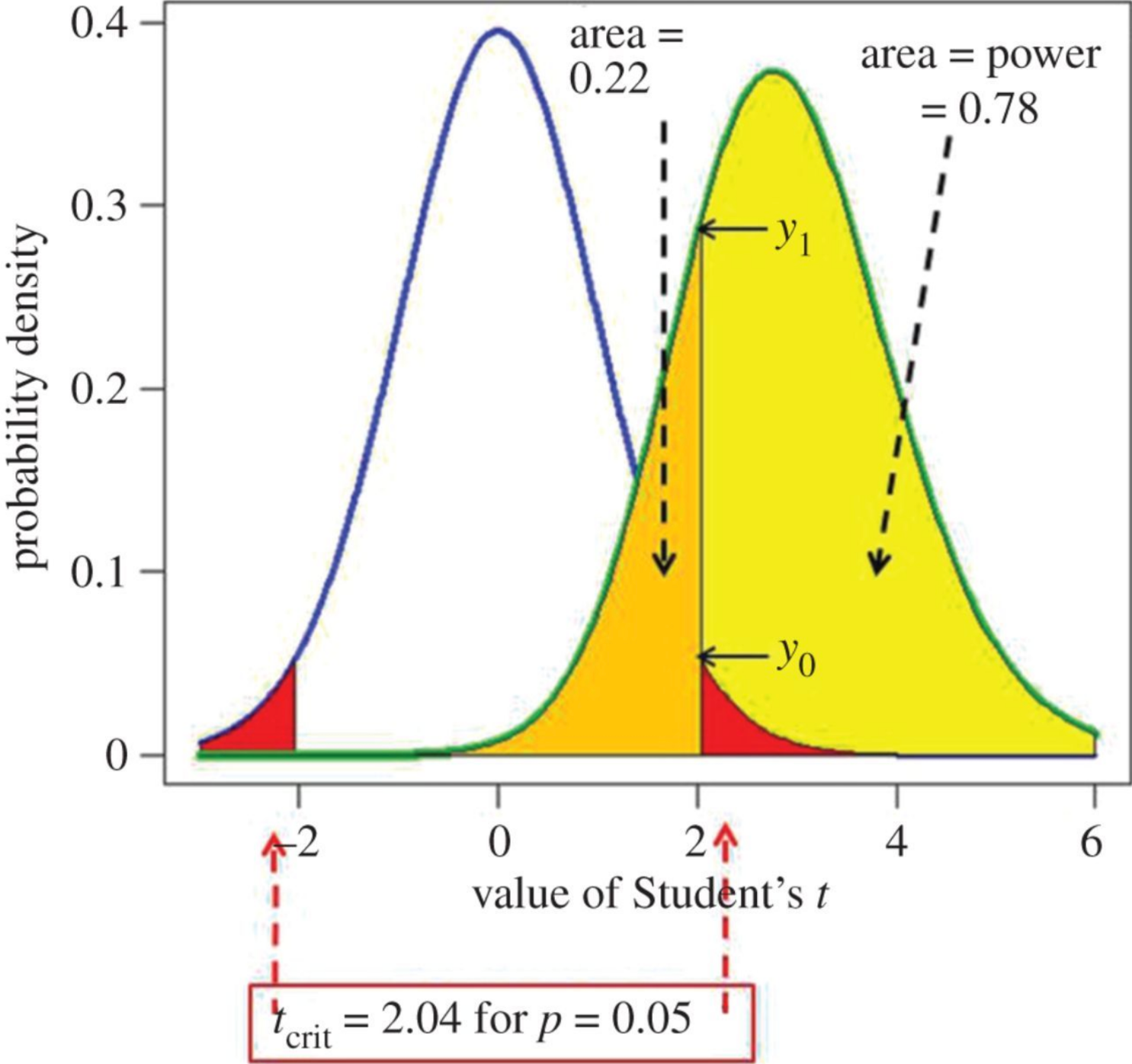
P-value myths:

"p-value is the probability that your results occurred by chance"
"p-value is the probability that the null hypothesis is true" or the "false positive risk"

Actual definition: "p-value is the chance of seeing a difference at least as big as we have done, if, in fact, there were no real effect"

graph/quotes via @david_colquhoun doi.org/10.1098/rsos.171085
@academicchatter #SciComm #AcademicMastodon #science #AcademicChatter

Follow

@erinnacland @david_colquhoun @academicchatter

I do so wish that all science Ph.D. programs, at least, required a rigorous but highly applied statistics course (including data sets with a realistically complex structure) so that we would stop seeing literature filled with bad inferences from improperly-used statistics.

"Condition A has p < 0.05 compared to control, but condition B doesn't, so we can conclude that A and B are different" is a really common and wrong inference.

(Amusingly, or perhaps depressingly, ChatGPT does better than a lot of authors of Science and Nature articles.)

Sign in to participate in the conversation
CleverLibre Social

CleverLibre Social is an inclusive social instance for open discussion, learning, and community.
All cultures welcome.
Hate speech and harassment strictly forbidden.