

Nick @internic@social.cleverlibre.org
- Pronouns
- he/him/his
Theoretical physicist by training (PhD in quantum open systems/quantum information), University lecturer for a bit, and currently paying the bills as an engineer working in optical communication (implementation) and quantum communication (concepts), though still pursuing a little science on the side. I'm interested in physics and math, of course, but I enjoy learning about really any area of science, philosophy, and many other academic areas as well. My biggest other interest is hiking and generally being out in nature.
Joined Nov 2022
@arstechnica I have a 12th gen Intel-based #Framework, and I love it. My one gripe might be a wish for longer battery life, but it actually works for my purposes. Coworkers were curious, so I brought it into work, showed it operating, and quickly popped it open to show the easy access to components. I felt like an unofficial salesman, because several coworkers (all IT and engineering) said now they were interested in getting one.
@frameworkcomputer
#computers #rightToRepair #right2Repair
@freyablekman @CMSexperiment The figure suggests that the confidence region is azimuthally symmetric around the origin. Is it pure coincidence that the best fit is so close to the prediction or are things more constrained in the azimuthal direction than I am inferring?
@web3isgreat I think what hits me hardest about this is the fact that I know so mainly people write painstakingly detailed proposals to get a relative pittance of funding in STEM academia while these people got $40M based on a pitch of making "some sort of chicken game."
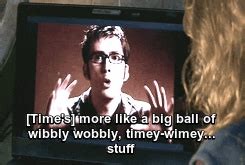
@Wolven As for time, my official input as a physicist is as follows:
@Wolven Congratulations! I don't know if this is your first year as a professor in general or just at this school, but if the former that generally seems to be pretty tough (based on the experiences of friends and my own time as a lecturer).
@gvwilson I would think what would be useful would be applying l education research, I.e. empirically-based knowledge about effective pedagogy. Film and literary criticism is generally more about intellectual fads and social power dynamics, which I feel software doesn't need any more of.
@benjacobsen @PerryM It seems like this is especially true of the use of non-alphanumeric symbols in passwords. Most people insert them through some semi-formulaic procedure (like using l33t speak), so I really doubt it adds that much entropy in practice.
@mokazemi Interestingly, measuring intervals in #spacetime works something like this in the special theory of relativity, where the "proper time" between two events separated in space by dx and in time by dt is dT^2 = dt^2 - (dx/c)^2. When dx=c*dt, dT=0.
Physically dT represents the time experienced by someone traveling between the two events at a constant velocity (when it's not negative). When the velocity approaches the speed of light, time dilation makes the elapsed proper time approach zero.
@BartoszMilewski Are you speaking of definabilty in the sense of a "definable number" (i.e. one that can be uniquely specified by a sentence in the formal language)? Or are you talking about "definable" in a different sense? @bengo
I have wondered about how people use image generating AI like #StableDiffusion in practice. This #Vox video gives one example that clarified a lot for me.
https://youtu.be/Zc5Z63hX0j0
@daisy @mathew I have basically the same experience using OpenPGP long ago (people didn't think it was a virus, but the signatures did prevent some clients from properly displaying my emails). S/MIME seems to work okay in large organizations that support it, but even then my experience is that it's pretty messy if you try to talk to someone from another organization; there's often no way to retrieve someone's certs other than asking the intended recipient and often you don't have a trusted mechanism to get the public root cert for the other organization, undermining the usefulness of signatures for authentication.
@dec23k @mathew Yeah, I really wish they (or some similar organization) would start offering certs and perhaps make using S/MIME a more viable alternative for personal use. It's absurd that email encryption is still totally dysfunctional, given that practically everything else incorporates encryption at this point and I was successfully using encrypted email with OpenPGP like 20 years ago! The problem, of course, was that the web of trust model didn't really scale (for users who weren't cipherpunks), but maybe if S/MIME certs were easy to get it could actually get some traction (outside of large organizations).
@mathew I hope someone has a good answer, because I also would love to understand how to buy an cert for personal S/MIME use.
@DataDrivenMD I was excited to try it out, but it seems that I can't login because my instance is ostensibly on some block list for reasons I can't fathom. Can one easily look at the list it's referencing?
@petersuber Open access is certainly desirable, no author fees obviously sounds good, and I agree that if it would be better if journals were not-for-profit ventures, but I'm unclear how the significant work performed by the journal staff will be funded if we remove both embargoes and author fees.
@mcnees However this does seem somewhat reminiscent of the idea of "quantum foam" that Wheeler and others have talked about, albeit with a somewhat different motivation.
@textfiles A very nice blast from the past. I remember leafing through those as a kid to drool over possible PC upgrades.
@skua @noondlyt @Bam @atomicpoet I guess I should add that I don't think any technical solution will entirely solve the problem, but it may at least facilitate some compromise that everyone could live with.
@christianp Thanks! Hopefully some other #math #maths #science #computerscience folks will chime if there are other servers out there that support rendering LaTeX.
@skua @noondlyt @Bam @atomicpoet This is actually one of the things that sounds promising about the AT protocol underlying Bluesky. It sounds like content can be labeled by the originator or others and can then be put behind content warnings for a given user based on their preferences. That way different people can have CWs for different things and it's not entirely reliant on the originator using a specific hashtag.
- Pronouns
- he/him/his
Theoretical physicist by training (PhD in quantum open systems/quantum information), University lecturer for a bit, and currently paying the bills as an engineer working in optical communication (implementation) and quantum communication (concepts), though still pursuing a little science on the side. I'm interested in physics and math, of course, but I enjoy learning about really any area of science, philosophy, and many other academic areas as well. My biggest other interest is hiking and generally being out in nature.
Joined Nov 2022
