

John BS @johnabs@social.cleverlibre.org
- Background
- Chem, NetSci, ML, Math
- Languages
- English
- Hobbies
- Fencing, Woodworking
- Religion & Philosophy
- Christian & Stoic
A previous analytical biochemist, (functional) programmer, industrial engineer, working on a PhD with a focus in complex systems.
Joined Dec 2020
@andrew #rstats
Oh, speaking of R and ligatures, R's pipes are awesome, though the choice of infix operator notation isn't as much 😂
Relatedly, I have to plug both the purrr library for much nicer mapping (and reducing) functions than the built in lapply/sapply/mapply, and the different pipes that many people don't frequently discuss from magrittr! My second favorite is actually the "T pipe", which lets you call void functions that produce side-effects, without terminating the pipe prematurely (oh, and the '.' argument placeholder so you can repeat inputs in multiple locations of subsequent functions)!
For example, you can make a neat plot, and do some analysis on the dataframe/matrix after the plot in one go:
csums<-rnorm(100) %>%
matrix(ncol = 2) *%T>%*
plot %>%
colSums
Voila! You get your plot and your variable assignment in one, without code duplication! And of course, if you already knew all of this, please ignore me, but I love playing code golf 😅
Oh goodness, I'm stuck in a difficult situation with a manuscript. I'm trying to write (and be engaging) for a journal audience who likely aren't particularly big on our topic, whereas my colleague prefers a much drier and more passive style. I'm concerned that without a good hook, our work will go mostly unnoticed, even in this relatively high-profile journal.
Of course, this is primarily for the introduction, we get on to the "boring" stuff in the preliminaries and model formulations as needed. But at the very least, I'm hoping to implicitly signal to readers "yeah, this isn't your usual programming, but stick around, grab some eggnog and enjoy a well written, engaging piece of academic literature".
I'm basing my assessment on Helen Sword's "Stylish Academic Writing" book, which is an excellent guide, even for the hard sciences (she did a huge survey across fields before writing the book). Unfortunately, convincing others to deviate even slightly from the poorly written style they're accustomed to reading is....difficult, to say the least.
Anyone willing to offer some advice?
Ah, I can see how that may pose an issue for what I initially proposed, but are there typical ways to test for such deviations that are common to astronomy, similar to a shotgun assay that run loads of tests at once?
Clearly I'm not sure what form of data is typical to your field, but I do know this: never underestimate a smart, lazy person's ability to automate away annoyances with computers 😂
(As an example, I'm working on a short Emacs extension to take my detailed manuscript outlines and extract just the 1st, 2nd, and last headers so I can do structural editing in context, but "tangle" the output to a finalized version that can compile to latex and pdf. It makes writing and organizing my thoughts WAY easier. Oh, and if it wasn't obvious, I really love org-mode, and heavily recommend trying it with doom-emacs if you like vim keybindings 😉)
@academicalnerd To fix the first issues, you can try the [following](https://serverfault.com/questions/575112/why-do-my-ssh-sessions-freeze-after-some-time) on your local machine. (BTW, if you're not using TRAMP in Emacs to ssh, you're doing it wrong IMO. It's absolutely a killer feature for ssh to improve server interactivity and such)
As for nwchem, I checked out the user manual. Unfortunately, it has nothing on debugging simulations (typical of molecular dynamics and QM software). However, from my own work on a prior thesis, I can make 2 suggestions:
1. Write a translator from a set of functions to the input file format (add some basic error checking if you want, but I had to do this crap for Schrodinger Suite's software: function in R or python with desired inputs that never makes an error when writing the input files for multiple combinations of experiments)
2. Try running the code through gdb with fortran specific options to see if you can catch strange behavior and terminate it without letting things hang. [Here's](https://undo.io/resources/debugging-fortran-code-gdb/) a possible option to get you started if you're unfamiliar, though this may be trickier.
I hope that helps! Supercomputer access should always be fun, I hope this pushes it in that direction for you 😎 😂
@academicalnerd Oh no, what's the deal? I love working with mine, but maybe our IT team does a better job managing it or uses better software?
If you would like any tips or think I can be of help, just let me know and maybe I can make some suggestions 😄
@Robminchin Not to say I disagree with your premise, but I suspect that more minds on a set of data allow for better and faster science to happen. Do you think this problem could be improved via more effective planning and leveraging better software tools?
E.g. "reproducible research" tools like org-mode, RMarkdown, etc, should (I think) allow the prepared researcher to pre-design analyses and visualizations based on theory, while the data collection job is still in the queue. After a cursory comparison, unexpected results can be moved to the forefront, and remaining analyses can migrate to the supplemental information, all without the need to manually investigate the data almost at all. It's based on first principles, efficient, and doesn't bog other interested parties down as much.
Of course this doesn't eliminate the embargo, but I hope we can try to shorten them to improve data accessibility, while continuing to level the playing field for new or overloaded/understaffed researchers.
John BS
boosted


“Yah Yah we get it, Julia is fast.”
But not 34 billion times…
https://medium.juliazoid.com/no-julia-is-not-34-000-000-000-times-faster-than-python-f63e956313d7
#julialang #python
@barefootstache Oh, P.S. congrats on becoming a Qoto mod! 😄
@barefootstache I'll argue intelligence, in combination with any of the dark triad personality traits, are likely good starting points for power, but not always necessary. Money is also a great starting point, lol.
As an example: agreeable people are less likely to ask for raises, demand things of their employers, or to demand things of others. They are more of a "serve the needs of those around me at my own expense" (i.e. high empathy behavior).
Dark triad individuals are more likely to manipulate and seek their own best interest first and even at the expense of others (i.e. low-empathy behavior).
Hence, intelligence while likely useful for achieving power (though even this is questionable...look at Mao's decisions during the "Great leap backwards", among other examples), is not sufficient. I suspect the ability to manipulate people and align them with a cause is much more important, and this doesn't necessarily align with intellect.
I see you're playing mind games with it too: "Oh yeah, my totally gorgeous LaTeX based resume was made with my LaTeX skills that I only list as 'basic'. Please conclude my other 'advanced' skills are even more totally awesome, as I'm being humble about something I'm good at."
I'm on to you 😂
P.S. I'm gonna plug my resume template (based HEAVILY on Jean-luc Doumont's template) [here](https://github.com/johnabs/CV_Template/blob/master/cv_temp.pdf) for @worldsendless
"Life is a masquerade: many masks are opaque, some are translucent, yet only mine is glass.
Transparency itself does not vex me, yet many seem loathe to gaze upon what 'should remain unseen'.
Humbug! 'Tis better to doff garb, when its purpose does not befit its form, than suffer the psychic chafing it inflicts.
My marred form bare to behold, so unlike the impeccable, pallid porcelain worn passim. Shall I curse those who demand perfection yet only accessorize with it? Or do I accept freedom as blessing enough? Never have I been truly adorned; at least now, comfort is a welcome consolation."
Written by me, based on a quote from Kafka.
@freemo @IAmErik Hey Freemo, I want to say
a) I really appreciate all the work you do (and the fact that you put up with me for so long 😅)
and
b) I have a suggestion for managing your blood pressure sans medication that worked great for my mom and my aunts, if you're interested. It's based on current mechanistic literature and focuses on reducing blood levels of uric acid, which is one of the major contributors to increased blood pressure, even more than sodium IIRC.
Here's a potential paper of interest (quite a few more are easily searchable), and I can PM you a protocol that might help tide you over until you can get access to your meds again. It had my mom/aunts down to half doses and then no doses fairly quickly, but I can't comment on how well you would fair when you're so stressed, and of course I'm no GP, just an ex-biochemist. https://pubmed.ncbi.nlm.nih.gov/32179896/
Regardless, best of luck, I'll pray for you.
My dog worryingly looking at my wife for no reason. I think we're "doin her a heckin concern"... or she has gas from all the eggs 😂
@freemo Well if you find anything ground breaking, let me know! Worst case scenario, I'll fork Magit and be annoyed for a bit while I hack together Hg support.
The other downside is a lack of free options for hosting except for FOSS projects, and as a research under a PI, I don't get a huge amount of say when/where the packages get released unfortunately :(
@freemo Aww that sucks 😕 I'll pour out a gravy boat for our expat homies 😂
And no problem, I figured I'd bump it for anyone I may have convinced to try it. IMO it's not worth it unless you only want CLI usage (or to use a separate gui program like TortoiseHG). I like Emacs too much, and "monky" doesn't come remotely close to Magit, so I'll put up with my git grievances...for now.
@freemo Edit: I take it back, there is no good emacs compatibility. What curse have I brought upon this blessed instance, please ignore.
@xpil@fosstodon.org I wish we had this in the states...mostly just the trains, but also nice trains where I could accomplish things on my ride through the countryside. Maybe someday 😩
@freemo I know we have an instance of Gitlab hosted on Qoto, but I was curious if you've considered something for hosting mercurial/etc projects as well. I really appreciate the access to Gitlab, but I'm thinking of switching to either Hg or Sapling (even though the latter is made by...Meta🤢) as potential git alternatives due to many suggestions on hacker news, along with extensibility, and apparent simplicity of both tools.
I'm not sure if there would be widespread interest in such a thing since git more or less won the DVCS war, but I figured I'd chuck the idea your way and see if you have interest in making it happen like the STEM-genie I often imagine you to be 😂
P.S. I hope you're doing well and have fun plans for Thanksgiving...assuming you take time to celebrate it in Utrecht, that is 😉
@sibin This is brilliant, thanks for sharing! I'll definitely be using this for some upcoming conference talks, and sharing it with my colleagues 😄
John BS
boosted


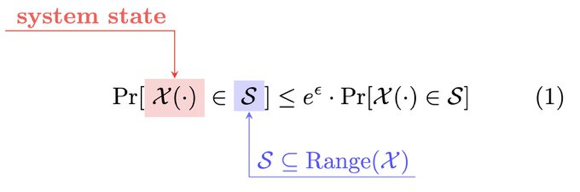
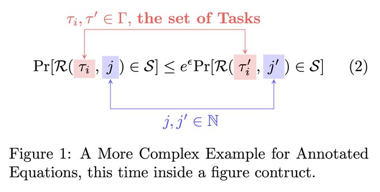
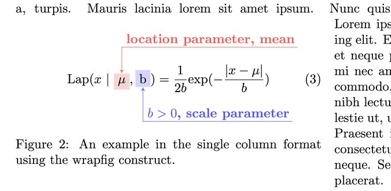
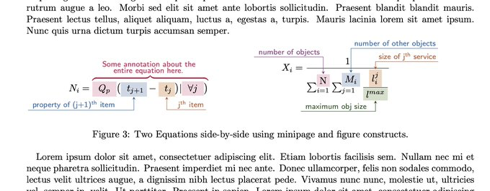
I've been using #AnnotatedEquations in my recent papers. I think it really adds to the readability and understanding of the math.
Here are some examples. It uses #tikz in #latex.
Let me know if you like it. Happy for any feedback.
- Background
- Chem, NetSci, ML, Math
- Languages
- English
- Hobbies
- Fencing, Woodworking
- Religion & Philosophy
- Christian & Stoic
A previous analytical biochemist, (functional) programmer, industrial engineer, working on a PhD with a focus in complex systems.
Joined Dec 2020
