

Léo Varnet @leovarnet@social.cleverlibre.org
- Institution
- CNRS, ENS Paris
- Research topics
- Auditory perception, psycholinguistics, hearing loss.
CNRS researcher at École normale supérieure Paris. Auditory perception, psycholinguistics, hearing loss. My toots are searchable #tootfinder.
Joined Oct 2022
Parmi ces participant.e.s souffrant de pertes incapacitantes, seuls 36.8% sont munis d'une audioprothèse.
Les résultats sont alarmants (mais attendus) : 24.8% des personnes testées présentent une perte auditive > 20 dB et 4.3% une perte auditive incapacitante (pertes > 35 dB)
(la précédente remontait à 2008 et était basée uniquement sur la gène auditive ressentie - un critère insuffisant car le degré de pertes auditives est souvent sous-estimé par les personnes qui en sont atteintes)
Première estimation large échelle de la prévalence des pertes auditives en France @JAMANetworkOpen https://ja.ma/3Eg6R1z
Pour rappel, un article à ce sujet sur mon blog: http://dbao.leo-varnet.fr/2020/01/03/pertes-de-sensibilite-auditive-et-pertes-supraliminaires-pourquoi-laudioprothese-parfaite-nexiste-pas/
Parmi ces participant.e.s souffrant de pertes incapacitantes, seuls 36.8% sont munis d'une audioprothèse. #hearingloss #audition @disability (3/3)
Les résultats sont alarmants (mais attendus) : 24.8% des personnes testées présentent une perte auditive > 20 dB et 4.3% une perte auditive incapacitante (pertes > 35 dB) @disability #hearingloss #audition (2/3)
Première estimation large échelle de la prévalence des pertes auditives en France @jamanetworkopen https://ja.ma/3Eg6R1z (la précédente remontait à 2008 et était basée uniquement sur la gène auditive ressentie - un critère insuffisant car le degré de pertes auditives est souvent sous-estimé par les personnes qui en sont atteintes)... (1/3)
RT @SocHistTech
What does the spread of hearing aids in 1950s Japan say about the history of sound technologies and cultures? In "Beautiful Sounds, Beautiful Life" @frankmondelli writes about hearing aids and music, in Deaf classrooms, events, corporate histories.
Link: https://muse.jhu.edu/article/868053
Léo Varnet
boosted

I recently learned many young people have never heard of Dr Primestein. This satirical account was huge in the early days of the replicability crisis in psychology. As good satire does, it made many people laugh (and upset quite some others! ) at a time when tensions were high. The website is still a joy to browse through: http://www.psi-chology.com/
Léo Varnet
boosted

There are now no less than 42 curated lists of academics on Mastodon, in various subject areas, on this GitHub, as well as links to groups, preprint and bibliography bots, and servers/communities. Check it out, tell others about it, and bookmark it for future reference! https://github.com/nathanlesage/academics-on-mastodon
Léo Varnet
boosted

Because this was my only post ever that got +5k likes on Twitter, it is only fitting that this is my first post here ⤵️
I created an awesome-PhD list on GitHub where everybody can contribute with their own tools and resources! 🔥
✨ Check it out and contribute yourself via pull requests: https://github.com/helenahartmann/awesome-PhD ✨
Léo Varnet
boosted

Hello World! We're here to reach the #acoustics community on mastodon - Researchers, academicians, clinicians, practitioners, educators, students, and anyone with an interest in acoustics! Follow for acoustics news and updates.
Léo Varnet
boosted

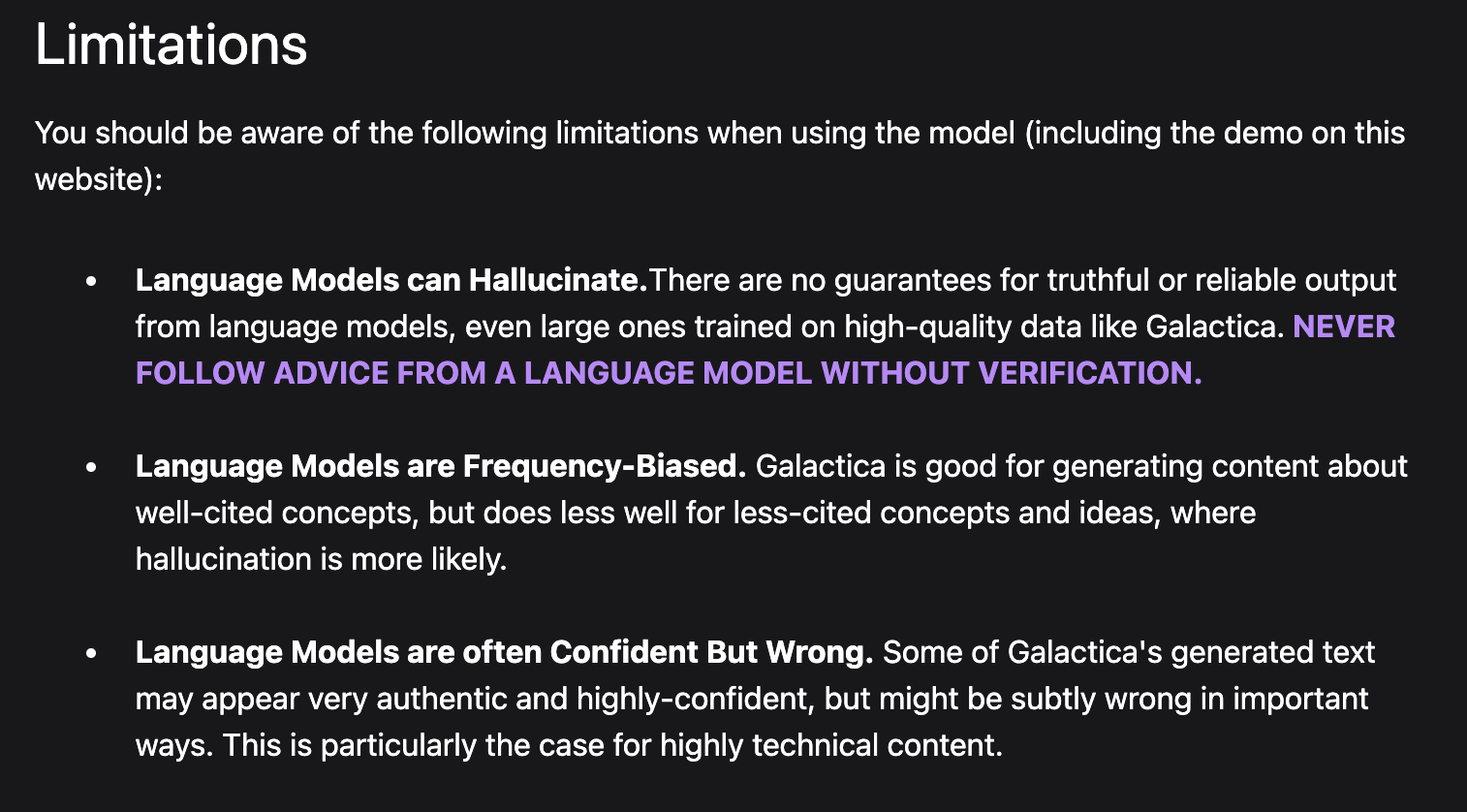
Facebook (sorry: Meta) AI: Check out our "AI" that lets you access all of humanity's knowledge.
Also Facebook AI: Be careful though, it just makes shit up.
This isn't even "they were so busy asking if they could" --- but rather they failed to spend 5 minutes asking if they could.
Et voilà! please feel free to ask me if you want more details on any of these projects! (9/9)
The two remaining projects are from the IRCAM’s side. Emmanuel Ponsot is investigating the integration of spectral and temporal information by the auditory system. He also received a funding for a project looking for early markers of cochlear synaptopathy. (8/X)
In parallel, Monica Hedge is exploring similar questions on infants of 6 months or 10 months, as part of her PhD project (7/X)
The Université Paris Cité team, led by Laurianne Cabrera, is mainly interested in the auditory development during childhood and infancy. In this project, Irene Lorenzini and Charlotte Benoit try to relate the maturation of AM processing in 5- to 11-year old children to the improvement of speech in noise perception during this period of life. (6/X)
The Auditory Classification Images project is actually the follow-up of my PhD work from 10 years ago. We develop new methods to investigate auditory perception, using a microscopic trial-by-trial analysis (aka "revcorr") of the participant’s responses. We apply this approach to the study of phoneme categorization, AM detection, and sentence segmentation. (5/X)
This very crowded slide details the Human Auditory ecology project led by Christian Lorenzi, investigating many aspects of the perception of natural soundscape by humans, from the detection of biophony (e.g. birdsongs) to the design of an algorithm for synthesizing natural soundscapes





- Institution
- CNRS, ENS Paris
- Research topics
- Auditory perception, psycholinguistics, hearing loss.
CNRS researcher at École normale supérieure Paris. Auditory perception, psycholinguistics, hearing loss. My toots are searchable #tootfinder.
Joined Oct 2022
