

Lup Yuen Lee 李立源 @lupyuen@social.cleverlibre.org
- Pronouns/Gender/Sexuality
- He/Him/They, Bisexual/Asexual 🇸🇬
- Date of Birth
- 1969
- Articles
- https://lupyuen.codeberg.page
IoT Techie and Educator / Apache NuttX PMC
Joined Jan 2020
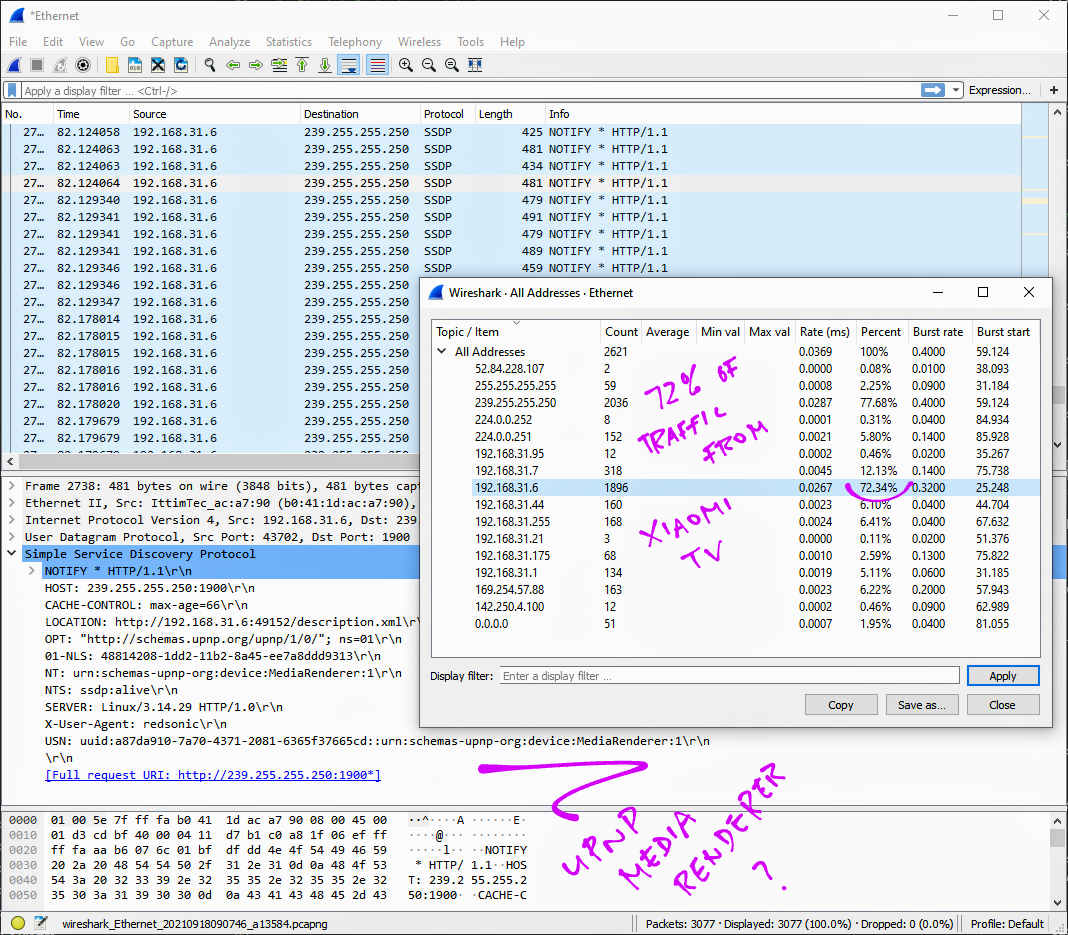
Why is Xiaomi TV flooding my network with UPnP Broadcasts? 🤔
Lup Yuen Lee 李立源
boosted

@lupyuen it's time like these when I'm grateful for the Internet. 🙂
Lup Yuen Lee 李立源
boosted


@mishari @lupyuen I wouldn't know... You can probably look up attenuation numbers for various types of foliage and figure out an estimated reach. OR, do what I did; test it. Put up a gateway, and drop N sensors (of any type) in "nature" at height where you expect them to be later, and monitor for a few days, possibly move them around a lot and plot the RSSI and SNR at each of these locations.
"My FOSS Story" (2020)
@mishari Then LoRa is definitely OK 🙂
A friend suggested 20 km coverage: https://qoto.org/@lupyuen/106946495191884623

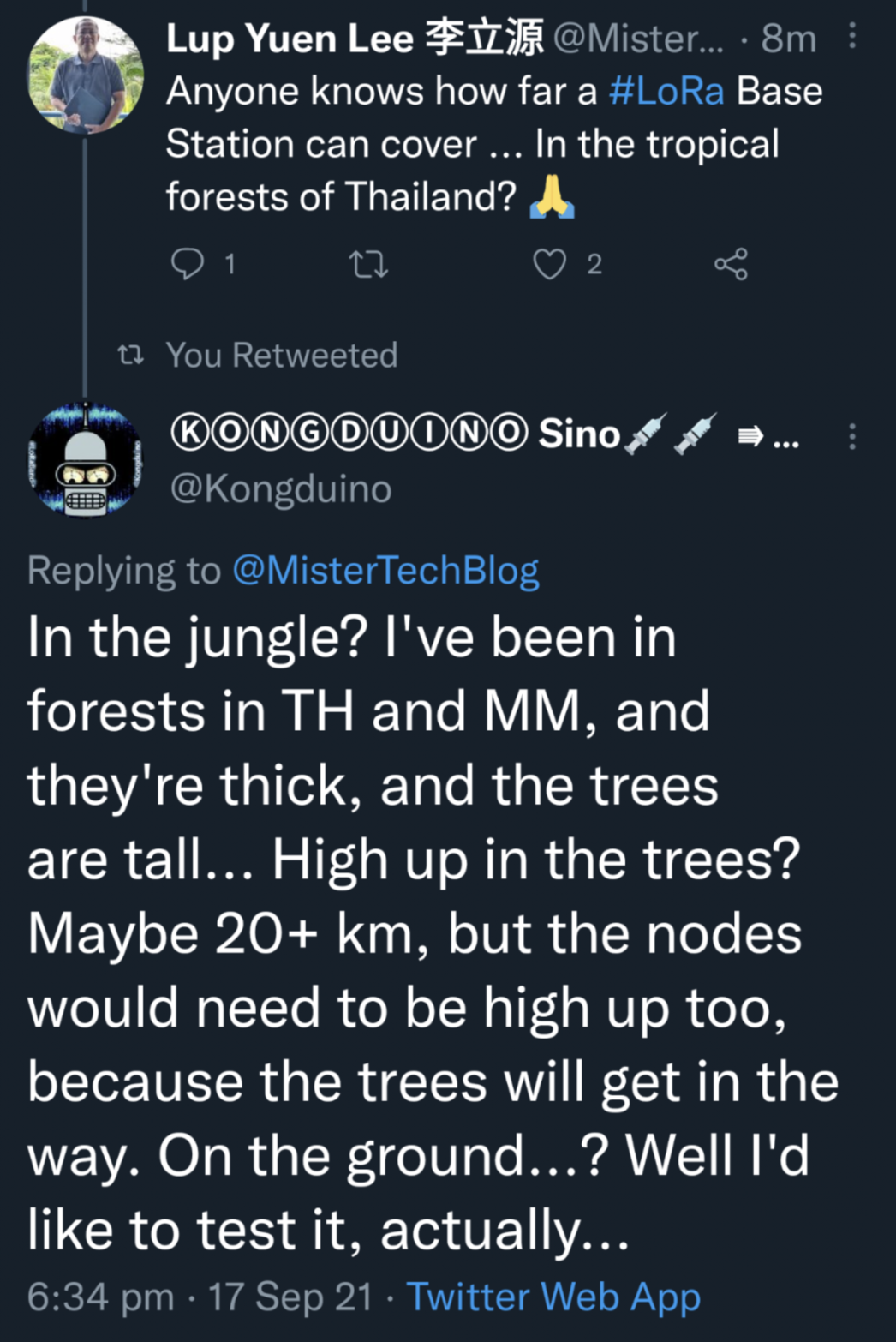
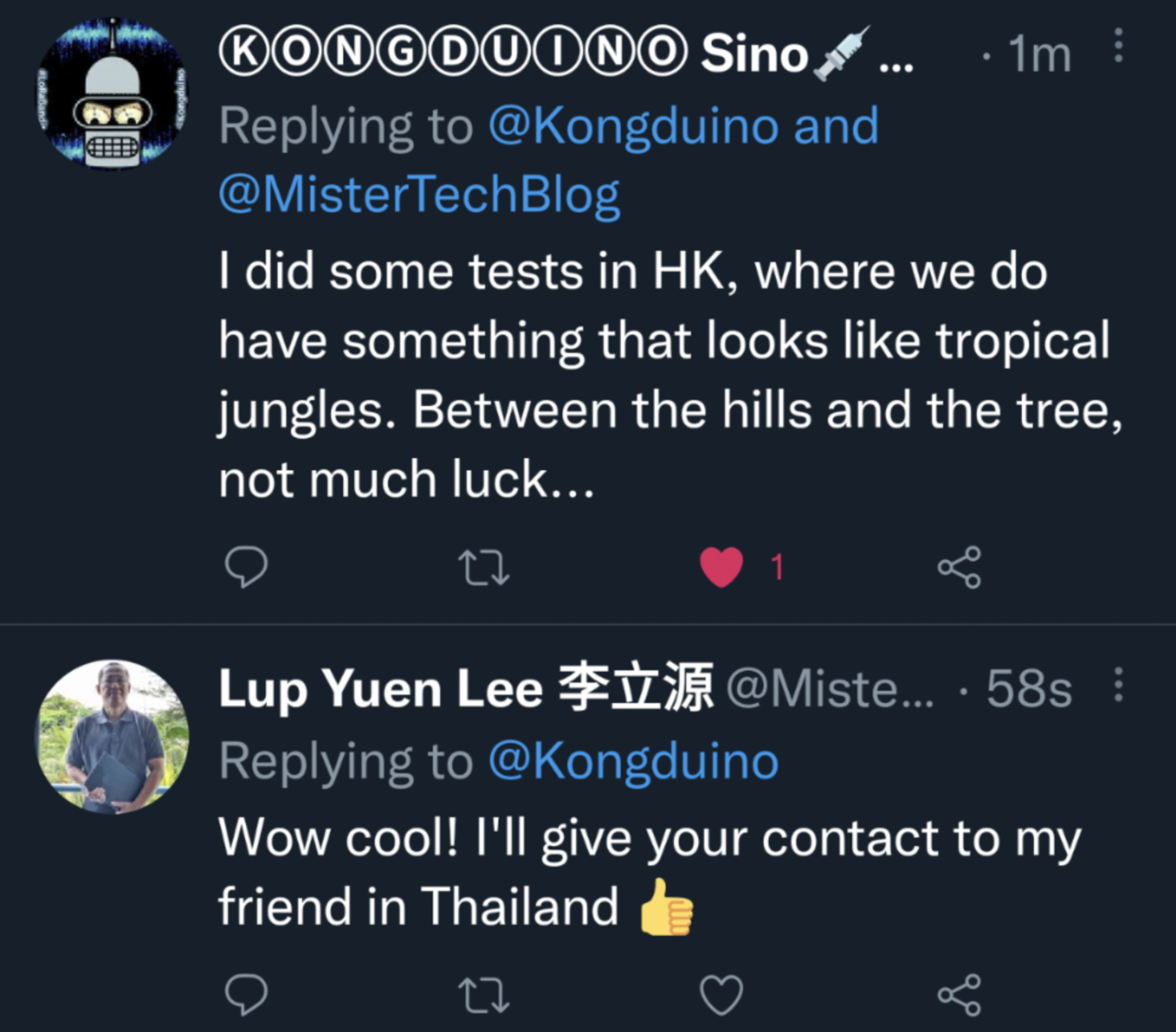
Anyone knows how far a #LoRa Base Station can cover ... In the tropical forests of Thailand? 🙏
Wild Elephant Tracking in Thailand ... With #LoRa / The Things Network? 🤔
@mishari Wow that's super interesting! About LoRa Coverage in forests: One of my friends in the Nordic countries said that the coverage is good in forested areas. I'm assuming flat land, no rolling hills, no metal structures. Lakes are OK.
Lup Yuen Lee 李立源
boosted
@niclas @lupyuen working on a system to detect elephants to reduce surprise encounters in the wild. Feel free to star and contribute https://github.com/elephant-detection/research
Lup Yuen Lee 李立源
boosted
Lup Yuen Lee 李立源
boosted
@lupyuen Sure, but students should get the school to invest $150-250 (Dragino LG308 for instance) in a LoraWAN gateway. And hobbyist could then possibly rely on schools.
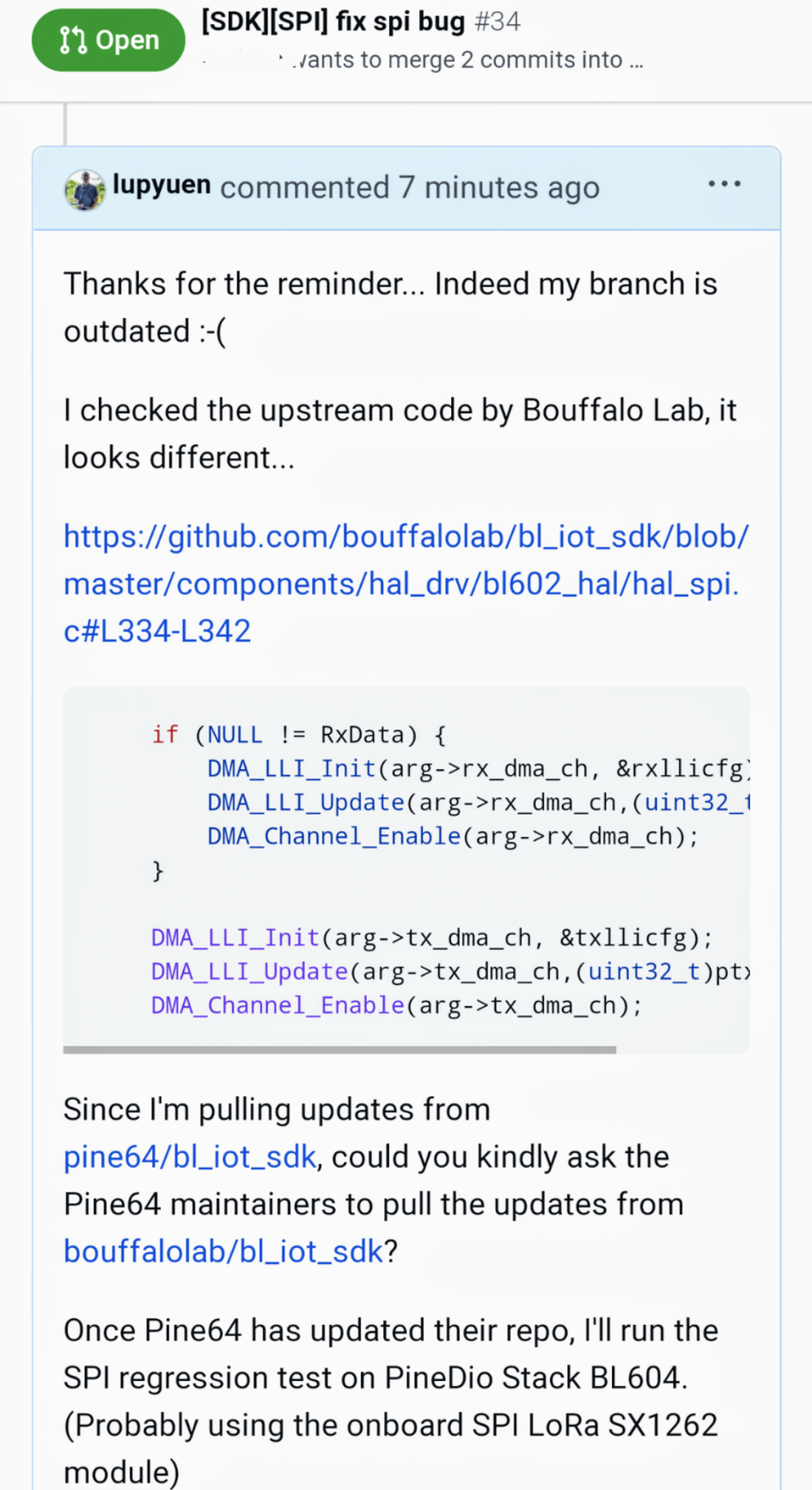
@niclas Yep I'm thinking maybe hobbyists and students could tap on the free The Things Network 🤔
Lup Yuen Lee 李立源
boosted
@lupyuen I work quite a lot with LoraWAN, to read room temperature data. It should be understood that if you need coverage, you install gateways yourself... Otherwise, your devices/users may be without coverage without notice.
I hope you have good #TheThingsNetwork Wireless Coverage in your area ...Coverage in Singapore is so spotty 😭

- Pronouns/Gender/Sexuality
- He/Him/They, Bisexual/Asexual 🇸🇬
- Date of Birth
- 1969
- Articles
- https://lupyuen.codeberg.page
IoT Techie and Educator / Apache NuttX PMC
Joined Jan 2020
