

Martin Ruskov @mapto@social.cleverlibre.org
- Research
- https://www.zotero.org/mapto
- Games
- https://mapto.itch.io
- Account in Bulgarian
- https://masto.bg/@mapto
Studying how people interact, in the past (#CulturalAnalytics) and today (#EdTech #Crowdsourcing). Researcher at @IslabUnimi, University of Milan. Bulgarian activist for legal reform with @pravosadiezv. I use dedicated accounts for different languages.
My profile is searchable with https://www.tootfinder.ch/ #fedi22
Joined Nov 2022
@FiveSeventeen @axios considering that from a niche network, Mastodon had become a refuge from Twitter, this is quite an impactful mistake to make
@Gert paywalled article with a sensationalist heading
Martin Ruskov
boosted

reX: Reverse engineering X's API:
Martin Ruskov
boosted

"Do the languages we speak shape the way we think? Do they merely express thoughts, or do the structures in languages (without our knowledge or consent) shape the very thoughts we wish to express?
Take "Humpty Dumpty sat on a...
Even this snippet of a nursery rhyme reveals how much languages can differ from one another. In English, we have to mark the verb for tense; in this case, we say "sat" rather than "sit." In Indonesian you need not (in fact, you can't) change the verb to mark tense.
In Russian, you would have to mark tense and also gender, changing the verb if Mrs. Dumpty did the sitting. You would also have to decide if the sitting event was completed or not. If our ovoid hero sat on the wall for the entire time he was meant to, it would be a different form of the verb than if, say, he had a great fall.
In Turkish, you would have to include in the verb how you acquired this information. For example, if you saw the chubby fellow on the wall with your own eyes, you'd use one form of the verb, but if you had simply read or heard about it, you'd use a different form.
Do English, Indonesian, Russian and Turkish speakers end up attending to, understanding, and remembering their experiences differently simply because they speak different languages?"
The answer is yes.
In a world of sharing ideas across languages, understanding how and why languages make us think, behave and reason differently from each other is increasingly important.
"All this new research shows us that the languages we speak not only reflect or express our thoughts, but also shape the very thoughts we wish to express.
The structures that exist in our languages profoundly shape how we construct reality, and help make us as smart and sophisticated as we are."
« Watch Lera Boroditsky's talk. Lera Boroditsky is an associate professor of cognitive science at University of California San Diego and editor in chief of Frontiers in Cultural Psychology. She previously served on the faculty at MIT and at Stanford. Her research is on the relationships between mind, world and language (or how humans get so smart).
She once used the Indonesian exclusive "we" correctly before breakfast and was proud of herself about it all day. »
https://www.ted.com/talks/lera_boroditsky_how_language_shapes_the_way_we_think
The quotes above are from her 2010 Wall Street Journal article Lost in Translation:
http://lera.ucsd.edu/papers/wsj.pdf
Also read:
The myth of language universals: language diversity and its importance for cognitive science
https://pubmed.ncbi.nlm.nih.gov/19857320/
Take "Humpty Dumpty sat on a...
Even this snippet of a nursery rhyme reveals how much languages can differ from one another. In English, we have to mark the verb for tense; in this case, we say "sat" rather than "sit." In Indonesian you need not (in fact, you can't) change the verb to mark tense.
In Russian, you would have to mark tense and also gender, changing the verb if Mrs. Dumpty did the sitting. You would also have to decide if the sitting event was completed or not. If our ovoid hero sat on the wall for the entire time he was meant to, it would be a different form of the verb than if, say, he had a great fall.
In Turkish, you would have to include in the verb how you acquired this information. For example, if you saw the chubby fellow on the wall with your own eyes, you'd use one form of the verb, but if you had simply read or heard about it, you'd use a different form.
Do English, Indonesian, Russian and Turkish speakers end up attending to, understanding, and remembering their experiences differently simply because they speak different languages?"
The answer is yes.
In a world of sharing ideas across languages, understanding how and why languages make us think, behave and reason differently from each other is increasingly important.
"All this new research shows us that the languages we speak not only reflect or express our thoughts, but also shape the very thoughts we wish to express.
The structures that exist in our languages profoundly shape how we construct reality, and help make us as smart and sophisticated as we are."
« Watch Lera Boroditsky's talk. Lera Boroditsky is an associate professor of cognitive science at University of California San Diego and editor in chief of Frontiers in Cultural Psychology. She previously served on the faculty at MIT and at Stanford. Her research is on the relationships between mind, world and language (or how humans get so smart).
She once used the Indonesian exclusive "we" correctly before breakfast and was proud of herself about it all day. »
https://www.ted.com/talks/lera_boroditsky_how_language_shapes_the_way_we_think
The quotes above are from her 2010 Wall Street Journal article Lost in Translation:
http://lera.ucsd.edu/papers/wsj.pdf
Also read:
The myth of language universals: language diversity and its importance for cognitive science
https://pubmed.ncbi.nlm.nih.gov/19857320/
Martin Ruskov
boosted

By 1920, the network of interurbans in the US was so dense that a determined commuter could hop interlinked streetcars from Waterville, Maine, to Sheboygan, Wisconsin—a journey of 1,000 miles—exclusively by electric trolley.
🚋🧵
Martin Ruskov
boosted

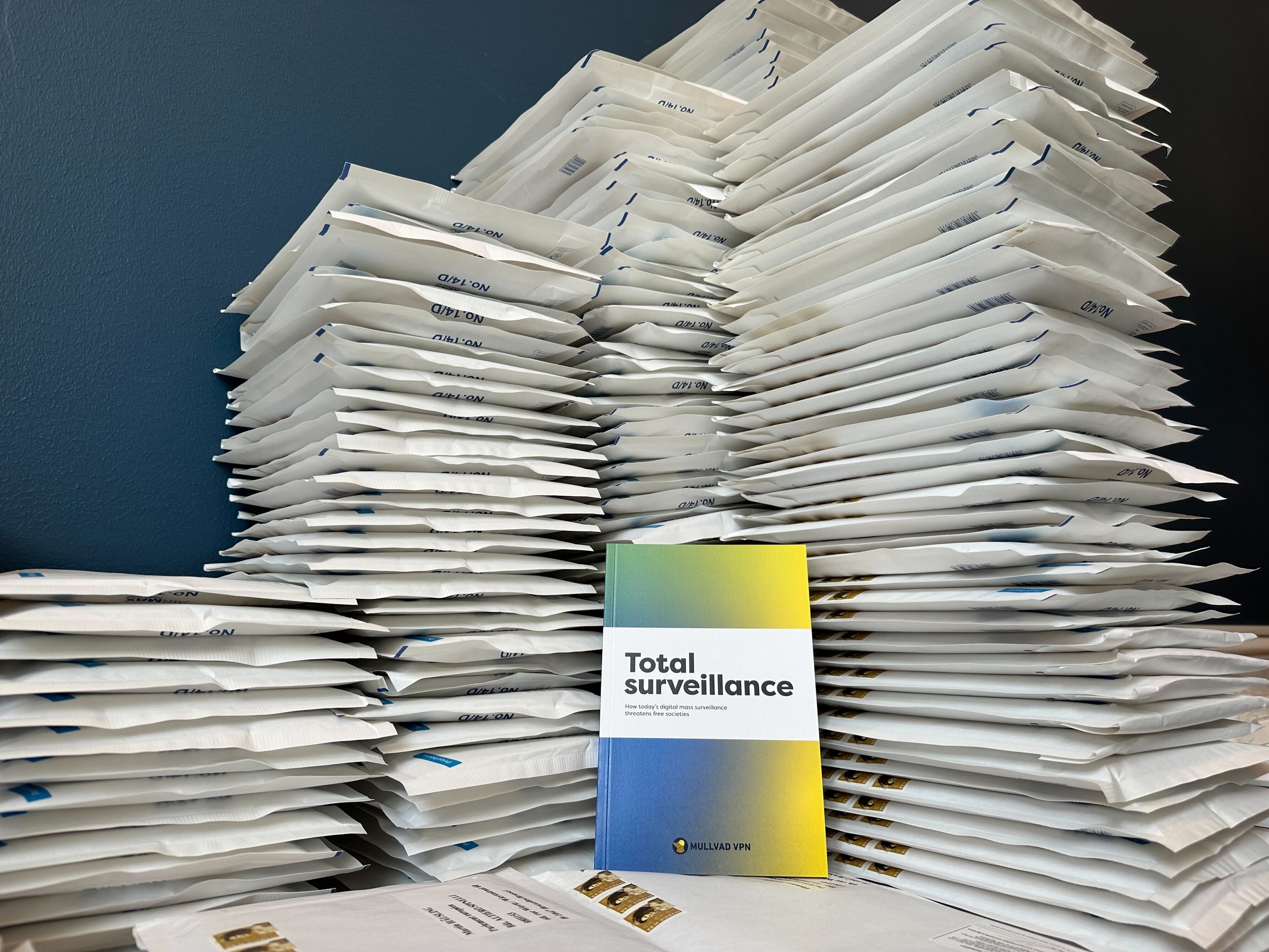
Today we sent 116 pages on mass surveillance and its consequences to each and every member of the EU Parliament.
This autumn, we urge them to vote for a free society. To say No to chat control.
Read all the articles at mullvad.net/why-privacy-matters
Martin Ruskov
boosted

Martin Ruskov
boosted

🦒 New post! "I'm a Spotless Giraffe."
#AI models were perplexed by a baby giraffe without spots. They're perplexed by me, too.
This article on #disability and #ableism within #GenerativeAI is more personal than I usually write. It would mean a lot to me if you read and shared it.
With thanks to @janellecshane for her original post!
https://benmyers.dev/blog/spotless-giraffe/
Martin Ruskov
boosted


Usefull search tricks for #Firefox Users:
Start typing your search with ^ to show only matches in your browsing history.
* to show only matches in your bookmarks.
% to show only matches in your currently open tabs.
# to show only matches where every search term is part of the title or part of a tag.
$ to show only matches where every search term is part of the web address (URL).
@BiblioWingate here's two cents from a nobody: you already hint on two ways to pick ranges: based on important events, and based on what resources you can dedicate. Both are valid, but I certainly share your preference for the former. It does give a more relevant context. Could you think of another important cut off line closer to the turn of the century?
Martin Ruskov
boosted

Finally, thanks to this answer from the Chicago Manual of Style, I know how to write this sort of citation properly:
“Text generated by Ouija, Salem, Mass: Parker Brothers, August 30, 2023”
https://www.chicagomanualofstyle.org/qanda/data/faq/topics/Documentation/faq0422.html
Martin Ruskov
boosted



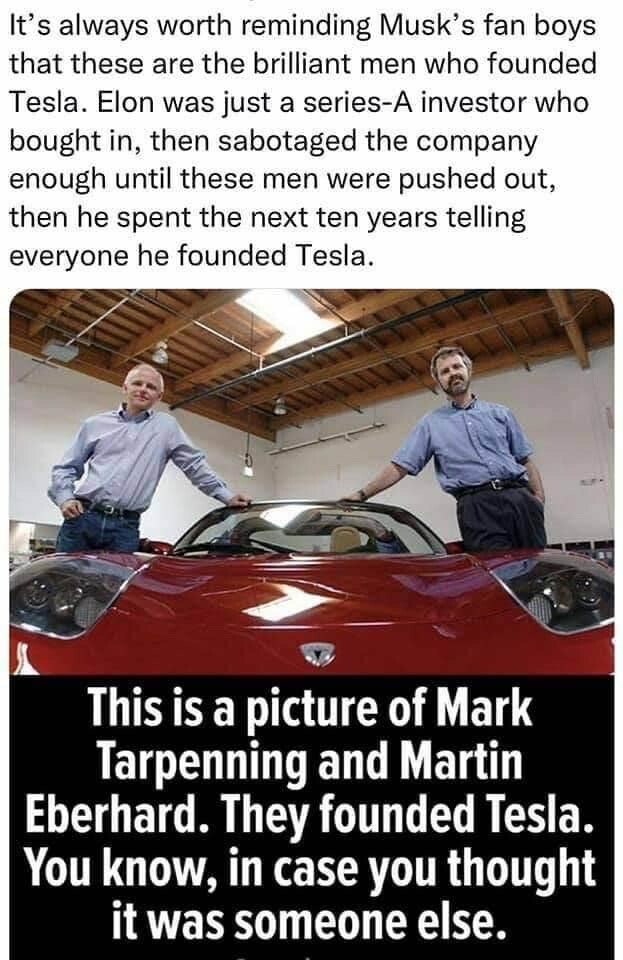
A.I. tools fueled a 34% spike in Microsoft’s water consumption, and one city with its data centers is concerned about the effect on residential supply
@nickmofo @chrisamaphone @maxkreminski it's a bit off from this conversation, but I've been looking for collaborator for a literature review on how people use LLMs when writing narrative. The idea is that when one looks systematically at ways to work together with an AI (similarly to what the work by Kreminski and Martens suggest), there are many ways such systems could contribute. As an example consider AI Dungeon. I'd think it's extremely successful, even though it is very weak on narrative structure. Similarly, we've recently looked into (non necessarily AI) collaborative writing systems https://doi.org/10.1007/978-3-031-42286-7_5 using a generic collaborative writing taxonomy and I think there's lots to be learned from redoing it for LLMs
@redfrog How about the extremely high probability that the ChatGPT text was actually strongly influenced by the corresponding Wikipedia article? If this might be true, a related hypothesis would be that ChatGPT would not be able to stand up to the quality for texts that have been generated after its scraping cut-off point.
@jeffgreene @edutooters @psychology it's actually quite difficult to get to the list from this link. I've tried and I've reached a paywall. I guess this qualifies it as clickbait, doesn't it
@bontchev @dangoodin Sorry, that link's old. This is an updated figure https://mastodon.social/@sundogplanets/111025127137415613
I'm not much into podcasts, my wife is. But I've been researching this thing called"European identity" for a while, complex stuff, quite different for different people. Anyway, this is one popular take of it that everyone might love.
https://www.theguardian.com/world/2022/nov/29/the-europeans-podcast-we-wanted-to-celebrate-europe-as-genuinely-fascinating
@bontchev @dangoodin Starlink now comprises more than half of all satellites in orbit https://www.sciencenews.org/article/satellites-spacex-problem-space-pollution
@themarkup and yet the more reusable and thus interesting part is not how you've set up your infrastructure (S3 and WordPress are popular choice, but not practical for everyone). Rather, it's interesting to see what your collaborators put in that HTML/CSS/JS serverless stack
- Research
- https://www.zotero.org/mapto
- Games
- https://mapto.itch.io
- Account in Bulgarian
- https://masto.bg/@mapto
Studying how people interact, in the past (#CulturalAnalytics) and today (#EdTech #Crowdsourcing). Researcher at @IslabUnimi, University of Milan. Bulgarian activist for legal reform with @pravosadiezv. I use dedicated accounts for different languages.
My profile is searchable with https://www.tootfinder.ch/ #fedi22
Joined Nov 2022
