

Mark Tomczak @mtomczak@social.cleverlibre.org
- My Page
- https://fixermark.com
Career software engineer living something approximating the dream he had as a kid.
Joined Apr 2022
Mark Tomczak
boosted

How I know when to start a new software project:
- Do I have time for this project? No.
- Have I finished my prior projects? Also no.
- Is there a need for this project? Definitely no.
It is time!
Writing a small multiplayer game with Boardgame.io and Phaser.
Things I have not written:
* any unit tests
Things I have written:
* a "DevHooks" file to make it easy to consolidate quick e2e test patches on top of the regular game flow
* Lots and lots of exploratory code that got torn up and replaced right after it was written, which would have taken twice + change as long if I'd written unit tests
#Wednesday (the Netflix series, not the day), quick review:
Cast 10, book 3.
I haven't finished the whole series yet (and I intend to), but as far as I've gotten: I rarely see such talented actors and actresses animating such a shambling carcass (which, I suppose, is very on-brand for an Addams property). Ortega and Myers are fun as hell, their characters really contrast delightfully, and every moment they're on screen is wonderful---as with the rest of the cast as well.
It's just a shame they're stuck in this tropey Hogwarts-adjacent CW high school drama. It's like someone pitched a live-action Monster High series, got shot down, and salvaged the pitch by gluing Wednesday Addams upside-down to an existing plot. I know; that sounds like it should be perfect! It is not.
If you can turn your brain off and enjoy every scene without asking inconvenient questions like "Where is this going?" or "Why are these characters doing this?" I can recommend it. And it still has time to pick up on the back end. But I'm not sure I should get my hopes up.
A lot of discussion on how AI-generated art will impact the artist community and art-making in general. I'm encouraged to see artists starting to organize around what happens next.
It will be a difficult near-future for anyone who doesn't want anything to do with these technologies. They're pretty solidly as transformative as the synthesizer, if not the camera. And they're pretty irrevocably here. So what happens next?
One angle I've seen some convincingly-pleasing presentations on is challenging the legality of how these tools were constructed. I think that's a pretty vertical cliff to scale (hard to draw a clean line that kills this tech without also killing other transformative uses of other people's work that are already accepted as non-infringing of copyright).
For the sake of argument, I'm going to assume that such legal challenges carry the day and Stable Diffusion / OpenAI are dismantled / banned from any legal use.
What I need people to understand is it won't be enough, and the next part is much harder.
There is a problem that I call the Balder problem. There is, I'm sure, a better term for it in the literature around collective labor action, but I cop to my ignorance of the space. In Norse legend, when Balder was slain, an opportunity was given for him to come back to the realm of the living... If every living being expressed their sorrow at his passing. One single giant, Thokk, did not. As a result, Balder would be kept in the underworld until Ragnarok.
If the current set of tools are found to be illegally-generated, the *next* set won't be. It will be more than worth it for every major media and advertising company to pay scads of cash to a small subset of artists to generate seed material for their own diffusers. The big ones could *easily* afford to make a hundred or even a thousand artists *lifetime-career-rich* for exclusive rights to their art.
The only way to stop that front is for every visual artist out there to say no to that money unless the money comes with solid guarantees that the livelihood of every artist is preserved.
That's a hell of a temptation, and it will be dangled in front of every visual artist in the world. I'm an optimist, but the odds of all artists standing together with one voice and demanding a right to survive on their talent that doesn't exclude other artists are poor.
But if I could think of any one demographic in this country at least that I have the highest hope for pulling it off, it's them. My optimism knows no bounds.
Spent a good ol' chunk of the day chasing down that when the Phaser game engine has camera zoom set, it doesn't immediately update its transform matrix so `getWorldPoint` doesn't give the right answer.
Game engines are great, but they don't remove the need for good old-fashioned debugging.
Twaining an AI to undewstand what "harmful information" is turns out to be reawwy hard, UwU.
I'm going to have to put more butter on this popcorn while I watch this Musk/Apple dust-up.
Musk is accusing Apple of hating free speech.
They won't, but I really want Apple to respond with "Yeah bro. Have you even heard of us? We're the OG walled garden. The *vertical* monopoly. Our whole *deal* is 'Pay us to think for you.' Our *vibe* is "safety and comfort." Our *unofficial logo* is the rounded rectangle. You think you're a problem for us? Our users *pay us money* to deal with *problems like you.* *For them.* *Efffffff* your frozen peaches."
... they won't say it.
...**But they could.**
My head-canon is that Solomon had, like, ten trials lined up for the baby case but the one woman failed so hard on the first one that he ended up with a whole free-ass day, just... Calendar cleared.
"We'll cut the baby in half and... What? You said what? Wow. I... Okay. You know what? There was going to be a whole philosophical journey I was going to take you on here, comparing and contrasting property and people, responsibility to ownership, culminating with recognition of the mystery of soul and the supremacy of G~d in all things, but... No! I don't care who the biological mother is. Give the baby to the woman who *doesn't think it's okay to cut babies in half!* Case closed praise YHWH!"
Discussions of AI-generated art that try to cut the tech off at the knees by invoking copyright regarding training the generators on artists' work without their consent are fine, but short-sighted and won't stop the economic shift.
If these tools prove valuable for generating sufficiently-novel, sufficiently-controllable input, advertising companies and entertainment companies *will* pay fifty artists for their labor to generate the seed data to create fifty million images.
These technologies, should they prove viable, will become a permanent tool in the toolbox.
Mark Tomczak
boosted


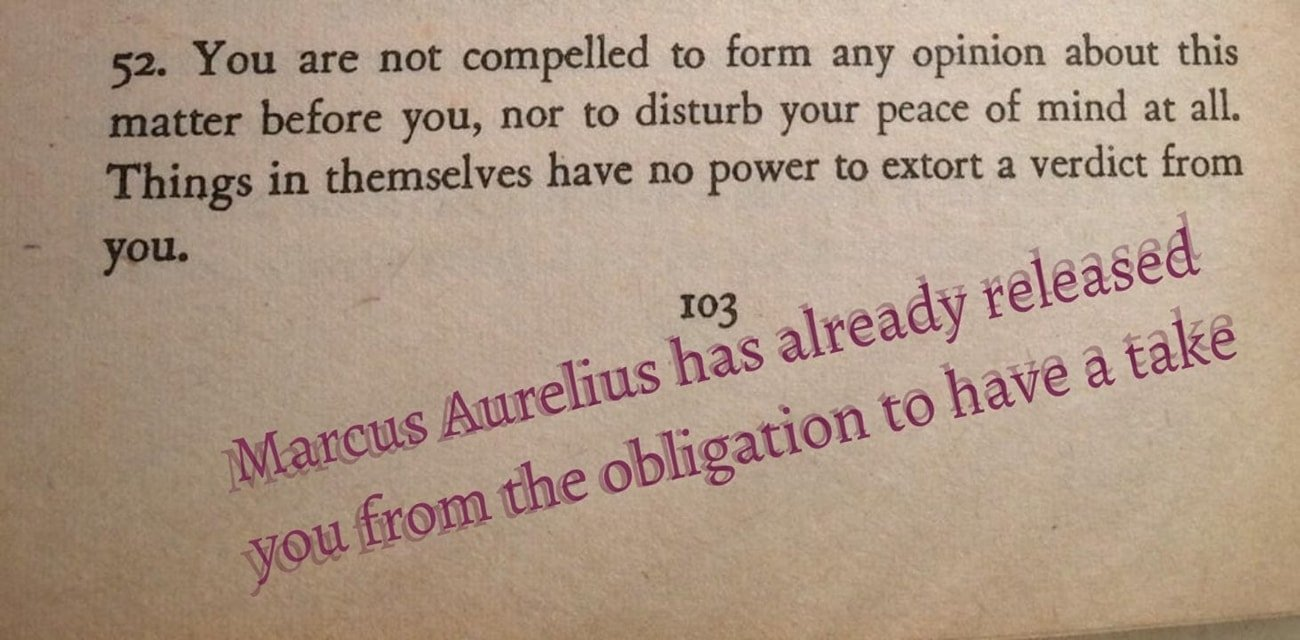
Some days I look at the timeline and think about getting this tattooed on my back:
Mark Tomczak
boosted

And just like that, I'm 11 years old again...
Mark Tomczak
boosted

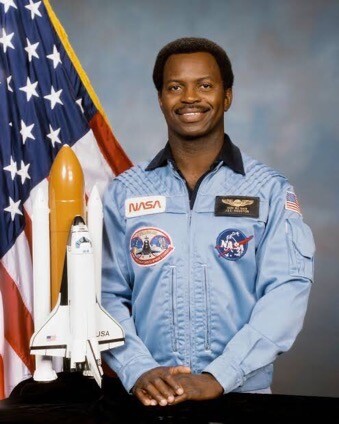
In 1959, police were called to a segregated library when a Black 9-year-old boy trying to check out books refused to leave, after being told the library was not for Black people.
The boy, Ronald McNair, went on to became an astronaut. The library is also now named after him
Mark Tomczak
boosted

"im not owned! im not owned!!" I continue to insist as my screwdriver slips, allowing my beryllium neutron reflector to close around my plutonium core, inducing supercriticality
There is something shabby-luxurious about traveling by Amtrak along the Eastern US that is incredibly endearing to me. Just the whole vibe of "Yes, we know it looks nothing like the brochure, but damnit we're trying."
And given the option of flying somewhere or taking the train somewhere, if the difference in travel time is a matter of a few hours, I'll take the train every time. Planes are too distracting, and the tray table is way too small. Besides, 50/50 odds that for the price of a coach plane ticket, I get an entire roomette to myself.
I get so much code written on a train.
Mark Tomczak
boosted

 💉💉💉🎉
💉💉💉🎉
The list of things that have gone wrong at Twitter is, well, extensive. But the simplest one happened at the very start, was exacerbated by Musk's subsequent communication, and was extremely, IMHO, predictable.
So, let's talk about the difference between startups and established tech companies.
I worked at a startup as my first job out of college. Put five years in. It was an amazing experience and I was truly fortunate to have it; I was thrown into the deep end, learned things about software architecture that would serve me well throughout my whole career, and wouldn't trade it for anything.
I also:
* broke off a date with my future wife because I was the only one of three team members who could make a demo work for the next day. We pulled an all-nighter.
* became well-familiar with the biker gang that pulled up to the bar across the street from our office every Saturday night; could set my clock by them arriving. Did often, on account of all the seven-day weeks.
* got the sickest I'd ever been, out three weeks. Week two, my CEO calls and checks to see if there's any duty I could take on because we had no other hands to do it. I wrote some user-facing documentation. Three months later, someone caught all the obvious typos and asked "What idiot wrote this?" I dead-panned that I think I missed some issues on account of all the vivid hallucinations.
* had a conversation with my doctor about the indigestion that was waking me up at night. He suggested I relieve stress. I responded "I work at a startup, so what are the options that don't require a career change?"
And eventually, I left because I was ready to stop living like that.
Here's the thing: there is *so much* of the software dev ecosystem where you don't *live* like that. You live like that because you're working on something you're willing to sacrifice yourself for it (I'm not talking about being passionate about the work---you can be passionate and have a work-life balance---I'm talking actual sacrifice; things you won't get back) or you are expecting a *huge* payout relative to the invested effort. If those ingredients aren't there? You don't take that gig. And companies that aren't willing to offer that payout or the kind of we-are-here-to-change-the-world opportunity don't get those employees.
Twitter was once such a startup. It's not anymore. It went public. Once a company goes public, it's no longer a startup; it's a place people who want a reliable paycheck and a reasonable work-life balance go to work. At Google, we were counseled to have a "startup mentality" by leadership, and people certainly tried to give it their all, but... You just don't work like you're at a startup at a 100,000-person company. You can't. The buy-in isn't there. It does you no good to pull seven-day weeks when the database team you're relying upon works five-day weeks, holds all the credentials to modify the DB, and just won't answer their email on a Saturday. What's the point then? Go home, love your spouse, work on your house, hike in the park, touch grass.
Musk tried something I don't think I've seen before: he tried taking a company that "won the game," as it were, and *roll it back to a startup.* He took a place people had a stable job making a product people use and tried to make it a place where the future was uncertain again. And then he confirmed that, yes, he *was* expecting those employees to work seven-day weeks to realize a vision... A vision he didn't even enunciate.
Twitter was a place steady hands were working to maintain a mature product for a reliable paycheck. A mass exodus is entirely expected. I don't know why *he* didn't expect it.
(... `"withheld_in_countries": ["DE", "FR"]`)
I'll miss a few things about Twitter.
Mostly the fact that with a little sleuthing, you could find on every account which ones Twitter believed were Nazis or Nazi-adjacent. Because for German legal compliance reasons, they had to filter those accounts for German users, so there was a little metadata you could fetch via the API that told you if a given tweet or entire account was Germany-noncompliant.
Mark Tomczak
boosted

Sad news from UNC Chapel Hill Computer Science — Fred P. Brooks, the founder and long-time chair of the department (and a major influence on my professional outlook) passed away a few hours ago.
Control system theory is frustrating because the nomenclature is all over the map.
Sometimes you get a formula where the inventors named the important tuning parameters, which you need to understand to make the formula work, "B" and "Zeta."
And then you get the *coolest* names for relatively mundane concepts, like "control authority." "Control authority" sounds like what an anime character uses to control their magic servant, not the idea that you can't force a motor to do more if it's already doing as much as it can.




- My Page
- https://fixermark.com
Career software engineer living something approximating the dream he had as a kid.
Joined Apr 2022
