

 This is Mur
  @mur2501@social.cleverlibre.org
- CATO
- QOTO
- MOTO
- @freemo
Lives in India🇮🇳
Loves to talk to people from around the world and know eachother 😀
Fascinated by every living thing and prefers to spend time with nature❤️💚
have edgy and invasive humour but is totally docile 😛
Lost my right eye to Glaucoma :(
Shifted from @mur2501
Joined Oct 2020
 This is Mur
boosted
This is Mur
boosted

huh, this thing will take C source and build a single executable that will run on 5 different operating systems...
https://justine.lol/cosmopolitan/index.html
https://justine.lol/cosmopolitan/index.html
This is Mur
boosted

The meme is remarakably true here in Singapore. https://www.reddit.com/r/singapore/comments/kle8v6/goodbye_santa_hello_cai_shen_ye/

140 baby cobras found hiding inside a farmers house 
https://youtu.be/NTmrh0XgNXA
This is Mur
boosted
 This is Mur
boosted
This is Mur
boosted

Here's a brief and cute introduction of me! Nice to meet you~✨ #meetTheArtist #haamuart
This is Mur
boosted

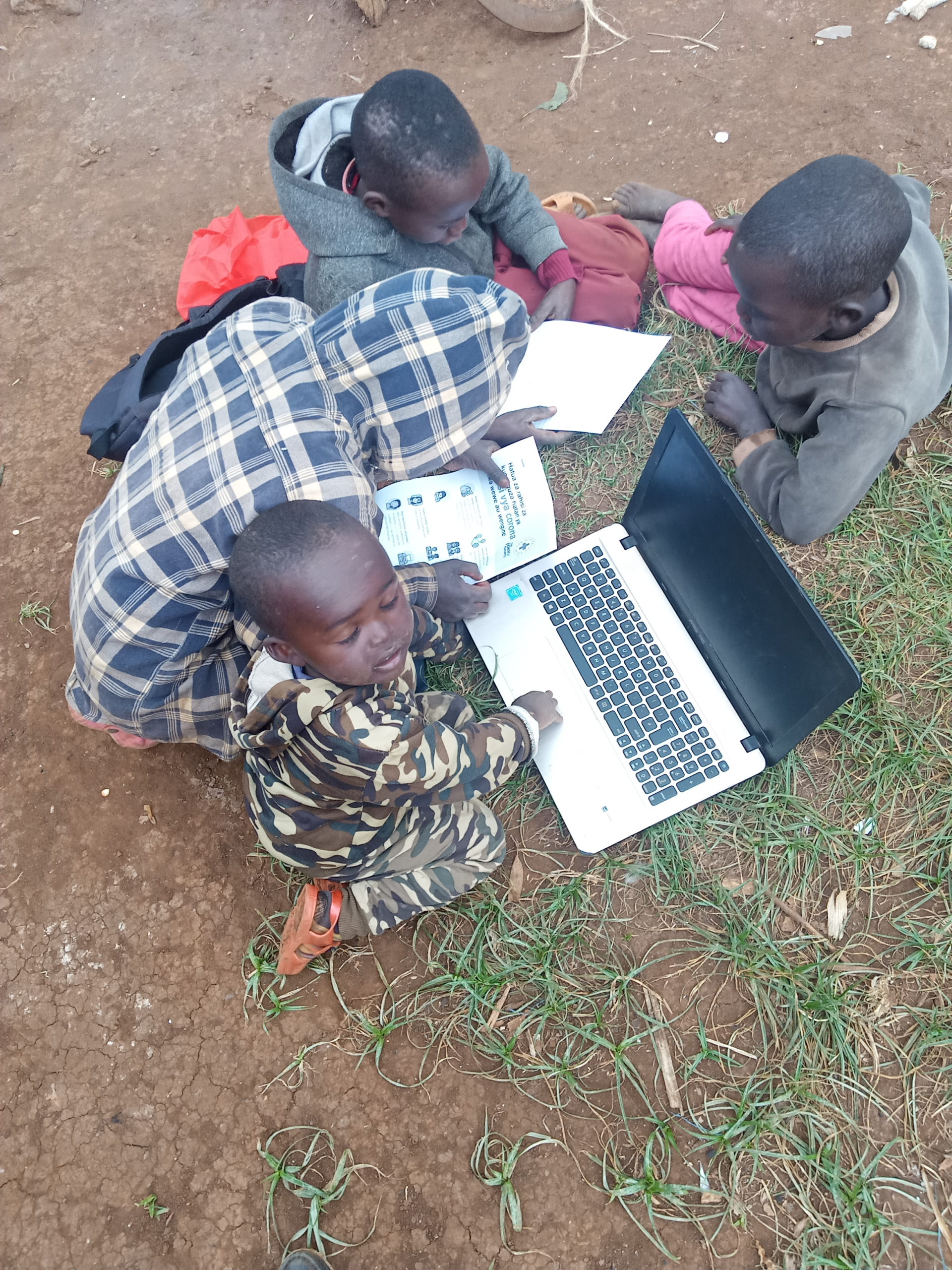
Another donation for #SchoolForAfrica!
We have raised: €326,50 so far now! 💪
This is Mur
boosted
 This is Mur
boosted
This is Mur
boosted

My name is Jonathan Mburugu from Kenya, founder of SchoolForAfrica. I struggled to get education in Kenya as it is expensive to most of the ordinary Kenyans( when you’re not government sponsored in higher education). Education is the easiest tool to deliver the poor out of poverty, yes very true! However, where finances are required, it become very difficult for someone to fulfill his or her dream(s).
I studied Italian language for 1 and half year in an effort to study in Italy. It was unsuccessful, as in, only wealthy people with huge amounts of money in their bank accounts are qualified to travel there.
I tried to enroll to Kenya Police Services and Kenya Defence Forces, I was unsuccessful due to unfair recruitment procedures.
As I volunteer to teach young kids, I saw many people worse than me, desperate than I’m, I felt for them, others, unlike me, have potential and promising future, I hope we all make it together.
History of Education in Kenya
The CMS missionaries interacted with local in Mombasa and set up one of the earliest mission schools in the country at Rabai in 1846.
The missionaries expanded their work into Kenya’s interior as the Mombasa to Uganda Railway expanded. The missionaries attempted to start a mission school in Yatta, but the Kamba tribe resisted. The missionaries then penetrated to western Kenya and set up mission schools and churches. The first school to be established in western Kenya was set up in Kaimosi in 1902. This set up the bases to some Kenyans to access education and some got privilege to proceed abroad for further education during colonial era. Among those who furthered their education were Jomo Kenyatta who attended Woodbrooke College and London School of Economics, Charles Jojo, who attended Gray’s Inn Law School, Peter Mbiyu Koinange, who attended Colombia University, Mwai Kibaki, who attended London School of Economics, R. Mugo Gatheru who attended Roosevelt University, Tom Mboya, Who attended Ruskin College, Oxford, Masinde Muliro, who attended University of Cape Town, Julius Gikonyo Kiano who attended Stanford University, Paul Ngei and Barack Obama Sr, who both attended the University of Hawaii at Manoa.
The first Kenyan to obtain PhD was Julius Gikonyo Kiano. By the time Kenya attained independence in 1963, 840,000 African children were attending elementary school.
7-4-2-3 System of Education up to 1985
Kenya continued with this system of education up to 1985, it should be noted that East African Community then had joint common education system. With the collapse of EAC in 1977, Kenya continued with the same education system but changed the name of examinations to national identity. The certificate of primary education became, Certificate of Primary Education (CPE), the East African Certificate of Education became the Kenya Certificate of Education (KCE) and the East African Advanced Certificate of Education became the Kenya Advanced Certificate of Education (KACE).
8-4-4 Curriculum From 1985 to 2017
The then, second president of Kenya, Daniel arap Moi introduced the 8-4-4 system of education, this system is structured with 8 years model of basic education, four years of secondary education and four years of undergraduate curriculum.
Formal schooling in begin at the age of six, with compulsory and free basic education up to the age of 14. Secondary school is also “free” but not compulsory.
The pupils take the national Kenya Certificate of Primary Education examination (KCPE), under the Kenya stNational Examination Council (KNEC) under the Ministry of Education. Pupils who performs very well gain admission into national secondary schools, while those with average scores attend provincial schools.
The curriculum is uniform nationally, with these subjects being taught: Kiswahili, Mathematics, Science, Social Studies, Religious Education, Creative Arts, Physical Education and Life Skills. The examinable subjects are five, Kiswahili, English, Mathematics, Science and Social Studies.
The 2020 standard 5 pupils will be the last class enrolled under the 8-4-4 education system.
Secondary Education
There are three types secondary schools in Kenya —public, private and harambee. (Harambee schools are run by local communities and do not receive full funding from the government). Private schools, most of them that are run by mission, have religious affiliations. Non-formal education centers provide basic education for children who are unable to access formal education, especially in impoverished urban and rural areas. The secondary education last for four years with two stages, first stage(Form 1 and 2), learners learn up to 12 subjects and second stage (Form 3 and 4) learners study 8 and minimum of 7 subjects. At the end of four years, students take examinations administered by the KNEC, where student is given Kenya Certificate of Secondary Education (KSCE). This examination is the determinant of whether a student will join university, other higher learning institutions and vocational training colleges.
Thirty subjects are offered at secondary level, grouped into six learning areas:
Languages (English, Kiswahili, Arabic, German, French)
Sciences (Mathematics, Chemistry, Physics, Biology)
Applied Sciences ( Home Science, Agriculture, Computer Studies)
Humanities (History, Geography, Religious Education, Life Skills, Business Studies)
Creative Arts (Music, Art and Craft)
Technical Subjects (Drawing and Design, Building Constructions, power and mechanics, Metal work, Aviation, woodwork, electronics)
The three subjects in group 1 are compulsory. Any three subjects of group 2 are compulsory, with mathematics being compulsory and any two of the rest. Grade C+ is the minimum requirement entry to university to pursue a bachelor’s degree course.
Higher Education
By 2005 there were only just five public universities in the country. Today there 23 public universities, 14 chartered private universities and 13 universities Letter of Interim Authority (LIA).
Public universities entry is coordinated by the Kenya Universities and Colleges Placement Service, that was established in 2014 to replace the Joint Admission Board (JAB).
In 2014, the threshold for degree programs was lowered and set at 60 points (B) for male 58 (B-) for female, from 65 (male) and 64( female). The threshold for diploma programs was a minimum overall grade of C- . In 2016 the threshold degrees program was lowered to C+ for both male and female.
Cost of primary education in Kenya (Estimates)
Although primary education in Kenya is “free” and compulsory, the word ‘free’ is in quote because only pays tuition fees for each learner. Other expenses are not provided, including exercise books and food. If you calculate the costs (depending with the school and location), minimum fees is Ksh 5,000 per year and a maximum of Ksh 12,000 per year.
Costs of secondary school education
Like primary schools, the government only pays tuition fees for every students, other cost of learning the schools are paid by the learners. The costs ranges from 10,000 to 15,000 Ksh per year for day schools and 40,000 to 50,000 for extra counties and county schools. The estimate cost for national schools is between 50,000 to 90,000 Ksh.
The schools charges fees with agreements of both Board of Management and parents in Annual General Meetings. Here, the less fortunate parents are forced to pay what they don’t afford by more fortunate parents.
Costs of University Education
University education is partly funded by the government, if a student admitted to university by the Kenya Universities and Colleges Placement Service, he or she is required to pay Ksh 16,000 per year. It should be noted that a student pays 16K even after Higher Education Loan Board (HELB) pays a certain amount of money to tuition fees. This is exclusive of accomadations and other basic expenses.
Like this:Like Loading...https://schoolforafrica.org/uncategorized/education-and-system-of-education-in-kenya/
This is Mur
boosted

this is birb, but it was too dark to see what kind.
This is Mur
boosted

...
We are clearly nowhere near extinct (there are over 600,000 Maori living in New Zealand, and 150,000 Iñuit across the Arctic), and in the modernization of our traditional clothing and outward appearances there are the obvious signs of globalization’s effects on our communities."
This is Mur
boosted

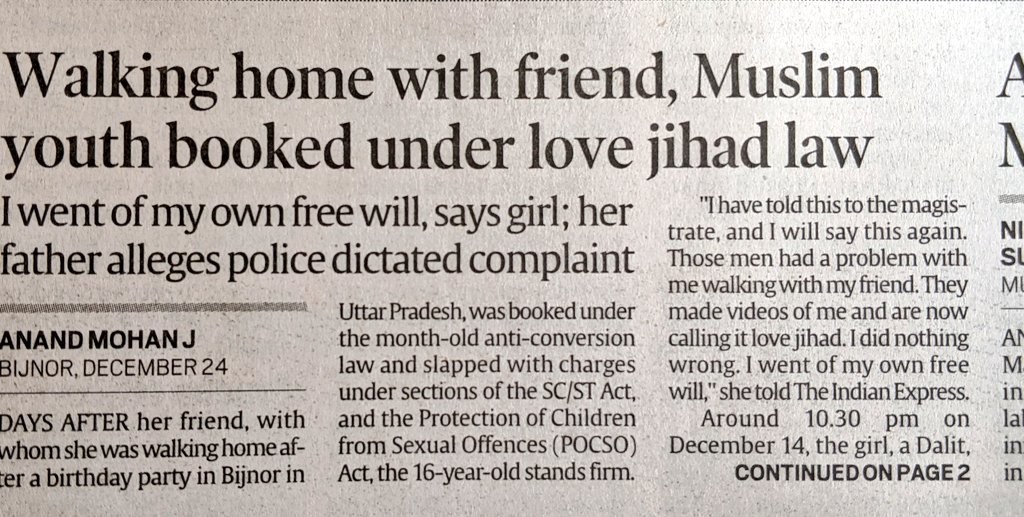
🤦🏾♂️🤬
---
RT @JairajSinghR
Just another headline in 2021
https://twitter.com/JairajSinghR/status/1342323967164444674
This is Mur
boosted
As a deaf I'm very frustated with inaccessible videos and especially youtube sucks at this, they recently removed the community captioning. The amount of captioned & new videos have gone down drastically and it has pushed people like me out of many communities. There's one certain problem that I'm very frustated of; captioning ONLY when some other language than english is being spoken on the video. Your ableism is showing when you don't caption THE WHOLE CONTENT. #ableism #deaf #accessibility
This is Mur
boosted
 This is Mur
boosted
This is Mur
boosted
Lasts pictures I'll probably post today, or not? But this is me, Melissa, in my natural habitat.
Or said otherwise, where I feel the happiest and safest.
Next to animals. And in the mountains or near the sea. When the weather is cold.
🥺
The first photo was in the South of Iceland when I started my trip and the second one on the cliffs of Etretat in Normandy, France. ❤️
This is Mur
boosted
 This is Mur
boosted
This is Mur
boosted

I love living in a piracy powered bubble:
-books are free but if I pay a little I can get a physical copy
-movies are free but if I pay a little I can see em on a big screen
-most music is free but if I pay a little I can get an algorithm to recommend me more music, or I can pay a little to support a smaller artist
-TV is free
-video games are mosrly free
-no ads, no need to sign up to a thousand different services, no nothing
This is Mur
boosted





- CATO
- QOTO
- MOTO
- @freemo
Lives in India🇮🇳
Loves to talk to people from around the world and know eachother 😀
Fascinated by every living thing and prefers to spend time with nature❤️💚
have edgy and invasive humour but is totally docile 😛
Lost my right eye to Glaucoma :(
Shifted from @mur2501
Joined Oct 2020
