

Nicola Romanò @nicolaromano@social.cleverlibre.org
Senior lecturer at ZJE and Edinburgh university.
I teach #imageanalysis & #dataanalysis with #RStats & #python. I study #heterogeneity in #pituitary (and other) cells.
Joined Oct 2022
Nicola Romanò
boosted

Further damage to the dysfunctional academic career system in Germany: The government has just presented its reform of the fixed term contract law (#WissZeitVG).
After years of #IchbinHanna protests, the max. length of fixed contracts for postdocs has been reduced to 3 years. The cynical argument: Careers become more predictable, because 3 years after your PhD, it's either professorship, third party funding, or exit.
The lack of a broader tenure track system makes this a devastating development.
Nicola Romanò
boosted

Oh, man. This comic — from 1993 — could NOT be more relevant today. As usual, Bill Watterson hits it out of the park.
@Aschniedermann and then postdocs leave academia for industry... guess why!
@clathrin My guess is we now get people from other institutes within the University, who would have not come in person otherwise (campus is on different areas of the city)
@clathrin We're running hybrid seminars and I think overall we're back at pre-COVID numbers. Probably 50/50 in person/online
@malwaretech I think it is quite interesting though, in that it shows that most exams are badly designed. It's also interesting that GPT4 is still very bad at English Literature and English Language...
This should really push us towards improving the quality of assessments.
What I really find scary in the GPT4 white paper is section 2.9 'Potential for Risky Emergent Behaviors'.
Nicola Romanò
boosted

Random first trial post: today, March 14th, is the 29th anniversary of the Linux 1.0 announcement.
Of course, there are other arguably more important dates in Linux history, but this is one of them.
Nicola Romanò
boosted

RT @Apeer_micro
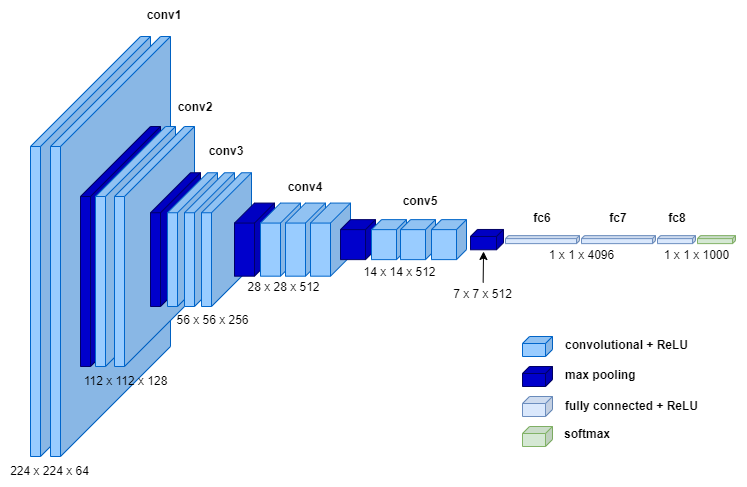
Learn how feature learning works in CNNs
Want to know the technique that gives #DeepLearning an edge over #MachineLearning?
Read our blog to find out.
https://hubs.la/Q01F6Nvp0
Nicola Romanò
boosted


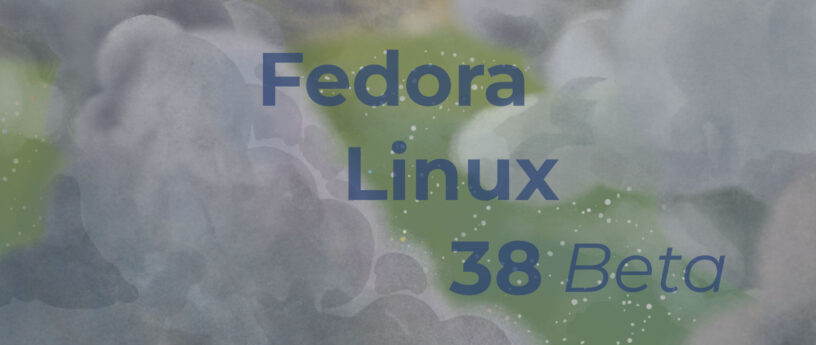
Ready to give Fedora Linux 38 a test? The beta release is here!
#Fedora #Linux #OpenSource
Learn more: https://fedoramagazine.org/announcing-fedora-38-beta/
Just finished reading this very interesting #review about #analysis of #scRNAseq data from different #species.
"Cross-Species Analysis of Single-Cell Transcriptomic Data" - Schafer - Front. Cell Dev. Biol 2019
https://www.frontiersin.org/articles/10.3389/fcell.2019.00175/full#B5
@BorisBarbour @clathrin @richardsever Absolutely, I have put a note on PubPeer, but no response so far!
@vicgrinberg "Elogio dell'imperfezione" ("In Praise of Imperfection" in the English translation) by Rita Levi-Montalcini.
It looks like the English version is out of print, but you can find it used.
Nicola Romanò
boosted

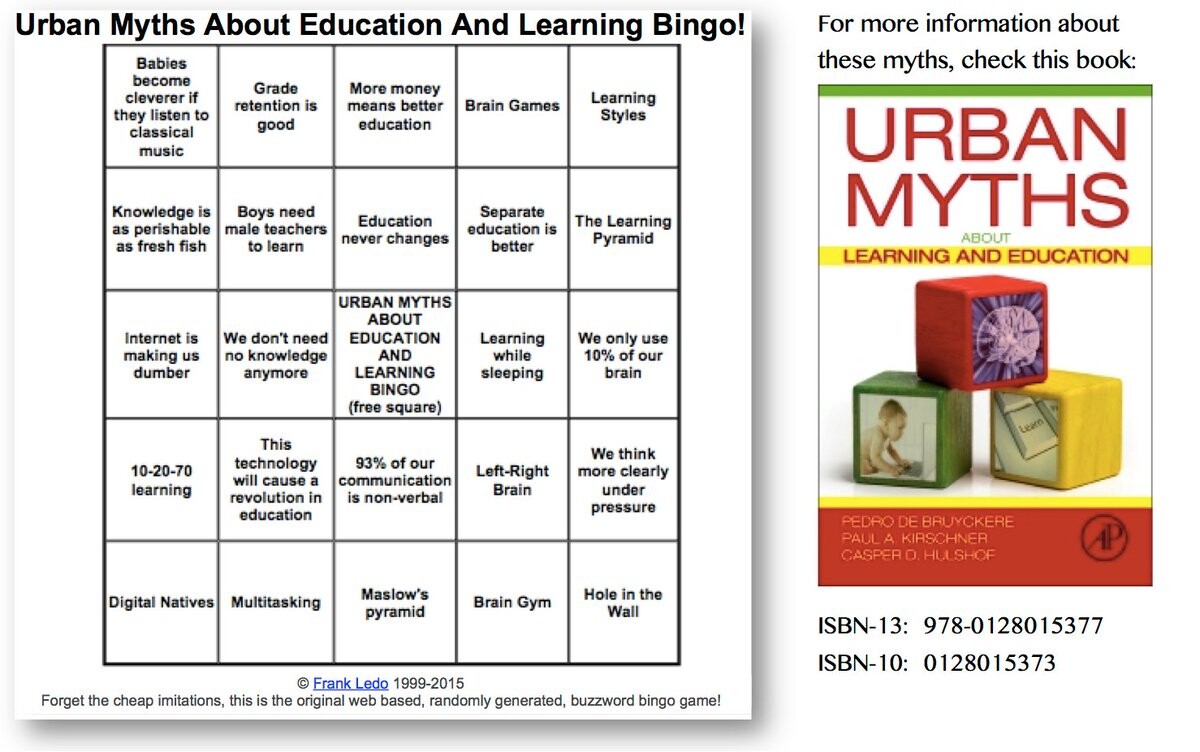
I hoped this bingo card would have become outdated because people would have started to know that these are myths. Sadly, this isn't the case.
Nicola Romanò
boosted

""The honors thesis must be a *single author* document written by the student."
Rules like this represent an antiquated approach to #science and harm the undergraduate researchers involved by teaching them that science is done by isolated individuals & that it's appropriate to not credit all contributors to a project.
Of course students should lead the work & writing of their honors thesis, but there's a difference between leading & doing it alone. We should teach science as it is practiced.
@failedLyndonLaRouchite @ethanwhite definitely not Hons projects...
Nicola Romanò
boosted

Nicola Romanò
boosted



There is people out there thinking that computational biologists spend less time on scientific projects (not true) and therefore deserve less credit or even no authorship in papers, compared to wet lab people.
They clearly have never seen all the years and work that takes to gain the knowledge to do it. Just like they clearly do not value such a knowledge on lab work, since they only care about how many hours someone spend doing something.
Just reading this very interesting paper on how many #replicates are needed for appropriate analysis of bulk #RNAseq data and comparing tools for DE gene expression.
#bioinformatics #article #goodread
https://www.ncbi.nlm.nih.gov/pmc/articles/PMC4878611/
From the abstract
With three biological replicates, nine of the 11 tools evaluated
found only 20%–40% of the significantly differentially expressed (SDE) genes identified with the full set of 42 clean replicates.
This rises to >85% for the subset of SDE genes changing in expression by more than fourfold. To achieve >85% for all SDE genes regardless of fold change requires more than 20 biological replicates.

@clathrin @richardsever Let me tell you a story about data reuse
I have a student who wants to re-analysing some sequencing data from a paper.
1. Paper reports the data will be shared on GEO at the time for publication. No GEO ID is present, although the paper has been published for a while now.
2. After digging onto GEO for longer than needed (it always feels like I'm back in the 90s on MySpace), I find the data. Well, part of it, the rest is nowhere to be found.
3. Several emails to the authors, no reply
4. In the meantime we manage to find the data. I confirm my hate for GEO.
5. Data is from human patients, which the paper indicates as patient 1,2,3 etc.
The patient numbers in the deposited data only partially match those in the paper. Luckily we're pretty confident we can tell who's who but still...
Data from one patient (out of 6) is missing
6. Out of three set of experiments, data is available only for two, the other are missing
The student has pretty much finished her project.
We're still waiting for the authors to reply to our emails.
I have to say, I've had much better experience with other papers, but still, I think we're a long way to have properly archived data.
@igutierrez@mastodon.social What do you edit PDF with though? Nowadays if I'm working with other people I use Google Docs. Formatting stays correct (not the case when going between Word/OpenOffice/LibreOffice esp with different OS), I can add comments and suggestions, have revision tracking, and can work synchronously with colleagues.
I'm not sure you can really do that with PDF, but I'll be super happy to be corrected.
Senior lecturer at ZJE and Edinburgh university.
I teach #imageanalysis & #dataanalysis with #RStats & #python. I study #heterogeneity in #pituitary (and other) cells.
Joined Oct 2022
