
No one who claims that not voting is a radical has ever given me a reason how it's supposed work.
The only benefit of not voting is that talking about it makes centrist liberals *super* annoyed, and although this is very amusing, it's still not really doing anything.
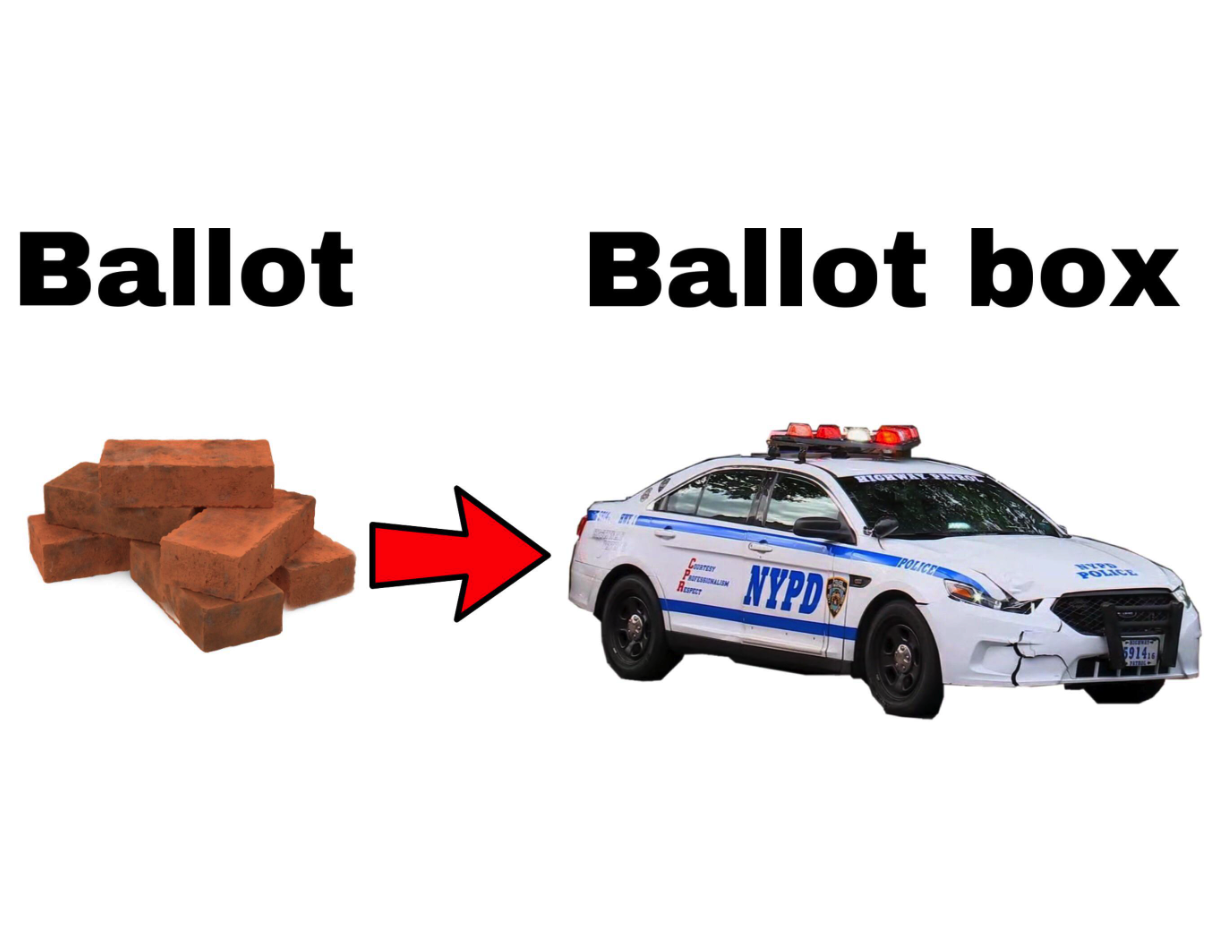
Worse? Whoever posted this meme *isn't* throwing any bricks at cop cars. (There is a good chance they aren't even leftists but rather right wingers who would find *you* having a criminal record very convenient.)
It is possible and easy to recognize the limitations and insufficiency of electoral politics and still use voting as one action among many to facilitate change.
Listen to what black people and queer people are saying.
I roll my eyes when the *only* response people have to injustice is "Vote!1!" I roll my eyes more at the idea that not voting is some big brain 5D chess radical move that lets you operate outside the system.
Use every lever of power you can reach. Every single one.

@futurebird would you say this also apply to voting for candidates which have no real chance at winning, too? like third party candidates in the us or small parties have no chance to get over the 5% hurdle in germany?

@benni @futurebird voting is a strategic choice to get the best possible outcome. So I vote for the best possible candidate that could win. Given I live in the USA that means I just vote straight Democrat every time. A protest vote for a third party that gets 0.5% isn’t meaningfully different from writing in Mickey Mouse.


@FeralRobots @njwatt @benni @futurebird Voting for an obscure 3rd party is better than not voting at all, because at least it does send a message. If you don't vote, your action is indistinguishable from those who don't care or find both leading options acceptable.
Ranked Choice Voting (which Portland, Oregon has recently implemented) makes that message even stronger, because it doesn't blur together the voters who prefer the centrist and those who considered it the lesser evil.
It eliminates the "spoiler" effect, which will be crucial in the event that your favorite third party starts getting 20% of the vote.

@peterdrake @FeralRobots @njwatt @benni @futurebird
Sends a message to who? Doubt “who” will listen. Just cast a vote for the one who represents you more than the other.
@LHookham @FeralRobots @njwatt @benni @futurebird If some third party got 20% of the vote, news would report it. Politicians would, to some degree, listen and veer in that direction.
If those people didn't vote, the losing major party would think, "Aha! People like the other party better. We should shift toward their position."
RCV is interesting because, among other things, it reveals this information. Third parties would finally find out if they're losing because voters are too afraid to "waste their votes" or because very few people support the third party's position.
@LHookham @FeralRobots @njwatt @benni @futurebird To be clear, in a plurality election, voting for a non-viable candidate is not MUCH better than not voting, but it's better.

@peterdrake @FeralRobots @njwatt @benni @futurebird I'm not a big fan of ranked choice voting but it definitely has a place in nonpartisan local elections and in elections where the third (minor) party can't win but can be a spoiler drawing most of it's votes from one of the major parties.