

Rune @skalden@social.cleverlibre.org
Writer. Interested in principles of storytelling, theater and a lot of random stuff.
Joined Sep 2023
@sz_duras There is very little tolerance for it in Norwegian media and politics. There have been several scandals in the last year where ministers have changed because of problems with impartiality. The spouses of politicians buying weapon shares while the politicians themselves are handling issues about whether the government should buy weapons for Ukraine, for example. Norwegian politics are assumed to be quite clean, but because of this intolerance rather than innate honesty. I guess we believe politicians in other regimes to be more corrupt than our own, in particular third-world and autocratic regimes. I guess the power of the oil lobby and so on is underestimated, though.
@sz_duras It is about a big corporation trying to achieve a seed monopoly. In the process, they bribe EU politicians. They are designing the seed that makes the farmers forever dependent on them. They also try to destroy a seed that would free them and solve the food crisis. Some of the backstory has real-life parallels.
@sz_duras The Norwegian national broadcaster is running an interesting one called "The seed" at the moment: https://tv.nrk.no/serie/the-seed - not sure if it is viewable anywhere else.
Rune
boosted

”So in everything: power lies with those who control finance, not with those who know the matter upon which the money is to be spent. Thus, the holders of power are, in general, ignorant and malevolent, and the less they exercise their power the better.”
— Bertrand Russell, Sceptical Essays (1928): Freedom and Society, p. 153
Rune
boosted

@alicemcalicepants Elevate it and see the others become insecure about their normality. We are cyclic creatures. Social and then not. Weird and then not. Awkward and then not.
@mrundkvist It is laboriously established only if you agree with it, I believe? When you disagree, it is traditional.
@RustyBertrand I think this is about books?
Rune
boosted
Every 12 to 18 months, an upgraded model of Bill Gates emerges from Microsoft’s secret underground facility and immediately sets off to find and destroy its previous incarnation.
@SimonRoyHughes Da er navnet dyrebart og ikke et dyrenavn, tror jeg
@SimonRoyHughes Du tenker på salmen av Petter Dass?
@SimonRoyHughes A fine point is that "havsens" would not really mean Ocean but something like "Far out in the ocean". Which also points towards the "saviour" interpretation. Not sure what to make of the Christ connotations of that term, though. It is probably either very appropriate or very inappropriate in this context
@SimonRoyHughes But as the plot shows, being saved by a troll may be a blessing with caveats
@SimonRoyHughes I see it as a connotation to the people who go out to save ships in need. "Bergingsaksjon" and "bergingsmannskap" is associated with helping people in extreme danger. Often at sea or in the mountains with extreme weather
@SimonRoyHughes @lbheuschkel Yes, I can see that "de syv hav" becomes "seven seas", for example. I think rindende is hard to pin down. (I see in the footnote that Arne Garborg gave up.) In this context I would probably pick "rushing" to maintain the ambiguity. (King Oceansaver rushing Sea Troll.) But there is also a Norse goddess Rind, to make it all even more complicated. Perhaps (probably?) the sound of it is more important than the meaning
@SimonRoyHughes @lbheuschkel Is there a place we can see the whole passage in Norwegian? Would be nice to see "rindende" in context. It could be derived from "renne", which would usually refer to a flowing stream, but it is also possible to use about a person (or troll) running. https://naob.no/ordbok/renne_1 ("Renne over ende" is an idiom, where you rush over somebody causing them to loose balance). I think "Havsensberger" would probably most accurately be rendered as "Ocean Saver". "Sjø", like sea, can be an ocean or a lake, but "hav" would only refer to an ocean.
@SimonRoyHughes "berger" should be in the sense of "saver" I think, so Sea Saver, perhaps
Rune
boosted


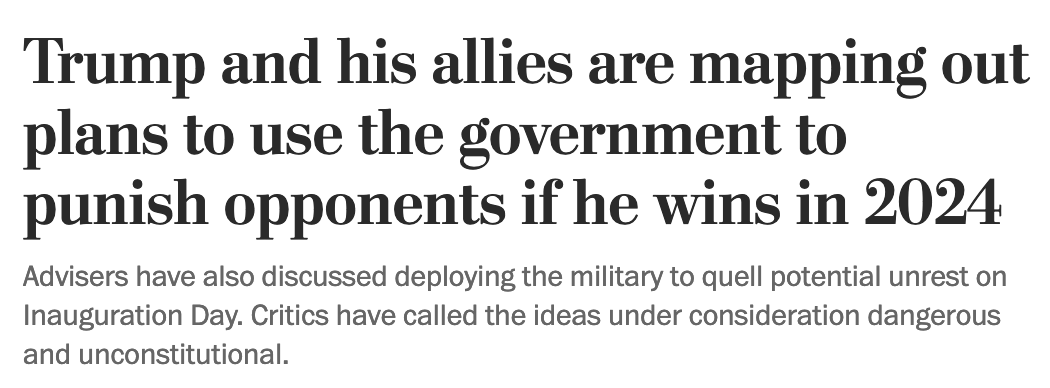
Please understand that fascism never "creeps in." It is out in the open, blaring, guns blazing, using neon signs. Yet, too many people still do not care and tell you to stop overreacting, find comfort in complacency because they'll be fine, or welcome fascism with open arms because they support it.
Writer. Interested in principles of storytelling, theater and a lot of random stuff.
Joined Sep 2023
