

Alex Weber @weberam2@social.cleverlibre.org
Assistant Professor at UBC; MRI, Medical Imaging, Neuroscience; Books and Mountains
https://github.com/WeberLab
weberlab.github.io
Joined Nov 2022
Alex Weber
boosted

Kenya's UBI trial data is in.
people dont stop working when they have a UBI.
lump sum UBI had the greatest economic benefit, creating a lot more entrepreneurs.
we have conclusively verified humans can be trusted to make excellent financial decisions.
now it is time to fix economic policies to connect people with money directly, not manage it for them out of mistrust.
https://open.spotify.com/episode/3x329k32DXVjasx1zSqApH?si=RslQjGSeRYK0osae88yJig
Alex Weber
boosted

Alex Weber
boosted

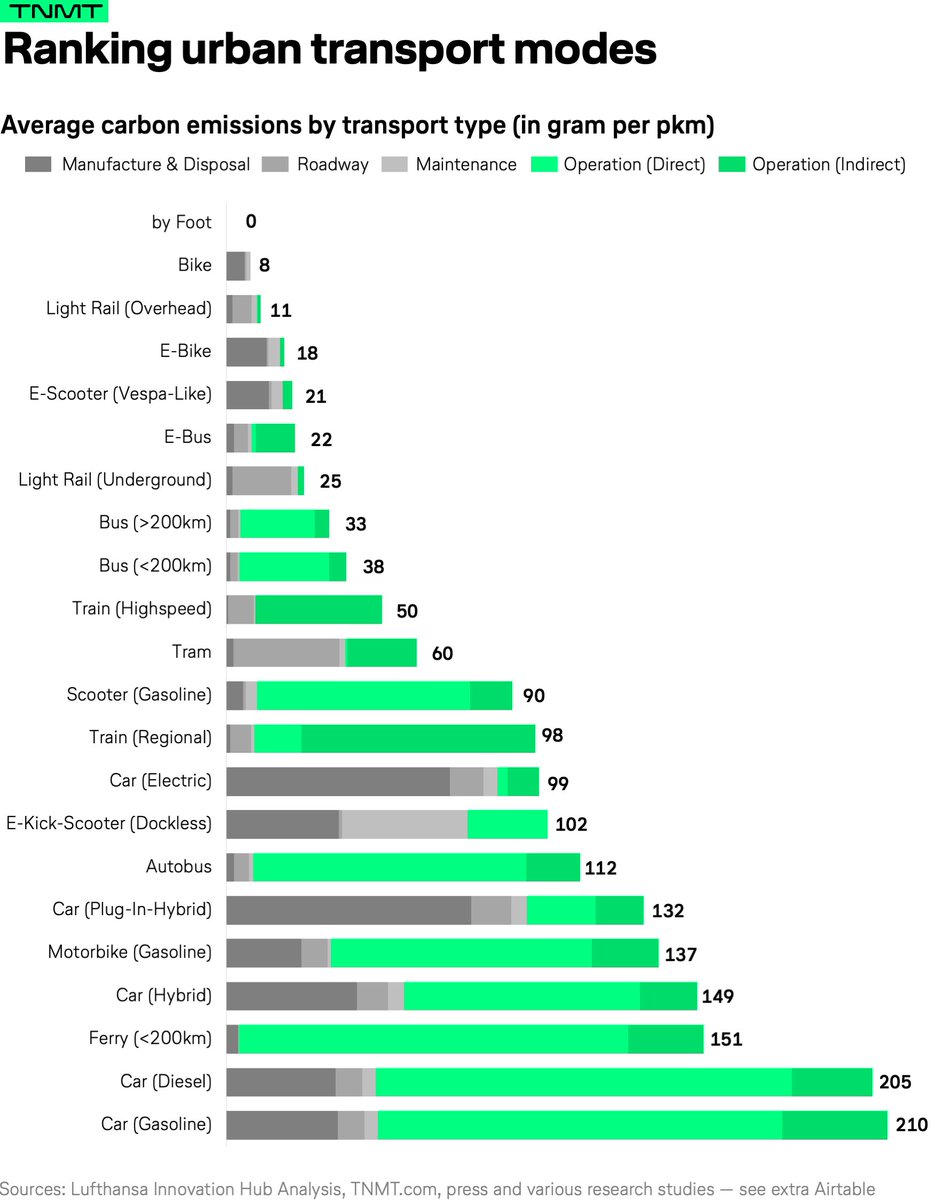
You cannot seriously reduce carbon emissions without a clear and consistent plan to replace driving by walking and cycling.
How is your city/country doing?
(source: https://tnmt.com/infographics/carbon-emissions-by-transport-type/#19085)
Alex Weber
boosted

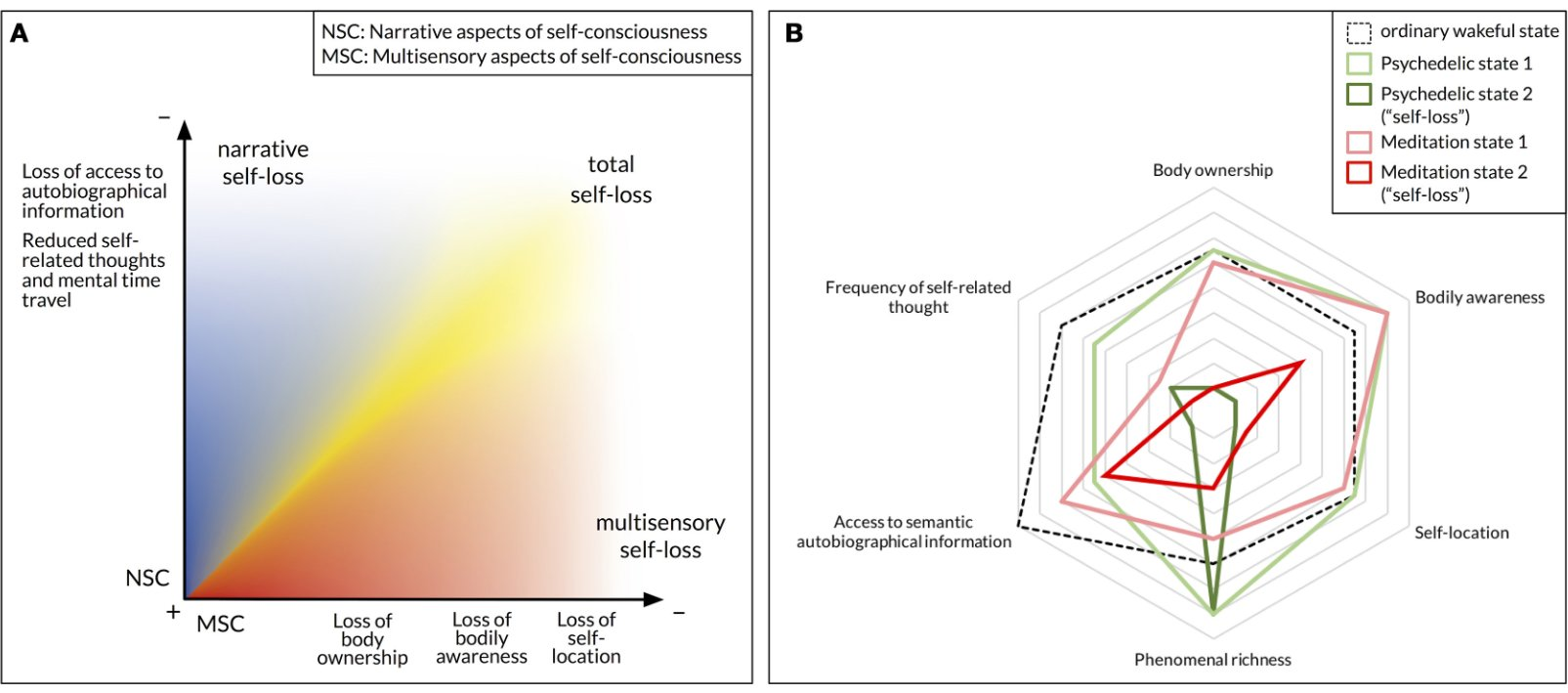
Very readable paper on the partially overlapping phenomenologies of meditation and psychedelic experience.
Millière, Carhart-Harris, Roseman, Trautwein, and Berkovich-Ohana. "Psychedelics, meditation, and self-consciousness."
Alex Weber
boosted

« #AaronSwartz planned to publish millions of scientific articles, financed by public money and on which the authors received nothing. Prosecuted before he had published anything, he risked 35 years in prison. Facing this prospect, he committed suicide on 11 January 2013. 11 years ago.
In 2024, #OpenAI will apply its algorithms to any document, online or offline, without the consent of the authors. No one is likely to be prosecuted.
#IntellectualProperty is just a tool of oppression. »
Alex Weber
boosted

"Substack’s argument in response to the Atlantic article was a masterclass in how not to do it: the best way to defeat these ideas, it claimed, was through scrutiny. Frankly, if scrutiny was going to defeat neo-Nazis or the idea that the Cultural Revolution had some upsides, it would have done so already."
https://www.ft.com/content/648ec2c0-d71b-4dc6-af15-56fedc54eb2d
Alex Weber
boosted
"Scientists found the thickly contextualised, sharply focused histories of now-discarded science irrelevant and indigestible. Historians bridled at the scientists’ demands for a mythologised and anachronistic version of the past. We think it’s time to restart the conversation, for the benefit of both scientists and historians."
https://aeon.co/essays/science-and-history-cannot-afford-to-be-indifferent-to-each-other
Alex Weber
boosted
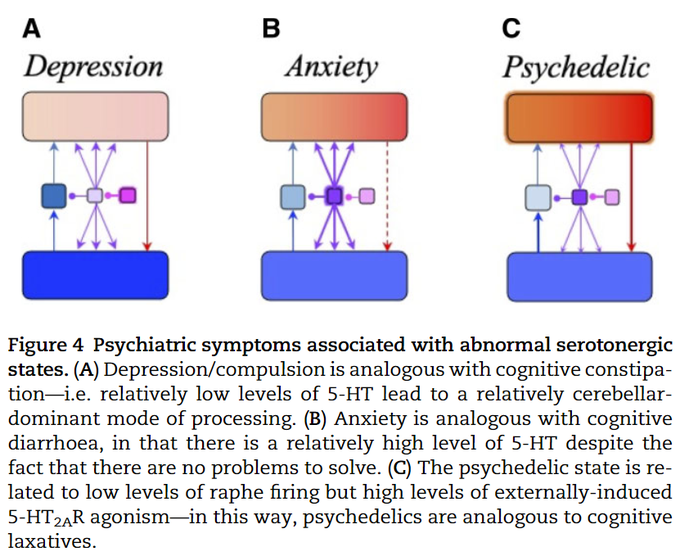
It's been well over a year, but I still haven't fully processed that I am co-author of a theory paper suggesting that "psychedelics are analogous to cognitive laxatives."
And this happened in part via a question I asked during a journal club!
https://academic.oup.com/brain/advance-article/doi/10.1093/brain/awac256/6648879
Alex Weber
boosted

Every time I open up Octave, a little part of me dies inside.
Alex Weber
boosted

I saw the best job talk today! Not one that leaves you thinking just “this person is so smart” but “ I would really like to have this person as a colleague and collaborator”
Alex Weber
boosted

@weberam2 Follow people who people you follow follow. Follow people who seem vaguely interesting.
Without the algorithm, follows should be *much* cheaper (you can always unfollow later).
If you don't build up a good base of people to follow, this place will seem barren. But once you get that good list, it's just as lively and fun as anywhere else.
Also, consider setting up Lists based on hashtags you find interesting; that'll also help you to find new people to follow.
As for servers, QOTO is a good one. The only reason I'd seriously consider switching is if I someday launch my own instance.
Alex Weber
boosted

I see you are on Android. There is @Tusky and @elk is a great web based mastodon client.
This substack post about how our understanding of the #cerebellum has been so wrong for so long (or at least those of us not paying attention)
I'm probably making a cardinal mistake, but my takeaway simplified understanding is that the cerebrum is more distributed/ slow learning, while the cerebellum is for super fast execution of heuristics it has learned. Kind of like CPU vs GPU?
Did you know the cerebellum has 80% of all neurons in the brain? Or that it essentially maps almost every part of the cerebrum, even down to language being localized on the left? Get out of here...
https://sarahconstantin.substack.com/p/what-does-the-cerebellum-do-anyway
Last toot about #vim (for now)
Learning the basic vim motions can seriously help in other domains.
I've installed a #Firefox plugin so that I can navigate better with my keyboard.
I'm also using a #zsh (my current shell) plugin that allows me to use vim motions to edit commands etc. That may sound strange but I find it incredibly useful.
Finally, my terminal emulator #Alacritty has some basic visual vim options for scrolling and copy/yanking text.
I almost feel like learning vim motions should become more standard... am I crazy?
I really want to stay with #mastodon
Threads and Bluesky I feel will all just eventually go the way of #enshittification
What are some tips on improving my experience?
Should I change my server from qoto.org?
Should I use a third party app? Currently I'm rocking the official app (I think)
Any other tips?
My toot about #neovim being my #IDE got some traction.
I'm curious why others are using it over something more popular like #VSCode.
Especially as VSCode has a vim plugin.
Personally I don't trust Microsoft to not eventually #enshittify it. Plus there was that whole thing with #telemetry. And I won't pretend to fully understand, but it seems like a sneaky version of #opensource.
Correct me if I'm wrong, but Neovim, and I believe most if not all the plugins, appear to be more truly open source... if that makes sebse. Again, there are complexities there I'm only beginning to figure out.
Anyone else trying to use #neovim as their #IDE?
It's both fun and frustrating (steep learning curve)
I'm using the #LazyVim config after trying a lot of the other ones.
Also, obligatory shout out to #Alacritty and #Tmux
Great read. Hard to summarize.
But basically: people have been buying bigger cars/trucks. Which has creates a positive feedback of people feeling unsafe unless they also drive bigger vehicles. Which means with electric, people want big. But big EVs are super heavy and expensive. Which is bad for many reasons.
All of that is to say: the future needs us to majorly rethink transport. How can we both: improve public transport and infrastructure to make people drive less; and how can we get people to drive smaller cars when they do.
https://www.businessinsider.com/electric-car-ev-sales-prices-problem-transportation-2024-1
Alex Weber
boosted

I love this quote about complexity
https://www.jstor.org/stable/2459579
Robert May and George Oster, circa 1976 at the time of the introduction of one of the niftiest equations, the logistic map.
(It has a single parameter (R), and tweaking it moves the system from collapse to a set point attractor to an oscillator to chaos)
https://en.wikipedia.org/wiki/Logistic_map
Alex Weber
boosted



@NicoleCRust
When I was first starting being a scientist I read Steve strogatz "Sync" as a pop science primer to nonlinear dynamics and chaos and this idea of simple systems being far more complex than they have any right to be has stuck with me as one of my main meta-interests in this world. Love this quote
Assistant Professor at UBC; MRI, Medical Imaging, Neuroscience; Books and Mountains
https://github.com/WeberLab
weberlab.github.io
Joined Nov 2022
