

Kragen Javier Sitaker @xentrac@social.cleverlibre.org
- country
- Argentina
The only AI I have ever used to write my posts is my cellphone keyboard's autocomplete. I even turned off autocorrect. But I write a lot about things I used AI to make, so you might not want to follow me if that is going to upset you. I understand. I'm terrified myself.
I know an enormous number of things, some of which are even true.
I'm not interested in fighting. If you're here to fight, I will probably not follow you or respond to you. Disagreement does not constitute a personal attack. I'm interested to hear your point of view. If it's about an objective matter, I want to be right so much that I will change my mind if I'm wrong. Usually, I hope.
Joined Sep 2023
@mei I have some hope that proving software correct will avoid the kinds of bug fix releases that we're used to, although there's the inevitable "menu item mislabeled" sort of bug fix.
@tekknolagi You probably know this by now, but a quasiquote is string interpolation, but not necessarily for strings. So `(chocolate covered ,item) evaluates, if item is police, to (chocolate covered police). It's just the same thing as pattern matching, just backwards.
As for catamorphisms and the nanopass framework, no idea.
A question for new followers: why the follow?
@tychotithonus I'm interested in hearing about Vinyl, and possibly other cool things.
@karotte That's brilliant. I'd never thought of anything like that. So you transmit bits as fast as the receiver can soak them up.
In that form it's half-duplex and point to point, but I guess you could adapt it to be a master-slave bus protocol just by preceding the data stream with an address sent in a more normal SPI sort of way, probably at some kind of low speed like 400kHz? You'd need some kind of framing so the receiver knew when to stop acking.
Kragen Javier Sitaker
boosted

@pozorvlak @raganwald @DRMacIver I've often found this approach useful, but usually I prefer the "related work" section of a dissertation, which is usually a very good review of the relevant field at the time of writing, even if the actual original contributions in the dissertation are not of any use to me. By their nature, at the time the dissertation is written, they're unproven, while the related work is the stuff that's notable enough for people to mention it as related work, after all.
@azonenberg Wow, I had no idea. That's an amazing set of abilities for open source hardware and metrology projects especially.
@nervous_jessica Just to be clear, you're way ahead of me here with these amazing images, and I greatly appreciate you sharing your knowledge.
@nervous_jessica Wow, that's gorgeous. Have you tried PEO/PEG? I don't know if it would hurt the colors, but it does seem to help with stability.
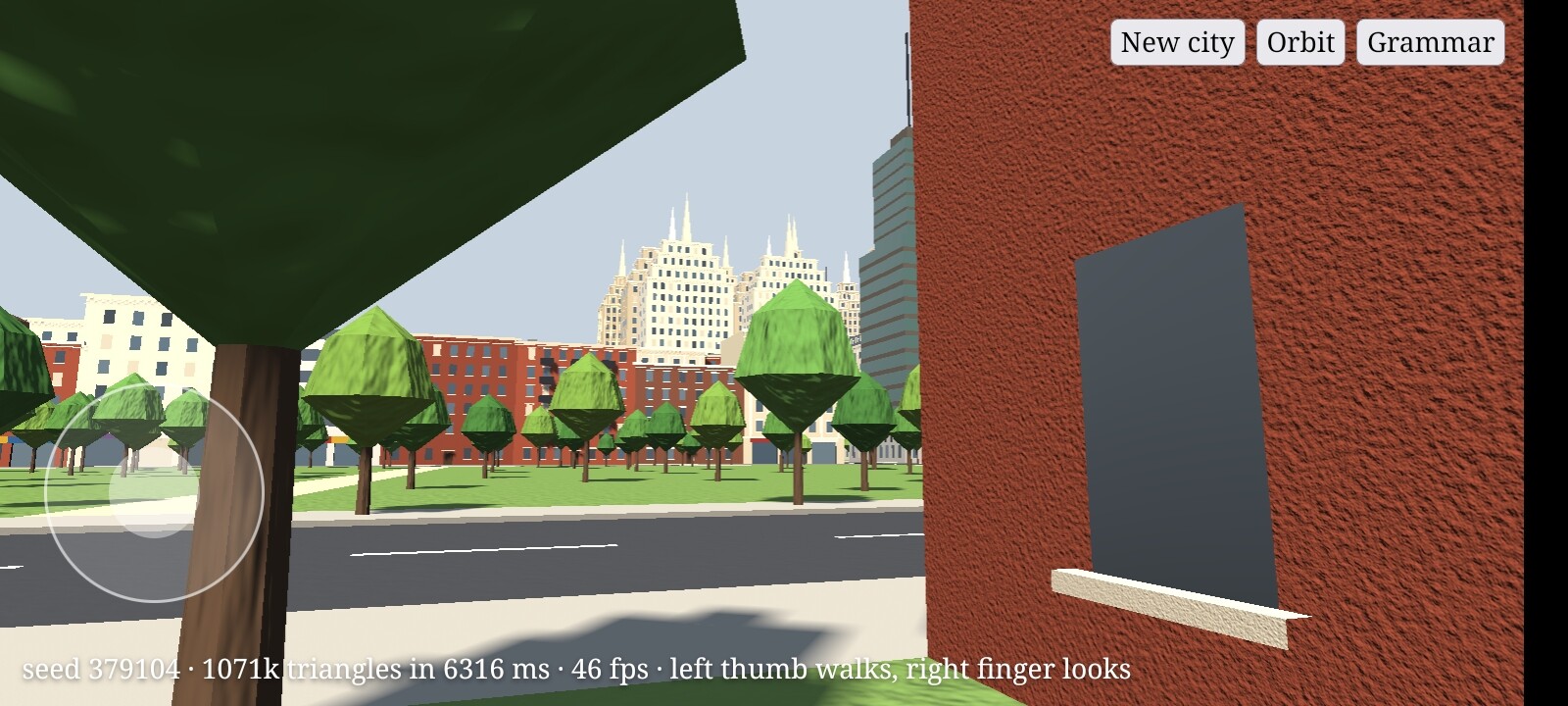
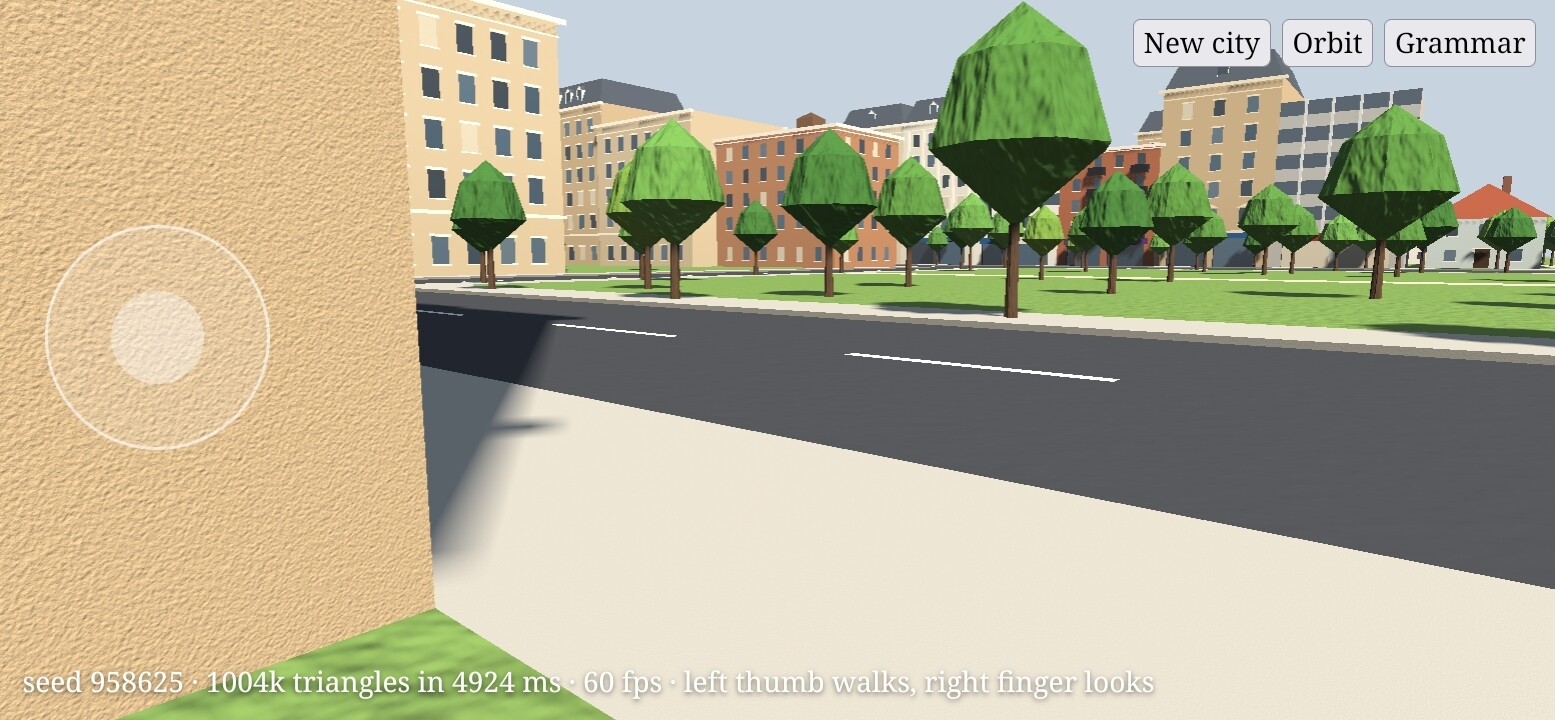
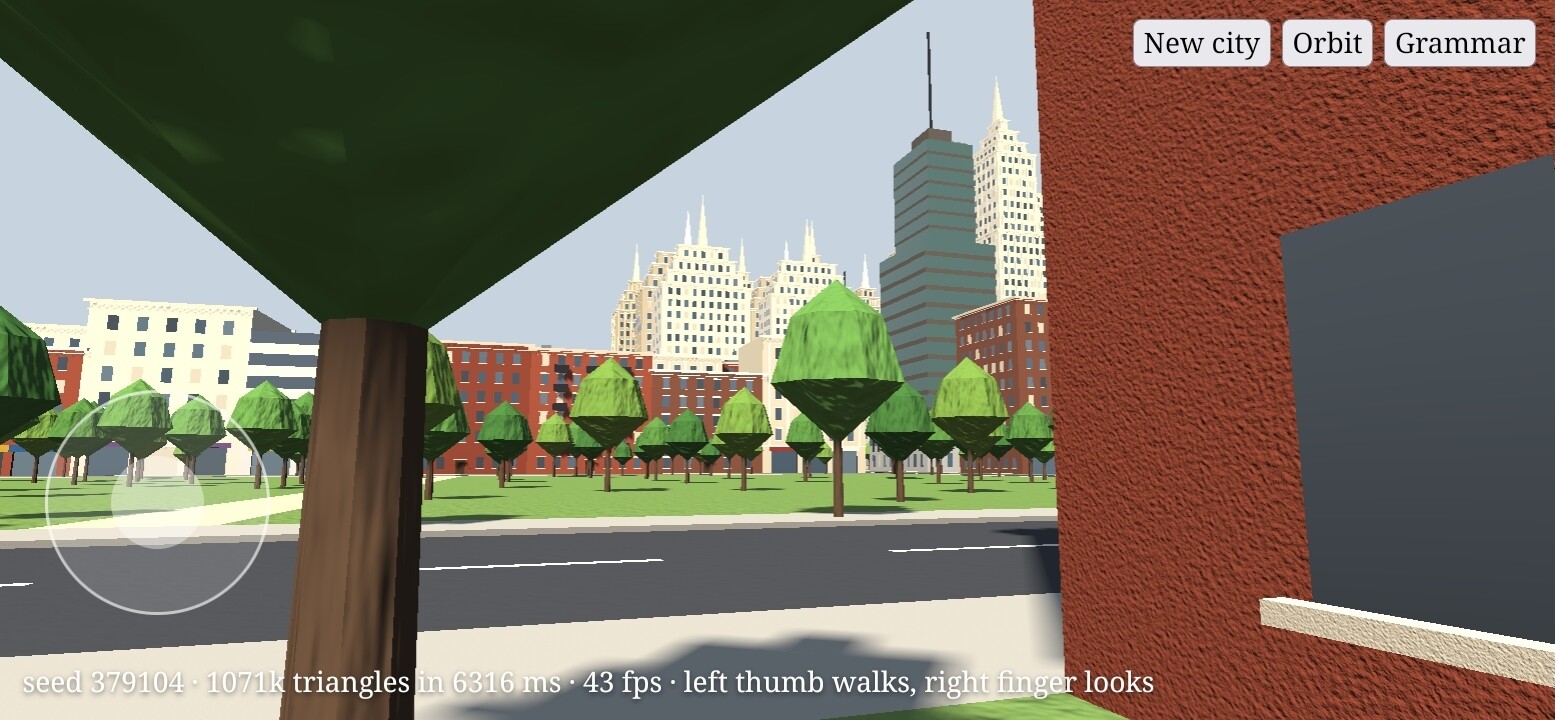
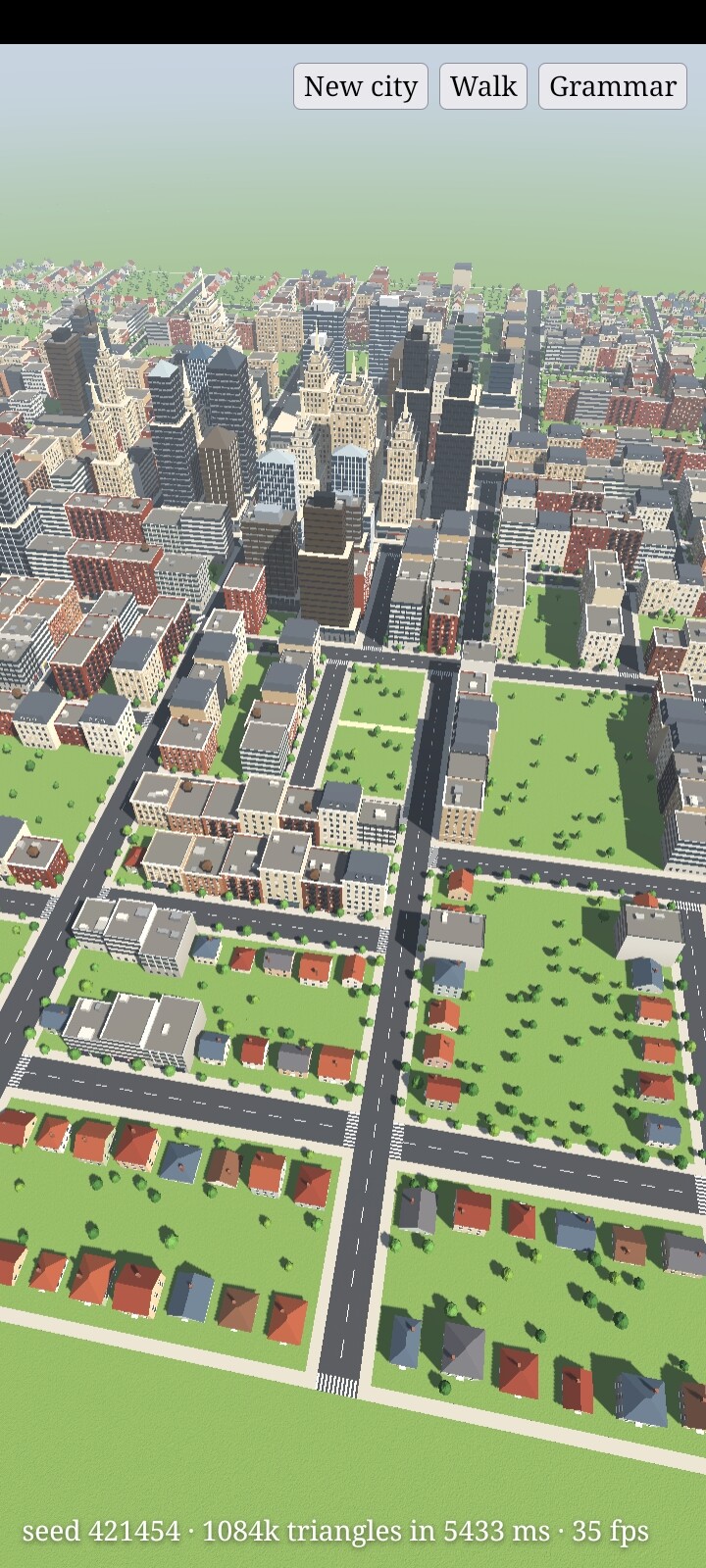
I elicited this stochastic city generator from Claude a few weeks ago, Opus 5.0 I think. You can edit the CGA shape grammar (expressed in JS rather than CityEngine's shape grammar language) that generates the city and walk around it in your browser with WebGL.
I've been keeping a low profile for the last few years, but I'm happy to be back on the Fediverse. I'm still in Argentina, still shamelessly liberal, still committed to free software and free society.
@freemo I just came back to the Fediverse after years, and I'm so happy to see that you're still online, and my account is still here. I hope I don't have to restart following people, but I also don't feel that you owe me anything; I appreciate that you've been willing to run QOTO all these years without me paying for it, but you never promised me to continue at all, much less to do the work of things like migrating followers to a new platform. So I don't think I deserve a vote.
@freemo That's awesome! I didn't know it was even possible. What's the project called, and where can I download it?
Kragen Javier Sitaker
boosted

not to think out loud but i have been wondering what form another web could take, in response to the constant ddos
one way is a more fidonet approach, interlinked groups and manual peering. as a means of somewhwat opting out and moderating crawlers
but well, sometimes it feels like the right answer is to go all in on more content-addressable, bitorrent like approaches, essentially making scrapers earn content through contributing bandwidth
but yeah that means everythings way more scrapable
@tef Yeah, content-addressable with the apps running locally, just fetching the blobs they want with byte ranges and publishing and subscribing to notification topics. A lot like Novell Netware. Or Usenet, but with mobile code.
@askesis Hello there! Sorry I didn't answer before, I was offline.
- country
- Argentina
The only AI I have ever used to write my posts is my cellphone keyboard's autocomplete. I even turned off autocorrect. But I write a lot about things I used AI to make, so you might not want to follow me if that is going to upset you. I understand. I'm terrified myself.
I know an enormous number of things, some of which are even true.
I'm not interested in fighting. If you're here to fight, I will probably not follow you or respond to you. Disagreement does not constitute a personal attack. I'm interested to hear your point of view. If it's about an objective matter, I want to be right so much that I will change my mind if I'm wrong. Usually, I hope.
Joined Sep 2023
