

Bibliolater 📚📜🖋📐 @bibliolater@social.cleverlibre.org
Not a bot; a rather corpulent male approaching fifty years of age; married; father; a very very slow reader; barely reaching up to the level of mediocrity; an ignoramus who reads occasionally.
Toots are humanities, sciences, books and maps related. Toots or follows or boosts or mentions ≠ endorsements of any particular notion or notions. Expect many typing errors.
Addendum: for those wondering, I do not physically resemble a fountain pen.
Joined Nov 2022
Bibliolater 📚📜🖋📐
boosted

@bibliolater @reading @bookstodon
The Age of Surveillance Capitalism: The Fight for a Human Future at the New Frontier of Power by Shoshana Zuboff
I have to pause after paragraphs so frequently, the language is so precise and unfamiliar. I've had to read it in very small chunks to really absorb the meaning. I still recommend it, but it's NOT easy!
Bibliolater 📚📜🖋📐
boosted

@bibliolater @reading @bookstodon For me, it was THE FUTURE IS HISTORY, by Masha Gessen. All of her other work is pretty accessible, but this one was a bit more scholarly. I think it's brilliant work, and helps us understand the structures of power and decision making, beyond just Russia.
Bibliolater 📚📜🖋📐
boosted
@bibliolater @reading @bookstodon
Also sprach Zarathustra by Friedrich Nietzsche.
I could not make heads or tails of it. Its way of thinking was unpenetrable to me. At first I thought it was because of my limited understanding of the German language. So I tried a translation. Didn't help.
And what is yours?
Bibliolater 📚📜🖋📐
boosted

Education isn't something you can finish -- Isaac Asimov
Bibliolater 📚📜🖋📐
boosted

Most humans live in areas where the mean average temperature (MAT) is between 13°C and 27°C - “the human climate niche.”
Coninuted heating is going to expose at least billion people to unprecedented heat (MAT ≥29°C)
Impact:
“High temperatures have been linked to increased mortality, decreased productivity, decreased cognitive performance, impaired learning, adverse pregnancy outcomes, decreased crop yields, increased conflict, hate speech, migration and infectious diseases.”
Bibliolater 📚📜🖋📐
boosted

The word 'island' and the names 'Jersey', 'Scandinavia', and 'Batavia' all contain a descendant of the same Proto-Germanic word:
*awjō: "land in or close to a body of water".
This infographic - which I had a lot of fun designing - shows how these words (and others) are related:
Bibliolater 📚📜🖋📐
boosted

#otd 814 Charlemagne died. Here is a little known depiction of his death, including cradling of the soul and being tempted by demons. #medievaldeath #medieval @medievodons
Ms.: Chantilly, musée Condé, Ms722, f. 114v (Vincent de Beauvais)
Bibliolater 📚📜🖋📐
boosted

This is good.
Decoding maths, most famous fractal: the Mandelbrot set - Quanta Magazine.
Bibliolater 📚📜🖋📐
boosted
Open-access scholarly writing, such as peer-reviewed journal articles, gets more citations and more diverse citations than paywalled articles.
The downside of open access is that many journals charge exorbitant fees to make a paper open access.
https://www.science.org/content/article/open-access-papers-draw-more-citations-broader-readership
Bibliolater 📚📜🖋📐
boosted

⬇️ In the mid-18th century, Martin Howard, left, and Stephen Hopkins were both loyal British subjects in the English colony of Rhode Island. Both were prosperous civic leaders.
But as the winds of revolution started to blow, one argued against taxation without representation, and the other defended the King.
It’s a relevant lesson as we head into the 250th anniversary of the American Revolution
https://theconversation.com/2-colonists-had-similar-identities-but-one-felt-compelled-to-remain-loyal-the-other-to-rebel-220202
@histodons #histodons #history
Bibliolater 📚📜🖋📐
boosted
Anyone here have experience of an iPad Pro? A friend has said they've been offered one second hand and was asking if I have experience, but I haven't.
So ... feedback welcome.
TIA
(If you're happy to do so I'd welcome boosts for reach ... ta.)
Bibliolater 📚📜🖋📐
boosted

@bibliolater @reading @bookstodon
The Last Voyage of Somebody the Sailor, by John Barth. I was not prepared for the time jumps within the story. They left me slightly lost, until I caught on to the device. It's 33 years old now, but I would still recommend it today.
Bibliolater 📚📜🖋📐
boosted

@bibliolater @reading A Borland manual to programming in Pascal.
If ever you need a fast way to fall asleep, read a Borland manual from back in the day.
If ever you need a fast way to fall asleep, read a Borland manual from back in the day.
Do you think that a large cohort of the general public would benefit from being taught detailed courses on #logic at secondary #school? #Question #Education
What is the most difficult #nonfiction or #academic #book you have ever #read? What made the #book so difficult for you? Would you #recommend others #read that #book?
#Question #Questions #Reading #AmReading #ReadingCommunity #Books #Ebook #Ebooks #Bookstodon @reading @bookstodon
Bibliolater 📚📜🖋📐
boosted

gealla, m.n: gall, bile, or any bitter substance; bitterness. (YEH-al-la / ˈjɛal-la)
#OldEnglish #WOTD
Bibliolater 📚📜🖋📐
boosted

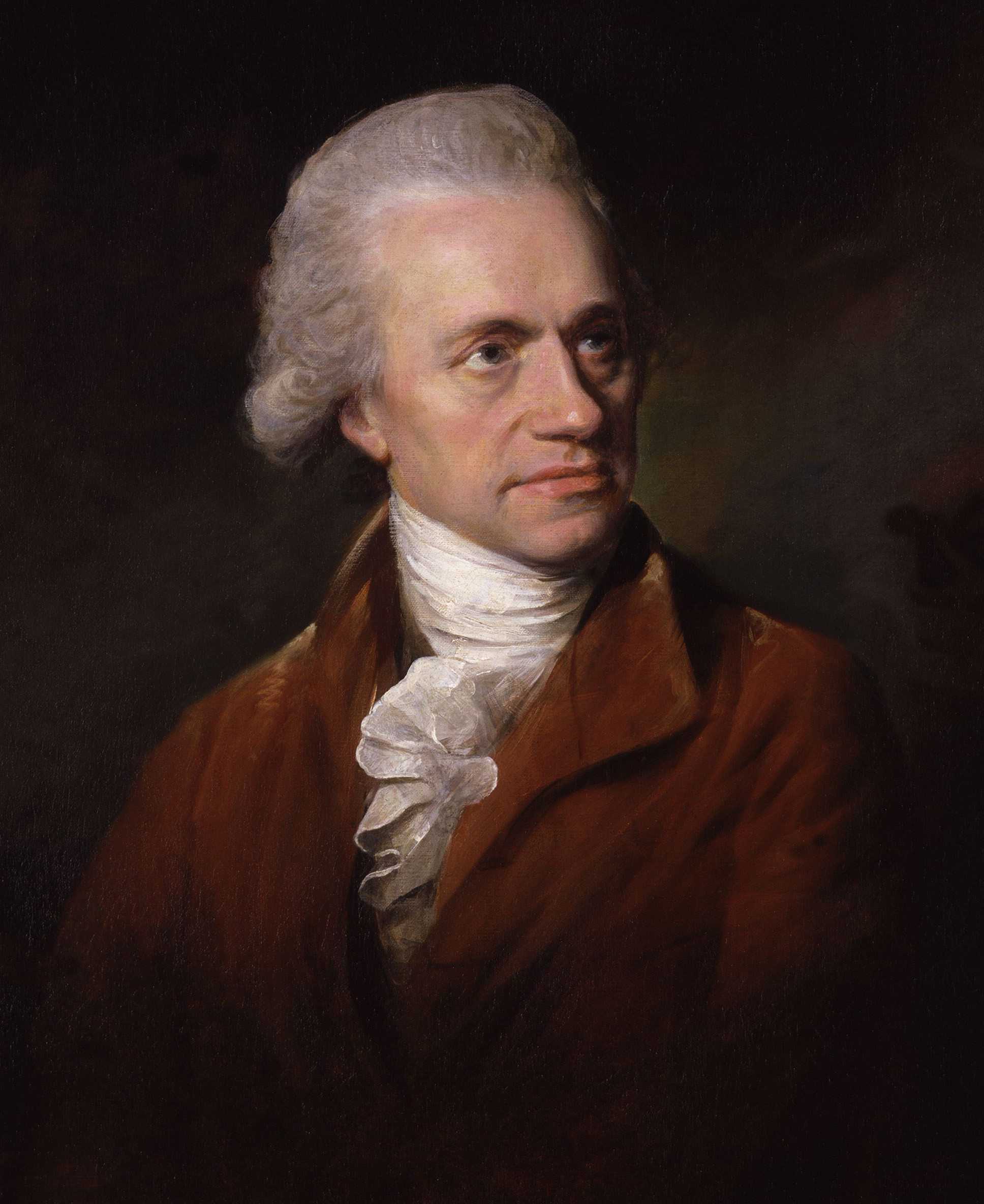
On March 27, 1800, William Herschel discovered a world beyond the human senses. Why don't more people learn about it?
In my latest Subtack column, I recount this remarkable (and remarkably under-appreciated) moment in the history of exploration.
https://invisibleuniverse.substack.com/p/the-day-we-found-a-world-beyond-the #science #history #physics #astronomy
Bibliolater 📚📜🖋📐
boosted



Its success must have felt inevitable at the time.
In the early 20th century, Buenos Aires had such momentum. A population of almost a million people (keep in mind Madrid was almost half that), business was booming and the city's infrastructure was growing. It was said that it had a faster pace of life than other "tropical cities". Here a map from 1911 by a Argentinian mapmaker, includes notations for neighborhoods and comisarias.

"Both sugar trade and spice trade were economic foundations of early European geographic expansion and colonial capitalism. Frankish settlement in twelfth- and thirteenth-century Syria-Palestine may be seen as, arguably, the earliest example of colonial capitalism, preceding early sixteenth-century Portuguese conquests of spice-trading coastal outposts of India, south-east Asia and the Arabian peninsula."
Philip Slavin (2023) ‘With a grain of sugar’: native agriculture and colonial capitalism in the Frankish Levant, c. 1100–1300, Crusades, 22:1, 1-38, DOI: https://doi.org/10.1080/14765276.2023.2193021 #OpenAccess #OA #Article #History #Histodon #Histodons #Europe #France #Levant #Agriculture #Capitalism #International #Trade @histodon @histodons
Not a bot; a rather corpulent male approaching fifty years of age; married; father; a very very slow reader; barely reaching up to the level of mediocrity; an ignoramus who reads occasionally.
Toots are humanities, sciences, books and maps related. Toots or follows or boosts or mentions ≠ endorsements of any particular notion or notions. Expect many typing errors.
Addendum: for those wondering, I do not physically resemble a fountain pen.
Joined Nov 2022
