

Thiago Carvalho @cyrilpedia@social.cleverlibre.org
I've worked on all of science, from B cells to T cells.
https://fellowsherpa.com
Joined Nov 2022
'As the costs of fuel, groceries and housing surge around the world, scientists are fighting inflation at the bench. Reagents, gloves, pipette tips, microscopes and almost every other item needed to conduct science are more expensive than they were just a year ago. And that means that nearly every researcher is feeling the pressure.'
"Fears that the Covid booster shots made by Pfizer-BioNTech may increase the risk of strokes in people aged 65 and older were not borne out by an intensive scientific investigation, federal officials said on Friday."
#COVID #Coronavirus #Covid19 #Vaccine
https://www.nytimes.com/2023/01/13/health/covid-boosters-stroke.html
Thiago Carvalho
boosted

RT @DrSTANtheMAN@twitter.com
Cancer cells resistant to immune checkpoint blockade acquire interferon-associated epigenetic memory to sustain T cell dysfunction @NatureCancer@twitter.com https://www.nature.com/articles/s43018-022-00490-y
🐦🔗: https://twitter.com/DrSTANtheMAN/status/1615226432816390144
Thiago Carvalho
boosted

Reproducible research or open science courses can be inspiring, but overwhelming. Not sure how to start implementing what you've learned now that you've returned to your research group?
Our ten simple rules paper guides you through the process. Learn how to decide what to implement, get support, make an implementation plan, adapt to changing circumstances and more.
Teaching a course? See the supplement for things instructors can do to support implementation.
https://journals.plos.org/ploscompbiol/article?id=10.1371/journal.pcbi.1010750
Thiago Carvalho
boosted

"It can be between 10 and 30 years before people develop symptoms so most are unaware they have Chagas, often called a “silent and silenced disease”. Some will never develop symptoms but up to a third suffer heart damage, which can lead to progressive heart failure or sudden death. Others (up to 10%) may experience abnormal enlargement of the colon or oesophagus.
About 12,000 people die from Chagas every year. It kills more people in Latin America than any other parasitic disease, including malaria."
#Parasitology #Immunology #PublicHealth #ChagasDisease
#Trypanosoma #Tcruzi
In which Charles Darwin tries to predict the book-buying public's taste.
(from Janet Browne's "Charles Darwin, The Power of Place").
#books #reading #bookworm #Evolution #Darwin #CharlesDarwin #HistoryOfScience #HistoryScience
Thiago Carvalho
boosted
However, suppression falls precipitously even at moderate antigenic distances: when Wuhan-Hu-1-primed mice are boosted with Omicron BA.1 S (about 8% divergence in RBD), suppression falls to 3-4-fold, barely detectable statistically. Similar results for flu at same distance.
Thiago Carvalho
boosted
This shows a steep gradient in how much primary responses suppress new ones, dependent on antigenic distance. If priming and boosting are homologous, new antibody responses are on average 55-fold lower than they would be without the prime.
Thiago Carvalho
boosted
One change I want to highlight is that we now quantify de novo antibody responses to homologous and heterologous booster shots *compared to what they would have been if there had been no priming*
Thiago Carvalho
boosted
I put up a thread on the bird site when we first released this as a preprint @biorxivpreprint but there have been a few important changes since then (thanks to our reviewers for their suggestions).
https://twitter.com/victora_lab/status/1564763238469877760?s=20&t=JM9xdX3rYX7zhnRnPNwg1Q
Thiago Carvalho
boosted
Happy to see this study out! Massive effort by our student Arien Schiepers and also many collaborators, both from our lab and @jbloom_lab, Paul Bieniasz (Rockefeller), and Norbert Pardi’s (U. Penn) groups.
Thiago Carvalho
boosted

Thiago Carvalho
boosted

RT @TrainingVbc
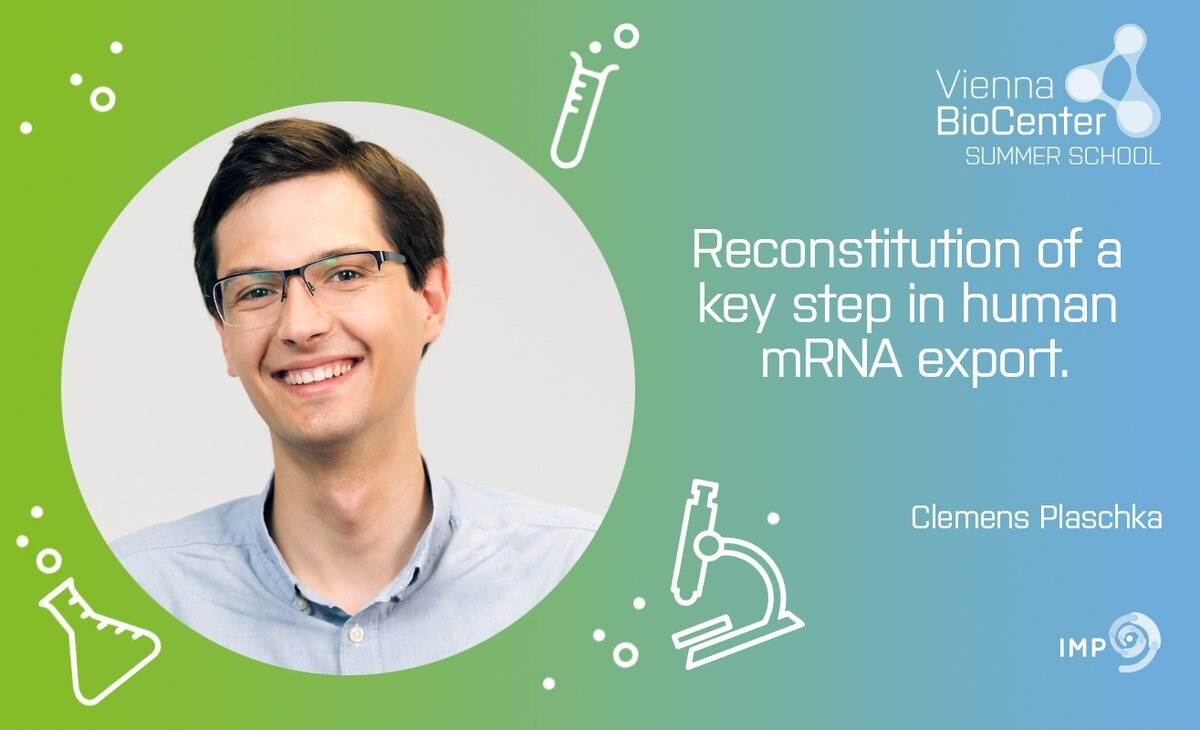
We have 20 labs taking part in the @viennabiocenter Summer School 2023 call. Clemens Plaschka (IMP) @plaschka_lab is offering a position for this exciting program! Check out our website:
https://training.vbc.ac.at/summer-school/
@IMPvienna @IMBA_Vienna @gmivienna @maxperutzlabs @CeMM_News
Thiago Carvalho
boosted

The King 👑
---
RT @TheKingCenter
‘Letter from Birmingham Jail’: https://www.africa.upenn.edu/Articles_Gen/Letter_Birmingham.html
A masterpiece.
“You deplore the demonstrations taking place in Birmingham. But your statement, I am sorry to say, fails to express a similar concern for the conditions that brought about the demonstrations.”
#MLK #MLKDay
https://twitter.com/TheKingCenter/status/1614994607212822528
Thiago Carvalho
boosted

@cyrilpedia Interesting, and strange that the manuscript on inducing synapse formation with foreign adhesion molecules [1] doesn't mention GRASP (GFP reconstitution across synaptic partners) [2] which essentially does the same thing–strong bounds across membranes of two cells and which is suspected (or known?) to induce synapse formation or prevent their pruning.
[1] Hale et al. 2022 https://www.pnas.org/doi/10.1073/pnas.2215905120
[2] Feinberg et al. 2008 https://www.sciencedirect.com/science/article/pii/S0896627307010203
#neuroscience #GRASP
Thiago Carvalho
boosted

Our next #DevPres webinar is on theoretical and computational #modelling of developmental biology. Join us on Wed 25 Jan at 15.00 GMT to hear talks from Kirsten ten Tusscher, Simon Freedman and Mindy Liu Perkins, chaired by Associate Editor Paul François.
https://us02web.zoom.us/webinar/register/9516643589483/WN_kljsy59PTquVq9adW22fig
Thiago Carvalho
boosted




Why do some people have persistent loss of smell post-Covid?
A biopsy-based study shows durable T-cell mediated inflammation long after the virus is cleared from tissue

Sex bias in housekeeping gene expression
"In this study, we evaluate the expression profiles of six classical HKGs (four metabolic: GAPDH, HPRT, PPIA, and UBC, and two ribosomal: 18S and RPL19) to determine expression stability in adipose tissues of Homo sapiens and Mus musculus and check sex bias and their overall suitability as internal controls."
Aquatint by Madalena from a series of prints created between 2017- 2021 consisting of several stages, doors, caves or forests, where figures have been inserted through the technique of chine-collé & colours added through viscosity printing.

I've worked on all of science, from B cells to T cells.
https://fellowsherpa.com
Joined Nov 2022
