

Thiago Carvalho @cyrilpedia@social.cleverlibre.org
I've worked on all of science, from B cells to T cells.
https://fellowsherpa.com
Joined Nov 2022
Thiago Carvalho
boosted

RT @CoE_iFIT
👉 We are making it even easier to play an active part in the #iFIT2023 conference, by giving you extra time to submit your abstracts!
ℹ️ The submission will now be possible until February 1, 2023!
➡️ Submit your research here: https://ifit2023.com/abstract-submission
#cancerresearch #immunology
Thiago Carvalho
boosted

Our webinar on “Good statistical practice for the analysis of large biological data sets” with @wolfgangkhuber@twitter.com from @EMBL@twitter.com is happening today at 16:00 CET and you can still register here https://t1p.de/lvfej
Thiago Carvalho
boosted


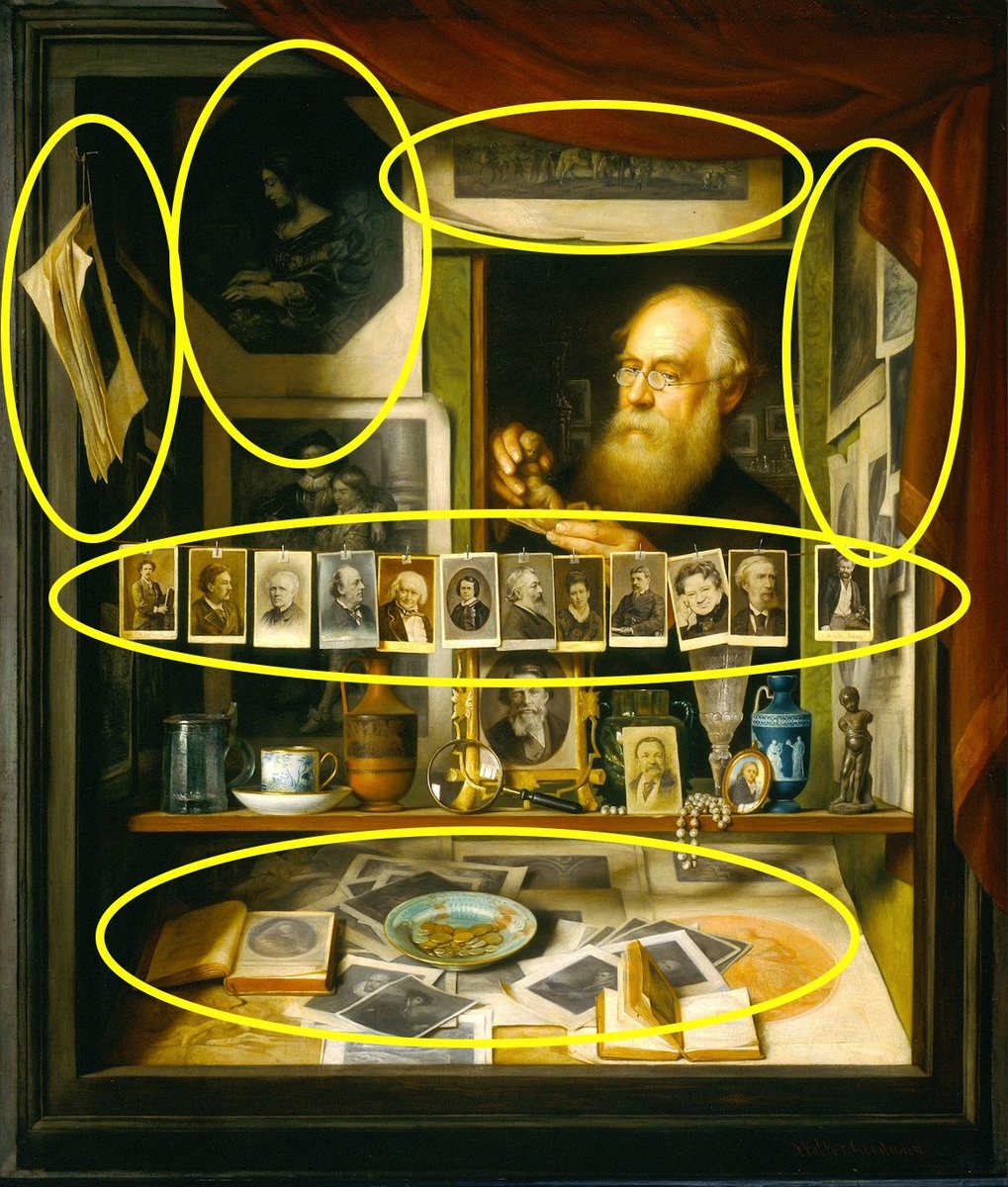
And another #PaperHistory thread for those interested in the material worlds of the past, dear #histodons.
You see a trompe l'oeil painting from 1883 by Walter Goodman: The Printsellers Window. It may have also been called the Papersellers Window https://magart.rochester.edu/objects-1/info/3889
Let's have a deeper look at the paper worlds present in this painting. The nineteenth-century in Europe was, just like the early modern period, a paper world of its own: another paper age. Paper was everywhere. #History
1/x
Thiago Carvalho
boosted

Cover feature in issue 42/2:
#Golgi #oxygen sensor controlling #intestinal ‘mucin #glycosylation
by Tal Ilani, Deborah Fass and colleagues with SciStories.com
And:
Gut colonization via #GTPase-less EF-G paralog
#Yeast cells in two minds about #cellcycle start
#MASTL/#PP2A module restraining #PI3K-Akt
Zinc-dependent structural transition in ALS-mutated #SOD1
https://www.embopress.org/toc/14602075/2023/42/2
Thiago Carvalho
boosted
Aquatint by Madalena from a series of prints created between 2017- 2021 consisting of several stages, doors, caves or forests, where figures have been inserted through the technique of chine-collé & colours added through viscosity printing.
Thiago Carvalho
boosted

On this day, I like to reflect on my #students . The #diversity in their faces, that just a little over 50 years ago may not have existed. I consider it an honor to work with all of my students. I also have #teachers ask me about books all the time, so I have lists bookmarked, and am adding to all the time. Because it is immensely important that our students see themselves reflected in their reading. Here's one of the lists.
https://www.wildrumpusbooks.com/civilrightsmg
#MLK #K5 @edutooters @edutooter #edutooters
Tools
"Here, we present an iTEC-based three-stage medium/high-throughput in vitro assay for synthetic polymer mimics of thymic extracellular matrix (ECM). Using this assay we identify, from a complex library, four polymers that bind iTEC as well as or better than gelatin but do not bind mesenchymal cells."
https://onlinelibrary.wiley.com/doi/abs/10.1002/eji.202249934
The very first thing I ever did in a lab was work on reptile allosteric modulators of hemoglobin, way back in 1993-94.
This new @CurrentBiology article provoked some nostalgia
"Evolution and molecular basis of a novel allosteric property of crocodilian #hemoglobin"
https://www.cell.com/current-biology/fulltext/S0960-9822(22)01840-1
'The most revealing letter, though, might be le Carré’s gently discouraging reply, in 1988, to a ten-year-old boy who wanted advice on how to become a spy. He diagnosed his young fan with the same yearning—for adventure, for purpose—that had made Charlie susceptible to her handler’s seduction. “My guess is,” le Carré wrote, “you want excitement and a great cause. But I think and hope that if you ever find the great cause, the excitement will come naturally from the pleasure of serving it, & then you won’t need to deceive anybody, you will have found what you are looking for.”
https://www.newyorker.com/books/page-turner/john-le-carres-search-for-a-vocation
Thiago Carvalho
boosted

How does the genome orchestrate the development of mulicellular organisms? Which mutations are causing disease?
I'm a scientist at the German Cancer Research Center in Heidelberg. To answer such questions we develop tools for #CRISPR genome engineering. Our main system is the fruit fly #Drosophila.
While we mostly focus on inactivating genes, we sometimes also 'tag' genes to make their products visible. Such as in the pic below.
Thiago Carvalho
boosted

Our review about the evolution of the innate immune system in animals is finally out in Nature Ecology & Evolution. Ancient roots, rapid adaptation, and many losses...
We also talk about future research directions that we believe can push the field forward.
Here is a link for reading the article:
https://rdcu.be/c3i5c
Thiago Carvalho
boosted

Our comprehensive review of #LongCovid was just published today
access: https://rdcu.be/c3m45
The phenomenal work of Hannah David, Lisa McCorkell, and Julia Moore-Vogel https://www.nature.com/articles/s41579-022-00846-2
Thiago Carvalho
boosted

#Introduction somewhat late to the show, but finally found the time to switch platforms.
Hi everyone 👋, I’m a postdoctoral researcher working in computational systems neuroscience. My research is at the interface of NHP electrophysiology, behavior, and modeling.
I am very much a proponent of the “computation through dynamics” framework (inherited from my time as a PhD student in the Jazayeri lab @MIT) and hope to extend these ideas to understand not just how neurons perform computation, but also how we “learn through dynamics”.
Long-term, I aspire to work with theoreticians to tighten the loop between models and experiments and speed up the process of finding guiding principles for computation and learning.
Looking forward to fun science discussions on this platform !
"A similar failure to generate protective heterosubtypic T cell immunity during IAV priming is seen in offspring of IAV-primed mothers that naturally receive high titers of IAV-specific Ab through maternal transfer."
If you're in Madrid
"De casi todas las prácticas que uno pueda imaginar, logradas a lomos de la química y de la tecnología, pero sin tener por qué retratar la realidad, más bien, procurando alejarse de ella, se ocupa la exposición Visiones expandidas, en el CaixaForum de Madrid hasta el 26 de marzo. Un recorrido con 172 obras de 107 artistas, procedentes del Musée National d’Art Moderne-Centre d’Art Georges Pompidou, estructurado en seis secciones temáticas y sin orden cronológico."
https://elpais.com/cultura/2023-01-17/la-fotografia-que-traspasa-los-limites-de-la-realidad.html
Thiago Carvalho
boosted

The authors of a new GBE article pay homage to the iconic cover of a 1970 book by Susumu Ohno. Read the article by @SaraWighard et al.-- A New Hope: A Hermaphroditic Nematode Enables Analysis of a Recent Whole Genome Duplication Event https://buff.ly/3CzSlli #science #evolution
"In this review we discuss all three scenarios, with a focus on the recently fast-paced discoveries describing their involvement in solid tumors. In this regard, the role of Tfh cells in TLS, in ICB therapies, and as a potential link for the development of irAEs following ICB are of particular importance."
https://www.cell.com/trends/cancer/fulltext/S2405-8033(22)00270-9
Thiago Carvalho
boosted

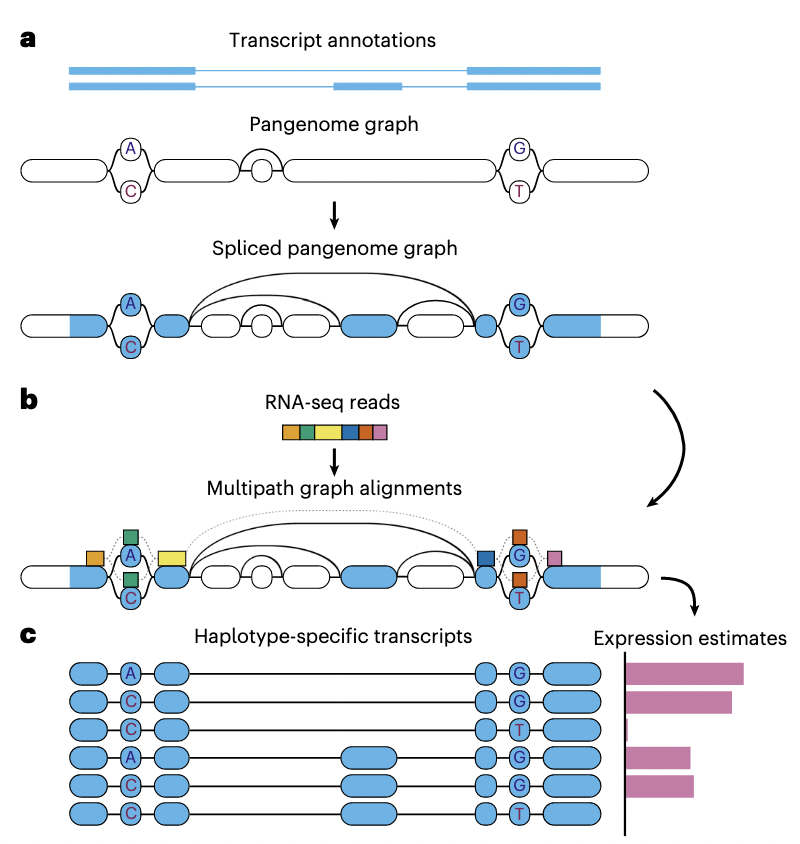
Nice. One graph to rule them all, and with their DNA bind them. (I've always thought splice graphs on genome graphs was the way to go; I do think there is a profile-HMM extension of "traditional" profile models to capture evolution). Great work @BenedictPaten@twitter.com etal
RT @BenedictPaten@twitter.com
Adding population variation into RNA-seq analysis to enable haplotype-specific transcript identification, finally out in Nature Methods: https://rdcu.be/c3xKq
🐦🔗: https://twitter.com/BenedictPaten/status/1615054386086182912
'As an early proponent of using historic smells to enhance the visitor experience, the Jorvik Viking Centre set an example for other museums to follow. ‘Museums have started to use olfactory information in order to engage audiences more than is possible with just visual information, and also to help audiences to retain that knowledge for longer,’ Strlič says.'
https://www.chemistryworld.com/features/the-smell-of-history/4016790.article
Thiago Carvalho
boosted






@thelancet @Nature A study in @SciReports on precautionary strategies against the indoor transmission of #COVID19 and other highly contagious diseases shows the most effective measures are implementing upward ventilation and wearing n-95😷


I've worked on all of science, from B cells to T cells.
https://fellowsherpa.com
Joined Nov 2022
