

Thiago Carvalho @cyrilpedia@social.cleverlibre.org
I've worked on all of science, from B cells to T cells.
https://fellowsherpa.com
Joined Nov 2022
Capt Louis is shocked. Shocked!
"The mogul’s treatment of union organizers and whistleblowers suggested that “free-speech absolutism” was mostly code for a high tolerance for bigotry toward particular groups, a smoke screen that obscured an obvious hostility toward any speech that threatened his ability to make money."
Thiago Carvalho
boosted

What is a Biomarker? A Snippet
by Elio
Most likely, we have all run into the term "biomarker," no? So, what is a biomarker? In 1998, the NIH Biomarkers Definitions Working Group defined a biomarker as "a characteristic that is objectively measured and evaluated as an indicator of normal biological processes,...
Read more → https://schaechter.asmblog.org/schaechter/2023/04/what-is-a-biomarker-a-snippet.html
Many interesting positions open at PRBB Barcelona, tech, manager, training, postdocs - have a look 👇
#ScienceJobs
Thiago Carvalho
boosted

.@DrJohannaRhodes explores a #PLOSBiology study of the alarming evolutionary potential of a #pandemic clone of #WheatBlast, arguing the urgent need for genomic surveillance & pre-emptive breeding of resistant wheat. Primer: https://plos.io/3MLuPay Paper: https://plos.io/3zP6Gse
Thiago Carvalho
boosted
My latest Clinical Pipeline column for #NatureMedicine is a look at zuranolone, a new antidepressant developed by Sage & Biogen, targeting the GABA pathway.
#drugdiscovery #drugdevelopment #depression #GABA #neuroscience
"In this study, we investigated the mechanism that one specific species of microbiota shortens lifespan and disrupts gut homeostasis of the aged flies, using a “fermented” fly diet. We found that the specific effects of this bacterium on fly healthspan were due to its capability of stimulating a specific receptor in the gut that recognizes peptidoglycan, a component of bacterial cell wall. Paradoxically, the same bacterium also increases stress resistance and defence against oral infection of a pathogen."
#Drosophila #Microbiota #ageing
https://journals.plos.org/plosgenetics/article?id=10.1371/journal.pgen.1010709
Thiago Carvalho
boosted

Quite happy to share this latest work from our lab. In this study, we have addressed an important question of general importance: if and how brain medications (such as anti-depression drugs) change brain over time. We addressed this by specifically investigating the impact of an important drug, Ketamine.
https://www.biorxiv.org/content/10.1101/2023.04.12.536506v1
#biorxiv #neuroscience #ketamine #brainplasticity
thread ....
Thiago Carvalho
boosted
'The burden of navigating Covid’s risks now falls on the individual, and what “post-pandemic” means for one person or community, like Ninety-Fifth Street Elementary, looks wildly different than it does for others.'
Thiago Carvalho
boosted
Philadelphia’s 'Matisse in the 1930s' show is in Paris (l’Orangerie), will open in Nice in the summer.
'The exhibition fascinates as the first ever to focus on Matisse in this decade, for its optimistic account of renewal by an artist in his sixties and for European audiences as a rare chance to encounter tremendous paintings acquired by Americans.'
https://www.ft.com/content/4a5b1c3c-9e8c-4973-8fed-5bc9b0ec055a
Thiago Carvalho
boosted

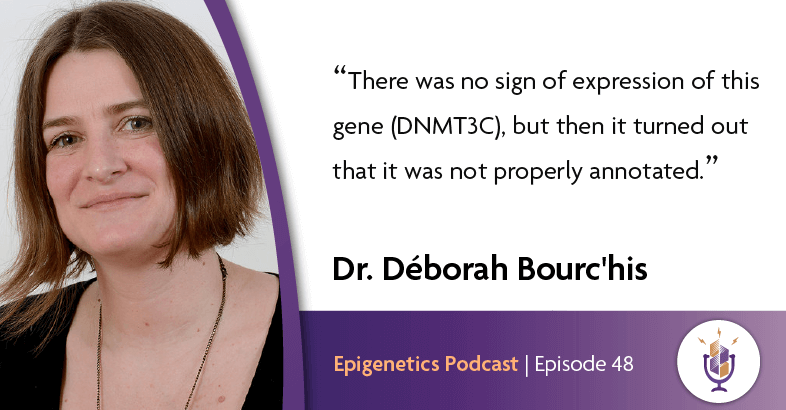
On this #throwbackthursday we go back to our Episode #48, there we talked to Déborah Bourc'his from L'Institut Curie in Paris about her work on the role of DNA methylation in mammalian development. #epigenetics #podcast #womeninstem
Listen here: https://www.activemotif.com/podcasts#deborah-bourchis
Thiago Carvalho
boosted

Very excited to share my PhD work on B cell responses in lung cancer!
Antibodies to endogenous retroviruses promote lung cancer immunotherapy
'Our cross-species study indicates that scaling of cell size to ploidy is not due to abrupt changes in cell division timing, that different size scaling regimes occur during embryogenesis, and that the developmental program of Xenopus is remarkably consistent across a wide range of genome and egg sizes.'
https://www.cell.com/current-biology/fulltext/S0960-9822(23)00161-6
Thiago Carvalho
boosted

Synteny Identifies Reliable Orthologs for Phylogenomics and Comparative Genomics of the Brassicaceae https://doi.org/10.1093/gbe/evad034 #science #evolution #biology #genome #SciComm #evolgen_paper
"Reports, filed not from the trenches but from assembly lines and offices, start to speak of fragmentation, helplessness, and an imprisonment that requires no bars. A new fear wells up: a tired mind may be more resistant to healing than the body in which it is housed."
https://www.newyorker.com/magazine/2023/04/17/a-history-of-fatigue-georges-vigarello-book-review
Thiago Carvalho
boosted

Network lesion approaches?
Network lesion approaches strike me as pretty remarkable https://www.nejm.org/doi/10.1056/NEJMra1706158. For the aficionados: anything I should be wary about? Any cases in which it didn't lead but misled?
The gist behind them is that you gather together a group of patients with similar symptoms (like Capgras - the delusion that familiar people or things have been replaced by imposters). Next, you use anatomical MRI to pinpoint where the lesions are in their brain. The problem is that it's a bit hard to make sense out of it all. So using healthy controls, you study the network of brain areas that are functionally connected to those lesioned areas to test the hypothesis that symptoms emerge from sites functionally connected to a lesion location, not just the lesion location itself. If the same regions come up again and again across all patients, you might be onto something. You can also test hypotheses about the degree to which those regions overlap with functions you hypothesize to be involved (like brain areas involved in "familiarity" and such).
The approach has been used for all sorts of things, from depression and amnesia to Capgras and even free will:
https://www.pnas.org/doi/10.1073/pnas.1814117115
Thiago Carvalho
boosted

Whenever I read the term "ganglionic eminence"...
Philadelphia’s 'Matisse in the 1930s' show is in Paris (l’Orangerie), will open in Nice in the summer.
'The exhibition fascinates as the first ever to focus on Matisse in this decade, for its optimistic account of renewal by an artist in his sixties and for European audiences as a rare chance to encounter tremendous paintings acquired by Americans.'
https://www.ft.com/content/4a5b1c3c-9e8c-4973-8fed-5bc9b0ec055a
Thiago Carvalho
boosted
@cyrilpedia
I love these columns; thank you. Wonderful to see a new pathway targeted for depression!
One of the things I found striking about the brexanolone trials was the unexpected (but not surprising) discovery that big benefits follow when new moms getting some sleep (ie nothing is in the IV at all):
https://www.washingtonpost.com/wellness/2022/12/09/pregnancy-depression-postpartum-sleep/
Do you know if this was also considered in the zuranolone trials as well? It's a pill - so new moms don't need to check out in the same way (big advantage). But if it works via GABA_A and what happens is that they sleep more, well ...
'There are still plenty of heated controversies among archaeobiologists. “We argue about everything—the timing, the motivation, whether humans were unwitting bystanders or even tricked into it by plants,” says Zeder. But a big-picture view is coming into focus.'
Thiago Carvalho
boosted






A new #preprint #OpenScience #PeerReview by #PCI_Ecology: Charberet, S., Maria, A., Siaussat, D., Gounand, I., & Mathieu, J. (2023). Feeding and growth variations affect δ13C and δ15N budgets during #ontogeny in a #lepidopteranlarva. #bioRxiv #Ecology. https://doi.org/10.1101/2022.11.09.515573

I've worked on all of science, from B cells to T cells.
https://fellowsherpa.com
Joined Nov 2022
