

Thiago Carvalho @cyrilpedia@social.cleverlibre.org
I've worked on all of science, from B cells to T cells.
https://fellowsherpa.com
Joined Nov 2022
Thiago Carvalho
boosted

I’ve been asked to write two promotion evaluation letters for people in US universities recently. I’m aware that we Europeans have a different (more muted) letter writing tone. Any advice on how I should approach these letters? Do I need to ham it up or risk scuttling the applicants? Thx
Thiago Carvalho
boosted


#pedscardiology @NEJM Infants undergoing cardiopulmonary bypass often receive perioperative glucocorticoids to limit systemic inflammation, but evidence for this practice is lacking. New research findings are summarized in a short video. nej.md/3EUOP5
https://www.nejm.org/do/10.1056/NEJMdo006817/full/
Thiago Carvalho
boosted

Beautiful neuroanatomical study:
RT Jonathan Whitlock https://twitter.com/jonrwhitlock/status/1601182066460463105?s=46&t=QxgPjtBlHD2Sq_lPfym69g
⬇️
To anyone with eyes: ever wonder how visual signals get to the motor system? We did. So we mapped the anatomy in mouse cortex and made it into sweet eye candy: the great work of @KarolineHovde @Idavrautio Andrea-Marie Hegstad, with Menno Witter!
biorxiv.org/content/10.110…
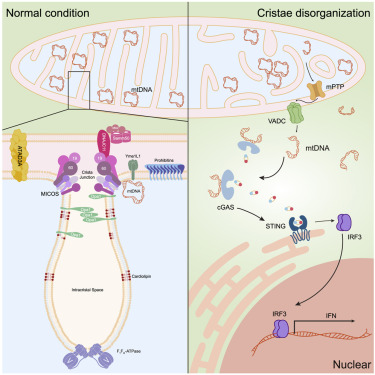
"Taken together, beyond revealing the central role of cristae architecture to prevent mtDNA release and inflammation, our results mechanistically link mitochondrial cristae disorganization and inflammation, two emerging hallmarks of aging and aging-related degenerative diseases."
#mitochondria #inflammation #InnateImmunity #Immunology
He et al @CellReports
https://www.cell.com/cell-reports/fulltext/S2211-1247(22)01657-6
Thiago Carvalho
boosted

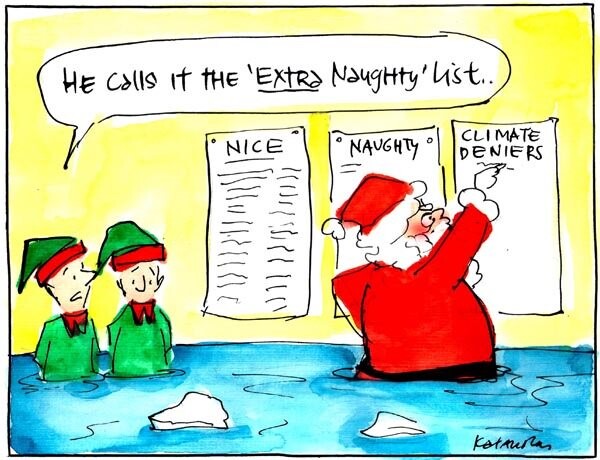
"Twitter has proved a cherished forum for climate scientists to share research, as well as for activists seeking to rally action to halt oil pipelines or decry politicians’ failure to cut pollution. But many are now fleeing Twitter due to a surge in climate misinformation, spam and even threats that have upended their relationship with the platform."
https://www.nationalobserver.com/2022/12/09/news/climatescam-denialism-twitter-scientists-worried
The NYT list of best podcasts of 2022 includes a life sciences one that I was not aware of:
"‘Unexplainable’
Where did the moon come from? What sounds did dinosaurs make? Does anyone know how smell receptors actually work? In this weekly science series, Noam Hassenfeld, Brian Resnick, Meradith Hoddinott and the explainers at Vox devote their attention to the basic facts of life we don’t understand, which, as anyone who’s spent time with a five-year-old knows, is a longer list than you might think. Always artfully scored and produced — especially in mini-series about human senses and the solar system — “Unexplainable” never feels like homework. At a time when many people see profit in false or oversimplified claims about reality, it’s refreshing to be reminded of what the search for truth really sounds like. (Listen to “Unexplainable” from the Vox Media Podcast Network.)"
https://www.nytimes.com/2022/12/08/arts/best-podcasts-2022.html
'As the story goes, a long time ago in Bavaria, beer underwent a transformation. Dark ale turned into a paler, gold-hued drink, and the beverage grew much more common around the time when a ducal edict restricted brewing to the winter months. The lager, as the new beer was called, had begun its journey to world domination.
Centuries on, geneticists have found that the yeast responsible for fermenting lagers is a hybrid of the traditional brewer’s yeast and another, cold-hardy yeast, Saccharomyces eubayanus. The lager yeast appears to be the result of a chance mating in a chilly brewery, where low temperatures allowed the hybrid to thrive.'
https://www.nytimes.com/2022/12/07/science/beer-yeast-lager.html
"Mark Filip, a former federal judge and Department of Justice official who now defends white-collar clients, will lead the investigation into Stanford president Marc Tessier-Lavigne, the university said in a statement on Wednesday. Stanford had previously tasked an internal committee made up of its board of trustees with investigating allegations of altered images in papers co-authored by Tessier-Lavigne. The special committee initially included an investor in a startup co-founded by the university president, who has since stepped aside for the investigation."
Thiago Carvalho
boosted

Japanese dengue vaccine becomes second approved by EU
Japanese pharmaceutical company Takeda said the European Union had given the green light to its dengue fever vaccine, making it the second jab preventing the disease to be approved by the bloc.
https://medicalxpress.com/news/2022-12-japanese-dengue-vaccine-eu.html
Thiago Carvalho
boosted

‘In the early 2010s, new social media sites like Facebook and Twitter were tools for emerging protest movements; now, they increasingly act as a substitute for them.’
@michael_chessum@twitter.com on the solution to digitally-enabled inaction:
"Phenotypic drug discovery has seen a general resurgence in the past 20 years, with several first-in-class drugs with no known molecular target recently approved by the US FDA, albeit largely for use outside of psychiatry [1]. We believe that phenotypic drug discovery has the potential to uncover previously unknown disease-relevant cellular signaling pathways or neural circuits and inform a deeper understanding of the pathophysiology of central nervous system diseases."
#DrugDiscovery #Neuroscience #PLOSBiology
https://journals.plos.org/plosbiology/article?id=10.1371/journal.pbio.3001904
Thiago Carvalho
boosted

RT @sangerinstitute@twitter.com
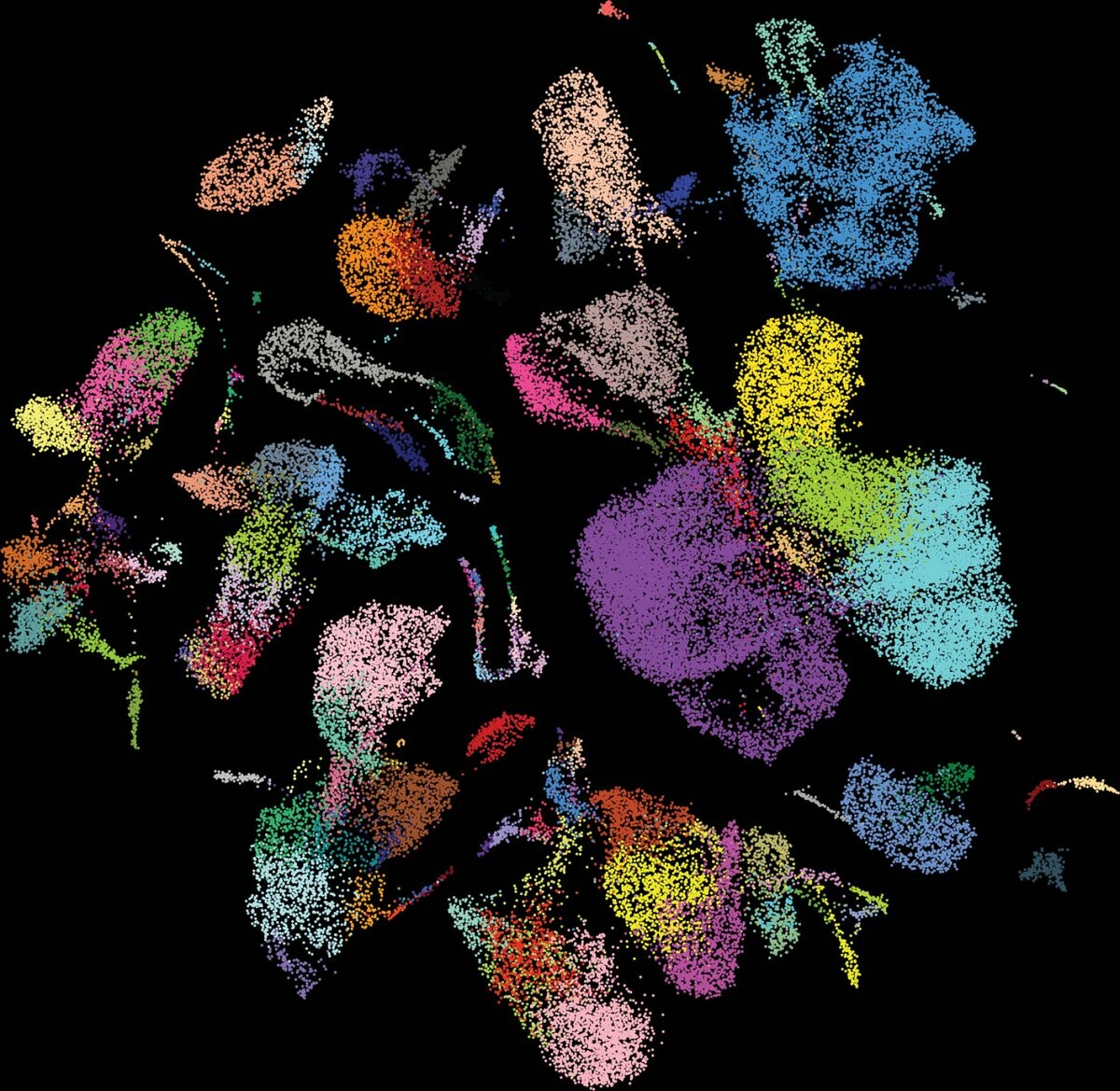
The developing human lung has been mapped in unprecedented detail, identifying 144 cell types in the early stages of life
Acting as a guidebook to healthy lung development, this can be used to investigate how #lungdiseases originate
Read more 👇🏻
https://bit.ly/3P8C9MQ
🐦🔗: https://twitter.com/sangerinstitute/status/1600887574729732096
Thiago Carvalho
boosted

New structural insights into DNMT1 function! This protein remains full of surprises. From @KyoheiArita@twitter.com's group, with help from our neighbors @Kosuke_Y_1989@twitter.com and @DefossezPierre@twitter.com. Congrats all! https://www.nature.com/articles/s41467-022-34779-4
Thiago Carvalho
boosted

#Advent Day9: Now we jump to the subgenus #Drosophila (confusing, I know) and meet the root of the taxonomic mess: D. funebris. This species cannot be renamed without an act of god (or the ICZN https://doi.org/10.21805/bzn.v67i1.a14 ), so we must either rename melanogaster or live with paraphyly https://academic.oup.com/genetics/article/185/2/703/6096929 . When not upsetting taxonomists, Dfun is a human commensal that likes farmyard manure and nearly made it as a lab model https://doi.org/10.1002/jez.1400510206 , but hasn’t done much in the lab since the 1980s
Thiago Carvalho
boosted
RT @sj_marzi@twitter.com
📢 Come and join our team! My lab is recruiting a postdoc to work on cell type specific epigenetic regulation in Alzheimer's disease. Apply by 4 Jan.
Email for queries and apply here:
👉 https://tinyurl.com/5c8hy52v
Please RT.
Thiago Carvalho
boosted

Having read this book by @drcpennington already, I can really not recommend it enough. From all texts on open science and the replication crisis, this is the one I would give to my students. A comprehensive, *optimistic*, and inspirational overview of the topic!
Thiago Carvalho
boosted

Exciting new paper on dopamine (DA).
Bellman: created an equation describing how to make choices to maximize value. But it required infinite memory.
Sutton & Barto: Came up with a new way, by calculating the difference between what happened & what you expect. This 'reward prediction error' was mapped to DA in the brain.
New paper: not quite. Instead, the brain computes whether a stimulus precedes reward beyond that expected by chance (causality).
Thiago Carvalho
boosted

#introduction
Hello everyone!
I’m an assistant prof at Virginia Tech studying viral and microbial diversity. Lately my group has been focusing on giant viruses, but we are also interested in other protist viruses, and the role of viral endogenization in host genome evolution.
#GiantViruses #ViralDiversity #TreeOfLife #Protists #Microbiology #Bioinformatics #Evolution #Virology #Genomics
Most recently we found endogenous giant viruses in the green alga C. reinhardtii!
https://academic.oup.com/ve/article/8/2/veac102/6767315?searchresult=1
Thiago Carvalho
boosted

The @nytimes in no small part helped to normalize the pandemic--remember #Omicron is milder--while making cases against mitigation as doing more harm than good (causing everything from teen suicides to car crashes).
Now this piece by David Wallace-Wells just says the truth out loud. We're see massive death still and it's not just a "pandemic of the unvaccinated." It's our grandparents who are dying. We are sacrificing our elders for our thirst for normal.
https://www.nytimes.com/2022/12/07/opinion/environment/covid-19-pandemic-elderly-deaths.html
Thiago Carvalho
boosted


"Although the process of human-to-human transmission is multifactorial, viral load substantially contributed to human-to-human transmission, with higher viral load posing a greater risk for onward transmission"
https://www.nature.com/articles/s41579-022-00822-w
I've worked on all of science, from B cells to T cells.
https://fellowsherpa.com
Joined Nov 2022
