

Thiago Carvalho @cyrilpedia@social.cleverlibre.org
I've worked on all of science, from B cells to T cells.
https://fellowsherpa.com
Joined Nov 2022
Thiago Carvalho
boosted

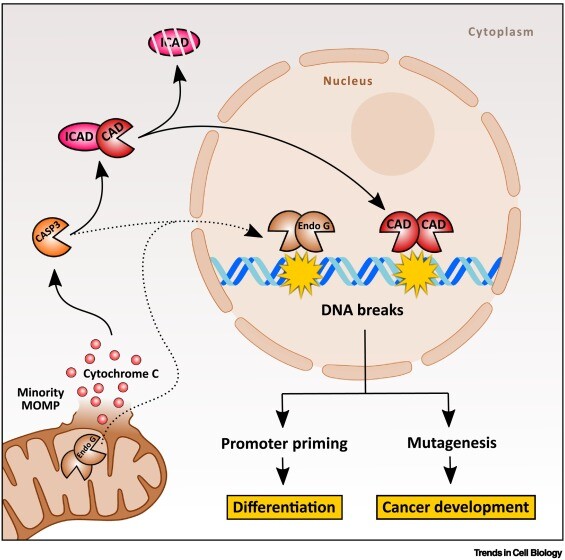
Self-inflicted DNA breaks in cell differentiation and cancer https://www.cell.com/trends/cell-biology/fulltext/S0962-8924(23)00043-0?rss=yes&utm_source=dlvr.it&utm_medium=mastodon
We hold this truth to be self-evident:
"I think there are already a lot of individual PIs who see preprint peer review as a good thing and organise preprint clubs with their students. They see it as valuable training for students who are going to become scientists, but also for students who are not going to become scientists. But this is not necessarily true for all PIs. So my view is that the institutions ought to do more to make it part of their training programs."
https://prelights.biologists.com/news/prelights-talks-to-richard-sever/
Looking back on a BBC classic
"At some point during my PhD, I started thinking about science journalism and publishing and my supervisor encouraged me to explore these areas. Basically, I had to figure out whether I wanted to be a journalist or an editor. So when I finished my PhD, I wrote to tons of journalists."
@richardsever
https://prelights.biologists.com/news/prelights-talks-to-richard-sever/
"But then… as he reaches the end of his analysis, Muller offers a stunning prediction. In essence he says that if you want to really understand the structure of the gene, it will not be done with Drosophila. Instead, he recommends the study of “d’Herelle bodies.” In 1917, the French physician Félix d’Hérelle discovered bacteriophage."
Models and their quirks:
"Here Muller was exceptionally lucky, because the somatic pairing of homologous chromosomes along their entire length—readily seen in #Drosophila—is not a general feature of eukaryotes."
Some of my favorite cover illustrations by Madalena were not selected by editors - like this one for Ilana Gabanyi & @mucida's 2016 paper "Neuro-immune Interactions Drive Tissue Programming in Intestinal Macrophages"
Thiago Carvalho
boosted

Plant Science Research Weekly, March 31.
https://plantae.org/plant-science-research-weekly-march-31-2023/
1. Special feature: Harnessing crop diversity in PNAS
2. Seeing clearly: Plant anatomy through Katherine Esau’s microscopy lens
3. 100 important questions facing plant science
4. Light signaling in Physomitrium
5. Microtubules and cell division in maize
6. Photosynthetic orchid roots
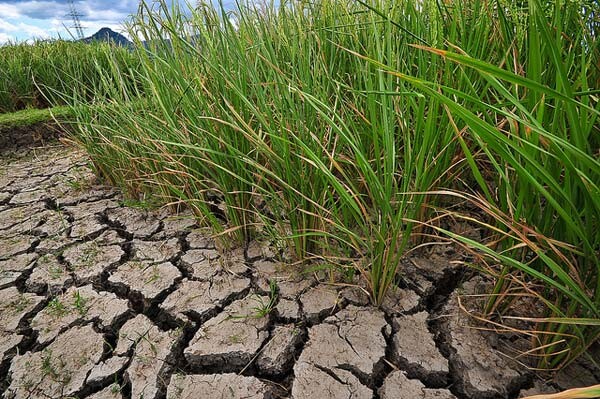
7. Improving rice harvest index under drought
8. Optimizing short-format training
Antisense oligos & n=1 cases:
“A lot of clinicians might have a patient with a rare disease and want to help, but don’t have any idea how to approach the FDA. Where do you find a source of oligonucleotide for under $500,000? For a single patient?”
"I started to understand why so many great writers are obsessed with the repetition of a consistent work schedule: they are all trying to hit a number of words a day that may or may not contain something interesting in them."
https://www.newyorker.com/news/our-columnists/whats-the-point-of-reading-writing-by-humans
Thiago Carvalho
boosted

Love this photograph by #Nigerian photographer and artist Asiko, of a #Yoruba #Egungun #Masquerade staged in Newcastle. Egungun is about the return of deceased ancestors. This one was staged, together with Asiko, by the group Moko Somõkõw.
"With growing attention on the remains of people held by museums and universities around the world, we outline ethical considerations that researchers working with human remains in anthropology must bear in mind."
Thiago Carvalho
boosted

Arthur Conan Doyle, the creator of Sherlock Holmes, fell for one of the greatest hoaxes of the 20th century when he became convinced that the "fairy photographs", taken by two girls from Yorkshire in the 1920s, were real. Mary Losure explores: https://publicdomainreview.org/essay/sir-arthur-and-the-fairies #AprilFools #hoax #photography #fairies
Thiago Carvalho
boosted


So pretty.
Basis of the H2AK119 specificity of the Polycomb repressive deubiquitinase https://www.nature.com/articles/s41586-023-05841-y
Thiago Carvalho
boosted

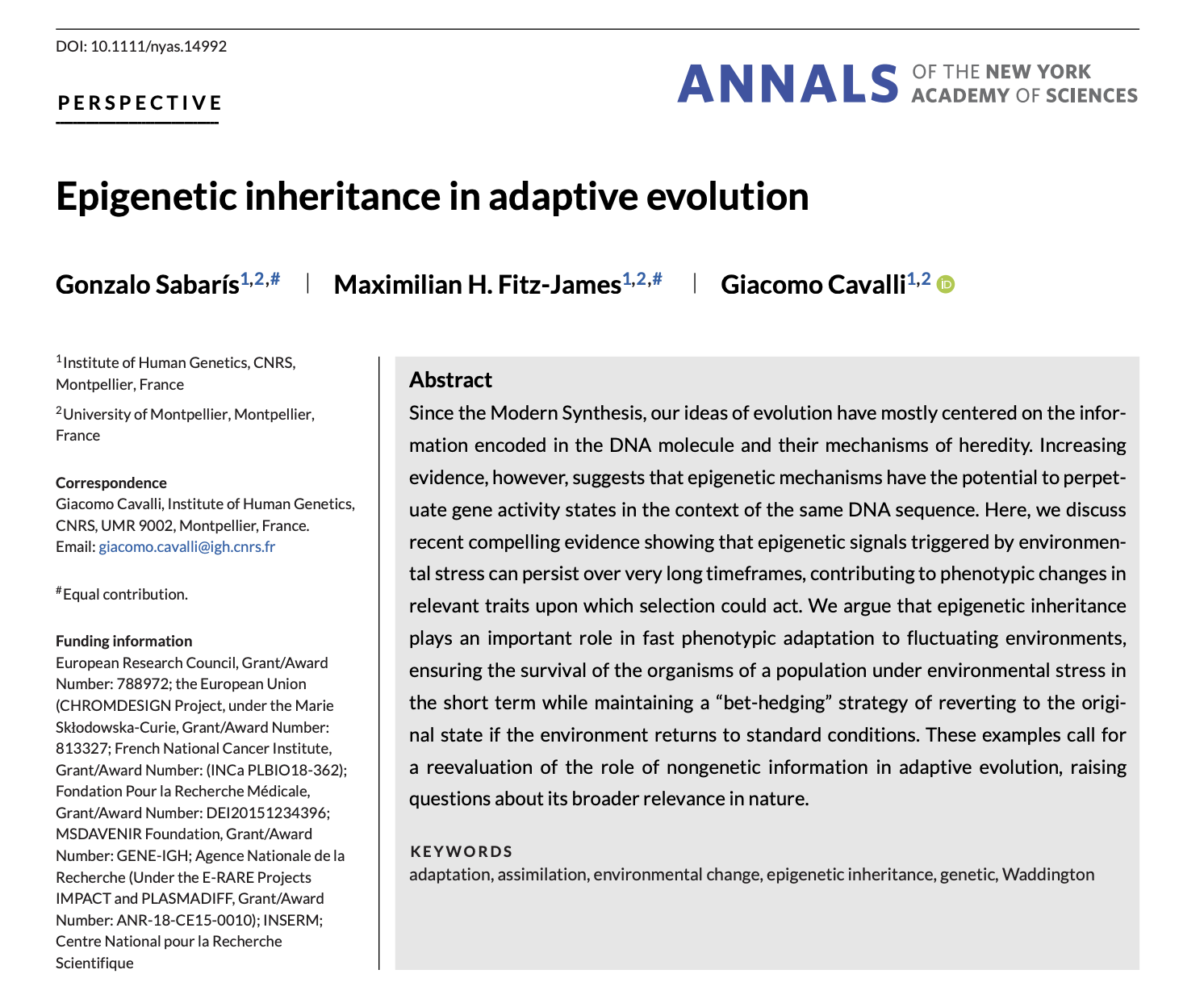
Check out our new Review discussing #Evolution in the light of #Epigenetics: Sabaris, Fitz-James and Cavalli, 2023, Epigenetic inheritance in adaptive evolution. Annals of the New York Academy of Sciences.
DOI: https://doi.org/10.1111/nyas.14992
Huge Kudos to Gonalo Sabaris and Max Fitz-James who wrote it wonderfully well !!
Not from Portugal, but somehow still good :)
Thiago Carvalho
boosted

I will be hiring a postdoc (up to 2 years) for a project on transfer learning and dataset similarity, to work with us in Copenhagen 🇩🇰.
The official call will be online soon, but please reach out via email if you might be interested!
Thiago Carvalho
boosted

The Green Dragontail Butterfly (Lamproptera meges) is a species of swallowtail butterfly found across Southeast Asia. The butterfly is known for its long, white-tipped tail, transparent forewings, and its quick and erratic flight patterns.
Video credit: Kazuo Unno
Source: https://www.goo.ne.jp/green/life/unno/movie/movie.html?movieid=1340715995
Thiago Carvalho
boosted

'Cats on the Roof' - Toyohara Chikanobu, 1899.
#Caturday #ukiyoe #JapaneseArt #cats #Japan
Thiago Carvalho
boosted






Non-structural genes of novel lemur adenoviruses reveal codivergence of virus and host
https://academic.oup.com/ve/advance-article/doi/10.1093/ve/vead024/7087189?rss=1
I've worked on all of science, from B cells to T cells.
https://fellowsherpa.com
Joined Nov 2022
