

Thiago Carvalho @cyrilpedia@social.cleverlibre.org
I've worked on all of science, from B cells to T cells.
https://fellowsherpa.com
Joined Nov 2022
Thiago Carvalho
boosted

Acting like there’s no tomorrow is a great way of ensuring that when tomorrow inevitably arrives that it will be an absolute mess…
https://www.nytimes.com/interactive/2023/08/28/climate/groundwater-drying-climate-change.html
Thiago Carvalho
boosted

Assistant Professor job- Comparative Biomechanics - Integrative Biology Department:
https://aprecruit.berkeley.edu/JPF04087
Thiago Carvalho
boosted
'Genomic technologies evolve rapidly, and there is a pressing need to update genetics teaching curricula and training in medical education. Some universities8 have already started to address this gap with initiatives aimed at enhancing undergraduate medical education in genomics and recruiting medical graduates into genetics residency training programs, but more formal education programs for medical students and current clinicians are urgently needed.'
Thiago Carvalho
boosted
'La mayor parte de los condenados hizo carrera dentro del Ejército, alcanzando con los años altos cargos dentro del escalafón militar. Todos están en situación de retiro y transitaron el juicio en libertad. Este es un perfil de los condenados.'
Thiago Carvalho
boosted
'In this study, we identified that PRMT3 catalyzes asymmetric arginine dimethylation of RIG-I, MDA5, and cGAS, leading to the inhibition of their activation. As a result, knockdown of Prmt3 in mice can protect mice against both RNA and DNA virus infection.'
#immunology #InnateImmunity
Thiago Carvalho
boosted
'Nobody would dare to boil down Ursula Le Guin’s marvelous writing—all that fantasy, all that science fiction, poetry, essays, translations—into one idea. But in a pinch I’d pick two sentences from her 2014 National Book Award speech: “Capitalism[’s] power seems inescapable. So did the divine right of kings.”
https://lithub.com/dragons-are-people-too-ursula-le-guins-acts-of-recognition/
Thiago Carvalho
boosted
'The pigment cells of the sea urchin were also found to be similar to immune and neural cell types in the sea star. Based on the genes shared between them, Meyer et al. propose that pigment cells have a dual role (immune and neural) in sea urchin larvae, while these functions are exerted by two separate cell types in sea stars (Figure 1B).'
Thiago Carvalho
boosted
'Kidneys even have a sense of smell. To sift hundreds of blood and urine chemicals on the fly, expelling some and husbanding others in precise quantities, kidneys employ odor receptors similar to those found in the nose. “The kidney is sniffing the urine and the blood plasma as they go by,” says Jennifer Pluznick, associate professor of physiology at the Johns Hopkins School of Medicine, who discovered the organ’s olfactory gifts. “The kidney’s attention to detail is astounding. I’m convinced it has many other long-held secrets which are waiting to be discovered.”
https://lithub.com/how-our-kidneys-keep-us-healthy-and-what-it-means-when-they-fail/
Thiago Carvalho
boosted

The fear of being murdered by your student with a gun Is uniquely American.
https://www.wral.com/story/unc-shooting-victim-faculty-academic-adviser/21023373/
Thiago Carvalho
boosted

How the twin crises of climate change and poor public housing are harming people’s health
Thiago Carvalho
boosted

A 29-year-old woman died while in US Border Patrol custody in Harlingen, #Texas. https://www.cbp.gov/newsroom/speeches-and-statements/statement-cbp-custody-death
Thiago Carvalho
boosted

 🏳️🌈🖖🏽
Abortion is a defining political issue for the U.S. today. At last week's GOP debate, the contenders staked out their positions. And for some, that included planning an all-out, national ban on abortions. So much for letting the states decide. We dive in deeper at #TheBigPicture. https://thinkbigpicture.substack.com/p/gop-debate-abortion-bans-2024
Thiago Carvalho
boosted

Hot off the press! 📰
It took a minute, but I'm glad it's finally out:
A Critical Perspective on Neural Mechanisms in Cognitive Neuroscience: Towards Unification
https://journals.sagepub.com/doi/10.1177/17456916231191744
Thiago Carvalho
boosted

In his #JEB100 ECR Spotlight, Michael Lim tells us about his researching showing that the offspring of stressed zebrafish parents are more stress-tolerant than the offspring of unstressed parents and why there should be more support for null results, to reduce the pressure on researchers in search of high profile results
https://journals.biologists.com/jeb/article/226/16/jeb246534/325941
Read the full research article at https://journals.biologists.com/jeb/article/226/16/jeb245583/325942
Thiago Carvalho
boosted

Texas construction company sued by Black employees after nooses, white supremacy symbols displayed
Thiago Carvalho
boosted

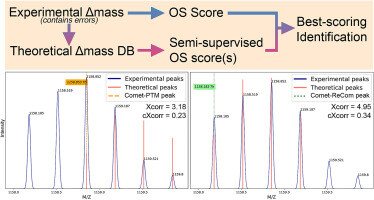
ReCom: A semi-supervised approach to ultra-tolerant database search for improved identification of modified peptides | https://www.sciencedirect.com/science/article/abs/pii/S1874391923001574?dgcid=rss_sd_all #proteomics
Thiago Carvalho
boosted

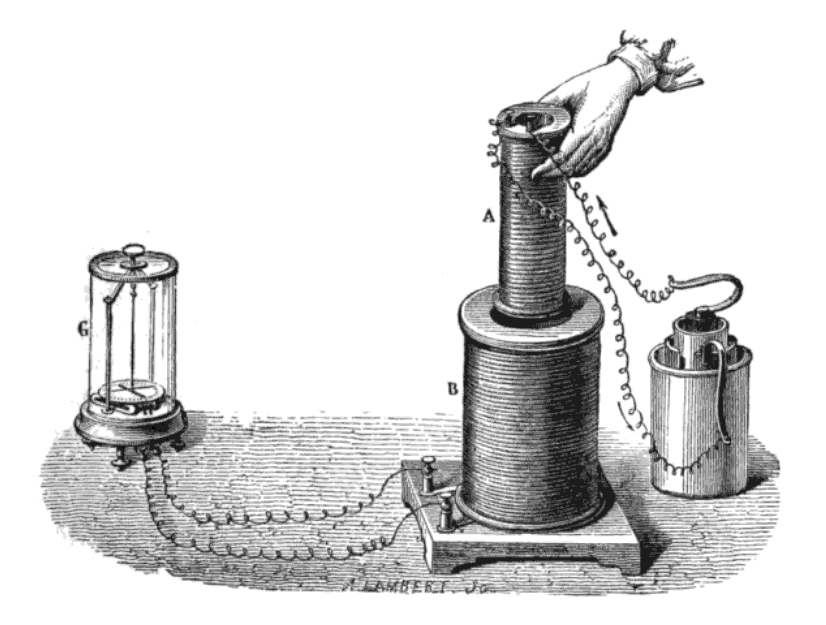
Michael Faraday discovers electromagnetic induction #OTD in 1831.
James Clerk Maxwell mathematically described it as Faraday's law of induction. Lenz's law describes the direction of the induced field. Faraday's law was later generalized to become the Maxwell–Faraday equation, one of the four Maxwell equations in his theory of electromagnetism.
'Here, once again, my personal landscape shifted and the possibility of a career in science seemed beyond my reach. I struggled to sleep at nights. I even tried distracting myself with daily 7 mile runs, every pounding step the question echoing: What do you do when you don’t know what to do?'
'Implementing a series of sustainable practices in health research could help the field to reduce its hefty carbon footprint, according to a report commissioned by health-research funder Wellcome.'
Thiago Carvalho
boosted



“Dryness in Panama, low levels in the Mississippi. Low levels in the Rhine. That’s of concern to anyone that has interests in global trade.”
Gift link:
https://www.nytimes.com/2023/08/25/climate/panama-canal-drought-global-trade.html
I've worked on all of science, from B cells to T cells.
https://fellowsherpa.com
Joined Nov 2022
