

Thiago Carvalho @cyrilpedia@social.cleverlibre.org
I've worked on all of science, from B cells to T cells.
https://fellowsherpa.com
Joined Nov 2022
Thiago Carvalho
boosted
"Drug companies want to sell drugs and patients want to take them, but unproven remedies erode our faith in industry’s ability to deliver drugs that work and provide false hope to people suffering from life-threatening diseases. It’s a devil’s bargain that serves no one."
https://www.thenation.com/article/society/act-up-fda-lessons/
Thiago Carvalho
boosted
"Books like these demand a certain agreement between writer and reader. The writer must be a knowledgeable guide as they lead the audience deeper into the topic. When done well, the resulting pages look effortless—but authors need to do a lot of background work to be able to explain difficult concepts in clear terms. (An old bit of editor’s wisdom applies here: Often, journalists who are struggling to draft an article don’t have writer’s block; they’re just not done reporting.)"
Thiago Carvalho
boosted
"Thomas’s insistence that the bomb was necessary to bring about Japan’s surrender is largely contradicted by his own evidence. In the most interesting and vivid part of his book, he takes us into the hot, humid, mosquito-ridden bunkers at the heart of the devastated Japanese capital, suffused with the ashes of a hundred thousand inhabitants incinerated in LeMay’s fire raids, where a sweating, tiny ruling circle, the so-called Big Six, argued and intrigued. They all knew Japan had lost the war."
https://www.lrb.co.uk/the-paper/v45/n22/andrew-cockburn/big-six-v.-little-boy
Thiago Carvalho
boosted

A post from February:
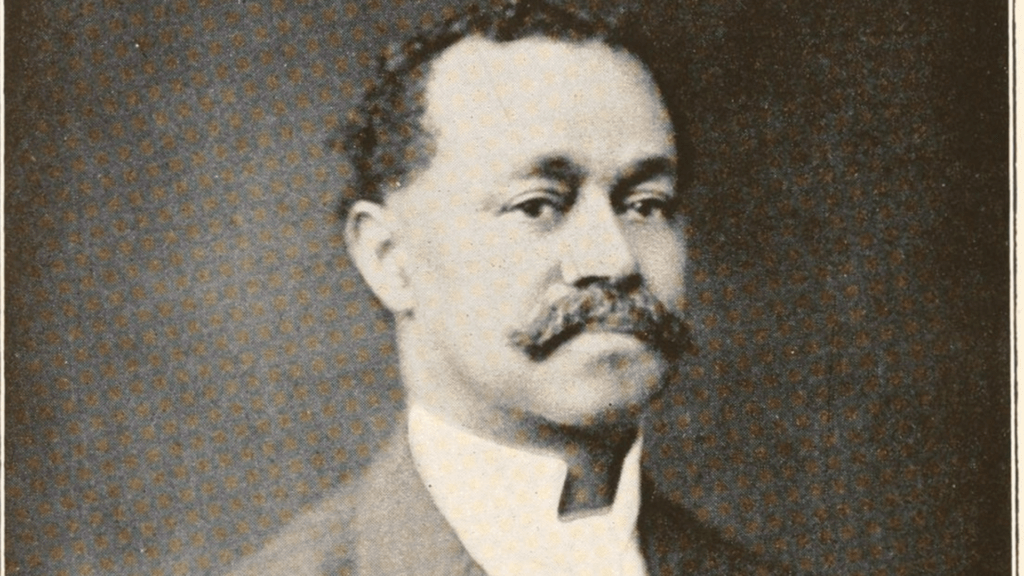
Charles Henry Turner was a pioneer in entomology - and he couldn't get a job in higher ed, so he taught high school biology.
"Across his distinguished 33-year career, Turner authored 71 papers and was the first African American to have his research published in the prestigious journal Science."
His simple but elegant experiments in public parks revolutionized understanding of bees.
#BlackHistory #BlackFriday #BlackHistoryMonth @blackmastodon
Thiago Carvalho
boosted
“One of the really bad things you can do to your writing is to dress up the vocabulary, looking for long words because you’re maybe a little bit ashamed of your short ones. This is like dressing up a household pet in evening clothes. The pet is embarrassed and the person who committed this act of premeditated cuteness should be even more embarrassed.”
Stephen King, On Writing. #Books #Bookshelf #writing
Thiago Carvalho
boosted
You'll never guess what happened next...
"When the project was announced, in 2002, Biobank promised that data would not be given to insurance companies after concerns were raised that it could be used in a discriminatory way"
Thiago Carvalho
boosted

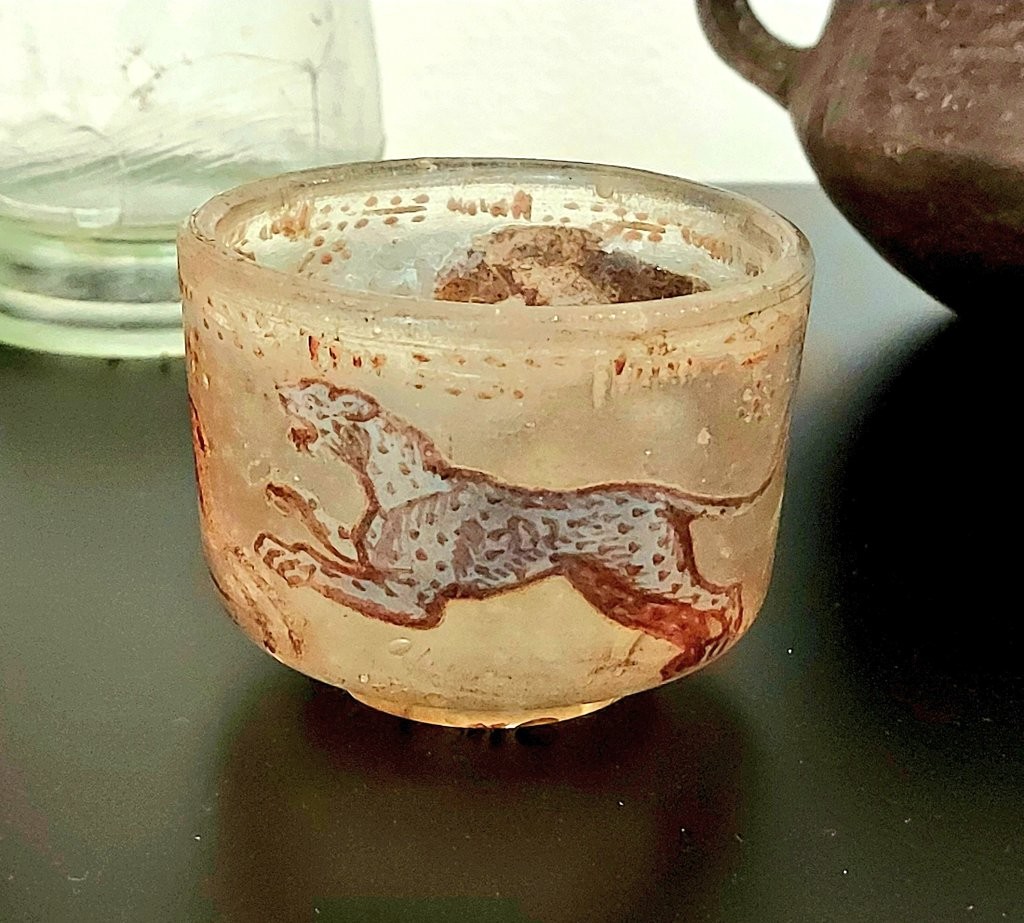
Fascinating world of ancient #glass: An enamel-painted #Roman glass cup found in a rich woman's grave at Nordrup, Denmark, 3rd c. AD. Vessels like this are known as circus cups because they are decorated with images of animals hunted in the arena during the venationes (hunting spectacles). The cups were a product of workshops in the Rhineland.
On display at National Museum Copenhagen
Thiago Carvalho
boosted
"Evaluating policies on misconduct is essential, but the idea of a scientific ecosystem that is free of errors is an unattainable utopia. However, evolving a more responsive ecosystem is entirely possible, and scientific journals, institutions, and researchers must together move more intentionally in this direction."
Thiago Carvalho
boosted
'And then once we’d had a drink, every single host told me that a plane used to fly from Moscow just to fetch Stalin’s wine. What’s more, every other host swore he had documents to prove it, and two of them even showed them to me, though first of all, they were in Georgian, and second, I was too tipsy to understand them or remember anything about them.'
https://lithub.com/dinner-with-a-dictator-what-joseph-stalin-ate/
Thiago Carvalho
boosted
"AstraZeneca is to enter the race for a weight loss pill, working on a next-generation class of drugs that it hopes to deploy in poorer nations as the obesity treatment market booms."
https://www.ft.com/content/c96bafc8-0ba9-4a24-9239-c5d5ee0d5051
Thiago Carvalho
boosted
SBIAP: Brazilian Society for Immunology & Arts in Portugal.
Thiago Carvalho
boosted
How are #altmetrics services adjusting for the decline of #Twitter, especially #AcademicTwitter? Are they giving Twitter mentions less weight? Are they tracking mentions in other social-media platforms? If so, which platforms? Where do *they* think academics are going? Do they have good data?
#Academia #AcademicMastodon #Impact #SocialMedia #TwitterMigration #X
@academicchatter
Thiago Carvalho
boosted
Greetings everyone ! My name is François Rincon, I am a theoretical physicist working in France at CNRS. I spent the first 20 years of my career doing research on nonlinear astrophysical fluids, plasmas and magnetic dynamics in astrophysical systems spanning many scales, ranging from the Sun, to protoplanetary accretion disks, to clusters of galaxies and the primordial Universe.
(Astro)Physics has been a core part of my personal identity since childhood and illuminates my views of the natural and human world. In particular, doing research on dynamical complexity on astronomical scales has contributed to the development of my increasingly alarmed scientist perspective on a variety of very earthly issues, chief among which our climate & ecological crises.
However, paradoxically (or perhaps as a logical conclusion ? ), what I have learned in part thanks to my astrophysicist viewpoint has also increasingly led me in recent years to wonder if I should not use my scientific skills and training to help mitigate these crises, rather than in astrophysics. After much weighing what was the best move from my comfy position in the astrophysics ivory tower, I have finally “looked up” from my speculative theoretical calculations, and have recently decided to gradually shift my research priorities to ecological sciences with a focus on biodiversity conservation, in an attempt to make the most of my research training, experience and vocation to modestly help, to the best of my scientific abilities, understand & mitigate the ecological crisis we are facing here, on Earth.
Why ? Well, first of all, with increasing professional experience, I have personally discovered astrophysics & astronomy to be quite a mixed bag. On the one hand, it is a field full of very smart people and intellectually challenging. But it is also now sufficiently mature that we essentially know all we need to know to grasp our position, both insignificant and precarious, on Earth and in the larger Universe. In some sense, mission accomplished: the field has done its job (well) to scientifically enlighten human bipedes. On the other hand, there remains a myriad of unanswered questions, more or less important and interesting to solve, that in my opinion me and most of my colleagues could spend their lives working on without making any significant difference to human progress, knowledge, or well-being in relation to our environment. Most of the research questions we work on have become in my opinion misguided intellectual raisons-d’être in an era of bloated mediocre hyped academic research and industrial-scale scientific publication. Working on such questions make us feel busy and smart, but in reality my own impression, informed by experience, is that we are nowhere near to have the adequate tools, theoretical, numerical, observational, or experimental, to make any significant progress on many of these. Why then waste our energy on these questions, most of them quite insignificant – especially in exceptional times that invite us to focus our intellect on more pressing issues ? Fact is, astrophysics is and will remain a very speculative field, with very limited falsifiability, in the foreseeable future. I may expand on this in future posts. What matters here is that having spent most of my professional life myself on not even being wrong, all of this while the world burns, has become a major existential problem for me.
Then, there is the problem of the pollution footprint of astrophysics. Let’s write this plainly: we are the most polluting scientific field on the planet: mega-observatories, steel and concrete cathedrals of science built in remote desertic locations, mega-space observatories packed with electronics dumped into space by huge rockets (some of them built by corporations that are actively contributing to the destruction of our environment), billions of CPU hours spent in high-performance computing numerical models of doubtful informational value sucking lots of not-so-low-carbon electricity (3t/MCPUh in the lowest-emitting countries), lots of electronic purchases to develop high-tech astronomical instruments, and buzzing international travel all over the world to conferences and international collaborations all contribute to our huge footprint. In my current research institute, each individual, researcher or other, emits on average 28t CO2 eq/ year in his/her professional activities ! My own individual professional footprint, including HPC (but excluding my occasional use of observational data from space observatories) was of the order of 10t CO2 eq/year until recently. None of this is sustainable and justifiable for a field that is nowhere near essential to document and help solve our environmental crises. However, despite a raising awareness among the base, our community has barely started taking significant steps to change that at the science policy power levels that really matter. This would require questioning the actual need for our most polluting research activities, and to downscale significantly instrumentally and in term of human resources. I am having a very hard time being part of the problem in the environmental catastrophe movie unfolding under our eyes. On this front too, I will probably talk more in future posts about the detailed arguments underlying the case I’m making, as I do not want to give the impression that I am making this case lightly.
Mix all these considerations together, and shake with a pinch of mid-career scientist professional existential crisis and boredom, having the feeling of having done everything I could and not being able to give more to the field, and you have the recipe for a major introspection and reconsideration of future plans. I have honestly grown tired of astrophysical sciences, its research practices, and my own perceived personal inadequacy to do anything significant there. I feel both useless and wasted. So I have concluded it is high time I use my energy and experience to serve more important causes before I get too old and professionally rotten, modestly and with whatever limited intellectual capacities I have left at my advanced age of 45. What better cause to serve than ecology and biodiversity conservation research for someone with a deep sensibility for nature, mountains, and natural complex patterns in the world ?
This place will be here to describe my experience, thoughts and struggles as a scientist in the process of such a (scientifically difficult, and certainly not obvious) transition. I thought it would be a good idea to share my experience as it unfolds, both for egoistic reasons, to encourage myself and to conserve momentum when things get difficult (as they inevitably will do), but also to make other younger or older people with similar questionings, and maybe eager to take similar steps, relate and share. And also maybe as a bit of an activivist too, to contribute to instill through some logical arguments some sense of emergency and questioning among some of my colleagues less sensitive to these issues.
How, when, where all of this is going to happen, what is going to be posted in this place, that will be a story for upcoming posts. I hope you enjoy the ride. Please feel free to weigh in in the comments now and then to tell me/us about our your own experience and thoughts on the matters I will post about, especially if you are a scientist yourself. I would also like this place to be a forum for debate or experience-sharing on all these matters. What’s important for me though is that this is always done constructively, in a civil and informed way, and in good faith. My view of these exchanges is that they should in the end lift us up all to help us better understand our place and role as humans and sometimes scientists, both as part, and powerful (for the best or the worst) actors of our earthly natural world. This kind of conversation, in my view, is more than ever needed (and well-beyond scientific circles) in times of massive media dis- or mis-information and off-the-roof political irresponsibility on the biggest issues of our times, preserving nature and life on the pale blue dot.
https://lookingup.francois-rincon.org/from-scratch-the-origins-of-a-transition/
Thiago Carvalho
boosted

Okay people 📣
It's time for "the opposite of doomscrolling" 📖
The latest issue of my newsletter, "The Linkfest", just dropped 📬
Free to read here, subscribe via pay-whatevs-you-want, including free: https://buttondown.email/clivethompson/archive/linkfest-13-17th-century-chatgpt-the-merovingian/
This issue includes:
🏛 17th-century ChatGPT
🎀 the "Merovingian" knot
🎧 CT scans of Airpods
🧊 "superionic" ice
☀️ pixels made of bioluminescent algae
❓ the "blood footprint" mystery
⚔️ how historically accurate is the armor in Baldur's Gate, anyway
AND MORE
Thiago Carvalho
boosted
"Factor VIII concentrate was developed later in the decade. Production involved pooling many batches of donated blood, then fractionating it. The Factor VIII was freeze-dried and packed into bottles. Haemophiliacs could get it out of the fridge themselves, mix it and inject it to stop bleeds. It was a miracle treatment: in 1962 the median life expectancy for severe haemophiliacs in Britain was 37; by 1980 it was practically normal."
https://www.lrb.co.uk/the-paper/v45/n22/florence-sutcliffe-braithwaite/we-ve-messed-up-boys
Thiago Carvalho
boosted

@cyrilpedia I have read this book and can recommend it, it is really good 👍🏼
“One of the really bad things you can do to your writing is to dress up the vocabulary, looking for long words because you’re maybe a little bit ashamed of your short ones. This is like dressing up a household pet in evening clothes. The pet is embarrassed and the person who committed this act of premeditated cuteness should be even more embarrassed.”
Stephen King, On Writing. #Books #Bookshelf #writing
Thiago Carvalho
boosted





#covidheart Spectrum of Pathophysiology of Cardiovascular Involvement Due to #COVID19 & #PASC-#CVS. Chronic inflammatory🫀 involvement affects a much broader segment of previously well people who may had only an acute #SARSCoV2 infection . The symptoms commonly develop after a delay of weeks or months after a period of relative recovery from the acute phase. Symptoms related to the 🫀 system : exertional dyspnoea, exercise intolerance, chest tightness, pulling or burning chest pain & palpitations

"Thomas’s insistence that the bomb was necessary to bring about Japan’s surrender is largely contradicted by his own evidence. In the most interesting and vivid part of his book, he takes us into the hot, humid, mosquito-ridden bunkers at the heart of the devastated Japanese capital, suffused with the ashes of a hundred thousand inhabitants incinerated in LeMay’s fire raids, where a sweating, tiny ruling circle, the so-called Big Six, argued and intrigued. They all knew Japan had lost the war."
https://www.lrb.co.uk/the-paper/v45/n22/andrew-cockburn/big-six-v.-little-boy
"The prints are very small, some are roughly the size of a stamp, & are at times watercoloured."
Mini-etchings inspired by Seghers, Rembrandt & Bruegel the Younger/loosely inspired by 17th century Dutch landscape paintings.

I've worked on all of science, from B cells to T cells.
https://fellowsherpa.com
Joined Nov 2022
