

Nick @internic@social.cleverlibre.org
- Pronouns
- he/him/his
Theoretical physicist by training (PhD in quantum open systems/quantum information), University lecturer for a bit, and currently paying the bills as an engineer working in optical communication (implementation) and quantum communication (concepts), though still pursuing a little science on the side. I'm interested in physics and math, of course, but I enjoy learning about really any area of science, philosophy, and many other academic areas as well. My biggest other interest is hiking and generally being out in nature.
Joined Nov 2022
Nick
boosted

I love that Cicada Mania is not only an amazing passion/hobby website, but that it was one of the very first websites, dating back to 1996, and it is still very active in 2023.
Nick
boosted


When you notice who Elon is paying, it's another reason to leave Twitter. https://www.washingtonpost.com/technology/2023/07/13/twitter-creators-payments-right-wing/
Nick
boosted

Thanks to all of you who reached out to me. I got many more responses then I can respond to privately. My question was related to the WordPress plug-in that fixed a bug that logged passwords during login. I wanted to know if best practices called for some sort of zero knowledge login that prevents even the website from knowing a users password. Story is here:
Nick
boosted

Are there any maker/electronics instances?
Nick
boosted

How a cloud flaw gave Chinese spies a key to Microsoft’s kingdom
Hackers stole a cryptographic key that let them forge user identities and slip past defenses.
Nick
boosted


Come see me keynote Blue Team Con in my home city of Chicago this August! @BlueTeamCon
https://www.helpnetsecurity.com/2023/07/13/dragos-lesley-carhart/
Nick
boosted

Following the example of the German government and the European Commission, the government of the Netherlands is now running their own Mastodon server! No middlemen between them and their constituents! Welcome @minbzk!
@johncarlosbaez Wow, I can't believe I never realized this!
Nick
boosted

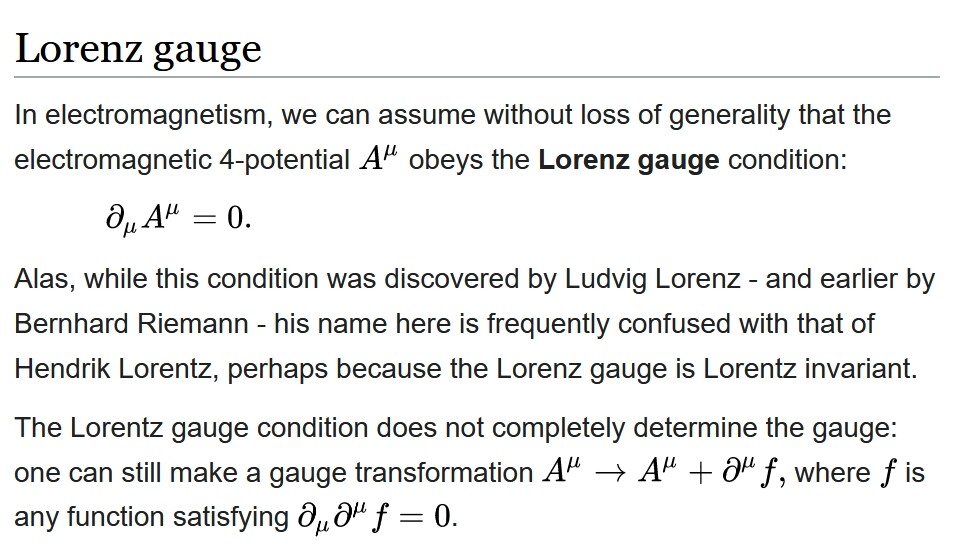
@weekend_editor - yes, you're right! For people reading thus who don't know: even in quantum mechanics you can still do any gauge transformation to the 4-potential without changing anything observable.
Nick
boosted
@johncarlosbaez *Not to be confused with Lorenz, E.N., of butterfly effect, Lorenz attractor, Lorenz energy cycle... fame.
Nick
boosted
Lorenz and Lorentz - two different physicists who did important work on similar subjects. It's easy to mix them up. Lots of textbooks call the Lorenz gauge the 'Lorentz gauge'. Let's stop doing that!
But what is the Lorenz gauge?
It's very efficient to describe the electromagnetic field using the 4-potential \(A^\mu\), which is a 1-form on spacetime. But you can change the 4-potential without changing anything observable! This is called 'gauge symmetry'.
Gauge symmetry is important, but sometimes it's a bit of a nuisance. Sometimes it's nice to eliminate, or partially eliminate, this gauge symmetry by requiring that the 4-potential obeys various extra equations. These are called 'gauge conditions'.
Maxwell used a gauge condition now called 'Coulomb gauge'. To write this condition you need to choose a reference frame, so it goes against the spirit of special relativity - though it only affects unobservable quantities.
When Lorenz introduced his alternative gauge condition, Maxwell didn't like it - because he thought it would violate conservation of energy! But it's fine if we include the energy of the electromagnetic field, as we should. And it has the advantage of not requiring you to choose a reference frame, i.e. a notion of rest.
So yeah: the Lorenz gauge is Lorentz invariant.
Nick
boosted

Nominations are now open for the Award for Best Longform Jira Drama
Nick
boosted
Are there any developers or researchers with expertise in website login security available to speak to me briefly? I'm interested in learning what best practices are for handling passwords during login. Please DM me on Signal (+1650-440-4479) or through Mastodon (if you must).
Nick
boosted

For friends of #QuantumControl and #QuantumTechnologies: Out now in #PRXQuantum, our newest paper.
How do you combine feedback and gradient-based optimization of control strategies --- something that is very useful for optimizing quantum error correction and many other important tasks? "feedback GRAPE" is our answer:
https://link.aps.org/doi/10.1103/PRXQuantum.4.030305
Work with Riccardo Porotti and Vittorio Peano.
Nick
boosted

Biden Administration FDA APPROVES FIRST OVER THE COUNTER BIRTH CONTROL PILL
Nick
boosted

Nick
boosted
Nick
boosted

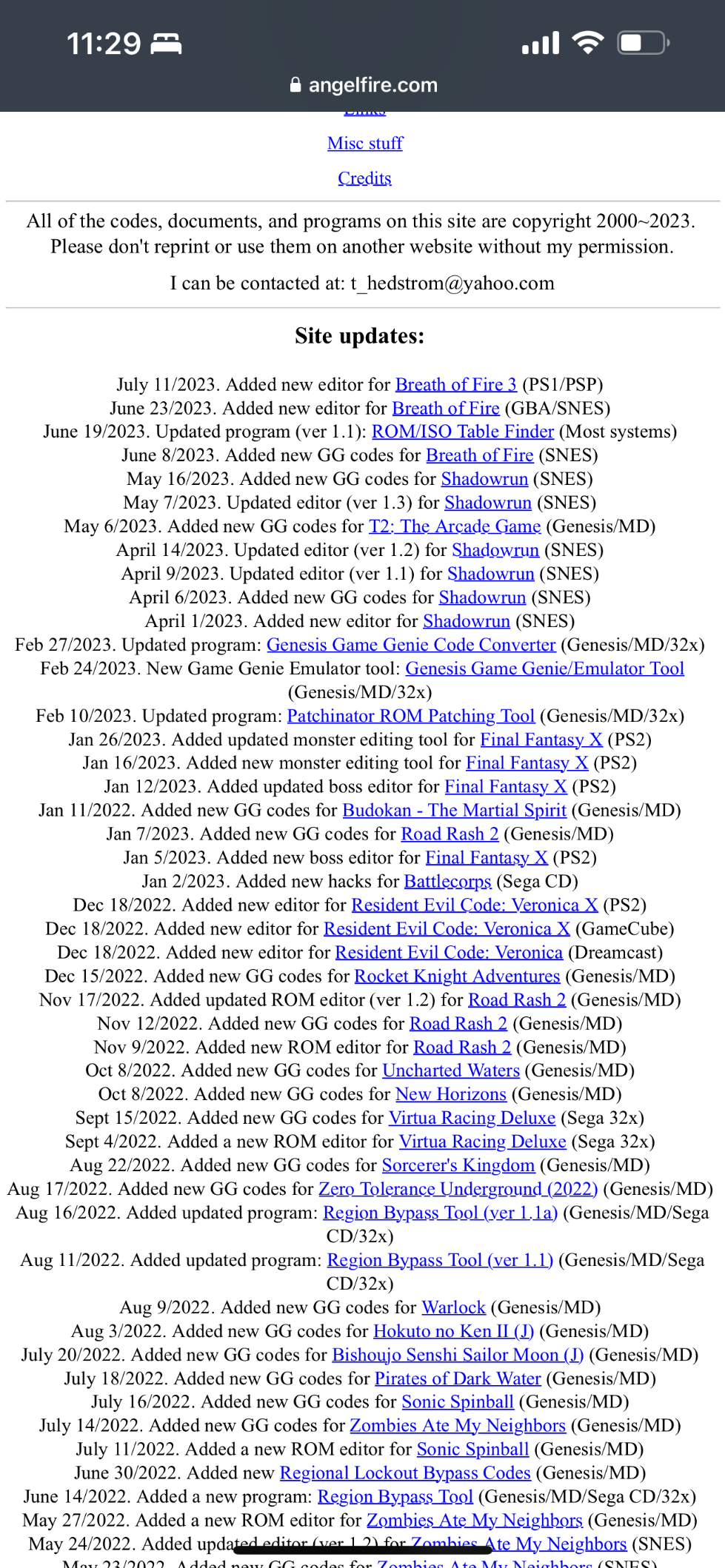
This dude has been publishing updates to his angelfire hosted game genie code website for 23 years…it’s amazing
Nick
boosted

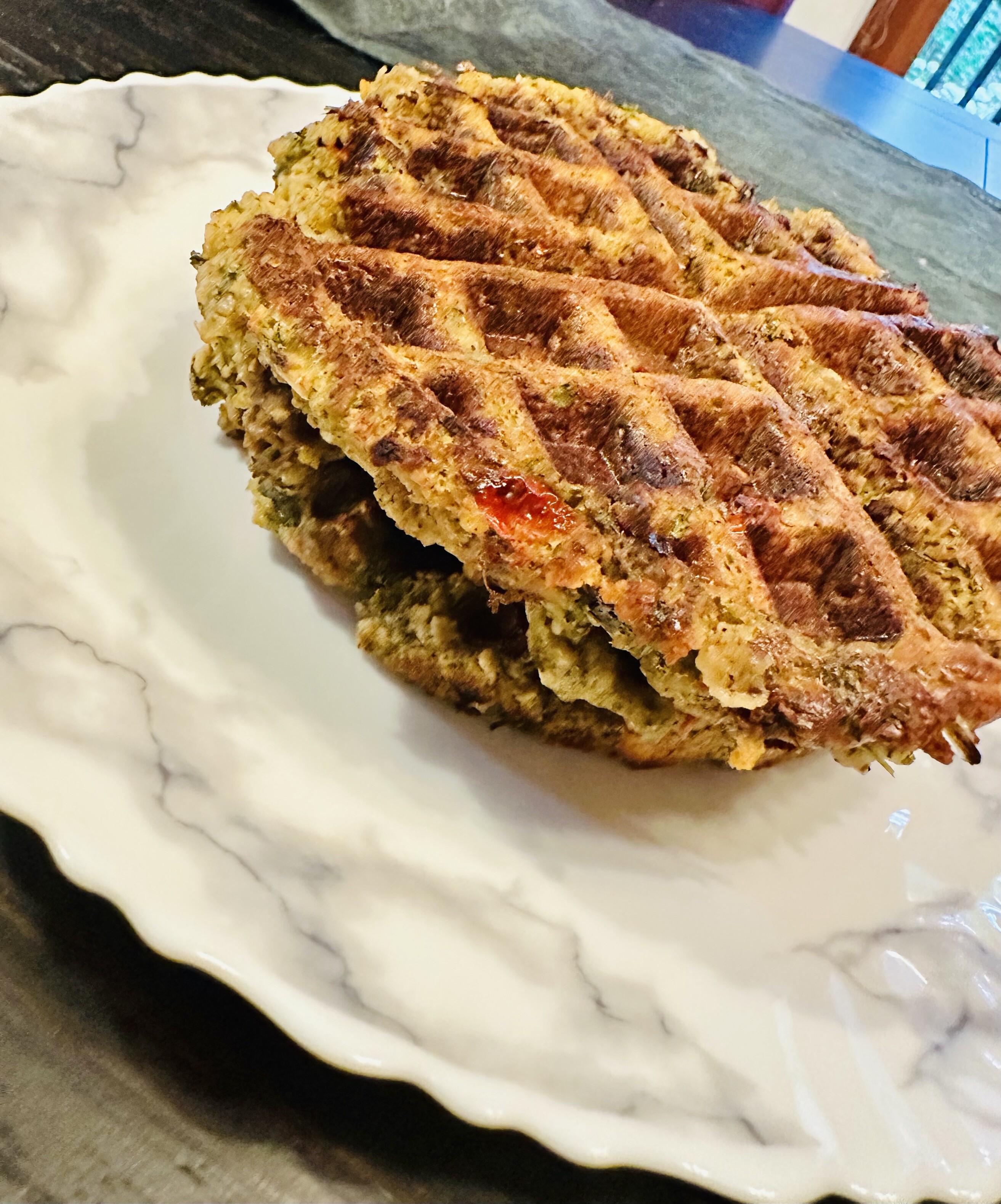
Last night’s shawarma/tabouli stuffed falaffles recipe is now up on Patreon!
Nick
boosted



I expect you've all seen pictures of the Taylor series expansions of sin and cos. But how about the expansion of \(e^{it}\) for real \(t\), as a curve in the complex plane?. Here are the first few terms. \(n=5\) is funky, and at \(n=8\) we see the first reasonable approximation to the unit circle appearing. Well I think it's pretty.
- Pronouns
- he/him/his
Theoretical physicist by training (PhD in quantum open systems/quantum information), University lecturer for a bit, and currently paying the bills as an engineer working in optical communication (implementation) and quantum communication (concepts), though still pursuing a little science on the side. I'm interested in physics and math, of course, but I enjoy learning about really any area of science, philosophy, and many other academic areas as well. My biggest other interest is hiking and generally being out in nature.
Joined Nov 2022
