

Thiago Carvalho @cyrilpedia@social.cleverlibre.org
I've worked on all of science, from B cells to T cells.
https://fellowsherpa.com
Joined Nov 2022
Thiago Carvalho
boosted

I’m still not sure how this 🐘 works, but I guess the best is to start with an #introduction
Here I will be posting about stuff from our lab at the CECAD. We want to understand #aging and #proteostasis to prevent multiple age-related diseases such as #ALS, #Alzheimer, #Parkinson and #huntington
Thiago Carvalho
boosted

last boost (#LB?): LOVED Carolyn @bertozzi's answer when asked for whether her winning the Nobel Prize provides "an enhanced platform" to address gender issues in STEM (at time 22:00): "It's probably a question that's better posed to the men around the table...there are so many more of them and they are in a position to make change that's 9 times greater than my own position." 🙌🏽🙌🏽🙌🏽
Good night proboscideans
Thiago Carvalho
boosted

RT @purveshkhatri
Excited to see our work advancing generalizability of host response-based diagnostics to address antimicrobial resistance for global population out today https://www.cell.com/cell-reports-medicine/fulltext/S2666-3791(22)00406-2! Strong work from @adityarao95 who also developed a new analysis framework for this work!
Thiago Carvalho
boosted

One of the benefits of #Mastodon being #OpenSource: The EU can help make it more secure.
"Awards of up to EUR 5000 are available for finding security vulnerabilities in LibreOffice, LEOS, Mastodon, Odoo and CryptPad, open source solutions used by public services across the European Union. There is a 20% bonus for providing a code fix for the bugs they discover."
https://commission.europa.eu/news/european-commissions-open-source-programme-office-starts-bug-bounties-2022-01-19_en
Thiago Carvalho
boosted

First post on mastodon! I'm thrilled to share our new manuscript on the metagenomic discovery, biochemistry, & structural insights of novel phage-derived CRISPR-Cas systems and their development into gene-editing tools! Now published @cellcellpress https://www.sciencedirect.com/science/article/pii/S0092867422013666
Thiago Carvalho
boosted

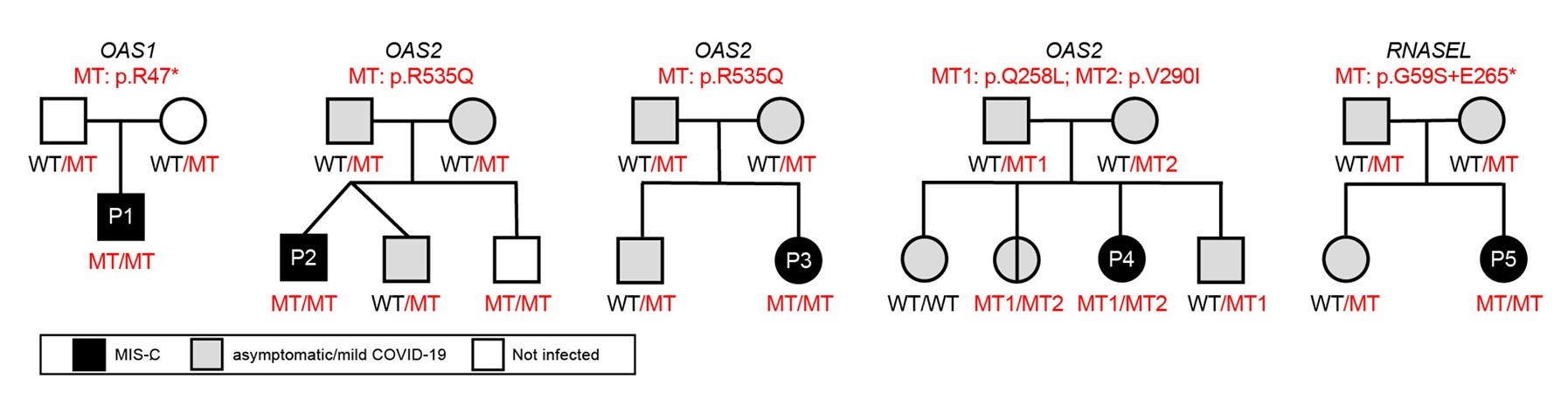
Inborn errors of #OAS–#RNaseL in #SARS-CoV-2 related multisystem inflammatory syndrome #MISC in children https://www.science.org/doi/10.1126/science.abo3627
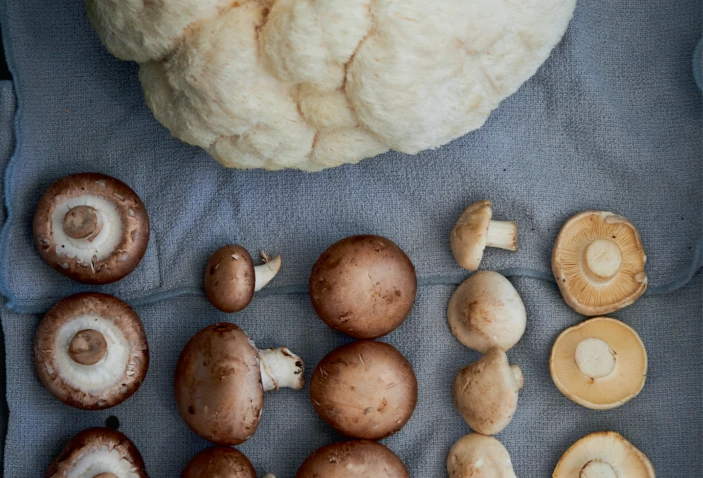
"The famed Copenhagen eatery, renowned as much for its culinary innovation as for its lively insect ingredients, has taken food condiments to new heights with its first microbe-made ‘garum’. Ancient Romans were said to go wild for this salty fish sauce and doused every possible meal with it, a bit like ketchup aficionados. Romans made garum by fermenting fish viscera in large, open vessels under the Mediterranean sun for up to three months. Many chefs have attempted to resurrect this so-called dodo of gastronomic history, with limited success — until now. Noma’s version, however, has no fish at all."
Thiago Carvalho
boosted

RT @deniz_cizmeci@twitter.com
Now available online! Pleased to present our human RSV challenge study. Thanks to the incredible participants, who make RSV vaccine development possible. @ragoninstitute@twitter.com @JanssenGlobal@twitter.com
https://authors.elsevier.com/c/1gElYL7PXiqic#.Y6HcKt2maoU.twitter
🐦🔗: https://twitter.com/deniz_cizmeci/status/1605237470030729216
My latest clinical pipeline column for Nature Medicine is a look at a drug recently approved by the #FDA to delay the onset of type 1 diabetes.
It's a direct descendant of the very first monoclonal ever approved for clinical use.
#Diabetes #Type1Diabetes #DrugDevelopment #DrugDiscovery #NatureMedicine #Immunology #MonoclonalAntibody
'Why some animals can regenerate while many others cannot remains a fascinating question. Even amongst planarian flatworms, well-known for their ability to regenerate complete animals from small body fragments, species exist that have restricted regeneration abilities or are entirely regeneration incompetent. Towards the goal of probing the evolutionary dynamics of regeneration, we have assembled a diverse live collection of planarian species from around the world.'
Thiago Carvalho
boosted

Final issue of our 40th #anniversary year!
Featured:
#LUBAC linear #ubiquitin signaling on #mitochondria
#Calnexin’s sugar-free taste in #lipid #bilayer
#Mitophagy receptors doubling in #pexophagy
#Cadherin-mediated #adhesion control (on the cover by Liang, Buckley et al)
...and more:
https://www.embopress.org/toc/14602075/2022/41/24
Thiago Carvalho
boosted

@macroliter @alexcc yeah... there's a nihilism to publishing (and it's earned), but I asked if there were really differences amongst some of the publishers folks often discuss in the #PredatoryJournal discussion (e.g. Frontiers, MDPI). Held a poll, found out at least the rep is different. Then in analysis, found the same trend in terms of insular citations within network compared to expectation (via IF/SJR ratio).
#MDPI really is comparable to proper predatory publishers like Bentham or OMICs.
👏 👏 👏
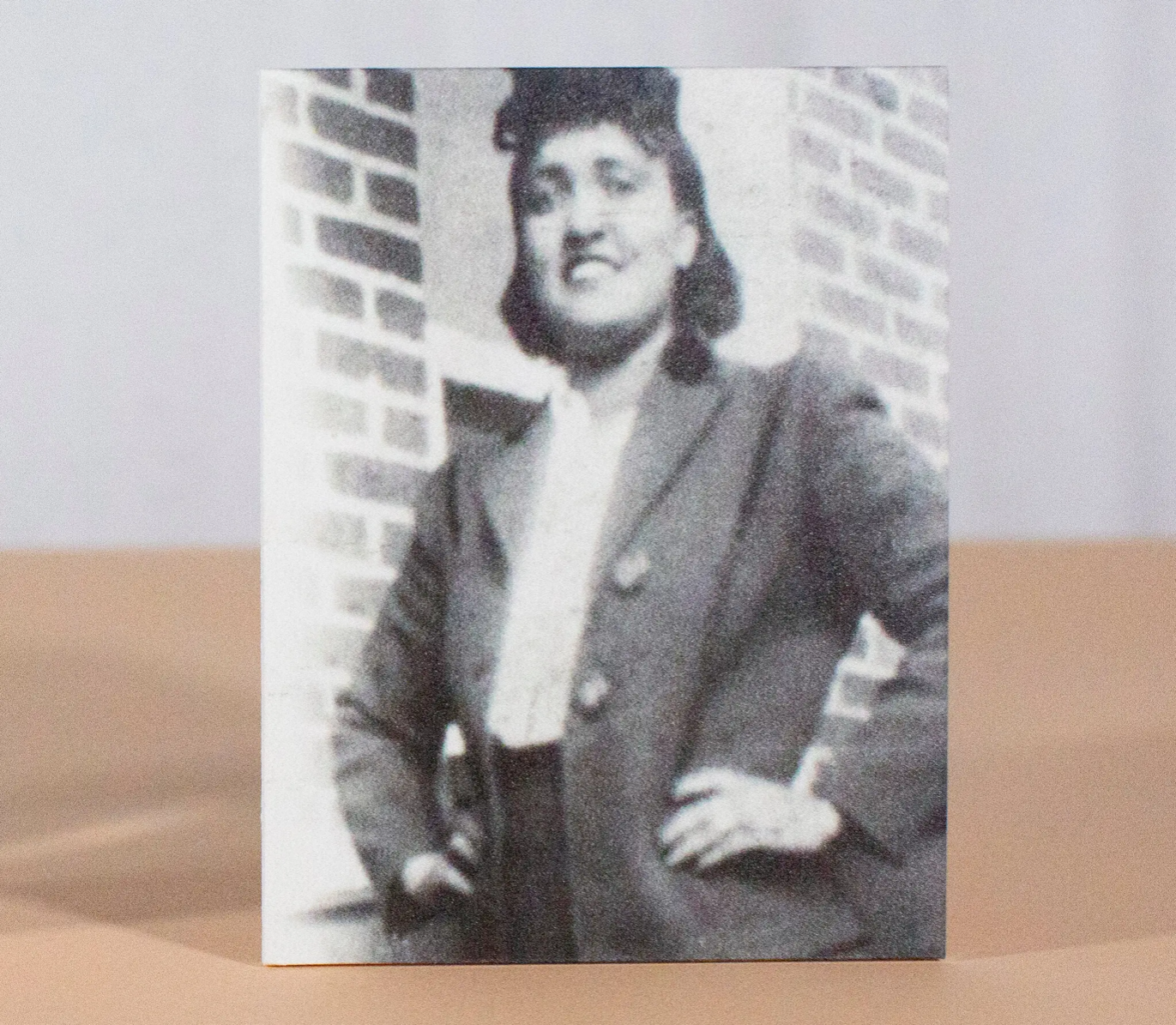
"A life-size bronze statue of Henrietta Lacks, the woman whose cancer cells were taken without her consent and were used for research that ushered medical discoveries and treatments, will be erected in her hometown, Roanoke, Va., next year in a plaza previously named after the Confederate general Robert E. Lee."
Thiago Carvalho
boosted

Similar to Switzerland, reports find that the US administration ignored early warnings of #COVID19’s dangers. For future #pandemicpreparedness, countries need to improve their risk assessment of pathogenic threats. @MCIDBern #xp
https://wissenschaftsrat.ch/images/stories/pdf/de/SWR_2022_Wissenschaftliche_Politikberatung.pdf
'It is a feature of America’s fragmented healthcare system that the private equity industry has seized upon. Over the past five years, some of the country’s biggest buyout firms have snapped up the companies that employ emergency room doctors, capturing some of the 18 per cent of gross domestic product that the US spends on medical care.'
https://www.ft.com/content/5673a288-f55b-4cfd-aa76-0ebb30b029a6
Thiago Carvalho
boosted

New Assistant Professor or Associate Professor posts at LSHTM available in...
Outbreak modelling: https://jobs.lshtm.ac.uk/vacancy.aspx?ref=EPH-IDE-2022-65
and
Spatial Epidemiology/Data Science: https://jobs.lshtm.ac.uk/vacancy.aspx?ref=EPH-IDE-2022-58
Both joint with UK Public Health Rapid Support Team. Deadline 20 Jan 2023.
Thiago Carvalho
boosted

Day 7 (of 10) of the brain ideas countdown. If you missed days 1-6, click here: #BrainIdeasCountdown. This is all about modern & fascinating ideas about the brain for us to discuss. How likely is each idea to be true? And if true, what are the implications?
Brain idea 4: Our health and well-being is determined not just by our genes, but also the genes of those around us.
We've all heard debates about the degree to which nature (our genes) versus nurture (our environment) shapes who we are, including our health and well-being. A complementary idea is the social genetic effect, which proposes that we are influenced by those around us, and they are shaped by their genes. How big are these effects? It's tricky to pin them down in humans. In a study of mice, these effects were estimated to be considerable, accounting for ~30% of differences in a collection of things ranging from anxiety-related behaviors to body weight.
The friendly version:
https://www.embl.org/news/science/1701-social-genetic-effects-health/
The deeper dive:
https://www.ncbi.nlm.nih.gov/pmc/articles/PMC5266220/
Thiago Carvalho
boosted

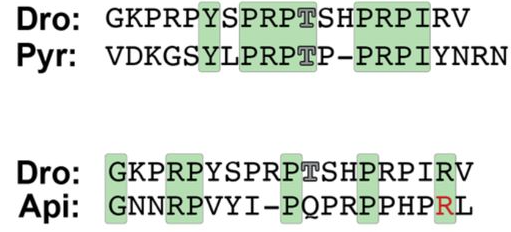
ICYMI: Inhibition of translation termination by Drosocin, an antimicrobial peptide from fruit flies.
https://www.biorxiv.org/content/10.1101/2022.12.11.519952v1
Key result, the authors find mutations in Drosocin that improve its ribosomal inhibitory activity, suggesting it could be improved further.
Thiago Carvalho
boosted



Science Magazine (@sciencemagazine) First Release: Jean-Laurent Casanova & colleagues report that single-gene recessive inborn errors of OAS–RNase L pathway cause #myeloid cells to produce excess #inflammatory #cytokines following #dsRNA or #SARSCoV2 stimulation. This pathway may drive #MISC, a rare complication of #COVID19 in some #children!
I've worked on all of science, from B cells to T cells.
https://fellowsherpa.com
Joined Nov 2022
